

HaoDaFu Online's New Strategy: Covering Nationwide Healthcare Services with a Single Internet Hospital

As the New Year begins, everything takes on a fresh look. The end of the Spring Festival holiday marks our official entry into the busy schedule of 2017. Looking back on 2016, we witnessed frequent turbulence in the internet healthcare industry, the sustained boom in artificial intelligence, a surge of capital into the genomics sector, and tighter regulatory policies for pharmaceutical e-commerce...
Although the market we can observe is merely the tip of the iceberg of the entire healthcare and wellness industry, a single leaf reveals the coming autumn. VCBeat will select benchmarks and leaders from these dynamic sectors, review their development trajectories over the past year, and then reflect on and forecast their strategies for 2017, hoping to provide some assistance to investors, observers, thinkers, and practitioners in the industry.
2016 was a year for the internet healthcare industry characterized by the exodus of speculative capital and a return to fundamentals, separating the wheat from the chaff. During this period, internet healthcare companies broke through their existing business scopes to explore new operational models. It can be argued that after the intense competition of 2015, these enterprises began reflecting on development pathways suited to their specific circumstances. Thus, 2016 marked the year when they started validating these new models and achieving rapid growth.
How to develop a more sustainable profitability model and establish a virtuous business cycle to better serve users was the key focus of exploration for all internet healthcare companies in 2016. For Haodaifu Online, a veteran player in the industry and China’s largest medical information and doctor-patient interaction platform, the priority in 2016 was to build an internet hospital.
In an exclusive interview with VCBeat this year, Wang Hang, CEO of Haodf.com, stated, “There has long been a prevailing view in the internet healthcare sector that patient-seeking and consultation services, with appointment registration and online consultations as their core business models, are unable to achieve profitability. For Haodf.com in the past, achieving profitability was indeed a challenge. However, profitability is an essential goal for any enterprise. This is why we undertook significant initiatives this year.” The major initiative referred to by Wang Hang is the Smart Internet Hospital established by Haodf.com this year, along with all the strategic deployments centered around this hospital.
Regarding the question of why only one internet hospital was established, Wang Hang stated, “Haodf.com’s Smart Internet Hospital is licensed to provide medical consultations nationwide. A single internet hospital can connect with physician resources and patients from across China. For Haodf.com, it is unnecessary to redundantly build multiple internet hospitals, as its Smart Internet Hospital can fully cover the entire country.”
Review of Key Events at Haodf.com in 2016
April 2016 Haodf Online signed an agreement with the Yinchuan Municipal Government to jointly establish a Smart Internet Hospital.
April 2016: Haodf Online obtained the Medical Institution Practice License, officially transforming into an internet hospital and expanding from disease consultation into disease diagnosis and treatment.
July 2016 Partnered with qualified large-scale pharmacies to streamline the workflow from physician prescriptions to medication delivery.
July 2016: Partnered with insurance companies to launch individual professional liability insurance for physicians, providing medical malpractice coverage for licensed practitioners at the Smart Internet Hospital.
September 2016: Haodf Online Smart Internet Hospital launched for trial operation.
October 2016: Launched online family doctor services.
December 2016: Haodf Online Smart Internet Hospital Officially Launched, with Online Diagnosis and Treatment Services Covering China.
April: Signed an agreement with the Yinchuan Municipal Government for an internet hospital
On April 6, at the Yinchuan Municipal Government’s press conference on smart city initiatives and project signing ceremony, the Yinchuan Municipal People’s Government formally signed an agreement with Haodf Online to jointly establish the Yinchuan Smart Internet Hospital. Haodf Online will collaborate with the Yinchuan Municipal Government to facilitate the implementation of the Yinchuan Smart Internet Hospital, building a high-quality medical resource platform and online consultation platform based in Yinchuan, serving the central and western regions, and covering the entire country.
Yinchuan is the first and only city in China to adopt a top-level design for its smart city initiative on a municipal scale. It has established the country’s first city-level data operations center, aiming to enhance governmental administrative efficiency, three-dimensional urban management, public services, and industrial integration through cross-departmental data sharing. The Yinchuan Smart City project is being implemented in three phases, encompassing 10 major systems and 13 sub-modules, including a big data center, a 4G citywide network, a Safe City system, and intelligent transportation. These efforts are designed to advance innovation in government administration, refine three-dimensional urban management, improve the precision of public services, and promote integrated industrial development. The collaboration between Haodf Online and the Yinchuan Municipal Government focuses on the Smart Internet Hospital project within the broader Smart City framework.
Three categories of patients can improve their medical experience through Haodf Online’s Smart Internet Hospital. First, patients requiring specialist consultations: for instance, patients may initially visit a primary care facility near their home for the first diagnosis; when specialist consultation is needed, they can connect with Haodf Online’s expert resources via a telemedicine system, be triaged to appropriate specialists based on their condition, and undergo remote consultations, thereby accessing high-quality medical services from experts in major cities such as Beijing, Shanghai, and Guangzhou without leaving their local area. Second, patients with chronic diseases requiring follow-up visits: during post-discharge management, these patients can contact specialists through the internet hospital for online diagnosis and treatment, with medications delivered directly to their homes. Third, patients with complex or critical conditions that cannot be adequately diagnosed or treated locally, particularly those who require surgery but are unfit for long-distance travel: in such cases, they can use the internet hospital to schedule nationwide medical experts to provide treatment at their local hospitals, bringing top-tier specialist care to their doorstep.
April: Haodf.com Obtained the Medical Institution Practice License
After signing an agreement with the Yinchuan Municipal Government, Haodf Online promptly obtained the necessary qualifications for medical institutions in Yinchuan. Previously, Haodf Online’s business operations were confined to peripheral healthcare services; its entry into the realm of clinical diagnosis and treatment signifies a fundamental transformation of its overall business structure. Formerly, Haodf Online only provided consultation services to patients. When it came to diagnosis or prescription issuance, physicians could only advise patients to seek in-person consultations with them offline or to consult other local physicians for diagnostic and therapeutic interventions.
However, after obtaining the Medical Institution Practice License, Haodaifu Online can conduct online consultations, provide diagnoses, and issue prescriptions. This change is significant for internet healthcare companies specializing in lightweight consultations, indicating that Haodaifu Online’s business has entered a new phase of depth—marking the advent of Internet Healthcare 2.0.
July: Partner with qualified large-scale pharmacies
After receiving an electronic prescription, patients can purchase medications on their own at nearby hospitals or pharmacies, or opt for online ordering with home delivery, often enjoying more favorable prices. In the medication procurement process, Haodifu Smart Internet Hospital has adopted a collaborative approach, integrating its prescription workflow with major pharmaceutical e-commerce platforms such as Haoyaoshi and Jianke.com, thereby establishing a seamless pathway from physician prescribing to drug delivery. Through the synergy of online and offline services, Haodifu Online has supplemented its offerings to provide the comprehensive suite of services delivered by a traditional hospital.
July: Haodf Online Launches Individual Medical Liability Insurance
Haodf Online Smart Internet Hospital launched a physician individual professional liability insurance policy in July. Underwritten by Tianan Property Insurance, this coverage is automatically provided to all physicians practicing online through the Smart Internet Hospital, with a maximum coverage limit of RMB 200,000 per incident.
Individual Professional Liability Insurance for Physicians refers to insurance coverage wherein an insurer assumes the civil liability for compensation when a licensed physician is alleged to have engaged in misconduct while providing diagnostic, therapeutic, or nursing services. Traditional medical liability insurance typically names the medical institution as the insured party. In contrast, Haodaifu’s medical liability insurance designates the individual physician as the insured. In the event of a medical malpractice dispute, the insurer can intervene to handle the claim. The improvement of such medical liability insurance provides physicians with greater peace of mind when practicing in internet hospitals.
September: Haodaifu Smart Internet Hospital Trial Operation
After obtaining the internet medical license in April, Haodf Online’s subsequent tasks involved preparing for the establishment of an internet hospital, completing product development, formulating various management regulations, and standardizing business processes. In addition to its existing consultation-based products, the company needed to augment its online and offline management and operational staff, as well as recruit personnel for diagnosis review, physician credential verification, and prescription audit.
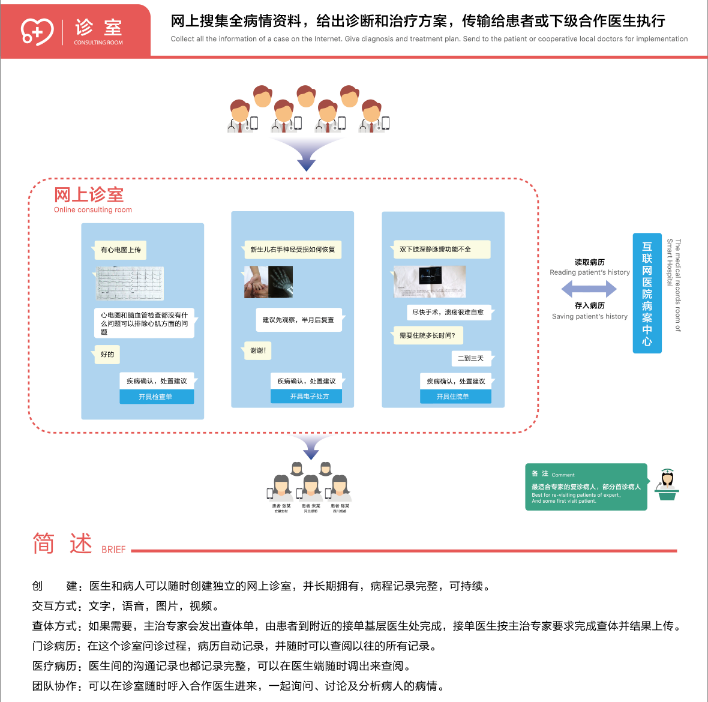
On September 15, Haodaifu Smart Internet Hospital commenced its trial operations. Registered physicians on the existing Haodaifu Online platform may provide online diagnosis and treatment services upon completing the required filings for multi-site practice. Meanwhile, the online medical consultation features of the Smart Internet Hospital were launched, with product design being progressively refined throughout the three-month trial period.
October: Launch of Online Family Doctor Services
Family doctor services represent another online consultation model launched by Haodf Online for patients, positioned to provide long-term disease management and health management services. Patients with chronic conditions frequently require medical consultations, and the vast majority prefer to see a physician who is familiar with their medical history. For these chronic disease patients, 80% do not need to visit offline clinics for every encounter; instead, they can complete consultations and obtain prescriptions through internet hospitals. Since the clinical conditions of patients with chronic diseases or those undergoing follow-up visits are well-established, the risks associated with online consultations are relatively low, making this group the primary target user base for internet hospitals.
After chronic disease patients sign up for family doctor services with a specific physician via Haodf Online, they can communicate online about daily health concerns at any time, request phone consultations for complex conditions, and even call the doctor’s private number in emergencies. This service not only reduces patients’ expenses but also ensures continuous care from a physician who is familiar with their medical history, thereby making healthcare access more convenient.By the end of 2016, 27,000 family doctor contracts had been established, and more than 8,000 households had purchased family doctor services.
December: Haodaifu Smart Internet Hospital Officially Opens
Haodafu Smart Internet Hospital Officially Opens on December 10Haodafu Smart Internet Hospital officially opened its doors on December 10. The hospital’s physicians are drawn from the pool of 140,000 top medical experts from 7,216 hospitals across China, accumulated by Haodafu Online over a decade. After completing the relevant multi-site practice registration, these doctors can provide diagnosis and treatment services through the internet hospital.As of its official launch on December 10, Haodaifu Smart Internet Hospital has completed the multi-site practice registration procedures for 10,000 physicians.
Since the trial operation began on September 15, Haodf Online has notified the 130,000 doctors on its platform that applications for the Smart Internet Hospital were open. In the first month alone, by October 15, it received multi-site practice applications from 15,000 doctors, of whom 3,000 completed registration after passing qualification reviews. As of December 10, a total of 10,000 doctors had completed the procedures for multi-site practice. Ninety percent of these doctors applying to join the Haodf Smart Internet Hospital are from tertiary hospitals or above, consisting mainly of chief physicians and associate chief physicians with considerable expertise, as well as some attending physicians with more than five years of experience. The latest data shows that 11,000 doctors have enabled multi-site practice and are authorized to provide online medical services at the Haodf Smart Internet Hospital, with practitioners distributed across 28 provinces and municipalities directly under the central government in China.
On its opening day, Haodf Online also unveiled four offline partner institutions: a consultation center, a surgical center, a partnered laboratory testing center, and a partnered pharmacy. The first batch of consultation and surgical centers for the Smart Internet Hospital were established at Yinchuan First People’s Hospital and Yinchuan Kawa Heart Center, creating a direct “green channel” for local patients to access national-level specialists. Ningxia Dianle Jia Biomedical Laboratory Testing Center will serve as one of the offline laboratory testing centers for the Smart Internet Hospital, providing diagnostic testing services to patients. Xuanqi Traditional Chinese Medicine Baicaotang Pharmacy is one of the Smart Internet Hospital’s local offline partner pharmacies in Yinchuan, offering pharmaceutical services to patients.
Any online service still requires supplementation by offline institutions to ultimately complete the commercial loop. Although diagnosis and treatment services provided by internet hospitals can be conducted online, certain medical procedures—such as laboratory tests, surgeries, and medication purchases—cannot be performed virtually. Therefore, during its development in 2017, Haodf Online will continue to center on its Smart Internet Hospital model, expanding coverage of offline consulting physicians and service partners around this “hospital.”
Internet Hospital is a Strategic Priority
As can be seen from the 2016 Milestones of Haodf.com, the Smart Internet Hospital became the strategic focus of Haodf.com in 2016, with all major events revolving around the establishment, operation, and enhancement of the Smart Internet Hospital. Unlike other companies, after identifying internet-based diagnosis and treatment as the right direction, Haodf.com concentrated its corporate advantages to develop its internet hospital and continued to deepen its expertise in the field of internet-based diagnosis and treatment, while exploring profit and service models.
Wang Hang, CEO of Haodf Online, stated in an interview with VCBeat that the most important task for Haodf Online in 2016 was to implement its business model, with the Smart Internet Hospital serving as the key vehicle for this new business model.
Wang Hang focused on the hospital’s positioning: to become the “Didi” of the healthcare industry.
Wang Hang stated, “The smart internet hospital established by Haodf Online operates much like Didi Chuxing: it does not build offline hospitals, purchase medical equipment, or hire physicians. Instead, it allocates patients’ diagnostic and treatment needs—such as laboratory tests, examinations, and prescriptions—through a ‘dispatch’ model, thereby revitalizing underutilized medical resources.”
Internet hospitals are the true embodiment of integrating diagnosis and treatment with the internet. The core of healthcare lies in diagnosis and treatment, while the essence of the internet resides in process reengineering and the rational allocation of resources. Internet hospitals leverage the internet as a platform to optimize diagnostic and therapeutic service workflows, thereby providing convenience to users.
In multiple interviews last year, Wang Hang, CEO of Haodf Online, candidly stated that the platform had yet to achieve profitability. The company’s existing services—such as consultation-based appointment registration and triage/referral—were difficult to monetize. To complete its business cycle and attain profitability, Haodf Online needed to explore new avenues. Internet hospitals emerged as the key solution to Haodf Online’s profitability challenges, with Wang Hang himself, senior management, and investors all expressing strong confidence in smart internet hospitals.
A Data-Driven Look at Haodf Online in 2016
1. Established 7,215 surgical reception centers nationwide: covering 31 provinces and municipalities directly under the Central Government, and 350 cities across China. A total of 2,405 top-tier experts from Beijing, Shanghai, and other regions have joined this initiative, thereby extending their diagnostic and treatment capabilities to primary healthcare facilities.
2. Established 74,300 physician collaboration groups nationwide to conduct consultation services. Since 2015, Haodf.com has been promoting remote collaboration between senior specialists and primary care physicians. By the end of 2016, it had established 74,300 telemedicine collaboration pairs across China to carry out remote consultations, thereby driving improvements in primary healthcare standards through the leadership of top-tier experts.
3. Established 1,414 Brand Doctor Academy training programs. Led by top domestic experts as mentors, these programs were set up across various specialties to create a network for learning, exchange, and collaboration between experts and primary care physicians, thereby enhancing the quality of primary healthcare.
4. By the end of 2016, the number of physicians providing services on the Haodf Online platform reached 142,000, among whom 11,000 had registered for multi-site practice at the Smart Internet Hospital and were authorized to provide online medical services. These physicians were distributed across 28 provinces and municipalities directly under the central government in China.
5. As of the end of 2016, the total number of patients served on the Haodf Online platform reached 32.74 million.
Upgrading from the Internet Healthcare 1.0 Model to the Internet Healthcare 2.0 Model,Delving into the diagnosis and treatment process, the primary objective is to address HaoDaifu Online’s profitability challenges. As an industry leader, HaoDaifu Online accumulated a substantial base of physicians and users through its consultation platform during the 1.0 era, thereby enabling it to relatively easily close the loop on online medical consultations by leveraging these resources.
According to data provided by Haodf Online,As of the end of 2016, Haodaifu Online had served a total of 32.74 million patients, with 142,000 doctors providing services on its platform.Doctor resources and patient resources are the strengths of Haodf Online. However, the previous online consultation channels were closed, and the light consultation business failed to help Haodf Online achieve profitability. The Smart Internet Hospital platform serves as a new channel that can help Haodf Online leverage its existing resources and further deepen the diagnosis and treatment process.
2017 Goals of Haodf Online
The key focus in 2016 was to establish a nationwide internet hospital, while the priority in 2017 shifted to optimizing its operations. With all processes streamlined and the business model established, the next phase involves strengthening internal capabilities.
In 2017, the Smart Internet Hospital will continue to enhance its online diagnosis and treatment capabilities by expanding upon its existing network of 7,215 surgical consultation centers. By collaborating with medical institutions and primary care physicians, it aims to facilitate the dissemination of expert diagnostic and treatment protocols and capabilities to grassroots levels. Furthermore, the scope of these consultation centers will be broadened; in addition to surgical consultation services, the platform plans to integrate third-party laboratory and imaging centers to provide diagnostic testing services, thereby serving as a robust complement to the online clinical offerings of the Haodafu Online Smart Internet Hospital.
Establish a telemedicine consultation center, collaborate with primary healthcare institutions and physicians, and form collaborative working groups comprising senior specialists and primary care doctors. This initiative will facilitate connections between primary care physicians and experts in cities such as Beijing and Shanghai, enabling the provision of high-quality diagnosis and treatment plans for patients at the grassroots level. Continue to expand the capacity of online family doctor services and strive to enroll more patients in these programs.
Expand the diagnostic and treatment radius of internet hospitals, integrate all service scenarios related to diagnosis and treatment, establish collaborations with medical institutions, third-party laboratory and imaging centers, primary healthcare facilities, and health service organizations across China, deliver medical services, and achieve a substantial increase in business volume.
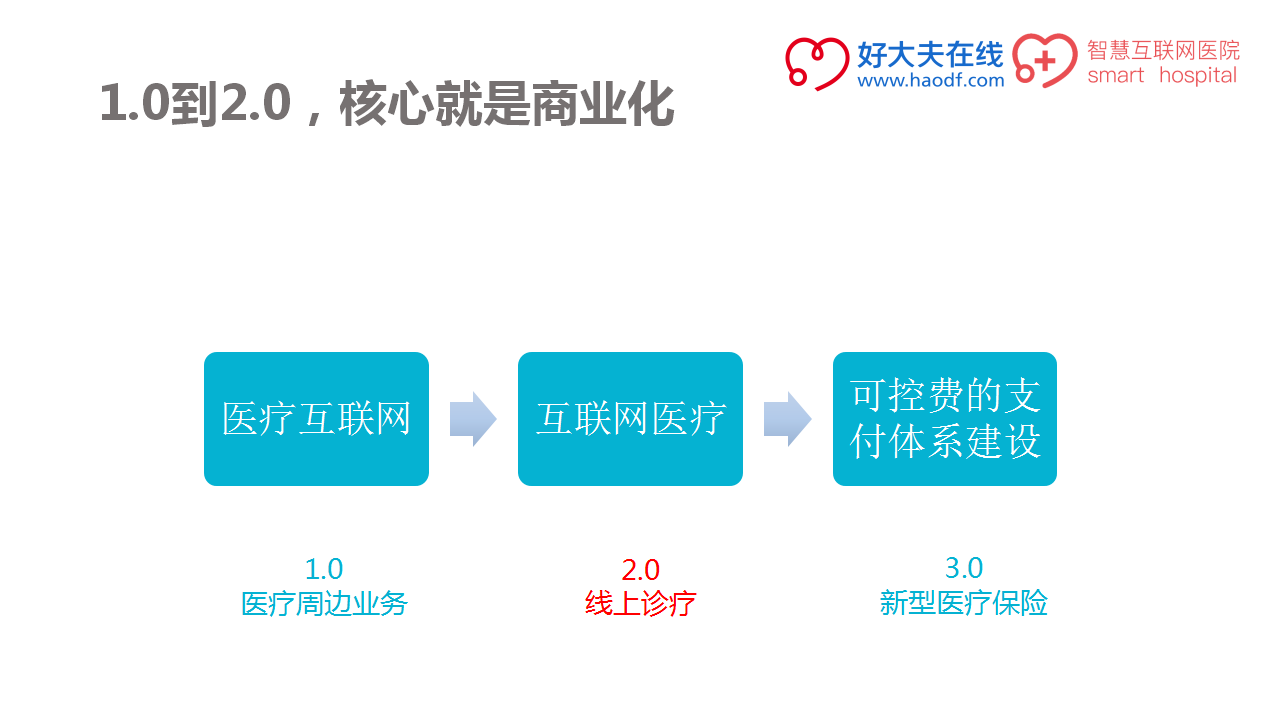
Haodf Online’s ultimate goal for 2017 is to achieve break-even through its internet hospital, laying the foundation for profitability in 2018.At the end of 2016, Wang Hang at VCBeatThe keynote address delivered at the Top 100 Future Healthcare Forum focused on exploring business models for internet healthcare enterprises. Wang Hang believes that Haodf Online has just entered the Internet Healthcare 2.0 phase, characterized by the emergence of internet hospitals. In the future, the integration of novel health insurance products and the establishment of a payment system with controllable costs will propel the industry into the Internet Healthcare 3.0 phase. Wang Hang aims to leverage his smart internet hospital to connect physicians and patients across China, thereby providing online diagnosis and treatment services nationwide.