

How 111 Inc. is Building an Internet-Plus Healthcare Ecosystem: A Review and Outlook
As the New Year begins, everything takes on a fresh look. The end of the Spring Festival holiday marks our official entry into the busy schedule of 2017. Looking back on 2016, we witnessed frequent turbulence in the internet healthcare industry, the sustained boom in artificial intelligence, a surge of capital into the genomics sector, and tighter regulatory policies for pharmaceutical e-commerce...
Although the market we can observe is merely the tip of the iceberg of the entire healthcare and wellness industry, it offers telling insights. VCBeat will identify benchmarks and leaders from these dynamic sectors, review their development trajectories over the past year, and provide analysis and forecasts for their 2017 strategies, with the aim of offering valuable guidance to investors, observers, thinkers, and practitioners in the industry.
We selectedGangling Group (111.com)As a representative example of pharmaceutical e-commerce enterprises, it began as a single-platform operator and gradually expanded into four core business segments: 1YaoWang (B2C), 1Zhen (mobile healthcare), No. 1 Medicine City (B2B), and Central China Pharmaceutical Exchange. With strategic presence across pharmaceutical e-commerce, mobile healthcare, and pharmaceutical distribution, its vision of an “Internet + Pharmaceutical Health Ecosystem” is steadily taking shape. An analysis of Gangling Group’s diverse strategic initiatives offers a valuable model for horizontal expansion by other pharmaceutical e-commerce companies.
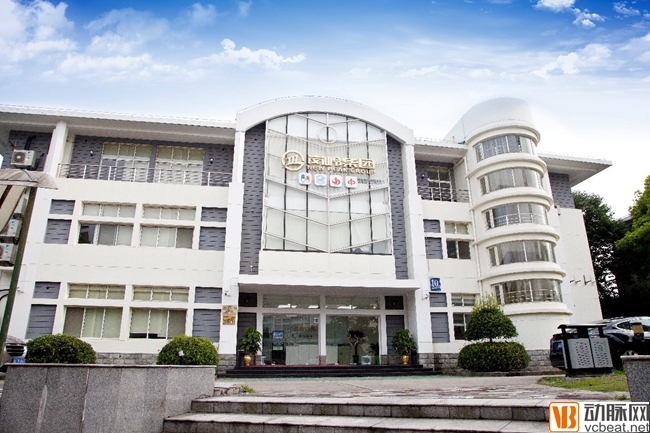
Gangling Group: A Review of Key Events
In July 2015, Yu Gang and Liu Junling returned to 111.com.
On October 26, 2015, 1YaoWang disclosed that it would secure over RMB 1 billion in financing.
On January 11, 2016, 1 Drug Store launched China's first pharmaceutical e-commerce promotion festival.
On April 6, 2016, 111.com.cn reached an agreement with Menarini to cooperate in the field of men's health.
On April 14, 2016, the Huanggang Internet Hospital was established in collaboration with Huanggang Central Hospital.
On April 15, 2016, 1YaoWang partnered with Johnson & Johnson, Hydron, Bausch + Lomb, and Alcon to establish the “Genuine Product Alliance” for contact lenses.
On April 28, 2016, the “Southwest Internet Hospital,” launched in collaboration with Guizhou Province, went online.
On July 8, 2016, the “South China Internet Hospital” was established in collaboration with the Guangzhou Yuexiu District Traditional Chinese Medicine Hospital.
On August 12, 2016, 111.com Inc. reached an agreement with Alibaba Cloud to collaborate in areas such as cloud computing and big data services.
On August 15, 2016, 1YaoWang partnered with Chunyu Doctors to focus on health management for patients with chronic diseases.
On September 14, 2016, 111.com partnered with Kuihua Pharmaceutical to establish an e-commerce platform for authentic pediatric medications.
From September to December 2016, 1YaoWang partnered with pharmaceutical companies such as Huiren Pharmaceutical, Dong-E-E-Jiao, Hongmao Medicinal Liquor, Wyeth, Menarini, and Baiyunshan & Huangpu to establish the “Authentic Products Alliance.”
On November 19, 2016, jointly established the “Central China Pharmaceutical Exchange” in a joint venture with Zhuoer Group.
A Combination of Measures Highlights Synergistic Effects
A review of Gangling Group’s recent activities also reveals its strategic presence in pharmaceutical e-commerce (B2B and B2C), drug distribution, mobile healthcare, and internet hospitals. Furthermore, according to public disclosures by Yu Gang, Gangling Group plans to expand its investments into postpartum care centers, smart hardware, and biomedicine. As the group’s business portfolio continues to diversify, it has effectively deployed a “combination strategy,” steadily realizing its vision of an “Internet + Pharmaceutical Healthcare Ecosystem.”
"From an industry-wide perspective,"Alibaba Health, JD Medicine, Jianke, and WeDoctor are all adopting a combined-strategy approach.Alibaba Health operates an e-commerce platform, online hospitals, the “Ma Shang Fang Xin” traceability system, and the Pioneer Alliance; JD Health features both a marketplace and self-operated businesses, with recent reports indicating plans to establish a pharmaceutical B2B platform; WeDoctor is also accelerating its presence in the pharmaceutical sector by entering the e-commerce space and integrating telemedicine devices into retail pharmacies; Jianke is similarly strengthening its DTP (Direct-to-Patient) pharmacies and online hospital services. In short, competition in the pharmaceutical e-commerce industry has entered an era where comprehensive strength is the key differentiator.
Viewed separately, B2C pharmaceutical e-commerce should focus more on supply chain optimization and brand building to address two key issues. First, it must connect with a greater number of pharmaceutical manufacturers to achieve direct drug supply, thereby ensuring product quality and strengthening bargaining power. Second, it must engage in brand building to provide continuous consumer guidance, familiarizing them with the online medication purchasing model. Initiatives such as the “Authentic Products Alliance,” “Festival Creation,” and the “Brand Acceleration Plan” are all designed to serve this purpose.
B2B pharmaceutical e-commerce has in fact become involved in the pharmaceutical distribution process, going beyond mere information display; we have observed that some platform-based enterprises have begun toApproach the pharmaceutical manufacturing and terminal businesses from perspectives such as ERP and SaaS, starting with drug listing information, sales data, and other relevant metrics., it can not only provide personalized procurement services to pharmaceutical end-users but also offer a certain degree of feedback to industrial enterprises regarding their production. Against the backdrop of the VAT reform and the “Two-Invoice System,” Internet-plus channels in pharmaceutical distribution will gradually gain attention from both industrial enterprises and pharmaceutical end-users. B2B pharmaceutical e-commerce platforms should address their challenges in information communication and decision-making.
In the realm of mobile health, pharmaceutical e-commerce platforms should also seize emerging trends. The first trend is the shift toward mobile usage behaviors. 111.com (Yi Yao Wang) has already accumulated mature experience in this area. Data from Analysys International shows that the monthly active users of the “111.com” app rank first among pharmaceutical e-commerce apps, significantly leading those ranked second and third. Furthermore, it is important to note that mobile health currently lacks a clear profit model; its role is primarily to drive traffic and enhance user stickiness for the core businesses of pharmaceutical e-commerce. Nevertheless, this segment is indispensable. For patients with chronic diseases and those requiring long-term medication, mobile health offers highly suitable services such as convenient health and medication consultations and chronic disease rehabilitation. As major pharmaceutical e-commerce enterprises invest in internet hospitals, remote consultations and electronic prescriptions are providing new strategic directions for mobile health to support medical services through pharmaceutical sales.
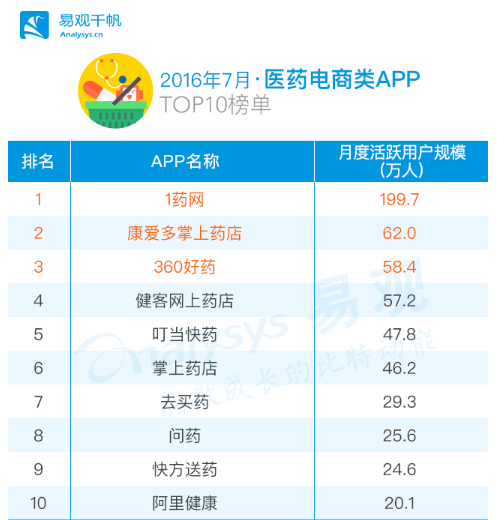
In July 2016, Analysys released the Top 100 E-commerce Apps and sub-sector rankings across various categories, with 111.com.cn topping the pharmaceutical e-commerce list with 1.997 million monthly active users.
When viewed across the entire healthcare market, medical care, pharmaceuticals, and healthcare services are inextricably linked. This is why leading industry players are increasingly focusing on “multi-dimensional business” strategies. It is foreseeable that pharmaceutical e-commerce will become the core connector linking these segments, serving as a key profit driver.
Gangling Group’s major business segments possess certain competitive advantages within the industry and have established a closed loop spanning from “medical services” to “pharmaceuticals.” However, it still falls short of creating a comprehensive “pharmaceutical and healthcare ecosystem” (wherein an ecosystem refers to multiple enterprises leveraging a platform to provide ancillary services). The key to building such an ecosystem lies in diversified integration: while enriching its business portfolio, the group should onboard more partners into its system to deliver extended and value-added services centered on its core “pharmaceutical” offerings, thereby generating mutual benefits for the entire enterprise community.
With the recentThe State Council Abolishes Review of B and C Licenses for Pharmaceutical E-Commerce, Signaling a New Round of Adjustments in the Sector, not only in terms of the number of enterprises, but also in the gradual emergence of integrated models combining various healthcare and pharmaceutical business formats. Nevertheless, pressure and bottlenecks persist in the pharmaceutical e-commerce sector. First, policies permitting the online sale of prescription drugs have yet to be lifted; second, pilot programs for third-party online retail of pharmaceuticals have been suspended. Additionally, as pharmaceutical e-commerce has not yet gained widespread consumer recognition, its development requires joint cultivation by industry players. In this regard, 111.com (Yi Yao Wang) has undoubtedly made proactive attempts.
Below, we will examine the 2016 developments in Gangling Group’s core business segments to interpret its strategic layout in pharmaceuticals and healthcare, and analyze how Gangling Group is realizing its “Internet + Pharmaceutical and Healthcare Ecosystem.”
1药网: Focused on Official Website, Focused on Pharmaceuticals, Focused on Mobile
A Brief Review of 111.com’s Development HistoryIn July 2010, the predecessor of 111.com, Yihao Drugstore, was officially established. It renamed several acquired offline pharmacies as Guangdong Yihao Pharmacy, thereby obtaining the Certificate C for Internet Drug Transaction Services. As one of the first enterprises in China to secure this certification, it focused heavily on its self-operated pharmaceutical e-commerce business. The company successively partnered with numerous foreign-invested, joint-venture, and Chinese pharmaceutical manufacturers, accumulating resources from over 500 pharmaceutical suppliers. This led to the establishment of flagship stores for brands such as Bayer, Pfizer, Wyeth, Dong-E-E-Jiao, Johnson & Johnson, Xiuzheng, and Kangbite. Furthermore, it extensively connected with pharmacy resources, creating dedicated pages for pharmacies including Kanghong, Xinshun, Qianbo, and Lianfutang, thus extending the “online order submission, offline purchase” model.
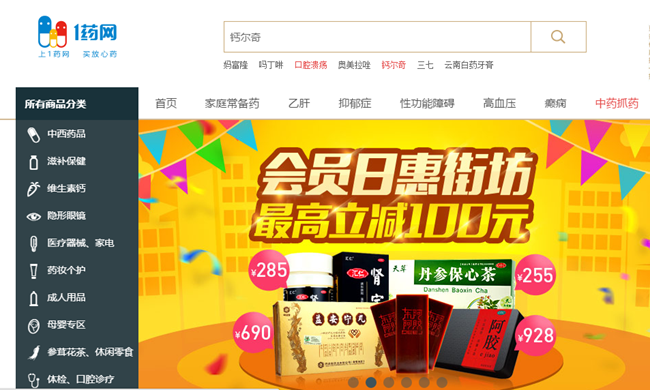
In 2013, Yihao Yaowang was rebranded as “Yiyao Wang” and launched its mobile application, becoming the earliest mobile app in the pharmaceutical e-commerce industry. In August 2015, Yiyao Wang’s monthly sales surpassed RMB 100 million for the first time, topping the pharmaceutical e-commerce sales chart for that month. In November of the same year, Yiyao Wang was renamed “1 Yao Wang,” with its mobile application updated accordingly.
According to data published on its official website, as of 2016, 111.com.cn had accumulated 20 million registered users; the number of SKUs available for sale reached 140,000; and monthly sales exceeded RMB 100 million in several months, with 80% of revenue generated through its official website, 70% derived from pharmaceutical products, and 80% of users accessing the platform via mobile devices.
From January 5 to 31, 2016, 1YaoWang hosted the “1·11” Health “Family” Carnival. The campaign lasted for over 20 days, providing ample time to establish a proprietary shopping festival for pharmaceutical e-commerce and exerting strong influence on consumer behavior. To boost participation, the promotion aligned with the demand for Chinese New Year purchases by introducing the concept of “Pharmaceuticals + Health-Focused New Year Goods,” addressing consumers’ pain points related to health-oriented holiday shopping. In terms of product categories, 1YaoWang created ten themed pavilions tailored to the gift-giving needs of different demographic groups, offering a variety of specialty gift boxes. Additionally, in partnership with Taikang Online, it provided travel insurance for the Spring Festival travel rush. At the time, analysts noted that 1YaoWang’s campaign not only set a valuable precedent for creating shopping festivals in the pharmaceutical e-commerce sector but also significantly enhanced the company’s brand visibility.
This round of initiatives was led by Yu Gang, who returned from Yihaodian. Leveraging his extensive experience in e-commerce platform operations, he amortized costs through supply chain integration and optimized logistics distribution, thereby achieving the goals of establishing the 111.com brand and capturing market share.
On April 6, 2016, 1YaoWang and the multinational pharmaceutical company Menarini announced a strategic partnership in the field of men's health in China. Leveraging their respective strengths in the healthcare industry, the two parties will utilize an internet-based platform to provide better health protection for more Chinese men. The collaboration between 1YaoWang and Menarini aims to deliver more accurate and effective solutions and services for health issues to Chinese men through a comprehensive online pharmaceutical platform.
On April 15, 2016, 1yao.com announced strategic partnerships with four leading contact lens brands—Johnson & Johnson Acuvue, Hydron, Bausch + Lomb, and Alcon—to establish the first “Authentic Product Alliance” in the contact lens market, ensuring 100% direct supply from the brands.
On August 15, 2016, 111.com.cn announced a partnership with Chunyu Doctor, with both parties focusing on health management for users with chronic diseases. According to media reports, Chunyu Doctor launched a rapid medication purchasing service within its “Air Hospital” section, provided by 111.com.cn. In return, Chunyu Doctor joined the “Connect with Renowned Doctors” section of 111.com.cn, offering consultation and medication guidance services from medical experts.
On August 18, 2016, 111.com.cn announced a strategic agreement with Alibaba Cloud to collaborate in areas such as cloud computing and big data services. It is reported that after multiple rounds of discussions and evaluations, Gangling Group determined that Alibaba Cloud’s scalable cloud computing capabilities could meet its business development needs. In addition to foundational cloud computing capabilities, Alibaba Cloud will provide 111.com.cn with a suite of products—including Elastic Compute Service (ECS), ApsaraDB for RDS, OpenSearch, Enterprise Distributed Application Service (EDAS), and Object Storage Service (OSS)—which will significantly enhance development efficiency and enable rapid business setup and application deployment. Most of these products have been market-validated for handling high traffic volumes and ensuring performance. In the future, Gangling Group plans to deepen its cooperation with Alibaba Cloud in cloud computing products.
On September 13, 2016, 111.com.cn announced a partnership with Kuihua Pharmaceutical to develop an e-commerce channel for authentic pediatric medications, enabling direct drug supply and ensuring the safety of children's medication.
From September to December 2016, 111.com.cn partnered with pharmaceutical companies such as Huiren Pharmaceutical, Dong-E-E-Jiao, Hongmao Medicinal Liquor, Wyeth, Menarini, and Baiyunshan & Hutchison to establish the “Authentic Products Alliance.”
1. Consultation: Leveraging Internet Hospitals to Drive Traffic to E-commerce Platforms
On April 14, 2016, Gangling Group signed a cooperation agreement with Huanggang Central Hospital, announcing the joint establishment of Huanggang Internet Hospital. Under the terms of the agreement, Gangling Group planned to invest RMB 500 million to establish Huanggang (Dabie Mountain) Internet Hospital Co., Ltd., which would operate the Huanggang (Dabie Mountain) Internet Hospital. The Huanggang Municipal Health and Family Planning Commission and Huanggang Central Hospital would provide corresponding medical technical and personnel support. The term of cooperation among the three parties was six years.
On April 28, 2016, the Southwest Internet Hospital, jointly established by Gangling Group and Guizhou Province, was officially launched. Based in Puding County, Guizhou Province, it is the first internet hospital in China to provide online medical and health services directly to patients at the community grassroots level and in remote areas. Serving Guizhou, covering the Southwest region, and reaching across China, it aims to ultimately realize the vision of “ensuring dignified healthcare for all” by establishing a comprehensive tiered diagnosis and treatment system.
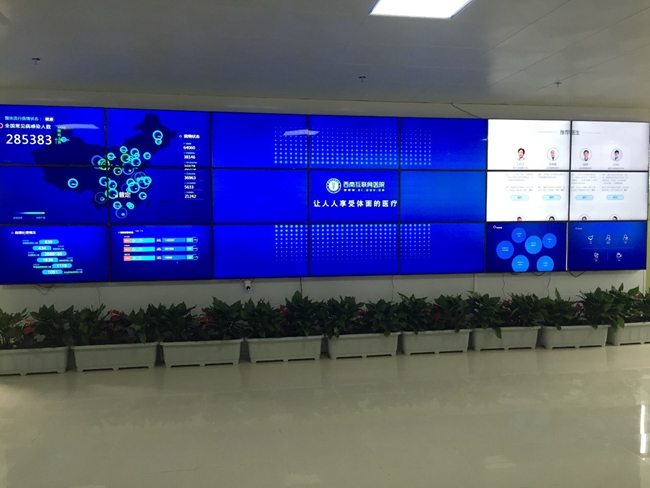 Southwest Internet Hospital
Gangling Group has high hopes for Southwest Internet Hospital. At the time, Zhang Keshuai, Vice President of the Group, stated that Southwest Internet Hospital would address healthcare access and medication procurement issues in Southwest China from three levels:First, it offers remote video consultations and electronic prescriptions, with delivery provided by Guangdong Yihao Pharmacy Chain Co., Ltd., a subsidiary of the Gangling Group. Second, it collaborates with hospitals to address the implementation of in-person examinations and treatments for internet hospitals. Third, it optimizes fee structures and provides targeted assistance to disadvantaged populations, charging at the minimum pricing standards established by Guizhou Province, with medical insurance coverage available in certain areas.
On July 8, 2016, Gangling Group signed a strategic cooperation agreement with the Yuexiu District Hospital of Traditional Chinese Medicine in Guangzhou, announcing the establishment of the South China Internet Hospital. This is the third internet hospital established by Gangling Group, following the Huanggang Internet Hospital and the Southwest Internet Hospital. Similar to the operational model of the Southwest Internet Hospital, users can conduct online remote video consultations through the “1Zhen” APP. Physicians may issue electronic prescriptions based on the diagnosed conditions, and medications are delivered by Guangdong Yihao Pharmacy. Meanwhile, the Yuexiu District Hospital of Traditional Chinese Medicine also provides users with laboratory tests as well as further diagnosis and treatment.
No. 1 Medicine City: B2B Internet Supply Chain Service Platform
Compared to the high visibility of the B2C platform 111.com (Yi Yao Wang), the group’s B2B e-commerce platform, “Yihao Yaocheng” (No. 1 Medicine City), may not be as widely recognized; nevertheless, it holds a crucial position within Gangling Group’s “Internet + Pharmaceutical Healthcare” ecosystem. Public records indicate that Yihao Yaocheng was established in December 2015, with the stated aim of forming the “three pillars” of the Internet + Pharmaceutical Healthcare ecosystem alongside 111.com and 1 Zhen.
Yu Gang once revealed that the Yihao Medicine City platform would establish a B2B trading platform for upstream brand owners, manufacturers, and distributors, as well as downstream hospitals, clinics, and pharmacies, ensuring transparency, fairness, and impartiality to make medical consultations and medication purchases more convenient and affordable for consumers. His remarks also highlight the role played by Yihao Medicine City within the Gangling Group system.
Although there was limited news coverage of Yihao Yaocheng (No. 1 Medicine City) in 2016, from an industry development perspective, B2B pharmaceutical e-commerce will become a crucial channel for future pharmaceutical distribution. Current data indicates that the scale of B2B pharmaceutical e-commerce has already surpassed that of B2C. 111.com’s early strategic presence in this sector underscores its commitment to building a comprehensive, end-to-end pharmaceutical and healthcare industry chain. Extensive collaborations with supply-side pharmaceutical manufacturers and demand-side retail pharmacies and clinics further strengthen 111.com’s influence within the industry, creating synergies that benefit its other business operations.
Data indicates that the pharmaceutical B2B market size is estimated at approximately RMB 100 billion. This market can be segmented into A-license platform operators and B-license pharmaceutical manufacturers or distributors that have established their own pharmaceutical e-commerce websites. As of the end of January this year, there were 41 companies holding A licenses and 195 companies holding B licenses. Additional statistics show that the ratio of transaction volumes between pharmaceutical B2B and B2C e-commerce is approximately 9:1. With the B2C transaction volume reaching around RMB 15 billion in 2015, the pharmaceutical B2B e-commerce market size exceeds RMB 100 billion (this refers to matchmaking transactions facilitated through internet platforms, not limited to transactions directly completed on such platforms). Particularly in the pharmaceutical distribution sector, many companies have begun to develop e-commerce channels as the industry evolves.
The “13th Five-Year Plan for Drug Circulation,” released recently, also points out that it is necessary to promote “Internet + Pharmaceutical Distribution”. Promote the widespread application of information technologies, such as mobile internet and the Internet of Things (IoT), in the pharmaceutical distribution sector; encourage enterprises to carry out service innovations based on the internet, thereby diversifying pharmaceutical distribution channels and development models. Support collaboration between pharmaceutical distribution enterprises, medical institutions, healthcare security authorities, and e-commerce companies to develop pharmaceutical e-commerce services, providing patients with convenient options such as “online ordering and in-store pickup” and “online ordering and store delivery” for over-the-counter drugs, thus promoting the integrated development of online and offline channels.
Industry insiders also point out that pharmaceutical B2B is a nascent business segment, currently in the phase of incremental growth. The key to competition lies in deep integration with the supply chain, enabling the provision of customized marketing and product services to achieve strong strategic alignment. From the enterprise’s perspective, cost control is paramount. By addressing these two critical issues, B2B pharmaceutical e-commerce could become the next significant profit pillar for Gangling Group.
Central China Pharmaceutical Exchange: Powering Pharmaceutical Distribution 3.0
On November 29, 2016, the “Central China Pharmaceutical Exchange,” jointly established by Gangling Group and Zhuoer Group, was launched. This pharmaceutical exchange isThe third regional drug exchange in China, following the Chongqing Drug Exchange and the Guangdong Drug Exchange.
It is reported that the Hubei China Pharmaceutical Exchange obtained the Certificate for Internet Drug Transaction Services (Class A) issued by the China Food and Drug Administration last August. This certificate authorizes the operation of a third-party service platform facilitating B2B transactions among pharmaceutical manufacturers, drug wholesalers, and medical institutions, while prohibiting sales to individual consumers. The exchange is a trading center approved by the Hubei Provincial People's Government, integrating both financial and pharmaceutical attributes.
At the launch ceremony of the Central China Pharmaceutical Exchange, Yu Gang defined the development of China’s pharmaceutical distribution sector into three stages: the 1.0 Industrialization Stage, the 2.0 Informatization Stage, and the 3.0 Internet Stage. He noted that during the 1.0 era in the late 20th century, China faced mismatches between drug supply and demand, opaque information, multiple logistics links, and low efficiency. Entering the early 21st century, driven by national emphasis and investment, the pharmaceutical distribution sector advanced into the 2.0 era. The rapid development of information systems and modernized logistics enabled point-to-point information exchange within the pharmaceutical distribution market. However, enterprises still struggled to access data on product sales and supply chains; supply and demand information remained siloed among companies, making efficient matching difficult and regulatory oversight highly challenging.
How Does China Traditional Medicine Exchange Address These “Chronic Ills” in the Pharmaceutical Industry? Multidimensional Services Are at Its Core. By building a platform that serves as a bridge between pharmaceutical manufacturers and medical end-users, it enables participation in national health insurance tenders and local procurement bids on the hospital side. On the primary care front (clinics and retail outlets), it consolidates small, fragmented demand to enhance bargaining power, ultimately reducing a portion of drug price markups.
In practice, the business strategy of the Central China Pharmaceutical Exchange (CCPE) remains centered on “pharmaceutical e-commerce.” First, it emphasizes marketization. Chen Ruoqi, then General Manager of the exchange, stated that its strong objectivity and independence allow it to fully leverage the market’s role in price determination. Second, it offers value-added services, including finance, logistics, and data. In terms of financial services, the platform’s financial system, developed in collaboration with the Industrial and Commercial Bank of China (ICBC), not only provides payment functionalities but also offers additional financial services such as order financing and factoring to users, particularly downstream pharmaceutical terminal enterprises. Regarding logistics, the platform integrates industry-wide logistics resources through internet technologies to enhance supply chain efficiency across upstream and downstream partners and ensure delivery quality.
At the operational level, the Central China Pharmaceutical Exchange comprises four segments: the Public Trading Platform (offline), the Financial Settlement Platform, No. 1 Medicine City (online), and the Medical Device Trading Platform. It is evident that No. 1 Medicine City has been “integrated” into the Central China Pharmaceutical Exchange system (the business license displayed on the official website of No. 1 Medicine City lists the registered company as “Central China Pharmaceutical Trading Co., Ltd.”). In other words, the establishment of No. 1 Medicine City as an independent segment underscores Gangling Group’s firm commitment to tapping into the vast markets of non-public hospitals and pharmaceutical distribution.
From a business system perspective, the Huazhong Pharmaceutical Exchange can be regarded as an “advanced version” of B2B pharmaceutical e-commerce, integrating online and offline channels, merging e-commerce logic with multi-dimensional services, and taking on the initial form of Pharmaceutical Distribution 3.0.
In summary, 1 Drug’s development trajectory is representative within the industry. Its strategic pathways—integrating medicine and pharmaceuticals, online hospitals, health management, chronic disease management, brand building, mobile optimization, health insurance, and medical services—essentially cover the key aspects of pharmaceutical e-commerce operations. This model provides a replicable template for other enterprises. The most significant variable for 1 Drug lies in the synergistic effects among its various business segments; once these combined strengths become pronounced, they are likely to drive sustained positive growth across its business ecosystem.