

WeDoctor Achieves World's Longest-Distance Telemedicine Link, Connecting Antarctica Across 16,000 Kilometers
On February 5 at 15:00 Antarctic Time (February 6 at 02:00 Beijing Time), at China’s Great Wall Station in Antarctica, WeDoctor Internet Hospital successfully established a video connection with the station, eliciting exclamations of awe from polar scientists. Despite extremely challenging communication and climatic conditions, clear video and smooth audio enabled polar scientists and medical experts from their homeland to connect “face-to-face across screens,” bridging a distance of 16,000 kilometers and an 11-hour time difference. Professor Xia Zhaofan, Academician of the Chinese Academy of Engineering from the Second Military Medical University; President Zhang Qunhua of Wuzhen Internet Hospital; and Dr. He Chao, Founder of WeDoctor General Practice, provided multidisciplinary support for this remote consultation.
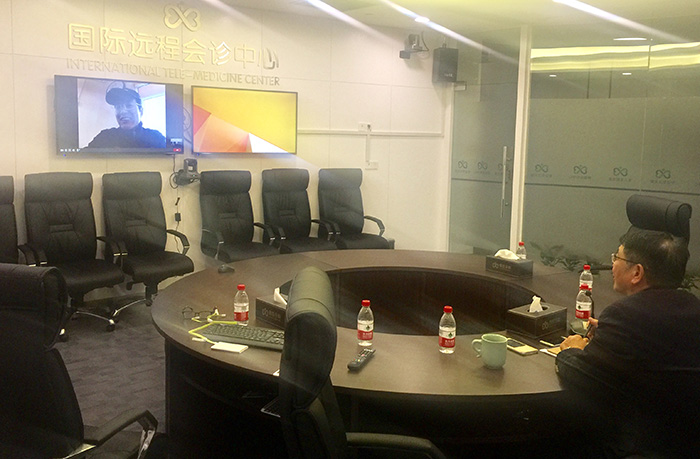
Since the establishment of the Wuzhen Internet Hospital in late 2015, WeDoctor has launched online-to-offline (O2O) internet hospitals across 17 provinces in China. With an investment of RMB 270 million, WeDoctor has built the world’s largest telemedicine and physician collaboration platform. The number of multi-site practicing specialists across various disciplines on the WeDoctor Internet Hospital has exceeded 60,000, making it the medical institution with the largest number of practicing experts globally.
The successful polar connection stems from WeDoctor Internet Hospital platform’s profound technological accumulation. It is reported that Liao Jieyuan, founder of WeDoctor, loaded the WeDoctor app aboard a ship in the Drake Passage. After disembarking amidst Force 6 winds and waves, he completed system debugging at the Great Wall Station within just a few minutes. The Great Wall Station relies on satellite communication systems; connectivity with China requires routing through international networks over vast distances, supporting only the most basic data exchange. Under such communication constraints, achieving remote video consultation was considered impossible. WeDoctor’s remote diagnosis and treatment system employs video compression and transmission algorithms independently developed by its technical team, delivering exceptionally high transmission efficiency and enabling smooth audio-video interaction even over extremely narrow bandwidths. By the end of last year, WeDoctor had successfully extended its internet hospital services to the Sansha Islands, China’s southernmost territory. This successful Antarctic connection demonstrates that WeDoctor’s remote diagnosis and treatment system can withstand the harshest environmental conditions.
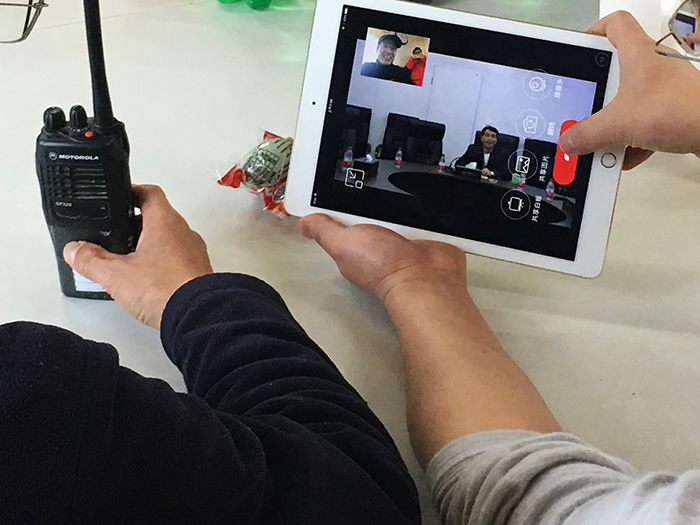
Liao Jieyuan believes that the internet’s contributions to healthcare lie in two key areas: first, breaking through physical spatial barriers, and second, enabling the shift from passive medical treatment to proactive health management. Breaking through physical space allows for genuine implementation of cross-regional physician collaboration, tiered diagnosis and treatment, and remote consultations. Meanwhile, the continuous and proactive service nature of the internet makes it possible to transition from a care model centered on medical treatment to one centered on overall health. Zhang Qunhua, Dean of WeDoctor Internet Hospital, noted that scientists working in polar regions endure harsh conditions year-round, making telemedicine support a crucial safeguard. WeDoctor is committed to safeguarding the health of these scientists stationed overseas.