

Where Did the $3 Billion Go? CIRM's Embryonic Stem Cell Research Struggles to Deliver on Promises
Stem cell research has long been a subject of intense controversy worldwide. In 2004, during the U.S. presidential election, California voters approved a ballot measure to commit substantial state funding to this contentious area of medical research, establishing a $3 billion fund to launch embryonic stem cell research initiatives. Following the allocation of this unprecedented financial support, the California Institute for Regenerative Medicine (CIRM) attracted scientists from around the globe, cementing its position as a leader in the field of stem cell research. However, with CIRM’s project funding set to be exhausted by 2020, the institute must deliver tangible results to demonstrate that its massive research expenditures have been justified.
Stem Cells, a direct translation from the English term “Stem Cells,” derives its name from the word “stem,” which conveys meanings such as “tree trunk” and “origin.” Much like a plant’s trunk that gives rise to branches, leaves, flowers, and fruits, stem cells possess the capacity for long-term self-renewal and the potential to differentiate into various types of mature blood cells. They represent one of the key solutions to many medical challenges that remain unresolved by current human medicine.
Embryonic stem cells (ESCs) are a class of cells isolated from early embryos or primordial gonads, characterized by their capacity for unlimited proliferation in vitro, self-renewal, and multilineage differentiation.Embryonic stem cell research has long been a highly controversial field in the United States. Proponents argue that this research helps to cure many intractable diseases and represents scientific progress, while opponents contend that conducting embryonic stem cell research necessitates the destruction of embryos, which are life forms in the uterus before human development is complete.Therefore, against the backdrop of the George W. Bush federal administration’s restrictions on funding for embryonic stem cell research, California voters, driven by the hope of curing diseases such as Parkinson’s disease and amyotrophic lateral sclerosis (ALS, commonly known as Lou Gehrig’s disease), approved this costly and ambitious initiative in the state.
However, more than a decade has passed, and the high hopes people once held had still not been realized by 2017. VCBeat (WeChat: vcbeat) has compiled and translated an analytical article from the foreign media outlet STAT, providing a detailed interpretation of the various factors behind this outcome, the current state of embryonic stem cell research in California, and its future prospects.
A STAT investigation found that one of the primary reasons for this outcome is the inefficiency of the local research institution, the California Institute for Regenerative Medicine (CIRM). The investigation pointed out that CIRM’s clinical translation cycle is often excessively long.Between 2006 and 2016, only 27 trials received funding from the California Institute for Regenerative Medicine (CIRM), with just two clinical trials ultimately completed. In contrast, the U.S. National Institutes of Health (NIH) funded 571 human stem cell therapy trials during this period, 165 of which were completed.CIRM spent a total of $2.2 billion, while the NIH spent $13.4 billion—more than six times that of CIRM; in terms of input-to-output ratio, the number of trials sponsored by the NIH was 3.5 times that of CIRM. Commenting on this, Jim Lott, a healthcare consultant and member of the California Institute for Regenerative Medicine (CIRM) Oversight Committee, stated, “If the data highlighting this disparity are accurate, neither as a voter, a taxpayer, nor as a member of the oversight committee can one be satisfied with CIRM’s performance.”
So, in the face of the massive $3 billion fund, where has CIRM allocated its resources? According to reports, to date,CIRM has allocated the majority of its $2.2 billion in funding to establish laboratories and cover basic research costs for public and private universities, such as Stanford University and the University of Southern California, as well as private companies.In addition, it has provided over $300 million in funding to 27 projects, including clinical trials, with the majority of these funds directed toward preclinical research. Meanwhile, the agency has also committed approximately $540 million to fund various new laboratories and construction projects.
One reason for CIRM’s allocation of funding as described above is that, given the current state of research, scientists do not yet fully understand embryonic stem cell biology, and significant barriers remain to their entry into human research.Consequently, CIRM’s board members have chosen to focus more on early-stage infrastructure, benchmark trials, and animal studies. However, critics have pointed out that many of the heavily funded institutions are also members of CIRM’s governing board. In a book published in 2013, the Institute of Medicine sharply commented that conflicts of interest among institutions had compromised the “integrity and independence of certain CIRM decisions.” Although CIRM has since implemented measures prohibiting board members from directly voting for their own institutions during funding selection, these steps have not addressed other financial conflicts between CIRM officials and grantees, and the flow of sponsorships to institutions affiliated with board members has continued to increase.
Marcy Darnovsky, director of the Center for Genetics and Society, a nonprofit organization based in Berkeley, stated, “Some might argue that California taxpayers’ money should be spent on state university campuses to build new facilities; yet no one would contend that Californians’ tax dollars should fund various novel construction projects at private universities such as Stanford University and the University of Southern California (USC).” In reality, Stanford’s endowment ranks among the top five nationwide. For every $7 in grants approved by the California Institute for Regenerative Medicine (CIRM), $1 is allocated to Stanford. Meanwhile, USC has received over $70 million for various construction projects, with hundreds of millions more directed toward its laboratories and research initiatives.
In contrast to the various criticisms within California, scientists outside the state believe that CIRM’s funding has played a significant role: over the past decade, researchers supported by CIRM have published nearly 2,000 academic papers. Dr. George Daley, the new dean of Harvard Medical School, a renowned stem cell scientist, and an informal advisor to CIRM, stated that this scholarly output has helped propel California into the top ranks of stem cell science. He considers CIRM’s achievements to be remarkable, noting, “I am greatly impressed by the progress my colleagues are making in California.”
CIRM Oversight Committee member Lott has a teenage daughter who was paralyzed in a car accident. As a father, he supports stem cell research, hoping that stem cell therapies will help his daughter walk again. He has expressed support and appreciation for CIRM’s goals and much of its work; however, he holds different views regarding CIRM’s management structure. Under the current management model, institutions represented on CIRM’s Board can benefit from CIRM’s grants and financing.
CIRM was established under the approval of California Proposition 71, which authorized the state government to issue $3 billion in bonds. This legislation allocates $300 million annually to CIRM over a 10-year period and requires repayment of $6 billion, including interest, over the subsequent 30 years. These funds are designated to support research on embryonic and adult stem cells, including scientifically oriented embryonic cloning research utilizing adult stem cells.However, financial experts point out that compared to the California State Treasury, long-term bonds offer relatively lower interest rates and are more suitable for such large-scale venture capital investments.When asked whether he would still support a similar bill if it were put to a vote today, Lott said, “We had envisioned everything in an overly idealistic light, and the circumstances back then were different from those today. But now, I certainly would not vote for it.”
In 2004, ethical concerns arising from the use of embryonic stem cells in disease research forced many countries to slow down their stem cell research programs.; In the United States, the George W. Bush administration also imposed restrictions on federal funding for embryonic stem cell research. Against this backdrop, Proposition 71, initiated by California residents, was approved by 59% of voters. However, some experts argue that the passage of Proposition 71 was also due to the exaggeration of its potential benefits by many individuals at the time. Numerous patients, scholars, and celebrities from the entertainment industry predicted that it would “cure diseases and save millions of lives.” Sponsors of the measure further projected that therapies developed by the California Institute for Regenerative Medicine (CIRM) would significantly reduce healthcare expenditures. Although no specific commitments were made regarding the ten-year timeframe for CIRM’s work, people stubbornly believed that miracles would inevitably occur.
Darnovsky remarked, “We have supported embryonic stem cell research, both in the past and present, but the current trajectory has inevitably caused some alarm… The media is saturated with so-called academic professionals in white coats, claiming they can deliver therapeutic regimens by Christmas. Most of them are actually owners of private companies, some of which later received funding from CIRM.”
C. Randal Mills has served as the Chief Executive Officer of CIRM since 2014 and was the architect behind the agency’s strategic shift in funding priorities. Mills was not involved in the establishment of the institution. He regards the notion of selling voters on the promise of “imminent major medical breakthroughs” as highly “naïve.” In reality, driving fundamental medical transformation typically requires decades, from initial concept to therapeutic application. Nevertheless, he stated, “Given that we have reached this stage, my sole mission is to leverage our remaining resources to generate as much value as possible for the people of California.”
CIRM’s $3 billion in funding was projected to be exhausted by 2020. In light of the limited clinical trial results from the preceding decade, the agency announced a year ago that it would reposition itself, placing greater emphasis on funding clinical research.CIRM plans to allocate the remaining $692 million to fund 50 new trials, 10 of which were announced in 2016. This represents a significant shift from the 17 trials conducted during CIRM’s first decade of operations.
Mills welcomes comparisons between CIRM’s operations and those of the NIH, believing that such comparisons can help assess CIRM’s progress.Mills previously served as the head of Osiris Therapeutics, the first company to commercialize an approved stem cell therapy.When asked by the media about CIRM’s achievements over its first decade, he declined to comment, stating only that laboratories and basic science are indispensable as the foundation for future clinical work. “What we need to do is continuously improve to help patients. If we are lagging behind the NIH, we need to work harder and do better,” Mills said in the interview.
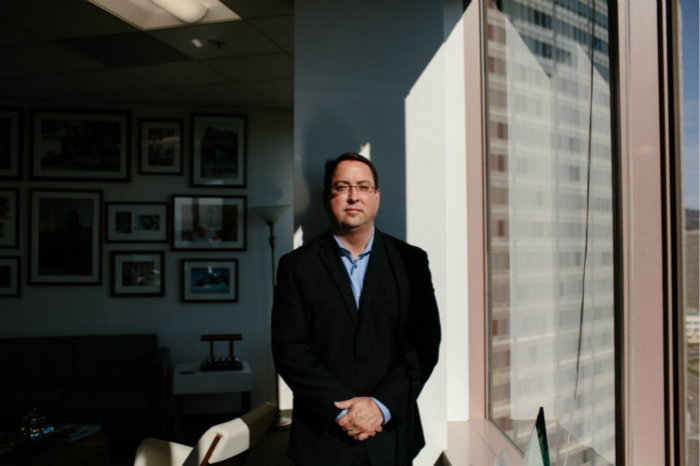
C. Randal Mills, CEO of the California Institute for Regenerative Medicine, in his office
As previously mentioned, the NIH far outperforms CIRM in terms of funding and research output in stem cell research.Between 2006 and 2016, the NIH funded a total of 50 Phase III clinical trials for stem cell therapies—the final step before seeking market approval—whereas CIRM funded only three.Of the three trials funded by CIRM, one was a study on skin cancer treatment involving immune system cells, sponsored by Caladrius Biosciences. The grantee terminated this trial after it was determined and confirmed that existing treatments had surpassed their investigational approach. The other two trials—one testing modified immune cells for brain cancer treatment and the other using bioengineered veins to manage vascular issues—still hold promise for success. However, according to information from the NIH website and the clinical trial registry ClinicalTrials.gov, both remain in the patient recruitment phase and will require several more years to complete.
In response, Dr. Daley of Harvard Medical School described the comparison with the NIH as “somewhat unfair,” becauseThe NIH focuses more on hematopoietic stem cells, a field that has been developing for decades; whereas the CIRM emphasizes cutting-edge embryonic stem cell research. The CIRM allocates more than half of its funding to support research on embryonic or induced pluripotent stem cells, approximately one-quarter to adult stem cell research, and the remainder to other research areas.。
Paul Knoepfler, a researcher at the University of California, Davis, agrees with Dr. Daley’s viewpoint. As one of CIRM’s grantees, he runs a stem cell blog aimed at popularizing science for the general public. Knoepfler stated, “For embryonic stem cell research, scientists often need to develop a research system to identify safe approaches for conducting clinical trials involving embryonic stem cells, because these cells are more potent and carry diverse types of risks.”
Likewise, he hopes that basic science will promptly translate into clinical breakthroughs, as demonstrated by Asterias Biotherapeutics. Based in Fremont, southeast of San Francisco, the company is currently engaged in preliminary work aimed at restoring function in paralyzed patients. Asterias’s trial, funded by the California Institute for Regenerative Medicine (CIRM), enrolled participants including Jake Javier, a patient who lost nearly all limb function in a swimming pool diving accident. Javier recently received an injection of cells derived from embryonic stem cells, which are intended to help protect nerve cells damaged by spinal cord injury. Following treatment, he regained some arm function, and he was the only one among the five patients in the early-stage trial to show improvements associated with the stem cell therapy. These findings have not yet been published in a peer-reviewed academic journal.
Furthermore, Mills pointed out that funding requirements for newly established laboratories mandate recipients to secure additional financing, thereby providing economic benefits to taxpayers and facilitating future trials. For instance, CIRM provided $30 million to Quintiles, a contract research organization (CRO), to conduct preclinical studies, manage regulatory issues, and provide clinical support facilities for CIRM-funded stem cell trials. All of these services were secured at significantly discounted rates. Mills argued that although scientific and technological advancements cannot be achieved overnight and substantial progress is difficult without a solid foundation, voters are still awaiting the delivery of the cures promised by CIRM at its inception.
To date, the tangible outcomes of CIRM’s “cure” promises have been limited to a poster featuring a child as its central figure: four-year-old Evangelina Padilla Vaccaro appeared on the cover of CIRM’s latest annual report. Born with severe combined immunodeficiency (SCID), Evangelina lacked an immune system entirely. Children born with this condition, commonly known as “bubble babies,” must spend time in sterile isolation tents after birth; however, most succumb to infections and complications within a few years. Only a fortunate few survive by receiving matched bone marrow transplants.

Evangelina Padilla Vaccaro, photographed in November 2016
Under funding from the California Institute for Regenerative Medicine (CIRM), Dr. Donald Kohn of the University of California, Los Angeles (UCLA) extracted some of Evangelina’s hematopoietic stem cells, genetically modified them, and reinfused the corrected cells into her body to rectify her genetic defect. The treatment was successful. Evangelina now has a robust immune system and is in excellent health. “Evangelina and 29 other children like her are regaining immune function through this therapy. They can go to school, swim in public pools, eat food that isn’t perfectly clean… they can do everything that children should be able to do,” said Steven Peckman, Deputy Director of UCLA’s Center for Regenerative Medicine and Stem Cell Research. “If they get sick now, their own bodies will fight off viruses and bacteria. They have been brought back to life. If this is what people mean by ‘cure,’ then we have achieved it.”
Of course, while this inspiring victory was partly funded by CIRM, Dr. Kohn’s research efforts spanned three decades. Moreover, the project did not involve embryonic stem cells; Evangelina was saved by hematopoietic stem cells—a type that receives greater attention from the NIH, whereas CIRM was established to fill gaps in embryonic stem cell research.
Although current CEO Mills has consistently defended the original CIRM in his public statements, he has been actively driving reforms in practice. Last year, he announced plans to transform the agency into “CIRM 2.0,” aiming to shift its focus toward accelerating clinical trial development before CIRM’s dissolution.When asked whether Californians have received good value from CIRM, Mills attributed the economic benefits to the state government, adding, “I am more concerned with the return in terms of alleviating human suffering. Our work has only just begun. I hope that in the future, when people look back through the annals of history, they will regard CIRM’s existence as a great achievement.”
To achieve the reform goals set by Mills, CIRM stated that it would focus on clinical trials and foundational work for related research in 2017. If these studies yield definitive results, Mills is confident that CIRM will continue to exist.
California’s monitor, Lott, was less optimistic about Mills’ CIRM 2.0 plan, stating, “CIRM needs to deliver more tangible and concretely measurable outcomes for the billions of dollars it has allocated… but it may be a bit too late to start now.” He believed that, given CIRM’s current management structure, it is unrealistic to convince taxpayers to provide new injections of funding.
Even Dr. Daley, who has never hidden his enthusiasm for CIRM’s work, hesitated when asked whether the CIRM model is worth emulating, albeit for different reasons than Lott. He stated, “If that were the case, I would reluctantly support it, in part because I believe it would lead the federal government and the NIH to abdicate their responsibility for investing in biomedical research, which is beneficial to us all.”
However, just as President George W. Bush’s restrictive policies on stem cell research 12 years ago led to the establishment of CIRM, the current situation may follow a similar pattern. Although President Obama issued an executive order in March 2009, shortly after taking office, authorizing the use of human embryonic stem cells for research in the United States and overturning the restrictions imposed by Bush, many conservatives within the current Trump administration have long opposed federal funding for embryonic stem cell research and are likely to prompt the new administration to reimpose restrictions. If the Trump administration adopts a hostile stance toward embryonic stem cell research, it may inadvertently offer CIRM another avenue of hope: California’s academic community has historically resisted restrictions on research domains and is highly likely to support CIRM in continuing its embryonic stem cell research.
Source: STAT. Compiled by VCBeat.