

FDA Approves First Newborn Screening System for Four Rare Metabolic Disorders
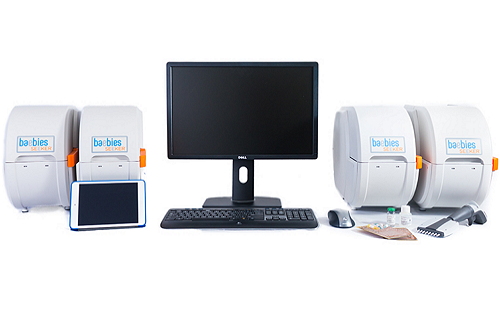
On February 3, the U.S. Food and Drug Administration (FDA) approved the marketing of the Seeker System for rare lysosomal storage disorders (LSDs) in newborns, which can be used to screen for four rare neonatal metabolic diseases: Mucopolysaccharidosis Type I (MPS I), Pompe disease, Gaucher disease, and Fabry disease.
Definition of Data on the FDA Website: Rare lysosomal storage disorders (LSDs) are a group of rare inherited metabolic diseases in which enzymes (proteins) that normally eliminate unnecessary substrates in the body's cells exhibit abnormal levels or dysfunctional activity.
According to the U.S. Department of Health and Human Services’ Advisory Committee on Heritable Disorders in Newborns and Children, the incidence of MPS I, Pompe disease, Gaucher disease, and Fabry disease in newborns and children ranges from approximately 1 in 185,000 to 1 in 1,500. If not detected and treated promptly, these genetic disorders may lead to organ damage, neurological disability, or even death.
Dr. Alberto Gutierrez, Director of the Office of In Vitro Diagnostics and Radiological Health at the FDA’s Center for Devices and Radiological Health, stated that the Secretary of the U.S. Department of Health and Human Services has recently added Pompe disease and MPS I to the list of conditions recommended for routine newborn screening. This action is expected to mandate the use of screening tests for these diseases. Accurate screening tests will facilitate early detection, treatment, and management before irreversible damage occurs in newborns. This underscores why assessing the availability, accuracy, and reliability of lysosomal storage disorder (LSD) screening methods is of critical importance to the FDA.
It is understood that the states currently authorized to conduct LSD screening in all newborns include Arizona, Illinois, Kentucky, Michigan, Missouri, New Jersey, New Mexico, New York, Ohio, Pennsylvania, and Tennessee. However, as of today, there are no FDA-approved devices for screening these disorders. The availability of the Seeker system provides laboratories with a screening tool whose clinical and analytical validity has been reviewed by the FDA.
The Seeker System was developed with funding from the Small Business Innovation Research (SBIR) program of the Eunice Kennedy Shriver National Institute of Child Health and Human Development at the National Institutes of Health.Manufactured by Baebies, based in Durham, North Carolina.
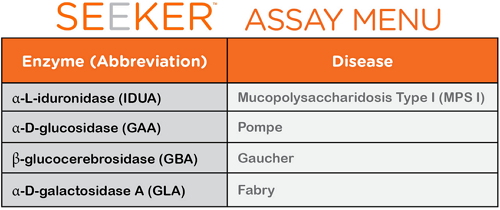
In terms of product, the Seeker System is manufactured by Baebies, Inc., based in Durham, North Carolina. It consists of the Seeker LSD Assay Kit (IDUA | GAA | GBA | GLA) and the Seeker Instrument, and it is the first newborn screening test system approved by the FDA for market release to screen for the aforementioned genetic disorders.
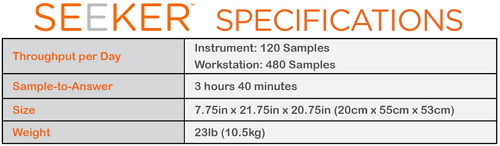
As shown in the figure, the Seeker System platform has a daily throughput of 120 samples per instrument and 480 samples per workstation, with a sample turnaround time of 3 hours and 40 minutes. The samples are heel prick blood collected from neonates 24 to 48 hours after birth.
Furthermore, the FDA stated that the Seeker system was reviewed through the de novo premarket review pathway, a regulatory route for novel medical devices with low to moderate risk. In essence, this differs from devices that have long been legally marketed, as well as from the further development of special controls to provide reasonable assurance of a device’s safety and effectiveness.
The Seeker System operates by measuring the activity levels of proteins essential for healthy lysosomal storage in dried blood samples. A reduction in the enzymatic activity of any of the four proteins associated with lysosomal storage disorders (LSDs) detected by the kit indicates the potential presence of a disease. During the regulatory review process, the FDA evaluated clinical study data from 154,412 newborns in Missouri, whose dried blood samples were used to test the activity of proteins associated with MPS I, Pompe disease, Gaucher disease, and Fabry disease. The FDA determined the system to be effective because it accurately identified all 73 newborns screened who had at least one of the four LSDs, with no false-negative results throughout the study.
Risks associated with the use of this screening system include false-negative results. As part of this study, the Missouri State Public Health Laboratory conducted active surveillance of newborn screening programs in four states to identify new diagnoses of these conditions. National laboratory surveillance activities were extended for 15 months after the completion of the study to identify false-negative cases that may have been missed during the study period. No false-negative results were identified through either the study or the 15-month state surveillance program.