

Jia Health: Attracting 17,400 OB-GYN and Pediatric Specialists to Redefine Healthcare Delivery and Doctor-Patient Ecosystem
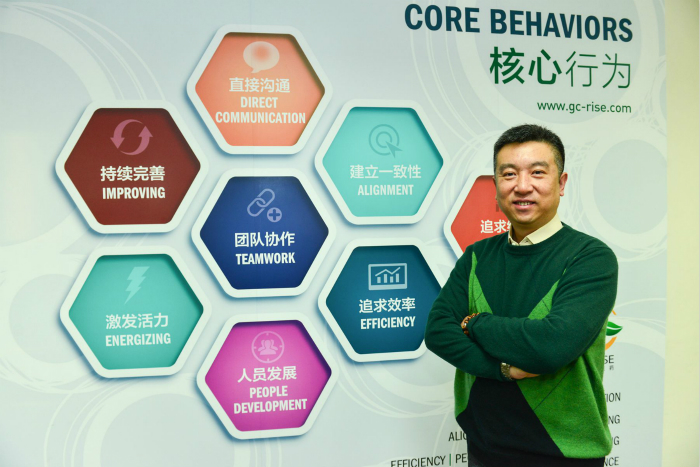
Zhang Hailei, Founder of the “Jia Jiankang” Brand and President of Jiesirui Health Sciences
The Mobile Health Battlefield: Emerging Shifts, Particularly in Online ConsultationsThe comprehensive, lightweight consultation model is drifting further away from the essence of healthcare. Unable to provide actual medical treatment or effective health management, and failing to enhance physicians’ efficiency and income, platforms with low patient trust are being eliminated. At this juncture, delving deeply into vertical sectors and reconstructing care delivery models and the doctor-patient ecosystem through innovative products and services has become a new opportunity for breakthrough.
“Jia Jiankang,” a mobile health platform that entered the market by focusing on women’s and children’s health management, has pioneered a new category in this field. Since its launch on October 30, 2015, the platform has quickly attracted a large number of high-quality physicians specializing in women’s and pediatric care. Currently, the total number of registered physicians on the platform has reached 17,400, with more than 50% holding associate chief physician or higher titles. Patients can access professional popular science knowledge in the fields of obstetrics, gynecology, and pediatrics at little or no cost. To explore the achievements made by Jia Jiankang over the past year and a half and to understand the current state of maternal and child healthcare, VCBeat conducted an exclusive interview with Mr. Zhang Hailei, founder of the “Jia Jiankang” brand and President of Jiesirui Health Science, to gain insights into new strategies in the mobile health arena.
Zhang Hailei, born in 1971, is not a grassroots entrepreneur. Since entering the pharmaceutical industry in 1993, he has worked at Glaxo (China), Bayer, and Bristol-Myers Squibb. He became a regional manager at the age of 26 and sales director at 29, rising rapidly to become one of the youngest sales directors in the medical field.
However, his career did not begin in the field of maternal and child health; instead, he focused on diabetes, cardiovascular, and oncology products. “I marketed two leading diabetes drugs, Glucobay (acarbose) and Glucophage (metformin), as well as top-tier antihypertensive medications, Adalat GITS (nifedipine) and Monopril (fosinopril). All these products ranked among the top 10 in market share,” Zhang Hailei recalled, reflecting on his pharmaceutical career.
Therefore, prior to founding Jestri Health Sciences in 2008, he already possessed extensive expertise in pharmaceutical sales, distribution channels, and marketing. In its early stages, the company built its foundation on the sales of pharmaceutical products, with all offerings centered around gynecology, obstetrics, and pediatrics. These included pharmaceuticals, health supplements, mobile wearable devices, medical foods, and cosmeceuticals. Based on confidence in the founding team, the company secured angel investment from Inventages, Europe’s largest healthcare venture capital firm, in its inaugural year. It subsequently raised two additional rounds of financing from Yifang Venture and OrbiMed.
The core of an online doctor-patient consultation app platform lies in the interaction between doctors and patients. Jiesrui Health Science, which specializes in women’s and children’s health, holds unparalleled advantages in recruiting its initial cohort of physicians. Many companies offer cash subsidies to incentivize doctors to download their apps—paying RMB 200 per installation—but most users uninstall the apps shortly after downloading, failing to establish stickiness or strong relationships. In contrast, since its inception, Jiesrui Health Science has built a robust sales representative team that has consistently engaged with physicians over the years, fostering deep familiarity and understanding. To use a trendy phrase, it has established strong relationships with doctors without burning through cash.
“China currently has 300,000 obstetricians, gynecologists, and pediatricians, of whom approximately 100,000 are considered high-quality. We suddenly realized that through routine visits or academic conferences, we can reach 20,000 doctors, accounting for 20% of the high-quality physician pool. This represents a significant figure and business opportunity.”
At this point, the vast base of physicians and the simplistic business model of product sales naturally give rise to an asymmetrical relationship. “Merely selling products is too limiting; we are well-positioned to co-create greater value with physicians, serve more patients, and provide a channel for patients seeking access to doctors—particularly renowned specialists,” said Zhang Hailei, emphasizing that this transformation is crucial to the company’s future development.
With doctors and patients in place, the next step was to focus on tackling doctor-patient interaction. In its early days, Jia Jiankang also attempted to facilitate doctor-patient interaction through internet-based approaches, such as maternal-and-child and women’s-and-children’s online communities. It once tried recruiting 200 physicians to provide free online consultations to patients, but the physicians were unwilling to participate, and patients were dissatisfied. The primary reason was that users in these communities were not actual patients, whereas physicians are focused on treating illness. Under such circumstances, physicians were reluctant to waste time answering questions from healthy individuals, and the questions themselves tended to be quite superficial. Clearly, this initial attempt was unsuccessful.
Physicians have four responsibilities: alleviating suffering, saving lives, protecting privacy, and managing health—all of which constitute the essence of medical practice. Among these, alleviating suffering and saving lives are not the primary focus of mobile health, while health management is a critical yet often overlooked component. The traditional perception of physicians is limited to diagnosing patients, providing treatment, and prescribing medications within hospital settings. In reality, during their off-duty hours outside the hospital, physicians can continue to serve patients, representing an underutilized resource.
The clinical care process is divided into three stages: pre-consultation, during-consultation, and post-consultation. Pre-consultation involves the initial connection between unfamiliar patients and physicians, focusing largely on administrative tasks such as appointment registration; this market segment is already saturated. The during-consultation phase has a clear definition known as telemedicine, which involves collaboration with healthcare institutions. The remaining stage is post-consultation, primarily centered on health management. With loosening regulations, doctor-patient communication outside hospital settings is poised for explosive growth. Physicians can leverage their expertise to earn legitimate income during their spare time. Healthcare is a high-touch, low-frequency service, requiring doctors to manage patients efficiently within limited time frames while also generating income. Jia Health has identified the significant opportunity in post-consultation health management, helping physicians create value by enabling one-on-one, in-depth health consultations between patients and doctors.
After repositioning towards health management, the team’s work focus has also shifted. Previously, whether as “pharmaceutical sales representatives” or “academic specialists,” hospital visits were primarily product-driven. Now, the main role is to assist physicians in patient management, more accurately described as “physician assistants.” There are three specific tasks: First, disseminate information on medical products and healthcare. Second, help physicians manage patients, such as through patient communities. Third, organize corresponding doctor-patient communication activities, including cloud-based classrooms and health education initiatives.
Undoubtedly, this represents a significant transformation. The work focus of Jia Health’s 300-member team has shifted from the previous singular model of selling gynecological, obstetric, and pediatric products to facilitating “doctor-patient services.” This includes collaborating with physicians to explore strategies for managing patient cohorts, particularly high-value postoperative patients requiring follow-up care. The team assists in building patient communities or leveraging the “Doctor’s Private Studio” feature within the Jia Health APP to manage patients, organize cloud-based classrooms, and regularly disseminate relevant medical information.
Comprehensive product and service offerings empower Jia Jiankang to achieve unparalleled success. Currently, Jiesrui’s strategic layout encompasses five key areas: first, anti-aging and quality-of-life improvement for women; second, maternal and neonatal health; third, respiratory diseases; fourth, mental health and child development; and fifth, skin health and aesthetics. Each area is supported by corresponding products. “We expect to launch two gene sequencing projects in early 2017, in collaboration with BGI Genomics (Mingma Technology) under WuXi AppTec and Novogene,” said Zhang Hailei, discussing future strategic initiatives in obstetrics.
So, how can the service-plus-product layout be effectively integrated with the “Jia Jiankang” app? Zhang Hailei provided a vivid example to the reporter. “According to official data, there are over 30 million patients with infertility in China each year. For those trying to conceive, basal body temperature (BBT) measurement is typically recommended for a six-month period. By using the Yunlv wearable device, doctors can interpret your BBT charts throughout these six months and organize online classes, including small-group sessions. In fact, we have already launched the ‘Haoyunhui’ project, which provides guidance for couples trying to conceive. Participants receive free Yunlv hardware devices, and professional physicians review their BBT charts to assess whether any organic issues are present. Of course, more maternal and child health initiatives will be rolled out in the near future.”
Healthcare can never be purely internet-based, as it is inherently asset-heavy and involves low-frequency services. To ensure professionalism, the involvement of physicians is indispensable. Regardless of the patient volume in China, care must be delivered through its 3 million professional doctors. Therefore, the key to mobile health lies with physicians. Moreover, doctors influence one another, and many patient-physician relationships are established through referrals from previous doctors. Clearly, by connecting doctors and patients through the Jiajiankang Women’s and Children’s Health omnichannel platform, backed by professional medical expertise and patient word-of-mouth, it will become the standard pathway for patients to access renowned specialists in the future.
Regarding the specific problems that mobile health can address, Zhang Hailei stated that its primary contribution lies in health management, which is central to the essence of medical care. This includes managing disease-related conditions, such as pediatric asthma, five-year survival monitoring after breast cancer surgery, and preconception planning for couples. These scenarios are well-suited for generating consultation demands. “We do not provide clinical diagnosis or treatment, nor do we prescribe medications on our platform.”
The market for women, children, and maternal-infant care is substantial. According to Zhang Hailei, the market size for health-related products in the field of obstetrics and gynecology alone reached approximately USD 60 billion by 2020. Jia Jiankang positions itself to serve high-net-worth individuals, starting with premium video consultations and focusing on in-depth follow-up consultations for patients after their initial diagnosis.
According to another set of data from the Ministry of Health, China’s Grade A tertiary hospitals handle 1.7 billion outpatient visits annually, while Grade A secondary hospitals handle 1.15 billion, totaling 2.8 billion visits. Under the requirements of the National Health and Family Planning Commission, up to 10% of these services may be designated as special-needs medical care. Hospitals generally offer special-needs medical services or special-needs outpatient clinics. “We have observed that the highest registration fee for a chief physician during evening special-needs consultations approaches RMB 1,500, which is unaffordable for ordinary patients. This price point targets those who are unwilling to queue at public hospitals and are willing to pay for premium access.”
Patients choose special-needs outpatient clinics for two primary reasons: to see a doctor quickly and to have ample time for communication. In China, the average consultation time in standard medical settings is less than four minutes, and even shorter—under three minutes—for pediatricians. Special-needs services typically offer 10-minute consultations, while Jia Jiankang’s premium video consultations provide 30 minutes, allowing patients to thoroughly address all their concerns. Although the per-customer transaction value is relatively high, this model is both monetizable and profitable. After more than a year of operation, the Jia Jiankang app platform had registered 17,400 doctors and over 220,000 patients. By the end of 2016, the platform had completed 3,826 premium video consultations, totaling 87,396 minutes. Gynecology accounted for 56% of these consultations, obstetrics for 31%, and pediatrics for 7%. Preconception care was the most sought-after topic.
On the Jiajiankang platform, a patient can schedule up to eight premium video consultations with the same physician. Currently, such high-frequency engagements remain relatively rare due to limited occurrence. However, it is common for patients to book two consultations at once, placing the second order simultaneously with the first.
From the physicians’ perspective, charging fees is essential to reflect the value of medical services. “Given that healthcare is inherently a low-frequency, high-stakes service, it would be alarming if each physician saw only one patient per week. However, with 20,000 physicians each handling one case weekly, this amounts to 20,000 cases per week, or 80,000 cases per month—reaching a scale worth tens of billions of yuan.” Zhang Hailei does not expect every physician to have patients to see every day.
Cloud Classroom is positioned as an online platform for patient education lectures in obstetrics and pediatrics. The Cloud Classroom mobile app was officially launched on January 19 this year. “With both doctors and patients on board, what should we do? We essentially subsidize the costs to facilitate doctor-patient education and foster more active doctor-patient relationships.” It offers three formats. The first is free of charge but does not allow questions. Jia Jiankang periodically releases special topics, such as infertility associated with polycystic ovary syndrome (PCOS). “We currently use the Qianliao platform, where anyone can listen completely free of charge. If you have questions and wish the physician to dedicate time to answering them during the lecture, this can be arranged through prior communication with the doctor’s assistant. Our most popular free Cloud Classroom session attracted over ten thousand attendees.” The second format involves small-group classes requiring a modest fee. If participants remain dissatisfied, they can schedule a premium video consultation for a one-on-one discussion with the physician to thoroughly address their concerns. This constitutes the three-step approach of Cloud Classroom.
In 2016, a total of 2,509 sessions were held on the Cloud Classroom. The number of patients who attended these online sessions reached 1.9 million. After each session, the lecture notes were synchronized to public media platforms such as Tencent Classroom, Toutiao, and UC Headlines, allowing free public access. The audio recordings, post-processed for quality, were uploaded to doctors’ private online studios on the Jia Jiankang platform, enabling their own patients to log in to the app at any time to review the full content of the courses. This approach proved highly convenient and had a profound impact. By the end of 2016, the Cloud Classroom had cumulatively reached 30 million people. Doctors’ original content was very popular, being highly relevant and timely, addressing topics such as smog prevention for children and menopause in women. “All menopausal women hope to have more conversations with their doctors; there is an expectation for open dialogue. Through Jia Jiankang, they can engage in detailed discussions. There are over one hundred conditions associated with menopause. The establishment of October 18 as World Menopause Care Day is largely attributable to the behind-the-scenes efforts of Jia Jiankang.”
According to Zhang Hailei, the top three most popular content categories on the Cloud Classroom are: first, preconception care and infertility; second, postoperative rehabilitation for gynecologic tumors; and third, parenting for infants aged 0 to 1 year. “This reflects our current operational status. We receive orders for premium video content every month, or even every week, with the volume doubling month over month.” It can be said that Jia Jiankang is a mobile health company whose quality speaks for itself, having accomplished substantial, tangible work at the grassroots level over the past year.
Let’s further discuss the revenue model of Jiajiankang. The primary focus remains on premium video services and cloud-based classrooms. Looking ahead, there are three additional revenue streams. The first involves corporate partnerships, leveraging the Jiajiankang platform for patient education. Corporate digital marketing departments are currently struggling to find innovative online approaches. Currently, two companies are in negotiations, and one agreement has already been signed with a company specializing in gynecological infections.
Second, we will engage in a series of in-depth collaborations with Yaofang.com (Renhe Yaofang.com). The specific model involves user sharing: users purchase medications on Yaofang.com, while members of Yaofang.com seek health consultations on Shangjiankang. Revenue sharing will be implemented between the two parties.
The final component is insurance. Haoyunhui operates similarly to an insurance product, which can be sold directly to patients, granting them access to value-added services. Currently, the Jiajiankang team is planning a new high-end insurance product, with the aim of launching it within three months. In addition, Jiajiankang collaborates with private and foreign-funded hospitals, facilitating physician consultations and sharing revenue.
Therefore, it is evident that Jiajiankang has substantial flexibility in its profit model. At the upstream end, it serves two communities: physicians and patients; at the downstream end, it provides services such as product partnerships, hospital implementation, and collaborations with insurance companies. The Jiajiankang platform sits at the center, forming a complete closed-loop business model. It may even partner with online pharmacies and e-commerce platforms to integrate product sales channels on the platform, thereby facilitating patient purchases. “However, no matter how you structure your monetization strategy, those unwilling to pay will never do so. Therefore, we enter the market by addressing the high-end demand for premium video consultations, and then seek peripheral collaborations. Once the platform is established, profitability will follow naturally.”
A reporter crunched the numbers on-site: Since its launch on October 30, 2015, more than 3,000 premium video consultations have generated total revenues exceeding RMB 3 million. “In the first half of 2016, Jia Jiankang did not see significant revenue; efforts were focused on building influence through free cloud-based classes. Real revenue growth began only after October, when the mobile premium video consultation system was launched. Quarterly revenues of RMB 3 million represent a fairly strong sales performance,” said Zhang Hailei with confidence. He projected that the company’s annual revenue for 2017 would surpass RMB 20 million.
With a sound business model and successful transformation, Jiasrui Health is attracting significant attention from investors. In the future, Jiesirui Health Science will remain a women’s and children’s, as well as maternal and infant, omnichannel platform centered on medical experts, providing both high-quality products and premium services to create a perfect closed-loop ecosystem.
Regarding future financing plans, Zhang Hailei stated, “Future fundraising will center on the development of this platform and its closed-loop ecosystem. For the upcoming Series D round, the target is tens of millions of U.S. dollars.”
During the interview, Zhang Hailei repeatedly emphasized returning to the essence of healthcare: enabling doctors to earn more within efficient working hours, thereby achieving satisfaction for both physicians and patients. Jia Jiankang has successfully transformed from a company and platform initially focused on product sales into an omni-channel platform covering obstetrics, gynecology, and pediatrics. This evolution aligns perfectly with Jia Jiankang’s long-standing advocacy and goal: “For convenient access to renowned specialists, turn to Jia Jiankang—when you think of seeing a top specialist, think of us!”
When discussing the entrepreneurial journey, Zhang Hailei summarized and interpreted it with the line, “I shall not regret my growing gauntness, nor mind my wasting away for her sake.” “In China, there is no other company that dares to undertake this endeavor. With professional products and services, backed by the credentials of experts, we feel a strong sense of mission—we believe this is something we must do.”
He also mentioned a detail: in December 2016, Jia Health conducted a follow-up survey with its premium video consultation clients, making over 300 phone calls and receiving 137 valid responses. Shockingly, all of these more than 100 respondents reported 100% satisfaction. Although some felt that the pricing could be further adjusted, no one expressed dissatisfaction with the overall service experience. “Healthcare is a socially meaningful endeavor. However, within the current system, many aspects still leave room for improvement, presenting numerous opportunities for reform and innovation. This is precisely the direction in which we are striving.”
Furthermore, in serving the physician community, Jiesirui, in partnership with the Obstetrics and Gynecology Branch of the Chinese Medical Doctor Association, jointly launched the “Lin Qiaozhi Cup for Outstanding Obstetricians and Gynecologists” award in 2012. As the highest honor for obstetricians and gynecologists in China, this award recognizes the most distinguished professionals in the field. By 2016, five editions of the award had been held, garnering significant influence within the industry. “Each time we watch the videos of the award ceremonies, we are deeply moved. Among medical professionals, obstetricians and gynecologists hold a truly noble profession, which is by no means easy.” They are the most admirable individuals who embody the true essence of healthcare.