

KuaiKangDa Files IPO Prospectus: Pioneering Zero-Down, Zero-Interest Medical Installment Financing with Insulin Pumps as Entry Point
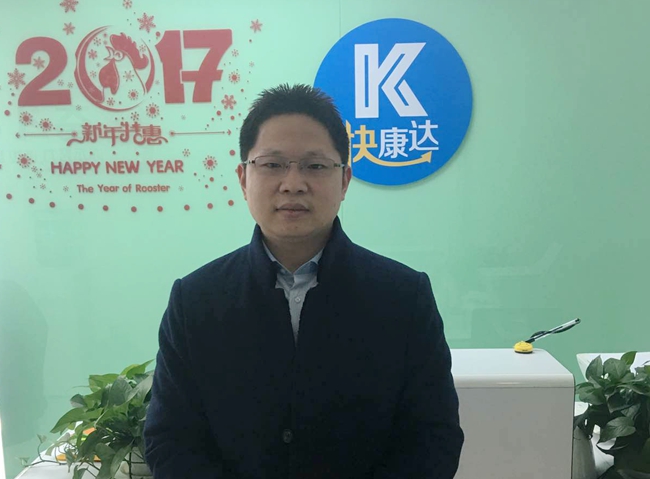
Guo Yuyu, CEO of Kuai Kangda
Internet consumer finance in China has moved beyond its initial phase of extensive growth and is now evolving toward vertical specialization. Following niche segments such as installment plans for medical aesthetics, rental housing, and home renovation, medical installment financing is set to become the new battleground for internet consumer finance.
According to official data from the National Health and Family Planning Commission, China’s medical insurance expenditures consistently exceeded revenues in 2012 and 2013, while coverage rates and benefit limits remained constrained. For major diseases, out-of-pocket medical expenses accounted for as much as 45–60%, highlighting the persistent issue of high healthcare costs. Many highly effective medical products and services are prohibitively expensive and not covered by medical insurance reimbursement, making it difficult for most patients to pay the full amount upfront within a short timeframe, thereby causing them to miss the optimal window for treatment. Additionally, some patients, despite having the financial capacity to pay, remain hesitant to make a lump-sum payment due to insufficient understanding of these products and prefer to try them on a short-term basis first.
In May 2016, Guo Yuyu, an entrepreneur with years of experience, entered the healthcare industry and co-founded Beijing Kuai Kangda Technology Co., Ltd. The company aimed to develop medical installment payment services and a chronic disease self-management platform, striving to address the challenges of high healthcare costs and limited access to medical treatment. While internet consumer finance has been developing in China for many years, “medical installment payments remain a blue ocean” compared to sectors such as medical aesthetics, rental housing, and home renovation.
“Initially, using the insulin pump as an entry point, the product facilitated over 100 transactions within three months of its launch and received widespread acclaim from patients.”
Why Choose Insulin Pumps for Diabetic Patients as the Pilot?
“The large patient population indicates significant market potential. As long as diabetic patients maintain proper blood glucose control, their daily life, work, and life expectancy are not adversely affected. However, the ‘powerful tool for glucose control’—the insulin pump—has an average price of 30,000 to 50,000 yuan,” said Guo Yuyu.
According to data released by the Chinese Diabetes Society of the Chinese Medical Association, China has 110 million patients with diabetes, among whom more than 24 million are suitable for using insulin pumps to control blood glucose. However, the current utilization rate of insulin pumps in China is less than 0.6%, whereas over 28% of type 1 diabetes patients in the United States use insulin pump therapy. If China’s insulin pump coverage rate reached the same level as that in the United States, sales revenue would exceed RMB 200 billion.
A major reason for the low adoption rate of insulin pumps in China is their high cost. With an average price of around RMB 30,000, insulin pumps undoubtedly impose a significant financial burden on many ordinary households. Additionally, some patients prefer to pay only for a one-month trial period. If satisfied after the trial, they will proceed with a full purchase or continue installment payments; if not, they can return the pump.
“Therefore, we fully advance the funds for medical devices to manufacturers. Users can purchase these devices through our platform via installment plans, with a certain down payment (if applicable) or even zero down payment and zero interest, enabling them to use insulin pumps earlier, better control blood glucose levels, and achieve maximum lifestyle freedom.”
Currently, Kuai Kangda has established strategic partnerships with leading insulin pump manufacturers. For these manufacturers, this collaboration not only boosts sales volume but also expands distribution channels. Since user installment payments are processed through the Kuai Kangda platform, manufacturers receive full payment upfront, eliminating any concerns about receivables.
At Kuai Kangda, in addition to purchasing high-value medical products such as insulin pumps through installment plans, users can also enjoy discounts on associated consumables. Meanwhile, the Kuai Kangda APP provides users with free, comprehensive scientific knowledge about products and diseases, along with features for blood glucose management, dietary planning, and exercise guidance, offering scientifically proven and effective chronic disease management solutions.
In addition, other high-cost medical expenses, such as surgeries and DTP (Direct-to-Patient) pharmacy purchases, also fall within the scope of Kuai Kangda’s medical installment plans. In DTP pharmacies, which specialize in new and specialty drugs, medication prices are high. For instance, Iressa, a UK-patented targeted therapy, costs RMB 550 per tablet; with a dosage of one tablet daily, the monthly expense amounts to RMB 16,500. Moreover, most new and specialty drugs are not covered by basic medical insurance, requiring patients to pay entirely out-of-pocket. Kuai Kangda also provides installment payment services for these expenses.
In fact, for medical installment services, risk control is the lifeblood of healthcare consumer finance companies and the top priority of overall operations.
First, thanks to the strong support from the government and regulatory authorities for internet consumer finance, the barriers to accessing authoritative data sources such as the People's Bank of China Credit Reference Center, the Ministry of Public Security, and social security systems are no longer insurmountable for industry players, who are also more willing to collaborate with other companies and share data.
As early as July 18, 2015, the People’s Bank of China and nine other ministries and commissions issued the “Guiding Opinions on Promoting the Healthy Development of Internet Finance,” encouraging financial institutions—including banks, securities firms, insurance companies, fund managers, trust companies, and consumer finance companies—to leverage internet technologies to facilitate the transformation and upgrading of traditional financial businesses and services, and to actively develop new products and services based on internet technologies. Meanwhile, the full text of the “Guiding Opinions” repeatedly addressed the development direction, regulation, and innovation of “internet consumer finance” companies.
Medical Installment Financing Also Requires Credit Infrastructure Development to Promote a More Accurate, Agile, Scientific, and Big Data-Driven Risk Control System. Kuai Kangda has established a risk control framework that integrates internet finance with healthcare. By setting indicators such as consumers’ historical applications, credit history, behavioral patterns, transaction records, social connections, and utility payments, it employs the FICO Decision Engine to implement pre-screening rules for credit risk and anti-fraud measures. Furthermore, it leverages big data methodologies, including linear/non-linear regression and machine learning, to build robust risk control models and achieve risk-based pricing.
Meanwhile, Kuai Kangda also collaborates with third-party financial institutions, such as BoxPay and banks. “These financial institutions have their own risk control systems, which are seamlessly integrated with ours to minimize the risk of user default.”
One concern that initially gave Guo Yuyou pause was that some users were not yet accustomed to submitting documents online via mobile phones; their unfamiliarity with the process might hinder smooth operations and potentially affect deal closures. However, subsequent practice demonstrated that this concern was unfounded. As the saying goes, “when one person falls ill, the whole family takes notice.” Even if patients themselves struggled with using their smartphones, their accompanying family members would promptly assist them. In the few cases where difficulties arose, they were effectively resolved through guidance from Kuakangda’s customer service representatives.
Users can submit relevant information and documents online via the Kuai Kang Da app or the “Kuai Kang Da Medical Installment” WeChat Official Account. Upon approval, they can immediately purchase medical products or services through installment payments, repaying on a monthly basis, thereby enabling them to receive diagnosis and treatment first and pay later.
Meanwhile, Kuai Kangda also provides users with free, comprehensive after-sales medical services and value-added chronic disease management services, maintaining high-frequency interaction with users to promptly grasp their actual conditions and reduce the risk of user default.
Kuaikangda provides users with medical installment services by deeply integrating advanced medical technologies with internet finance. It offers patients installment payment options for high-efficacy medical products and services, such as insulin pumps, enabling immediate access to essential treatments—including medical devices, surgical fees, and specialized medications—to facilitate a quicker recovery.
Across the entire healthcare sector, the total market size for medical products and services suitable for installment payments is in the trillions. If a company covers users’ full medical expenses upfront without charging any service fees, where does its profit come from?
“During the initial operational phase, we maximized benefits for patients by offering zero interest and zero handling fees throughout the process, with even some products requiring no down payment. In the future, Kuaikangda’s medical installment products will maintain relatively low interest rates, as we derive a certain profit margin from product sales revenue,” said Guo Yuyu.
The core founding team of Kuai Kangda comprises professionals from the internet, healthcare, and financial sectors, forming a stable, complementary team of approximately 20 members. This team includes successful entrepreneurs with extensive experience in internet technology and over a decade of deep expertise in medical devices. Key personnel in the risk control department possess many years of experience in internet finance, including roles at banks and online lending companies. Leveraging this collective expertise, Kuai Kangda ensures the professionalism of its medical installment payment services, offering tailored installment plans suited to various medical products. Additionally, the company provides comprehensive value-added services, such as post-treatment medical support and chronic disease management.
Many consider medical installment plans a hot potato, given the numerous uncontrollable risks associated with lending to patients. However, Kuai Kangda has gained widespread acclaim among diabetic patients by introducing installment purchase and rental options for insulin pumps. Within just three months, over a hundred individuals have benefited from these medical financing solutions. Building on this strong momentum, Kuai Kangda is now expanding into other areas, including additional medical devices, surgical fees, and specialty medications.
Throughout its development, Kuai Kangda has attracted an increasingly large base of highly engaged users. As the platform’s user base expands, it will continue to draw in more high-quality, creditworthy users. Future partnerships will focus primarily on medical institutions, medical device manufacturers, financial institutions, and insurance companies.
“I believe medical installment financing will be a large market with significant potential. By refining our medical installment products, we can benefit patients, manufacturers, and all partners across the entire medical installment industry chain. In the future, we aim to build a medical finance platform, thereby fostering a comprehensive medical finance ecosystem.”