

Baidu Shuts Down Medical Business Unit, Shifts Focus to AI and Big Data in Healthcare
On February 8, reports circulated on WeChat Moments alleging that Baidu had completely disbanded its Healthcare Business Unit on that day. This information has been corroborated by insiders within Baidu, although the company’s official spokesperson has yet to issue a response.
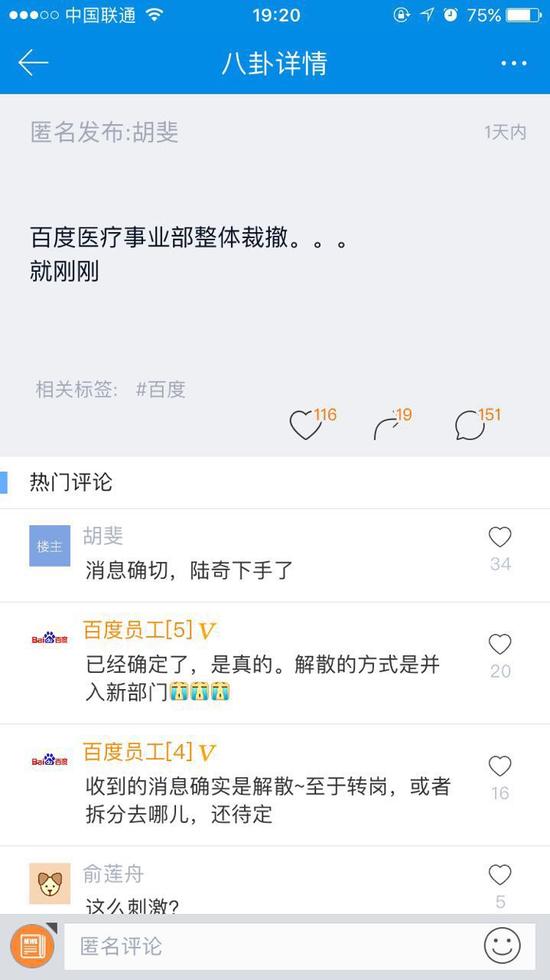
According to posts by Baidu employees on Maimai, Baidu has completely dissolved its Healthcare Business Unit today. The specific method of dissolution—whether through integration into a new department, internal transfers, or restructuring—has not yet been determined.
The recent layoffs were already hinted at in Baidu CEO Robin Li’s speech, “Embracing a New Era,” delivered yesterday:
“We are not a company focused on a single vertical industry; rather, we operate more like a platform company, and it is impossible for us to have an in-depth understanding of every industry.”
However, we have close ties with certain industries, such as the healthcare sector. Initially, Baidu’s ambition in healthcare was quite straightforward: it aimed to create an O2O (Online-to-Offline) solution. Given our large user base, many people sought guidance on where to seek medical care, and our goal was to help them secure appointments with their desired doctors.
However, starting last year, we observed that intelligent consultation systems have become increasingly practical. If our intelligent consultation system can achieve an average level of professional competence comparable to that of physicians, it could serve as a preliminary triage tool or at least assist doctors in making clinical judgments. This would enable patients to seek care at hospitals—particularly larger, better-equipped medical institutions—only when facing serious or complex conditions.
“Going one step further, consider gene sequencing, which involves massive datasets. Integrating artificial intelligence with medical knowledge to derive insights would represent a significant breakthrough. Delving even deeper, take the development of new drugs: how can AI technologies be leveraged to discover novel therapeutics? These efforts are still in their very early stages.”
It is evident that Baidu is leveraging big data and artificial intelligence to assist physicians in diagnosis, positioning this approach as a new breakthrough in healthcare.
Currently, Baidu has seven major healthcare-related businesses under its umbrella, including the Medical and Health Big Data Platform and the Baidu Doctor Appointment Registration Platform,MedDirect,Baidu Medicine, Thumb Doctor, Baidu Health (webpage cannot be opened), and Dulife。
It is reported that Thumb Doctor, launched in late 2013, is a healthcare-focused brand column meticulously developed by Baidu Zhidao. It provides online users with medical and health consultations, covering general health knowledge, disease information, pre-consultation advice, and more. Data shows that as of March 2015, the number of active physicians on the Thumb Doctor platform had exceeded 5,000, cumulatively helpingPatient36 million.
Baidu Medicine is a comprehensive medical information service platform officially launched by Baidu. It covers professional medical information such as academic journals, industry conferences, and clinical guidelines and consensus statements, aiming to improve the efficiency of physicians’ retrieval of professional information and assist them in making clinical decisions.
Duilfe is a wearable device brand under Baidu Cloud, dedicated to providing human health services. It deeply integrates Baidu Cloud services, including health data storage, analysis, processing, and visualization, while delivering customized cloud-based health solutions tailored to users’ needs.
Among them, the most strategically significant business isHealthcare Big Data Platform and Baidu Doctor Appointment Registration Platform。
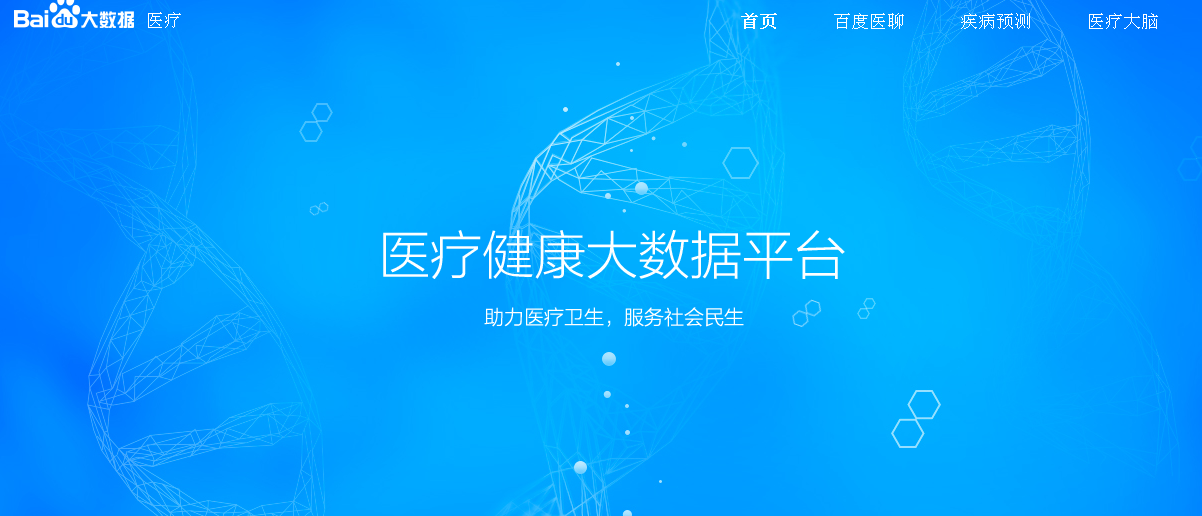
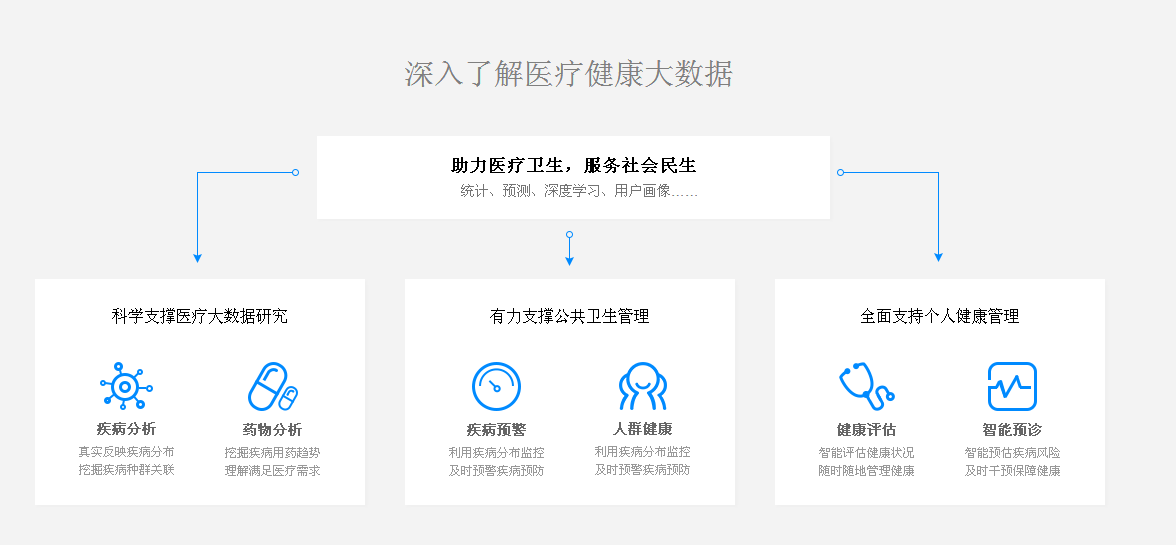
Baidu's healthcare big data comprises three major components, namelyBaidu MedChat, Disease Prediction, and Medical BrainAccording to Robin Li’s vision, Baidu Health’s big data will, in the future, provide physicians with auxiliary diagnostic services through these three offerings, deliver data analytics for precision medicine services such as gene sequencing, and enable pharmaceutical companies to computationally simulate the drug development process, thereby reducing R&D costs, predicting drug efficacy, and enhancing the efficiency of new drug development.
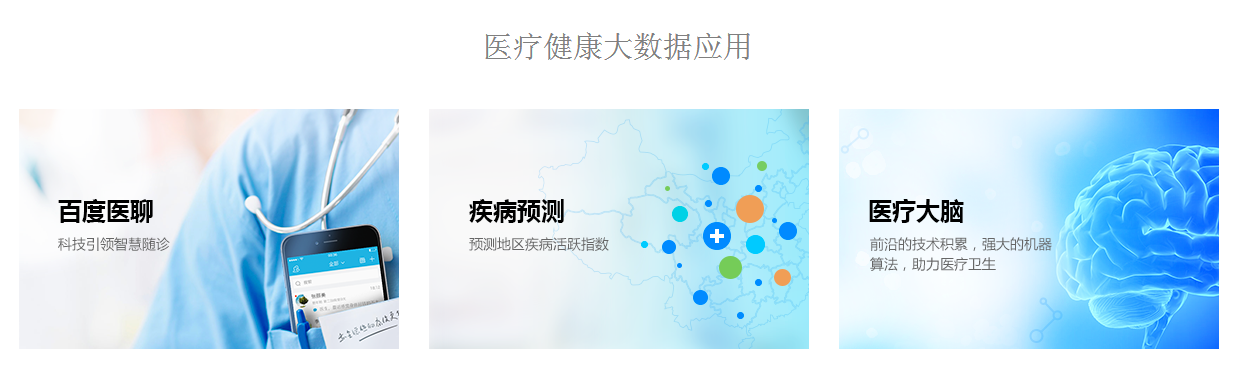
Since Baidu Medical Brain has been mentioned, let us focus on introducing this “"Beloved Treasure"”:
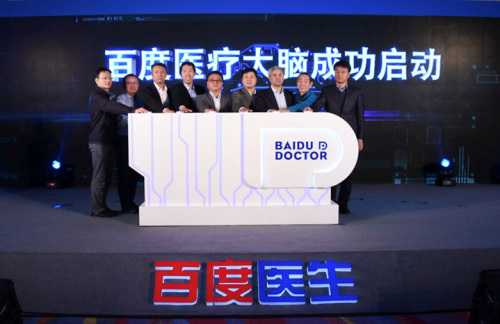
In late September 2016, Baidu officially launched Baidu Medical Brain. LiUsing machines to replace consultations for simple conditions, assisting doctors in analyzing and organizing patient data.
Baidu Medical Brain, like Baidu Brain, consists of three parts:
Computational Methods. Including ultra-large-scale neural networks, training with trillions of parameters, hundreds of billions of samples, and hundreds of billions of features;
Computing Power. Comprising hundreds of thousands of servers that form the physical infrastructure of “Baidu Brain,” Baidu began building its own largest GPU cluster in China several years ago;
Data. Web data from across the internet, search data accumulated over more than a decade, and tens of billions of images, videos, and geolocation data points.
The capabilities of Baidu Brain mainly consist of four aspects:
Voice capabilities, including speech recognition and speech synthesis;
Image Capabilities. Image capability refers to the ability not only to see an image but also to understand it. In technical terms, this is known as computer vision;
Natural Language Processing Capabilities. Natural language processing is more challenging than speech and image recognition. While speech and image technologies are largely at the perceptual stage, natural language understanding requires not only perceptual capabilities but also logical reasoning, planning, and other higher-order cognitive functions, as well as reliance on more robust knowledge graphs.
User Profiling. User profiling was not mainstream in traditional AI. However, today we can continuously collect vast amounts of data related to user behavior, enabling us to create comprehensive user profiles. The technologies employed for this purpose are predominantly AI-driven.
The developer of Baidu Medical Brain is Fan Wei, Director of the Big Data Laboratory at Baidu Research Institute. He revealed that the application of artificial intelligence in healthcare primarily faces three challenges: defining user intent, the colloquial and diverse nature of user descriptions, and the very limited volume of annotated data. Regarding “defining user intent,” Baidu Medical Brain categorizes user intent into five major types: diseases, symptoms, medications, examinations, and surgeries.
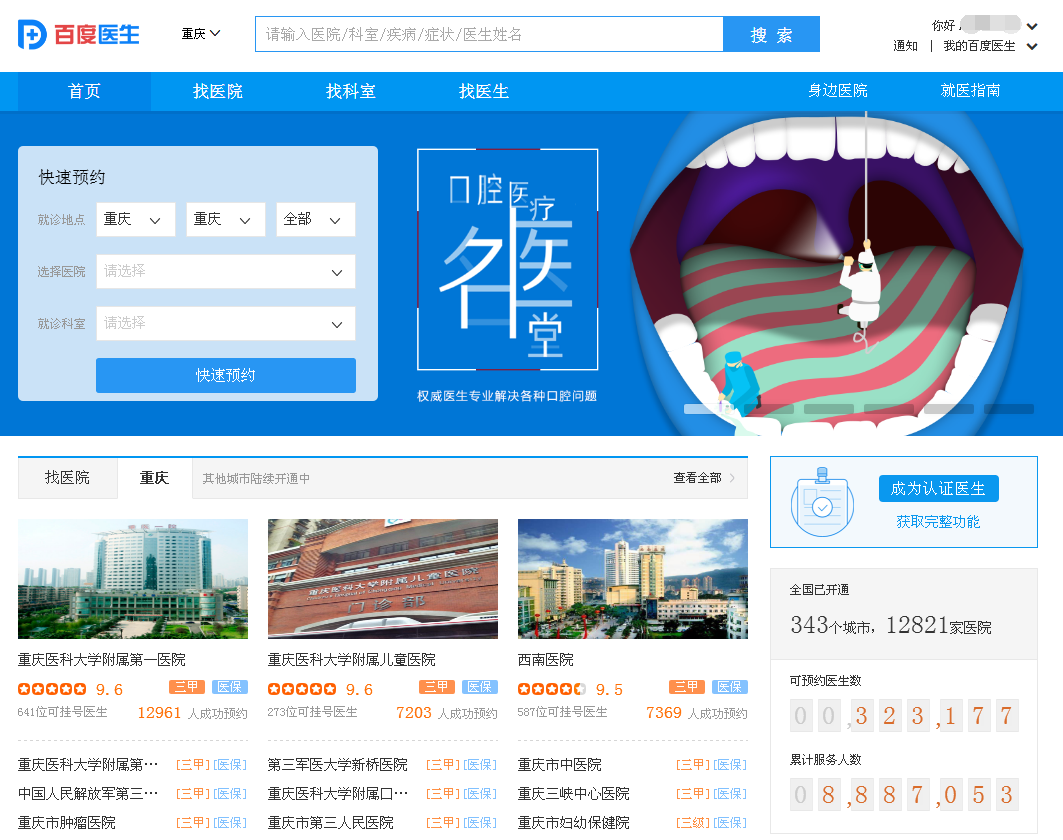
Baidu Doctor’s business primarily focuses on traditional online registration and appointment services. Since its launch in 2015, Baidu Doctor has covered 343 cities across China, partnering with 12,822 hospitals and over 200,000 doctors, and has cumulatively served more than 8 million users.
From a demand perspective, there is nothing inherently wrong with these two services themselves; the issue lies in the entry point. Tencent has WeChat, and Alibaba has Alipay—both possess super-app gateways in the mobile internet era, which is precisely what Baidu lacks. The author speculates that Baidu Doctor will likely not cease operations in the future but will probably strengthen its integration with offline resources. It is expected to gradually shift from a purely online, asset-light model to an on-the-ground model similar to that of WeDoctor’s Internet Hospital.
The implementation of Baidu Medical Brain and big data will inevitably require deeper integration with more offline doctors and medical institutions. Currently, the optimal model for collaboration between enterprises and doctors or medical institutions is the internet hospital. In these two areas, WeDoctor has already taken the lead, and it is believed that Baidu will not lag behind in this regard.
As a comprehensive platform aggregating resources from physicians and medical institutions, Baidu Doctor plays an obvious role. The potential users and target audience of Baidu’s big data in healthcare highly overlap with the service providers on this platform, making it easy for the two to form a complementary relationship. Therefore, if they can join forces, they may well become the trump card of Baidu’s new healthcare strategy.