

NIH Launches $41 Million Initiative to Advance Four Artificial Pancreas Systems for Type 1 Diabetes
Recently, the U.S. National Institutes of Health (NIH) announced that it is funding four late-stage clinical trials for artificial pancreas devices. If the trials proceed smoothly, these artificial pancreases are expected to receive FDA approval.
The artificial pancreas is a specialized medical device that automatically monitors blood glucose levels in patients with diabetes and delivers insulin or other medications based on the data. Compared with conventional diabetes treatments, the artificial pancreas eliminates the need for frequent fingerstick tests to measure blood glucose and regular insulin injections, as it integrates all these functions into a single device, thereby enhancing convenience for patients.
To meet patients’ medical needs, Medtronic’s first artificial pancreas was approved last October. This is a promising start; however, as a pioneer,Patients using this product still need to manually adjust their insulin dosage after meals.. And in the eyes of NIH scientists,An ideal artificial pancreas should be capable of fully automated monitoring and drug delivery.. Even during meal times, one can independently manage surging blood glucose levels.
Therefore, the National Institute of Diabetes and Digestive and Kidney Diseases (NIDDK), part of the NIH, will fund four distinct projects aimed at improving the fully automated artificial pancreas.
These devices differ in their usage methods, but all aim to limit the amount of time that patients with diabetes or their caregivers must spend managing blood glucose level fluctuations.Funding for these projects comes from a special appropriation by the U.S. Congress for type 1 diabetes treatment. Currently, the total amount of this funding reaches $41 million.
The first project will test inControl, a fully automated insulin delivery system. It will utilize smartphones to monitor 240 patients with type 1 diabetes across the United States for six months. Patient recruitment for this project is currently underway. The second project, launched earlier this year, is monitoring the use of artificial pancreas systems in 130 young patients with diabetes. The third project will enroll 100 young patients with diabetes to assess the feasibility of the “next-generation artificial pancreas.” Equipped with specialized algorithms, this device offers improved blood glucose control during meals. It is scheduled to launch in the second half of this year.
The final project is even more extensive,Expected to begin in mid-2018, led by Dr. Steven Russell of Massachusetts General Hospital in Boston and Ed Damiano of Boston University.Researchers plan to recruit 312 adults aged 18 and older for a six-month trial to evaluate the safety and efficacy of a “dual-hormone bionic pancreas.” This bionic pancreas delivers both insulin and glucagon. The researchers aim to maintain stable blood glucose levels in patients through the coordinated action of these two counter-regulatory hormones.
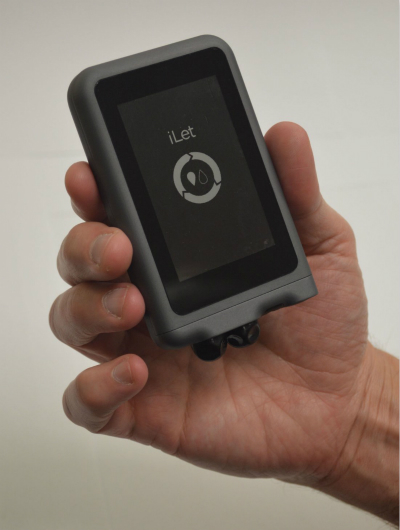
iLet, a device tested by Ed Damiano of Boston University
“For many people with type 1 diabetes, achieving a fully automated artificial pancreas is a true dream,” said Griffin Rodgers, Director of the NIDDK, in a statement. “Nearly 100 years since the discovery of insulin, a successful artificial pancreas would bring greater advances to the health of people with type 1 diabetes.”

Dr. Griffin Rodgers, Director of NIDDK
“The aim of these studies is to collect the necessary data to enable patients who need it to better utilize the artificial pancreas., said Dr. Guillermo Arreaza-Rubín, director of the NIDDK Diabetes Technology Program: “These results have the potential to change and save lives.”