

Guangzhou Yangpu Medical to Raise $86M for Telemedicine Expansion and Grassroots Healthcare Support
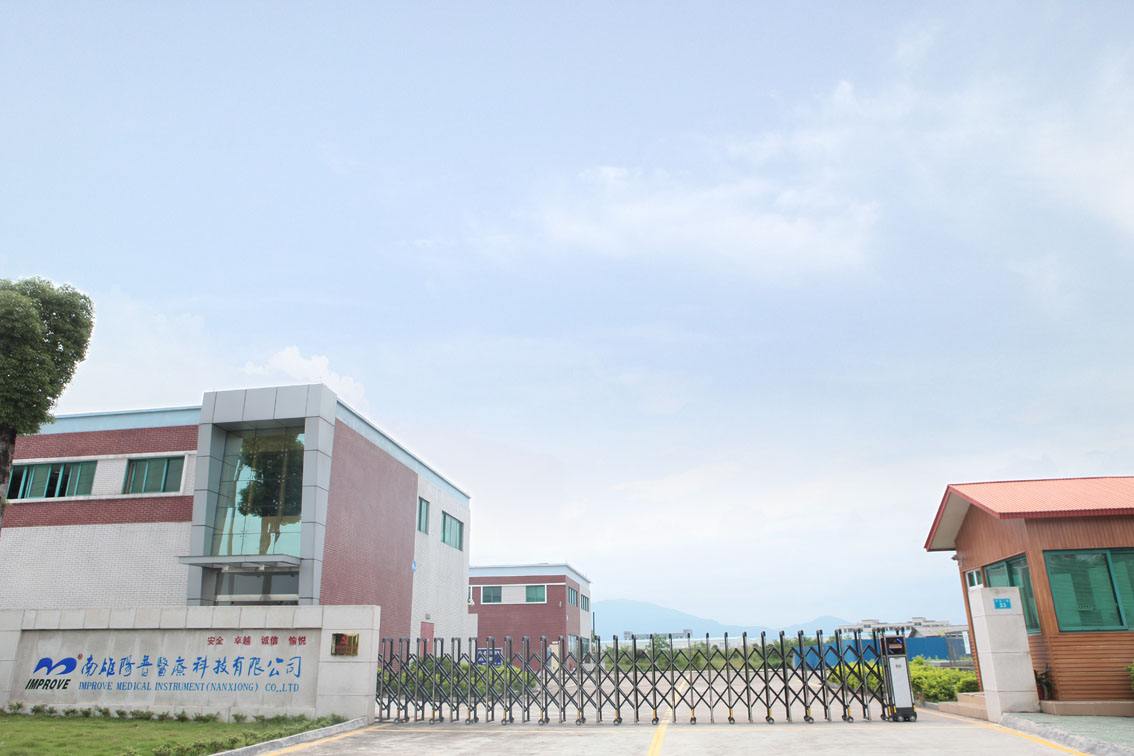
Guangzhou Impro Medical
On February 6, Impro Medical, listed on the ChiNext board of the Shenzhen Stock Exchange, announced new developments.
Yangpu Medical plans to issue no more than 60 million shares to no more than five specific investors, raising up to RMB 600 million. The funds are intended for investment in three medical product projects and the overall relocation (PPP) project of Yizhang County Traditional Chinese Medicine Hospital. The company’s stock will resume trading on February 7.
In 1996, Improve Medical was established in Guangzhou. Starting from medical devices, it evolved from a specimen expert to a nursing care expert, shifting its focus from technology to services. Now, with a new private placement of RMB 600 million, which fields will it expand into?
In August 1996, at the age of 30, Deng Guanhua traveled south to Guangdong Province to co-found Alltest Medical.Engaged in the research, development, and manufacturing of in vitro diagnostic (IVD) medical devices, having served successively as Chief Engineer, Deputy General Manager, General Manager, and Chairman of the Board. Previously served as Director of the Institute of Chemistry and Chemical Engineering at Wuhan University, with research interests consistently focusing on electrode process kinetics, intermediates, and variations in human venous blood.
At the outset of his entrepreneurial journey, Deng Guanhua faced severe financial constraints. Earning a monthly salary of just 1,000 yuan, he would even walk to the hospital to save on bus fare.
On December 25, 2009, after more than a decade of development, Impro Medical successfully listed on the ChiNext Board of the Shenzhen Stock Exchange. At that time, it was the first medical device company from Guangdong Province to go public, with an initial offering price of RMB 25 per share. On its trading debut, the stock hit a historical high of RMB 40. Deng Guanhua’s perseverance finally paid off: the market value of his 17.202 million shares in Impro Medical immediately exceeded RMB 400 million.
Although Improvement Medical began with medical devices, it has consistently strengthened its core competencies by focusing on independent research and development and innovation. The company has established the Guangdong Provincial Key Laboratory for Research on Blood Compatibility of Medical Materials and has undertaken numerous major projects, including those under the National 863 Program, the R&D of clinical immunoassay diagnostic systems, the Guangdong Provincial Special Fund for Industry-University-Research Collaboration, and industrialization platform construction initiatives.
Over the past 18 years, Improvement Medical has mastered eight core proprietary technologies for blood collection tube production and secured 65 scientific research patents. The company has elevated its flagship product, the third-generation vacuum blood collection system, into a high-end offering that boasts the most comprehensive range of specifications and the widest variety of tubes for specialized testing among domestic and international peers, while delivering superior serum preparation quality and speed. As the definer of the third-generation vacuum blood collection system and a leader in controlling pre-analytical variations of specimens, Improvement Medical is the only Chinese enterprise whose vacuum blood collection system has obtained registration with the U.S. Food and Drug Administration (FDA).
Currently, Improvac’s medical device sales channels have expanded to more than 90 countries and regions worldwide, providing extensive product, technology, and service support to nearly 10,000 medical institutions, research organizations, hospitals, and diagnostic laboratories across these areas.
As of September 30, 2016, Yangpu Medical reported operating revenue of RMB 358.93 million, with net profit attributable to shareholders of the parent company amounting to RMB 21.514938 million, representing a year-on-year decrease of 25.7265%. Basic earnings per share stood at RMB 0.07.
According to the plan, the private placement will allocate RMB 119 million, RMB 105 million, RMB 126 million, and RMB 200 million to the automated production project for liquid biopsy specimen collection tubes, the automated production project for thromboelastography (TEG) testing systems, the construction project for disposable intravenous indwelling needles, and the overall relocation (PPP) project of Yizhang County Traditional Chinese Medicine Hospital, respectively. The remaining RMB 50 million in raised funds is intended to supplement working capital.
Among these, the liquid biopsy specimen collection tube project will add a brand-new product category to the company’s portfolio. It is reported that liquid biopsy has the potential to disrupt traditional cancer diagnosis and treatment, enabling precise diagnosis and targeted therapy. Yangpu Medical can expand into blue-ocean markets with products represented by its liquid biopsy tubes; having cultivated expertise in the vacuum tube field for many years, the company possesses the capability to implement this project.
The Thromboelastography (TEG) Testing System project will primarily expand the company’s production capacity for TEG analyzers, facilitating the expansion of its “Medical Laboratory Diagnostic Platform” product portfolio. Given the widespread application of TEG analyzers in hospital departments such as anesthesiology, intensive care units (ICU), extracorporeal circulation, and organ transplantation, this system serves as a key strategic product for further solidifying the company’s position as a “Laboratory Diagnostics Expert.” The Disposable Intravenous Catheter project will increase the company’s production capacity for intravenous catheters.
As the project with the largest investment in this private placement, the Yizhang County Traditional Chinese Medicine Hospital Relocation (PPP) Project primarily involves the company establishing a hospital management team to oversee the construction and operational management of the new hospital upon completion of the relocation. The company may charge management fees and project service fees to the hospital and is entitled to revenue from supply chain operations. This project represents the company’s new strategic layout in the medical services sector, allowing it to apply its years of experience in serving hospitals to the actual operational management of the facility.
Improve Medical believes that its three major product lines—liquid biopsy tubes, thromboelastography analyzers, and intravenous catheters—are all industrialized outcomes of the company’s earlier R&D investments, thereby converting R&D expenditures into revenue and profitability. Meanwhile, the overall relocation (PPP) project of Yizhang County Traditional Chinese Medicine Hospital aims to establish Improve Medical’s brand in the healthcare services sector and create the “Improve Model” for privately funded healthcare delivery.
For years, Improv Medical has relied on clinical laboratory diagnostics and clinical nursing to provide users with professional solutions, technologies, products, and services.
The company boasts a professional R&D team with extensive experience, undertaking numerous scientific and technological projects at the national, provincial, municipal, and district levels. Its R&D focus encompasses basic research in disciplines related to its products, as well as technology and product development grounded in comprehensive foundational studies. Furthermore, the company maintains close collaborations with multiple universities and medical institutions both domestically and internationally.
Yangpu Medical also emphasized that, when market conditions are favorable, the company will diversify the tiered diagnosis and treatment model for private healthcare through various means. On one hand, it will gradually entrust, acquire, or invest in other hospitals to export hospital management expertise.
On the other hand, by leveraging technologies such as “mobile health,” remote medical diagnosis services are enabled, integrating primary healthcare demands with high-quality medical resource supply, thereby realizing the “Internet Plus” model and “Online-to-Offline (O2O) Medical Services.”