

Shoudu Genomics Files IPO Prospectus: Building a World-Class Authoritative Gene Database Starting from Cancer Detection
In 2014, the cost of whole-genome sequencing for humans dropped to $1,000, ushering in the first boom period for the global genetic testing industry, with China’s genetic testing market experiencing explosive growth. In 2017, Illumina further reduced the cost of whole-genome sequencing to $800. As sequencing costs declined, genomic data worldwide continued to accumulate at a rate exceeding Moore’s Law. Computational analysis and interpretation of genetic data have always been critical components of genetic testing. Amid this surge in data, how to perform data analysis and interpretation more rapidly and accurately will be the next key challenge facing the genetic testing sector. Seizing this opportunity, VCBeat is launching its “Genes & Data” series of reports; stay tuned for further details.
Shoudu Gene is a company that integrates biotechnology with IT, specializing in genomic big data. The company boasts an interdisciplinary R&D team with years of experience in gene sequencing, molecular biology, algorithm development, and big data processing. It is committed to building a world-class bioinformatics analysis center and establishing a domestically authoritative genomic information database.
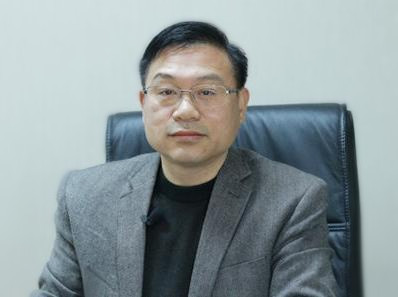
Tang Yuanhua, Founder and CEO of Shoudu Gene
Founder Tang Yuanhua told VCBeat, “Although people of Chinese descent account for one-quarter of the global population, genetic data research focused on this group lags far behind that for European and American populations. Therefore, we aim to focus on building a genetic database for people of Chinese descent, encompassing population-specific genetics and cancer-related mutations.”
Crossover: The Scientist Who Has Discovered the Most Human Genes in the World
Before founding Shoudu Gene, Tang Yuanhua successively served as the head of bioinformatics departments at several biotechnology companies in the United States. Judging from his professional resume, he is an expert in bioinformatics. However, Tang told reporters that he actually has a background in mathematics, which came as quite a surprise to them.
Tang Yuanhua recalled, “When I arrived in the United States in 1988, the Human Genome Project was in its preparatory stages. On my very first day of enrollment, James Watson delivered a lecture at our university. That lecture completely altered the course of my life.”
Tang Yuanhua describes himself as an idealist who went to the United States to learn the most advanced Western science and technology. “When I heard about the Human Genome Project, which was comparable to the Apollo moon landing program and the Manhattan Project for developing atomic bombs, I realized this was precisely why I had come to the United States.” Originally trained in mathematics, Tang resolved to shift his focus to genomics research.
The concept of bioinformatics was formally proposed in 1993. During Tang Yuanhua’s doctoral studies, bioinformatics had not yet emerged as a distinct academic discipline internationally, although the broader trend was already evident. As a mathematics student, his doctoral research focused on life sciences. After graduation, Tang devoted himself entirely to the Human Genome Project, leading a team that identified more than 20% of human genes. He is the scientist who has discovered the largest number of human genes worldwide and has identified and named four important gene families.
“At that time, bioinformatics was still a nascent discipline without its own theoretical framework. For many people, life sciences were an experimental science, and mastering it relied primarily on memorization,” recalled Tang Yuanhua. He told reporters that some mathematicians at the time hoped to establish a theoretical foundation for life sciences: “That was the broader context—a group of scientists from the mathematics community sought to find a unified theory capable of explaining all biological phenomena.”
After nearly three decades of development, theoretical biology has reached a highly successful stage. The foundations of life sciences have become grounded in informatics, to the extent that it has become a discipline sharing common origins with computer science. Today, biologists’ understanding of the essence of life has surpassed physicists’ comprehension of the physical world. This is because the essence of life resides at the DNA level, which is fully accessible to experimental investigation, whereas theoretical physics remains constrained by limitations in experimental methodologies. Tang Yuanhua expressed pride in being able to conduct pioneering work in the field of bioinformatics.
Homology: Life as a Program
In the early years, Tang Yuanhua discovered a new class of search technologies through genomics research, comprehensively enhancing the search algorithms of that time in terms of search dimensions and query complexity. These patented inventions have been cited by global IT giants including Google, Yahoo, IBM, and Microsoft. A bioinformatician with a background in mathematics developed patented search technologies adopted by these IT giants—a fact that, much like the reporter, likely leaves many people astounded.
Tang Yuanhua smiled and remarked that he had not strayed far from his field, as information science is inherently a multidisciplinary domain. Strictly speaking, he is an information scientist whose research focuses on information technology. These inventions are grounded in informatics; they are valuable not only to life sciences but also to computer science.
He explained to the reporter, “This brings us back to discussing the essence of life sciences.” Life phenomena, at their core, are chemical reactions and physical changes controlled by the genomic program. The essence underlying life is information. Genomic information is static; from the moment an individual is endowed with their genes, their lifelong biological information is determined. In other words, all life on Earth can be understood as a program—a biochemical and physical process governed by the genome.
Tang Yuanhua believes that life sciences, computer science, and even human rationality and artificial intelligence share a common origin and can all be subsumed under information science: “This is why research in information technology holds significance for both the computer science and life sciences communities.”
Top-tier Team: Research, Clinical Practice, and Innovation—A Three-Pronged Approach
In 2013, Tang Yuanhua was dispatched from Complete Genomics in the United States to BGI Genomics in Shenzhen, where he was responsible for managing the core algorithm team. Tang recalls that during this period, he frequently traveled between the United States and China, increasingly sensing that a major boom was brewing in China’s genomics sector. In 2015, he met a friend working in venture capital who also had a background in genomics. After their discussions, Tang became even more confident in the Chinese market. That year, he decided to start his own business in China and founded Shoudu Gene.
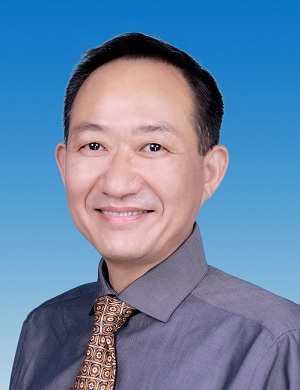
Co-Founder Xu Jian
Dr. Xu Jian, a co-founder of the company, is a relatively traditional molecular biologist. Previously, Dr. Xu worked at Qiagen, a renowned international biotechnology company, where he served as the Head of the Gene Technology Division. He later founded Polymorphic DNA Technologies in Silicon Valley, serving as Vice President of Research and Development. Currently, at Shoudu Gene, Tang Yuanhua oversees data-related domains, while Xu Jian is responsible for life sciences. The two form a highly complementary partnership, akin to a perfect match between jade and pearl.
Sixty percent of the company’s employees hold master’s degrees or higher. Established just a year and a half ago, the company has already filed 15 patent applications in the field of bioinformatics and secured five registered software copyrights, demonstrating its exceptional R&D capabilities. Speaking of his team, Tang Yuanhua expressed strong confidence: “Our team covers all aspects of genomics. In terms of expertise, we can be regarded as a world-class team in the field of bioinformatics.”
Shortly after its establishment, the company secured $10 million in Series A financing and received strong support from the Suzhou Industrial Park, ensuring a smooth trajectory. The company also established a medical laboratory in Hefei to process client samples, while setting up the Shoudu Gene Laboratory at the University of Science and Technology of China to conduct high-end industry-academia-research projects. Despite its recent founding, Shoudu’s ambitious vision is evident, pursuing a three-pronged strategy encompassing scientific research, clinical applications, and innovation.
Database and Testing Services, Research and Clinical
In its first year, Shoudu Gene did not rush to enter the market; instead, it focused on building databases and developing core algorithms. After a full year of effort, the company has established a relatively comprehensive and distinctive product portfolio, and has created a protective barrier for these products through patent applications and software copyright registrations.
To build a nationwide precision medicine information platform, Shoudu Gene has independently developed the FD-Exome comprehensive genetic testing service. Leveraging high-throughput sequencing technology, FD-Exome provides all-encompassing health risk genetic testing that covers hereditary cancer risk, common disease risk, nutritional metabolism capacity, and medication-related risks.
Unlike whole-genome testing, Shoudu Gene’s FD-Exome targets only the coding regions of all human genes. “The genome contains a vast amount of information, but what we truly understand is limited to the protein-coding regions and their regulatory elements, which account for approximately 2% of the total,” Tang Yuanhua explained to reporters. The remaining 98% consists of regions that are currently uninterpretable. For consumer-end users, the clinical significance of sequencing these 98% unknown regions is even less apparent. Compared with whole-genome sequencing, FD-Exome largely excludes regions whose current utility remains unclear, significantly reducing sequencing costs for users. This makes genetic sequencing accessible to every Chinese citizen today, rather than something reserved for the distant future.
Moreover, cost reduction does not compromise sequencing depth. On the contrary, by employing target region capture technology for simultaneous parallel enrichment of target regions, we have significantly increased sequencing depth (>200X) for the first time, thereby enabling clinically precise detection of genetic variants. Leveraging our proprietary dynamic variant annotation algorithm, we can scan for variations across all human gene exons, providing detailed interpretations for known genes while enabling real-time tracking of novel variants. This comprehensive genomic interpretation empowers users to achieve targeted health management. Furthermore, for B2B clients, our dynamic interpretation service facilitates timely monitoring of global technological advancements and access to the latest scientific research findings.
“For end-users, our product offers practical value; for physicians, it delivers clinical value; and for researchers, it holds scientific research value,” summarized Tang Yuanhua. “Most importantly, we have achieved effective cost control, enabling the fruits of the Human Genome Project to benefit the general public today.”
In addition to whole-genome sequencing for detecting customers’ genetic information, the company also offers a comprehensive suite of cancer gene testing services, including tissue-based cancer sequencing and non-invasive ctDNA testing based on blood samples. “FD-180-Tissue is designed for sequencing cancer tissues, while FD-180-ctDNA is used for sequencing customers’ blood samples, enabling real-time monitoring of cancer patients’ conditions. Our target users encompass both healthy individuals and those with diseases, and we also assist clinicians in developing personalized treatment plans for cancer patients.”
In terms of data services, Shoudu Gene provides free database resources to a broad community of cancer genomics researchers through the China Cancer Cloud Platform, a public-welfare data platform.
The launch of this database will jointly advance analytical research in the field of cancer genomics and continuously refine big data on cancer genes to benefit patient treatment. However, this represents only the first step in building China’s inaugural cancer genomics big data resource. Although existing publicly available datasets include those with Chinese populations, there is currently no database specifically dedicated to the Chinese population.
“East Asians account for one-quarter of the global population, yet research data on individuals of Chinese descent is far less abundant than that for other ethnic groups.” Tang Yuanhua believes that China represents a vast market and that its population exhibits significant genetic differences from those of European and American descent. Therefore, it is essential to establish a specialized database for individuals of Chinese descent with unified standards.
“There are significant disparities in cancer incidence rates across different ethnic groups. For instance, the incidence of breast cancer is much higher in the United States than in China, whereas the incidence of gastric cancer is lower in the United States than in China,” he explained to reporters. “To determine exactly what differences exist in the incidence of various cancers among different ethnic groups, big data analytics must be employed.”
Tang Yuanhua revealed that the Chinese genomic database is currently under sophisticated development, with over 1,000 individuals already sequenced. The data will ultimately be made publicly accessible via a cloud platform and will include information on high-frequency cancer genes, genetic profiles of the Chinese population, and cancer distribution patterns.
Currently, China’s genetic testing industry is characterized by intense competition and fragmentation. Significant disparities exist among different testing providers, including variations in targeted gene panels, sequencing instruments, and bioinformatics analysis standards, which hinder the interoperability of data analysis. Shoudu Gene aims to establish a national industry standard once its data volume reaches a critical scale.
Genomics Will Become as Ubiquitous as Mobile Phones in the Next 20 Years
In 2017, the cost of sequencing human coding genes entered the hundreds-of-dollars range, sparking excitement across the entire genomics field. This reduction in cost will undoubtedly further drive the widespread adoption of genomics.
Tang Yuanhua predicts that within the next 20 years, genomics will become as ubiquitous as mobile phones are today. Everyone will have access to their own genomic data and use it to understand their health status, enabling physicians to develop personalized health management plans based on this information. “The mission of Shoudu Gene is to provide such services to every individual,” stated Tang Yuanhua.
Last year, the National Health and Family Planning Commission approved NIPT (Non-Invasive Prenatal Testing), and local governments have been actively promoting it. NIPT is expected to achieve widespread clinical adoption in the future. “China has 17 million newborns each year. When including parents and grandparents on both sides, the population directly affected exceeds 100 million,” said Tang Yuanhua. “Although NIPT screens for only a small fraction of genetic disorders, it represents a significant tailwind for the genetic testing industry. It will rapidly reach a broad segment of the population, making genetic testing familiar to the general public. Leveraging this momentum, we can comprehensively expand screening for genetic disorders. Furthermore, by emphasizing the prevalence of cancer-related genetic mutations and hereditary disease genes within families, we can gradually introduce genetic testing products into the market.” Here, Tang Yuanhua sees an opportunity for the widespread market adoption of whole-genome sequencing.
With its core competencies in bioinformatics combined with experience in the sequencing industry, it is difficult to categorize Shoudu Gene as either a biotechnology company or an IT firm. This unique positioning sets Shoudu Gene apart. “Most domestic genetic testing companies are founded by molecular biologists, who often lack comprehensive expertise in computer science and information technology relevant to the genomic big data industry,” said Tang Yuanhua. “In contrast, since its inception, Shoudu Gene has operated simultaneously as both a biotechnology company and an IT technology company.” After a year of development, Shoudu Gene’s product portfolio has gradually become more diverse and mature, and the company is now in a phase of expansion. Tang Yuanhua revealed that the company is currently undergoing its Series B financing round, with a target exceeding RMB 100 million. The company aims to strengthen marketing efforts, expand its customer base, and generate more data post-financing, thereby contributing to the construction of a Chinese genomic database.