

The Reality Behind the Glamour: A Deep Dive into the Survival Status of U.S. Dentists
Earlier this year, Dr. Yun and a delegation from Jicheng’s headquarters traveled to the United States for a study tour. Over the course of 14 days, they visited four cities, toured 12 dental clinics and one university, examined the landscape of the U.S. dental industry, explored principles of dental education, and investigated best practices in practice management. Upon their return, they authored a report on the professional realities of dentists in the United States, addressing several hot topics in U.S. dental education.For example, program duration, tuition fees, employment prospects, compensation, and other topics related to overseas-trained dentists practicing in the United States.。
“You’re a dentist? Dentists and lawyers are the two highest-earning professions in the U.S. Keep up the great work—I’m rooting for you!”
You may often hear friends around you say the same thing. Indeed, in the Top 100 Best Careers ranked by U.S. media over the past few years, dentistry has consistently ranked among the top.In the latest U.S. News & World Report rankings, general dentists, orthodontists, and oral and maxillofacial surgeons all rank within the top ten, while dental hygienists are ranked 32nd.。
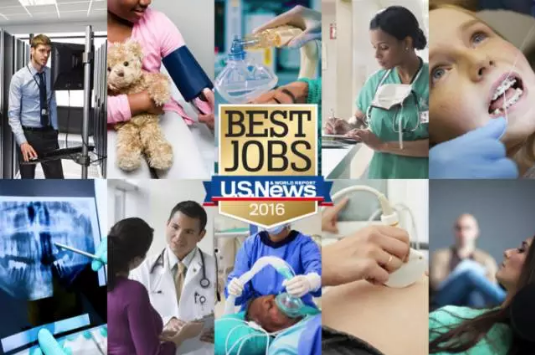
(Among the top ten professions, medicine holds a dominant position)
The chart below is quite interesting: the rankings of the top ten occupations vary across different U.S. states. In some states, dentists earn the highest income, while in others, it is surgeons or anesthesiologists.
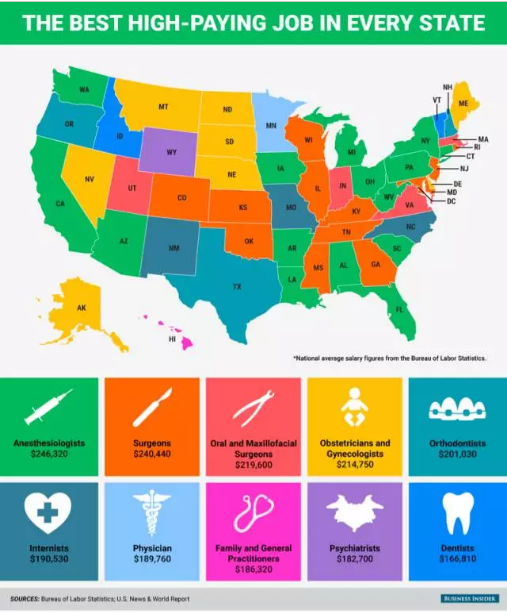
(Distribution of Highest-Paying Professions: Orthodontists in Texas Are the Highest-Paid Profession Locally, with an Annual Salary of $200,000)
The U.S. Department of Labor projects that an additional 26,700 new dentists will be needed by 2024.In addition to the mature development and robust demand of the U.S. dental market, the country’s strong and comprehensive dental education system ensures the training of highly qualified dentists, which in turn drives the continuous rise in public health needs and the strengthening of health awareness.
The United States began establishing dentistry as an independent specialty within dental schools in 1842. Currently, there are more than 60 accredited dental schools admitting students, with a majority being public institutions; some more developed states host multiple dental schools.For instance, Philadelphia, which we visited on this trip, is home to two universities with renowned dental schools: Temple University and the University of Pennsylvania. Meanwhile, California, the most developed state, boasts as many as six such institutions.
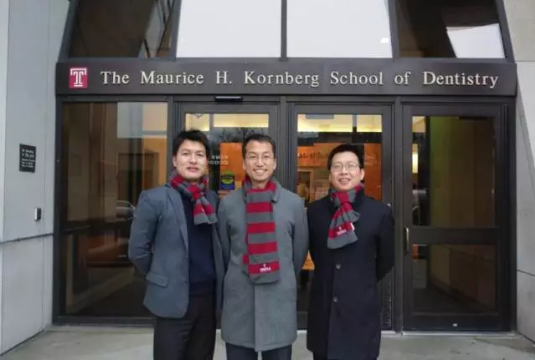
(Temple University Kornberg School of Dentistry, with a 154-year history, and Dr. YUN’s delegation; Dr. YUN, the author of this article, is third from the right.)
Dental schools and societies composed of various institutions have played a significant role in dental education research and system development.During my previous tenure as a visiting scholar, I already gained certain insights. This recent visit, coupled with extensive conversations with alumni, has further reinforced my belief that there is much in the U.S. educational system worthy of our emulation. In recent years, an increasing number of Chinese peers and young students have traveled to the United States for advanced studies or enrollment in dental schools. Taking this opportunity to summarize my trip to the U.S., I would like to provide a brief overview of the current state of dental education in America for your reference.
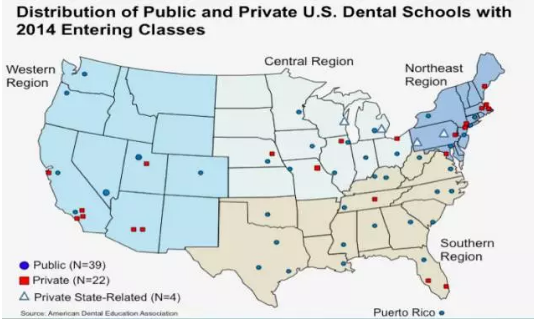
(Blue dots represent 39 public dental schools, red squares represent 22 private ones, and triangles indicate those jointly operated by private entities and state governments.)
First, we declare thatU.S. dental schools make annual adjustments to their admissions and training programs, issuing a publication akin to an admissions guide., if you are interested or want to keep up with the times, it is best to visit the website for the latest information.
A heartfelt thumbs-up to the website ADEA.org. It is unclear whether this association is a subsidiary of a dental society. The American Dental Education Association (ADEA) is truly a conscientious organization; its website is comprehensive and detailed. Whether you are a parent hoping your child becomes a dentist, a college student aspiring to enter dental school, or even a high school student merely curious about dentistry, visiting this site is akin to consulting with a patient career planner in dentistry. Through what feels like face-to-face, one-on-one counseling, you are sure to find the answers you need and gain immense benefit. While browsing the site, Dr. YUN repeatedly forgot his advanced age, feeling so inspired that he wished he could re-enroll in a U.S. dental school to study all over again.
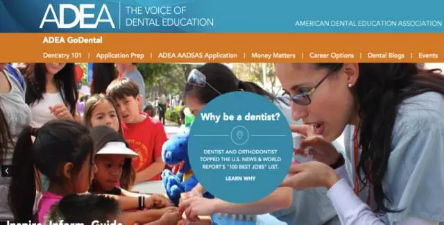
(The ADEA website is elegant and practical)
Upon entering the website, one is immediately confronted with several ultimate philosophical questions: “Why be a dentist?” This goes beyond mere financial rewards and flexibility; it emphasizes contributing to the advancement of healthcare and enhancing overall human well-being. “Is dentistry right for you?” This section probes whether you possess the compassion to heal and help, manual dexterity, a spirit of dedication, and—most frequently emphasized—leadership qualities. Finally, under the theme of “Need for Diversity,” the site showcases its inclusivity by highlighting the importance of diverse talent. It presents annual statistics on dentists by gender and ethnicity, encouraging individuals from all backgrounds to join the profession and serve their communities.
Next, we’ll guide you through the preparation process—from diligent self-study and networking with dentists to clinical observerships and organizing diverse activities that offer hands-on experience, helping you determine whether a career in dentistry is suitable and enjoyable for you. If you choose this path, the platform provides various modules covering application procedures, post-graduation career planning advice, continuing education, and more. In short, it aims to help you prepare well in advance for all the major milestones in your life. With this comprehensive resource at your fingertips, you can navigate your future with confidence. Today, Dr. Yun will discuss specific topics related to dental education in the United States.
The vast majority of applicants to dental schools are required to complete four years of undergraduate education and obtain a bachelor’s degree (a small number of institutions offer two- to three-year pre-dental programs). Applicants are generally expected to complete prerequisite courses beneficial for dental school admission, such as biology, chemistry, physics, and pharmacology, and achieve strong academic performance in these subjects.
Afterward, candidates are required to take the DAT (Dental Admissions Test). In addition to the aforementioned requirements, dental schools also evaluate applicants’ internship and academic backgrounds. Furthermore, personal statements and letters of recommendation should be compelling and impactful. Previously, several of Dr. Yun’s American friends in Minnesota were rejected multiple times in their applications. They subsequently worked as laboratory assistants in dental labs to enrich their research experience and improve their chances of admission.
Schools may place varying emphasis on applicants’ personal attributes. For instance, the Dean of Temple University’s Kornberg School of Dentistry has stated that he particularly values demonstrated leadership or leadership potential in applicants, as dental practice is a team-based endeavor centered around the dentist, making leadership skills essential.

(The admirable Dean of the Temple University Kornberg School of Dentistry, who possesses an international perspective and holds N degrees: BDS, MPH, MBA, DrPH, Diplomate, ABDPH. Note: The individual on the right.)
After enrollment,Dental school education typically lasts four years, comprising two years of basic medical sciences—including anatomy, biochemistry, physiology, and pharmacology—as well as foundational courses in oral health.. Simultaneously, dental simulation teaching is provided.The final two years are primarily dedicated to clinical practice at university hospitals and community clinics.。
Dr. Yun has an outstanding junior female colleague who, after graduating from West China School of Stomatology, enrolled at Temple University Kornberg School of Dentistry in Philadelphia. According to her account, the academic intensity and pressure there are far greater than those in China.In addition to the foundational and specialized courses we are familiar with, there will also be courses on psychology, finance related to starting a practice, and management operations. There will be exams every week, with extensive content covering teaching materials from more than 30 sets of PowerPoint presentations.Students are required to write various papers, deliver presentations, and read extensive literature. Essentially, the workload of a five-year undergraduate program plus a three-year master’s program in China is compressed into four years, with additional practical, high-value content added to benefit future clinical practice. For instance, topics such as finance are not included in our medical school curriculum.
Upon successful graduation, recipients earn a DMD or DDS degree (Doctor of Dental Medicine or Doctor of Dental Surgery), thereby becoming eligible to take the National Board Dental Examinations (NBDE) for dental licensure.

(Students Studying Diligently in the Preclinical Simulation Laboratory at Temple University Kornberg School of Dentistry)
After completing the four-year dental school program, students are typically eligible to take the licensing examinations and prepare to become dentists. However, the long journey of a dental career has only just begun.If you wish to gain further clinical experience or delve deeper into a specific subspecialty, the education sector has long prepared various advanced training programs or residency training options for you to choose from, helping you transition from General Practice to Specialty Care.If one wishes to further enhance general practice skills, there are typically advanced general practice programs lasting one to two years. In China, the eight-year Doctor of Clinical Stomatology program is somewhat analogous. Given such an arduous and prolonged training period, coupled with high tuition fees, it is only reasonable to expect substantial returns in the future.
Specialization does not refer to associate or secondary vocational degrees, but rather to specialized subfields within dentistry, representing a more advanced development beyond general practice. Do you enjoy making friends with all kinds of mischievous children? Would you like not only to provide dental care for kids but also take the opportunity to “educate” their parents?There are 79 pediatric dentistry specialty programs across the United States, with a typical duration of 2–3 years.。Providing professional, comprehensive, and in-depth specialist education in pediatric dentistry.
Orthodontics in the United States is similarly a 2- to 3-year program, with approximately 70 programs available for selection. Endodontics and periodontal prosthodontics follow similar patterns. Still not ambitious enough? “Looking for a challenge? Then you may be suited for the demanding and rewarding career of an oral and maxillofacial surgeon.” This is the exact wording from the educational association. It appears that specialty training in oral and maxillofacial surgery is considered the most prestigious: lasting 4–6 years, it is akin to undergoing another rigorous refinement process and leads to the attainment of an M.D. (Doctor of Medicine) degree. This creates the image of a highly distinguished elite within the dental profession. The phrase “Looking for a challenge?” strikes one as almost provocative, earning Dr. YUN’s genuine admiration.

(The Career Path of a Dentist: Endless Learning, Hard Work as the Boat)
According to my junior female colleague, securing a specialist position is even more challenging than gaining admission to dental school. It is entirely a mutual selection process akin to blind dating: only after you strive through the application process and navigate various interviews—presenting yourself as both highly qualified and professionally presentable—can you successfully match. Ultimately, landing the position requires a formidable combination of strength and luck.
As shown in the figure below, it is clear at a glance. For example, more than 10,000 candidates apply annually for orthodontic specialty programs, with only around 300 admitted—akin to thousands of people crossing a single-log bridge.
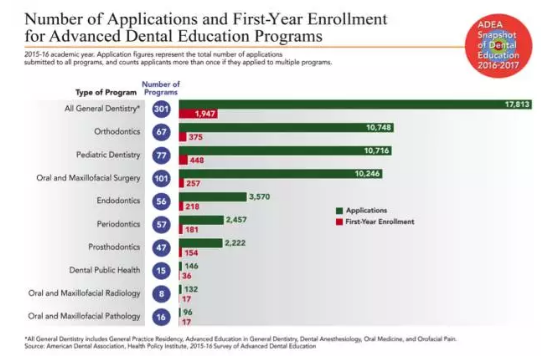
(A statistical overview of the application-to-admission ratios for various advanced programs)
Therefore, Dr. YUN holds deep admiration for the senior colleagues from China who have continued to strive and successfully carved out their own paths in specialized medical fields. One such senior colleague, a year above her at their alma mater, had already risen to the position of Associate Director. Yet, she resolutely pursued her dreams by returning to the United States for further studies. Not long ago, she matched into a residency program, embarking on the promising path toward becoming a specialist physician. Her achievement is both admirable and heartening. May every diligent individual reap abundant rewards and returns for their efforts.
While dentists are undoubtedly the central focus of dental education, other members of the dental team, such as dental hygienists and dental assistants, also play essential roles.
Another characteristic of dentistry in the United States is the education of dental auxiliary personnel, known as the Allied Education Program. According to the ADEA website, there are more than 600 enrollment programs annually, including those for dental hygienists, dental assistants, and dental laboratory technicians, which we commonly hear about.These auxiliary staff members do not require a university education; high school graduates are eligible to participate in such programs.Dr. Yun observed that dental technology projects are relatively scarce. In addition to the development of the local digital manufacturing industry, it is estimated that export-oriented processing units in southern China have also made significant contributions.。
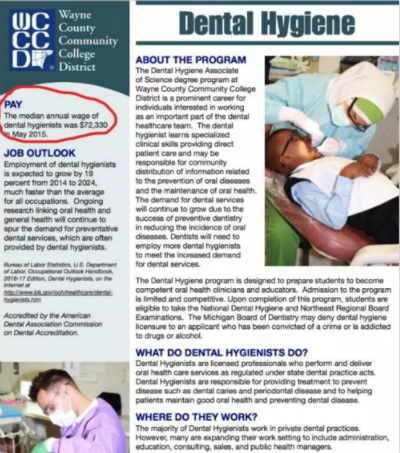
Dental hygienists play a crucial role, undertaking significant responsibilities in preventive care and patient education, as well as performing periodontal scaling. A dental team typically requires dental hygienists to share this workload. Unlike assistant dentists in China, dental hygienists cannot become dentists simply by working for a few years and passing an examination. Many dental hygienists have a high school educational background; those who wish to become dentists must complete prerequisite courses and gain admission to dental school. Given the substantial time and financial investment required, the highly competitive admissions process, and the relatively attractive compensation for dental hygienists, only a small minority pursue further education to become dentists. Below is an excerpt from an admissions brochure, which illustrates that while the curriculum is rigorous, the post-graduation income is quite substantial, offering excellent value for money.
Dental assistants, akin to four-handed dentistry nurses in China, are responsible for chairside assistance, instrument cleaning and sterilization, radiographic imaging, and patient guidance. Within a dental team, efficient operation is inseparable from the optimized allocation of assistants. During their visit, Dr. Yun and his delegation observed that several clinics employed a staffing model of 2–3 dentists supported by more than ten assistants, enabling them to treat over 80 patients per day. Assistants help physicians complete numerous tasks, ensuring the high-efficiency operation of clinical workflows.
Particularly in pediatric dentistry, behavioral management of child patients is a critical component of care. Relying solely on the dentist is insufficient; instead, the dental assistant’s role in communication should be leveraged more effectively. However, assistants are not permitted to perform any intraoral diagnostic or therapeutic procedures. Consequently, some states have introduced another category of auxiliary personnel known as Expanded Function Dental Assistants (EFDAs). These individuals are assistants or dental hygienists who have undergone advanced training and, under the supervision of a dentist, can independently perform a broader range of clinical procedures, such as restorative fillings. This role is somewhat analogous to that of an Assistant Physician in China. For instance, in a case requiring a dental filling, the workflow could involve a dental hygienist assessing oral hygiene status or performing prophylaxis, administering local anesthesia, followed by the dentist selecting the restorative material, removing carious tissue, and preparing the tooth surface. The EFDA would then complete the restoration.
Overall, a typical dental team consists of a dentist, a dental hygienist, and a dental assistant.Dental hygienists often serve multiple clinics simultaneously, functioning somewhat like community-based preventive care physicians. In contrast, dental assistants are more akin to the "four-handed dentistry" nurses commonly seen in China. However, the United States offers a wide variety of training programs and certifications for dental assistants, including specialized tracks in orthodontic assisting and clinic operations management. This enables them to pursue career paths as specialized dental assistants or clinic administrators.In terms of income level, generally speaking, physicians earn more than dental hygienists, who in turn earn more than dental assistants. This is quite reasonable, as compensation corresponds to the level of hardship endured.
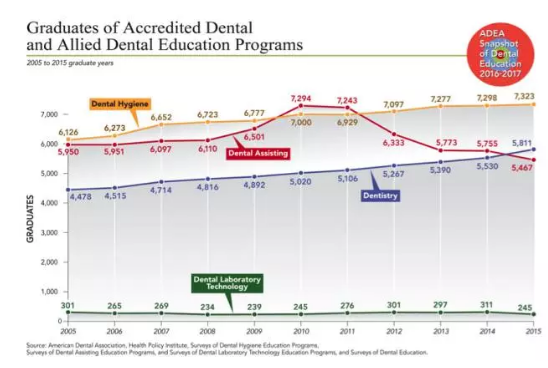
(Number of dentists, dental hygienists, and dental assistants graduating annually from 2005 to 2015; the number of assistants continued to decline after 11 years; 5,811 dentists graduated in 2015)
Practicing dentistry in the United States as a foreign-trained dentist is an arduous process, essentially requiring comprehensive retraining and recertification.Most states require a dental degree (DMD or DDS) from an accredited institution to obtain a U.S. dental license. Therefore, internationally trained dentists need to enroll in specialized programs to earn a degree granted by a U.S. dental school, which typically takes two to three years.Such programs are referred to as CODA-accredited advanced standing programs (accredited by the Commission on Dental Accreditation, where CODA stands for Commission on Dental Accreditation).
ADEA thoughtfully provides the CAAPID (Centralized Application for Advanced Placement for International Dentists) service, enabling international applicants to apply to nearly 30 institution-specific programs through a single portal, thereby avoiding the hassle of submitting individual applications. The fee is $245 for the first program and $93 for each additional one. Please note that not all programs are included in CAAPID; a small number still require separate applications if you wish to cover all options. The application cycle officially opens from March 1 of each year until January of the following year. Applicants should browse participating schools’ programs directly on the website, keeping in mind that deadlines vary by institution and the application window is relatively short. Therefore, it is advisable to closely monitor your target schools throughout the year.
Common basic application materials typically include notarized academic transcripts, TOEFL scores, online application forms, and letters of recommendation. Note that credential evaluation must be conducted through designated agencies such as WES (World Education Services) or ECE (Education Credential Evaluators). For instance, when using WES, Chinese applicants are required to have their degree certificates authenticated by the China Academic Degrees and Graduate Education Development Center (CDGDC), which is designated by the Chinese Ministry of Education. The authentication report issued by CDGDC must then be sent directly to WES. The process for ECE is similar. Some programs may also require scores from the NBDE (National Board Dental Examinations) or the DAT (Dental Admission Test). Therefore, in addition to preparing academic records from domestic institutions, applicants must also take these exams as required by individual schools, followed by the standard application and interview processes.
Due to space constraints, specific examination details will not be elaborated upon here. Please visit the American Dental Association (ADA) website for comprehensive information regarding the exams. Prior to registration, you must obtain a DENTPIN, which will be required throughout the entire process, from exam registration to dental school applications. As a helpful tip, previous years’ practice questions are available in the online store of the American Student Dental Association (ASDA) and serve as essential preparatory materials. For international students applying to U.S. dental schools, the requirements are largely similar to those for domestic applicants; however, the inability to access student loans can impose a significant financial burden, unless one has ample personal resources.
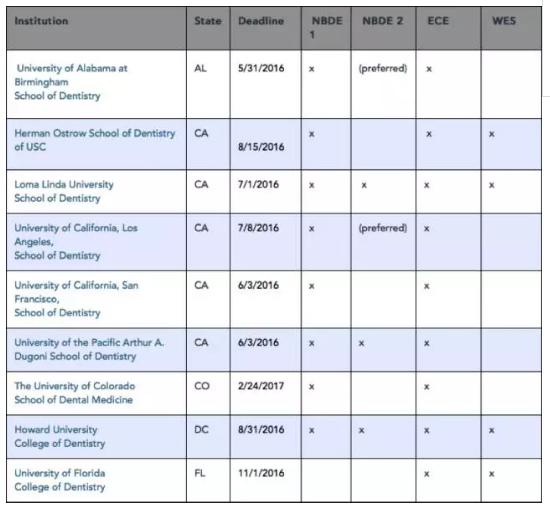
(This table lists a selection of institutions, most of which require NBDE scores and credential evaluations from ECE and WES.)
We have now arrived at the section concerning finances, a topic of considerable interest to many. The table below presents statistics from an authoritative source on the debt burden of dental school graduates. It is evident that even during the most economically challenging years, these costs continued to rise. Anecdotal evidence suggests that the increase has been even more pronounced in recent years; although the latest data are not available, the trend shown in the table indicates that it is now quite common for dental students to graduate with $300,000–$400,000 in debt. Nevertheless, this investment remains highly worthwhile.
The United States offers numerous preferential policies for its citizens, including scholarships, grants, and loans. Student loan interest rates are low, and there is a diverse range of federal and private loan options. Graduates who wish to pursue further education or specialized training can also apply for loans with extended repayment periods.. Overall, upon entering dental school, finances become a significant issue, though not necessarily the most daunting one. While it would be inaccurate to claim that every dental student comes from a wealthy background, the prospect of high future returns makes financial institutions willing to lend money for this investment.
Financing your education is a complex issue that involves numerous loans, taxes and fees, and various subsidies, with specialized institutions and professionals dedicated to providing these services. For international students, the process is more challenging; although there are a few private loans and scholarships available, the difficulty of application and the loan amounts are often unsatisfactory. The cost of training for dental hygienists and assistants is relatively lower, which naturally corresponds to lower future earnings.
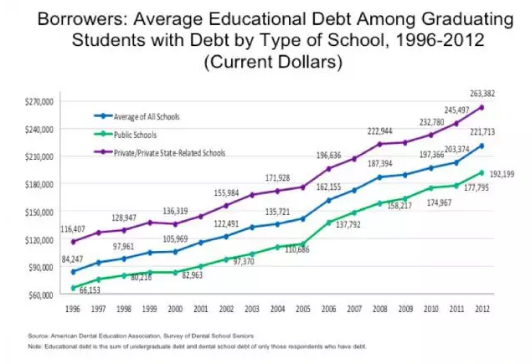
(From 1996 to 2012, regardless of the type of dental school, student debt rose annually, with the average reaching over $220,000 in 2012.)
6. Where Do Young Dentists Find Employment After Graduation?
There are significant differences in national conditions between China and the United States on this issue.In the United States, more than half of graduates go on to work in private clinics, while approximately one-third pursue further education to become specialists. About 42% work in independent practices, with similar proportions employed in physician-owned and corporate-owned clinic chains.。
As experience and income accumulate, many physicians seek to establish or acquire their own clinics in the future, while others choose to remain employed, thereby avoiding considerable hassles and risks. Consequently, a significant number of large chain clinic groups have emerged in the U.S. market, particularly in the aftermath of the 2008 economic downturn.
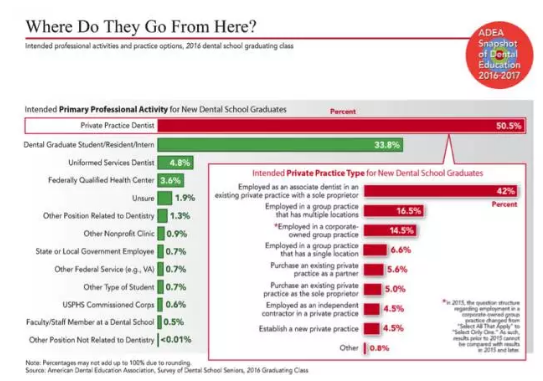
(Statistics on the career destinations of dental school graduates in 2016: 50.5% joined private clinics; the bottom-right corner provides a further breakdown of the private sector.)
Life is an investment. We spend money and time on education, so we naturally care about future returns. As mentioned at the beginning of this article, dentistry has stood out in the Top 100 High-Quality Professions ranking for three consecutive years, making it a cost-effective investment.
Of course, the arduous efforts made by every dentist should not be overlooked. Dentistry is a profession that requires lifelong investment; graduation does not mark the end of hardship, but rather the beginning of a new chapter. Dentists must continuously learn and improve, constantly seeing patients, reading literature, and attending courses. With new technologies and materials emerging endlessly, failure to keep up with learning will quickly lead to obsolescence, resulting in immense pressure.
Dentists who run their own clinics must also manage the business, striving diligently for the well-being of a large team. The rewards you receive should be commensurate with the effort you expend, the concern you show, and the responsibility you bear.
Let’s examine the income levels of dental professionals abroad. Anecdotal reports vary, with significant regional differences; hourly rates are said to range from $15–30 for dental assistants, $30–60 for dental hygienists, and $60–180 for dentists. Annual salaries for dentists commonly fall between $200,000 and $400,000, though figures reaching millions have also been reported. Specialists tend to earn higher average incomes than general practitioners, with final compensation influenced by individual credentials, competence, and experience. Similar to the situation in China, the monthly salary of one dentist (Dentist A) may equal the annual salary of another (Dentist B).
According to statistical data from the U.S. Department of Labor, the 2015 average figures are shown in the chart below. Of course, regardless of where one works as an employee, the income disparity is not significant. However, for those who start their own practice, diligent effort and building a strong reputation can lead to substantial earnings as the patient base grows; achieving an annual income of one million yuan should not be difficult. For highly capable practitioners who reach the stage of operating multiple chain clinics, transitioning from individual productivity to a capital-owner model, annual income could easily reach tens of millions.
A dental practice owner with seven or eight clinics, once visited by Dr. Yun and his team, handles two to three thousand general anesthesia cases annually at their dedicated center—easily making them a millionaire. Of course, such individuals are exceptional outliers. The ideal scenario involves a multi-generational family dental practice, where accumulated expertise and resources enable sustained growth and continuity. In fully corporate-operated chain clinics, dentists’ compensation varies based on seniority and position, remaining competitive with other institutions and in no way inferior. Long-term employees further benefit from incentives such as profit-sharing, while avoiding the administrative burdens of independent practice management.
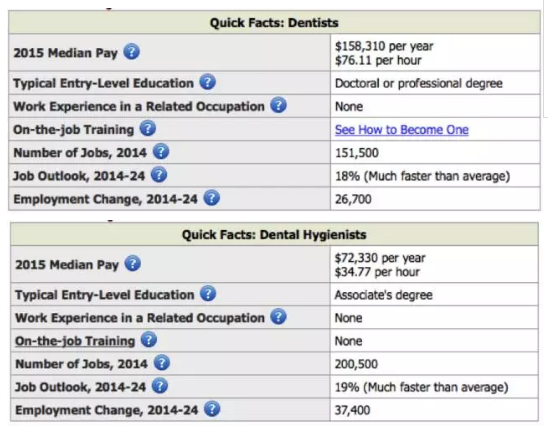
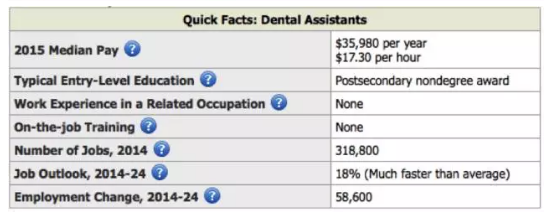
(The three charts present data on dentists, dental hygienists, and dental assistants, sourced from the U.S. Department of Labor website.)
Well, Dr. Yun has provided a brief overview of dental education in the United States. In reality, there are many more topics and details that could not be covered exhaustively. Interested colleagues are encouraged to conduct further in-depth research online to stay updated, or consult with more peers practicing in the U.S.
Dental education in the United States certainly faces certain challenges, such as uneven educational standards, unbalanced development of dental services, and a shortage of dental professionals in many low-income or underdeveloped regions. However, these are common issues faced by countries worldwide. There is also a notable shortage of faculty resources in dental schools; consequently, institutions often recruit practicing dentists from clinics to serve as part-time instructors or clinical preceptors. A significant advantage of this approach is that these frontline clinicians effectively impart practical patient communication skills and clinical experience to inexperienced students. When complemented by the theoretical knowledge provided by academic faculty, this model often results in particularly robust clinical training.
Some experts in China have published articles highlighting issues in American dental education, such as a shortage of research talent, excessive student burdens, and insufficient training in critical thinking and active learning. Having not studied at a U.S. dental school, I am not in a position to comment authoritatively; however, based on my interactions with many dental students, I have not observed any notable lack of enthusiasm for active learning or scientific inquiry. Those who truly have the authority to speak on this matter are individuals—both senior and junior—who have conducted in-depth research or have firsthand experience with dental education in both countries.
As the ancients said, “If you love someone, send them to the United States to become a dentist, for it is heaven; if you hate someone, send them to the United States to become a dentist, for it is hell.” Every coin has two sides. What matters is what lessons we can draw and what changes we can make. Most importantly, know what you truly desire. Let us encourage each other in this pursuit.
Dr. Yun Xiaofei, the author of this article, holds a doctoral degree from West China School of Stomatology, Sichuan University, and is the co-founder of Jicheng Dental. He served as a visiting scholar at the School of Dentistry, University of Minnesota, USA, from 2008 to 2010 under a government-sponsored program. VCBeat has made edits and abridgments without altering the original meaning.