

Illumina Pushes Toward $100 Genome Sequencing, with Clinical and Consumer Markets as Strategic Focus | Review and Outlook
As the new year begins, everything takes on a fresh look. The end of the Spring Festival holiday marks our official entry into the busy schedule of 2017. Looking back on 2016, we witnessed frequent turmoil in the internet healthcare industry, the sustained boom in artificial intelligence, a surge of capital into the genomics sector, and tighter regulations for pharmaceutical e-commerce...
Although the market we can observe is merely the tip of the iceberg of the entire healthcare and wellness industry, these small signs reveal larger trends. VCBeat will identify benchmarks and leaders from these dynamic sectors, review their development over the past year, and offer reflections and forecasts on their 2017 strategies, hoping to provide valuable insights for investors, observers, thinkers, and practitioners in the industry.
When it comes to genetic testing, Illumina, the global leader in this field, cannot be overlooked. Roche, BGI, and Illumina are the three giants of the global sequencing industry. Data from 2015 shows that Illumina monopolized more than 70% of the global sequencing instrument market, while Roche, another giant that once launched a hostile takeover bid against it, held only about 10% of the market share. In 2016, due to insufficient orders for the HiSeq 2500 and HiSeq 4000 instruments, the company’s revenue from sequencing instruments decreased by 26%. Nevertheless, despite missing its targets, Illumina’s Q3 revenue still rose by 10%, driven by expansion in consumables, services, and other niche segments.
The world’s largest DNA sequencing company has long since moved beyond merely selling instruments to customers. Through a series of acquisitions and strategic partnerships, Illumina’s business scope has permeated the upstream, midstream, and downstream segments of the sequencing industry, earning it the title of “World’s Smartest Companies” from MIT for several consecutive years. Although VCBeat has reported on this company multiple times, it is difficult to find a more suitable candidate than Illumina when selecting a benchmark enterprise in the genomics sector for analysis. Accordingly, VCBeat decides to take stock of Illumina’s activities over the past year or so, clarify the logic behind its sequential moves, and offer brief predictions on its potential new initiatives.
The upstream market continues to gain momentum, driving widespread adoption in general laboratories.
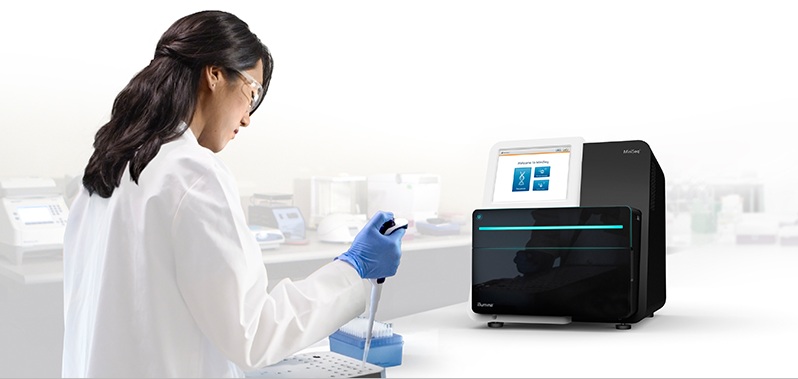
The upstream market has always been Illumina’s core strength and defining hallmark. In 2016, Illumina launched two new products: the next-generation sequencing (NGS) targeted sequencing system MiniSeq (alongside the announcement of another semiconductor sequencer still under development) and the next-generation tumor sequencing solution, TruSight® Tumor 170.
Based on Illumina’s existing sequencing technology, the MiniSeq system supports a wide range of DNA and RNA targeted applications, from single-gene sequencing to pathway-level sequencing. In terms of physical footprint, the MiniSeq is 44% smaller than the MiSeq instrument. Functionally, the MiniSeq integrates the “best-in-class” engineering components of both the MiSeq and NextSeq instruments: it features an optical module and a fluidics pump system that incorporate NextSeq’s two-channel technology, while utilizing a flow cell and loading mechanism more similar to those of the MiSeq. Priced at approximately $50,000, the MiniSeq is significantly more affordable than the MiSeq.
This demonstrates that the MiniSeq can facilitate the widespread adoption of targeted sequencing in general laboratories. In the words of Jay Flatley, former CEO of Illumina, the MiniSeq is “an important addition to the desktop sequencing product line” and will open up a new market in the “low-cost, low-throughput” segment.
In November, the company’s clinical oncology research portfolio welcomed a new member with the launch of TruSight® Tumor 170, a next-generation tumor sequencing solution. This product is dedicated to establishing a standardized method for analyzing tumor mutation profiles. TruSight® Tumor 170 offers a comprehensive DNA and RNA sequencing solution based on an enrichment workflow, enabling the detection of targeted, cancer-related gene mutations. It also serves as the foundation for the collaboration between IBM and Illumina announced at the J.P. Morgan Healthcare Conference. Capable of detecting variants in 170 cancer-related genes, this solution marks a shift from single-gene testing to multi-gene panel approaches in tumor profiling, providing a more comprehensive perspective on tumor genomics.
In addition to launching new products, Illumina is continuing to expand its overseas markets. In May 2016, Illumina announced that the MiSeqDx® instrument and the MiSeqDx Universal Kit had received product approval certificates from South Korea’s Ministry of Food and Drug Safety (MFDS).
MiSeqDx enables NGS sequencing on a single system, specifically designed for the clinical market. The successful approval of this next-generation sequencing (NGS) system marks the first step in Illumina’s comprehensive regulatory strategy in the Asia-Pacific region and represents another milestone in bringing Illumina’s NGS technology to clinical laboratories.
Bold Moves, Strong Confidence in the Midstream Market
After acquiring Blue Gnome, a UK-based company specializing in genetic variant sequencing services, Illumina broke its previous stance of not competing with customers and formally entered the midstream market. However, since the company competes with nearly all genomics firms, this has made Illumina’s entry into the clinical market somewhat challenging.
However, the previous acquisition turmoil involving Roche demonstrates that Illumina is a resolute and formidable company. Despite the numerous challenges associated with entering the midstream market, the company has remained unwavering in its strategic direction.
In January 2016, Illumina announced the establishment of Grail, a subsidiary focused on liquid biopsy for early-stage cancer. Early cancer screening can effectively help extend patients’ survival; therefore, pan-cancer early screening during the asymptomatic phase is of significant importance in reducing global cancer mortality. Illumina will provide technical support to Grail, helping it develop pan-cancer screening tests based on the detection of total circulating DNA in blood.
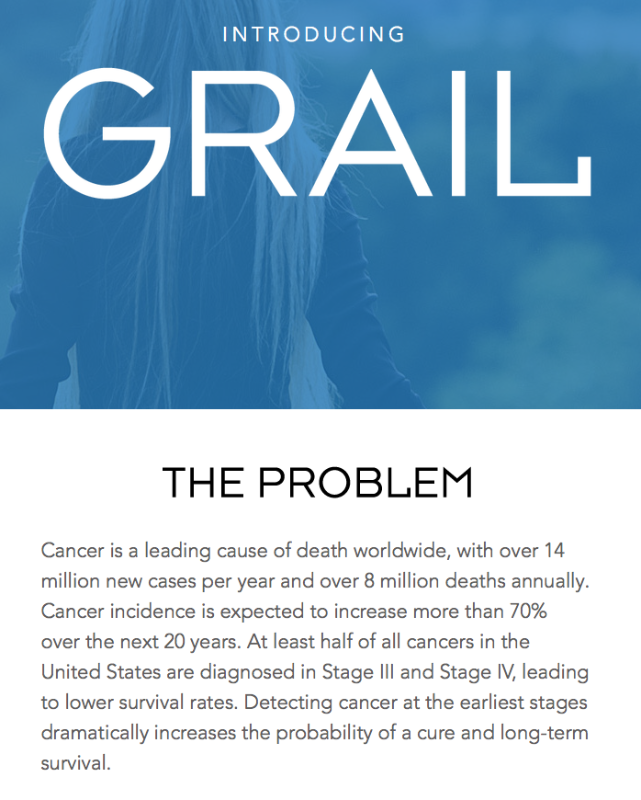
As a subsidiary controlled by Illumina, Grail has enjoyed significant prominence from the outset, securing over $100 million in funding shortly after its establishment. Investors include Google Ventures, ARCH Venture Partners, Bill Gates, and Sutter Hill Ventures. Earlier this year, Grail initiated its Series B financing round, with a target of up to $1 billion. Notably, following this round, Grail will repurchase its shares held by Illumina. This demonstrates that Grail has progressed smoothly since its inception one year ago, and Illumina intends to accelerate Grail’s independence, transitioning it from a subsidiary into its largest customer.
Coinciding with the announcement of Grail’s establishment was the revelation of an exclusive partnership between the company and Bio-Rad, a world-leading innovator in clinical diagnostics and life sciences. Under this agreement, the two parties will jointly develop next-generation sequencing workstations tailored for single-cell analysis. The field of single-cell analysis has undergone transformative changes in recent years, and this collaboration is poised to significantly impact companies employing competing technologies.
Flatley commented that this collaboration will bring a new experience to single-cell analysis, providing the most integrated end-to-end single-cell solutions for the entire market.
Single-cell sequencing technology is undoubtedly a major breakthrough in the history of technological development. Quoting Dr. James Eberwine from the University of Pennsylvania, when research delves into the single-cell level, control over the entire system is lost; however, if multiple distinct single cells can be selected from the entire system for study, the whole system can be reconstructed, yielding more valuable information.
In simple terms, single-cell sequencing technology not only helps to understand the differences between cells but also provides researchers with a new level for redefining cell comparisons. Therefore, single-cell sequencing has been a research hotspot for Illumina in recent years. In this field, its allies include Bio-Rad and FlowJo Partner, a leader in single-cell analysis software.
Last year, Illumina and Flowjo Partner entered into a strategic collaboration regarding next-generation sequencing data analysis (note: this collaboration represents a strategic move in the downstream data analysis sector). Leveraging Flowjo Partner’s extensive experience in cell biology and single-cell immunology, both parties will jointly develop new software applications, including third-party analytical tools and visualization datasets. This initiative will enable Illumina to achieve seamless integration between single-cell RNA sequencing and the BaseSpace Suite, providing researchers with accelerated solutions.
Last February, the company announced another strategic partnership. Illumina and 10x Genomics signed a co-marketing agreement to promote 10x Genomics’ Linked-Read sequencing products and Illumina’s sequencing systems. Furthermore, the two parties will collaborate on the development of long-read applications to jointly build an industrial ecosystem. As a dark horse at the 2015 J.P. Morgan Healthcare Conference, 10x Genomics attracted widespread industry attention with the launch of its GemCode platform. Through this partnership, 10x Genomics will leverage GemCode technology to enable users of HiSeq X, HiSeq, NextSeq, and MiSeq systems to upgrade their existing instruments, offering services with lower costs and higher quality compared to other long-read sequencing systems available on the market.
In addition to frequent collaborations, Illumina established the venture capital fund Illumina Ventures last April with a $100 million investment. The fund will be led by Nicholas Naclerio, former General Counsel and Senior Vice President of Strategic Development at Illumina, and will target startups focused on “improving human health by unlocking the power of the genome,” aligning with Illumina’s core values. The establishment of the fund underscores Illumina’s solidified position in the midstream market and may represent its final attempt to expand the genomics industry ecosystem through direct corporate investment and incubation of other companies.
In addition to the aforementioned strategic business partnerships, the company launched the iHope charitable initiative in December 2016, dedicated to assisting children with undiagnosed conditions whose families cannot afford sequencing-based diagnostic testing. Illumina plans to sequence 100 patients and their parents in 2017.
Illumina will provide free clinical whole-genome sequencing for selected individuals in its CLIA-certified and CAP-accredited laboratories. This initiative aims to offer humanitarian assistance to patients while also serving as part of medical practice to deepen understanding of rare diseases.
Downstream: Data + Cloud Services
Illumina is committed to providing the most comprehensive solutions for genomics. In 2012, the company launched its sequencing cloud computing platform—BaseSpace—to enter the downstream market. In its early years, the company acquired leading genomic informatics enterprises such as NextBio and GenoLogics, continuously expanding its enterprise informatics business. Over the years, it has also engaged in frequent collaborations to strengthen its influence in the downstream market.
In February, Illumina signed multiple biobank agreements, including with Vanderbilt University and the University of Colorado Anschutz Medical Campus, Alliance Healthcare, and the Montreal Heart Institute.
Christian Henry, Executive Vice President and Chief Business Officer at Illumina, stated, “These four progressive personalized medicine projects demonstrate how genomics is significantly advancing our understanding of human biology by leveraging multiple genetic analysis and identification approaches.” Under the agreement, these universities and medical institutions will utilize Illumina’s technology to conduct genomic analysis on large-scale biobanked sample collections. By integrating genomic data with electronic health records and clinical information, they aim to advance personalized medicine and improve human health.
In addition to the biobank agreement, the company has also partnered with Genomics England to develop platforms and knowledge bases that advance the automation of genomic interpretation, thereby alleviating the interpretive burden posed by increasingly large-scale data.
Under the terms of the collaboration, Illumina will develop interpretation and reporting tools to enable reporting for all genomes sequenced through the 100,000 Genomes Project. These tools will operate within Genomics England’s secure database, allowing researchers and clinicians easier access to information and reports.
Genomics England will acquire whole-genome sequences and de-identified phenotypic data to enable the use of these tools for personalized medicine. These tools will be employed to manage the knowledge base of information generated during the implementation of the program, with a focus on rare diseases and common cancers. Illumina and Genomics England have agreed to provide clinical findings obtained from the 100,000 Genomes Project to approved users of the collaboratively developed tools. Genomics England will partner with Illumina to develop a suite of bioinformatics tools that will support large-scale clinical and research studies conducted by NHS Genomic Medicine Centres and Genomics England.
This collaboration also enables Genomics England to utilize other Illumina tools (NextBio® and baseSpace®) for data access and genomic data management. As part of a pilot project for NextBio® Clinical, Illumina will provide researchers at Genomics England and the GENE Consortium with subsets of data from the 100,000 Genomes Project, facilitating cohort analyses of complex phenotypic and genotypic information within de-identified genomic datasets.
In April, the company launched its first cloud-based informatics architecture for sample-to-interpretation workflows, the BaseSpace® Informatics Suite, further advancing its commitment to precision medicine.

BaseSpace® Suite is currently the most comprehensive suite of genomics tools and solutions, providing users with a unified and integrated platform for laboratory information management, analysis and sharing, as well as sample interpretation, reporting, and advanced analytics. BaseSpace Suite accelerates the turnaround time from sample submission to actionable insights, addressing critical challenges in genomic data processing and analysis. Importantly, it eliminates the need to integrate multiple single-point solutions from different vendors, which is crucial for ensuring the accuracy of overall results.
In subsequent collaboration with the Mayo Clinic, BaseSpace® Suite played a significant role. As part of the agreement, the Mayo Clinic will deploy BaseSpace Clarity LIMS in several specific laboratories to evaluate the tool. BaseSpace Clarity LIMS is a system that provides comprehensive workflow tracking and integration within the laboratory. The Mayo Clinic will also implement and provide feedback on its use of BaseSpace Sequence Hub and BaseSpace Variant Interpreter. BaseSpace Sequence Hub is a cloud-based genomic computing environment for data analysis and management. BaseSpace Variant Interpreter is a cloud-based interpretation platform designed to save time and effort in extracting biological insights from genomic data. This software solution will be piloted by the Mayo Clinic to annotate and interpret the potential roles of genetic variants in disease progression.
Through this partnership, Mayo Clinic gains priority access to next-generation sequencing technologies, while Illumina acquires experience and data to inform the development of its existing products.
Patent Wars: Zero Tolerance for Infringement
As mentioned above, Illumina has faced competitive pressure from multiple fronts after entering the midstream sector.
As the new year began, Illumina launched a fierce patent protection campaign, filing patent lawsuits against five European companies in one go. These included three UK-based entities: The Doctors Laboratory, TDL Genetics, and Ariosa Diagnostics (a subsidiary of Roche); as well as two Polish companies, Centrum Badań and Medgenetix. In 2015, Illumina first sued Premaitha, alleging that the company had infringed upon Illumina’s ownership of two patents related to NIPT technology. The current lawsuits against the two Polish firms represent an extension of the Premaitha dispute, as both Polish companies are clients of Premaitha. In April, Illumina further sued Genoma, a Swiss NIPT provider and client of Premaitha, prompting all of Premaitha’s clients to heighten their vigilance.
Illumina stated that the patent litigation was initiated to protect its intellectual property, and affirmed that it would continue to monitor the NIPT sector, vowing to take full legal action whenever its patents are infringed. Meanwhile, Illumina announced that it is seeking damages and applying for injunctive relief to halt the infringement.
Not content with that, in February of last year, Illumina filed another lawsuit against Oxford Nanopore. This litigation involves two U.S. patents, No. 8,673,550 and No. 9,170,230, both titled “MSP Nanopores and Related Methods.” The lawsuit primarily targets Oxford Nanopore’s handheld nanopore sequencing device, MinION, as well as its higher-throughput PromethION platform, which has not yet been commercialized. Illumina filed the complaint with both the U.S. International Trade Commission and the U.S. District Court for the Southern District of California.
Oxford Nanopore is a rising star in the upstream sector of the gene sequencing industry and a long-standing rival of Illumina. This lawsuit is not the first legal dispute between Illumina and Oxford Nanopore Technologies. As early as 2009, the two companies reached a commercial agreement regarding exonuclease-based nanopore sequencing. However, Oxford Nanopore Technologies ultimately discontinued this technology and shifted toward long-read sequencing methods used in its MinION and PromethION devices, a move that triggered patent disputes between the two companies and led to the termination of their commercial agreement.
New Leadership Takes Charge, Accelerating Team Expansion
Jay Flatley stepped down to the board of directors in March, and current President Francis deSouza was appointed as President and Chief Executive Officer on the same day, continuing to serve as a member of the board of directors.
Jay joined Illumina in 1999 as President and CEO. Under his leadership, the company’s annual revenue grew from $500,000 to $2.2 billion in 2015, with organic growth and key acquisitions establishing Illumina as the global leading provider of next-generation sequencing solutions.
It is no exaggeration to say that Jay is the soul of the company. While the appointment of a new CEO represents a significant change for the organization as a whole, Jay remains fully confident in both the company and Francis: “The timing for Francis to become Illumina’s next President and CEO is ideal. Francis is an outstanding leader who has demonstrated remarkable success in leading large institutions and executing complex growth strategies. I look forward to collaborating with him in his new role to continue upholding the company’s strong tradition of innovation and execution.”
Francis joined Illumina in 2013 as President, working closely with Jay, the Board of Directors, and the management team to define the company’s strategic direction and lead its product development, commercial, and manufacturing divisions. He significantly improved the company’s performance, helped Illumina enter the clinical market, and successfully executed several major initiatives, including the launch of the HiSeq 4000 and the recent introduction of the MiniSeq. As President and CEO, he will continue to assume additional leadership responsibilities for the General & Administration (G&A) and Research and Development (R&D) departments, which are led by Marc Stapley and Mostafa Ronaghi, respectively.
Subsequently, Illumina began to frequently recruit talent from large enterprises. Within less than a year of taking office, Francis carried out four rounds of talent expansion.
In June 2016, Illumina announced the appointment of Paula Dowdy as Senior Vice President and General Manager to lead its commercial team in Europe, the Middle East, and Africa (EMEA). Previously, Ms. Dowdy served as Senior Vice President of Cloud Platforms, Software, and Managed Services at Cisco.
In July, Philip W. Schiller, Apple’s Senior Vice President of Worldwide Product Marketing, joined the company’s Board of Directors. As a member of Apple’s executive team, Schiller oversees product marketing, developer relations, marketing, education marketing, international marketing, and the App Store. His appointment will help guide our continued development of innovative solutions for users, while also potentially building bridges for interaction between the two companies.
In December, the company announced another expansion of its team, appointing Sam A. Samad as Senior Vice President and Chief Financial Officer. Mr. Samad has many years of experience in the pharmaceutical industry and healthcare supply chain services, having held key roles at Eli Lilly and PepsiCo. Previously, he served as Senior Vice President and CFO for Cardinal Health, overseeing operations in China.
Also in December, the company announced the appointment of Jonathan Seaton as Senior Vice President of Business Development, responsible for global business activities, including strategic partnerships, mergers, and acquisitions. Jonathan Seaton holds a degree in Pharmacy from the University of Manchester, a degree in Biology from Durham University, and an MBA from Oxford University’s Saïd Business School. Having held leadership positions at F. Hoffman-La Roche, Roche Tissue Diagnostics, LS9, and several investment banks, his addition will enhance the Strategic Development Department’s expertise in the clinical and life sciences fields.
During Jay’s tenure, Illumina endured numerous severe trials, including Roche’s hostile takeover attempt, effectively growing through the “catfish effect.” By the time Francis took the helm, Illumina had already established its industry leadership. However, with a plethora of emerging competitors in the market, consolidating its industry position and expanding its global influence became the company’s primary focus during this period.
Meanwhile, Illumina will continue to uphold its philosophy by committing to reducing sequencing costs and promoting the widespread adoption of gene sequencing, spanning both the research and consumer markets.
The Clinical Market Will Be the Main Focus in the Future
Following the precedent set in recent years, Illumina unveiled its new sequencing platform at the J.P. Morgan Healthcare Conference and announced major collaborative projects for the year. At this year’s conference, Illumina launched its latest sequencing system, the NovaSeq, and declared that the era of $100 genome sequencing is imminent. The cost of whole-genome sequencing for humans using the NovaSeq is $800. Achieving the $100 sequencing target will require longer read lengths, increased read density, and reduced flow cell costs, which are expected to be the company’s focus over the next three years.
From the perspective of market share across various sectors in 2016, the clinical consumer segment, particularly the cancer and NIPT markets, will be Illumina’s future business focus.
Among the major strategic announcements made at this year’s J.P. Morgan Healthcare Conference, two collaborations focused on the oncology sector were unveiled, with Royal Philips and IBM Watson Health as the respective partners. This underscores Illumina’s continued commitment to strengthening its position in cancer genomic testing.
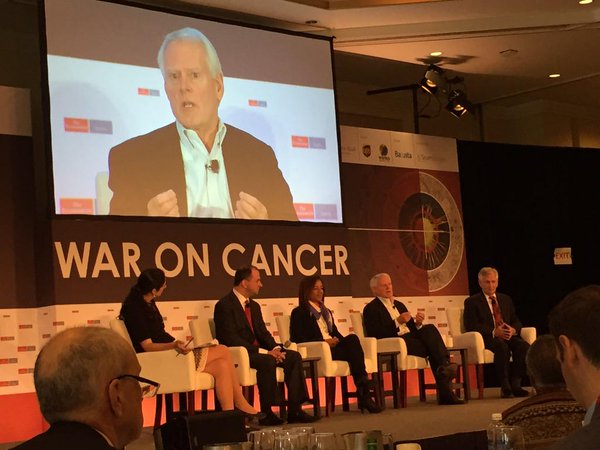
Among the multiple patent lawsuits filed last year, nearly all targeted NIPT products, underscoring Illumina’s determination to defend this market. Early this year, Illumina joined forces with Natera, Counsyl, and four other leading genetic testing companies—including Progenity, a long-standing adversary in patent litigation—to announce the formation of the Coalition for Advanced Prenatal Screening (CAPS). The coalition is committed to advancing non-invasive prenatal screening through cfDNA-based NIPT and raising public awareness of prenatal screening. In this regard, Illumina’s vision for the future of the prenatal testing market aligns closely with that of Berry Genomics, as both aim to extend their services to the general population.
As a leading enterprise in the field of genetic testing, it is only natural that the company will continue its exploration in scientific research to maintain its industry-leading position. The exclusive partnership with Bio-Rad has lasted for two years, while the iHope program has just been launched. This indicates that the company will continue its efforts in single-cell sequencing and rare disease research, seeking more scientific and accurate sequencing solutions.
Not only is Illumina advancing human genome sequencing, but it is also strengthening its influence in the agricultural sector. The company established the Agricultural Greater Good Initiative to support methods and measures that increase crop yields, improve animal welfare and productivity, and thereby alleviate poverty and hunger in developing countries. Last June, Illumina announced funding for the Donald Danforth Plant Science Center to enhance food security in sub-Saharan Africa. Evidently, Illumina views genomics as applicable not just to humans, but to the entire natural world.
Furthermore, Illumina may also collaborate with more research-capable clinical institutions similar to the Mayo Clinic. This is not only to leverage their scientific research capabilities to advance studies and deepen clinical understanding, but more importantly, to use the clinical setting as a gateway to provide foundational support for both clinical practice and scientific research.
2016 Major Events
January:
Filed two NIPT infringement lawsuits in Europe, involving five European companies;
Announced the establishment of Grail, a subsidiary focused on liquid biopsy for early-stage cancer;
Launched the MiniSeq sequencer;
Exclusive partnership with Bio-Rad to jointly develop a novel single-cell sequencing system.
February:
Signed four separate biobank agreements with Vanderbilt University, the University of Colorado Anschutz Medical Campus, Partners HealthCare, and the Montreal Heart Institute to advance personalized medicine;
Strategic partnership with 10X Genomics to develop sequencing products for long-read applications;
Partnered with Genomics England to develop a foundational data platform, enhancing the efficiency and automation of genomic data interpretation;
Filed a lawsuit against Oxford Nanopore, alleging that its nanopore sequencing technology infringes two patents, and submitted the complaint to the U.S. International Trade Commission and the U.S. District Court for the Central District of California;
Submit the CE certification application for the VeriSeq NIPT Analysis Software, with the aim of expanding the product into clinical laboratories.
March:
Jay Flatley will serve as Executive Chairman of Illumina’s Board of Directors; Francis deSouza has been appointed President and CEO.
April:
Launch of the BaseSpace® Informatics Suite to accelerate genomic data analysis in sequencing laboratories;
Announced the establishment of a new venture capital firm, Illumina Ventures, with a $100 million capital commitment over ten years;
Illumina and its wholly owned subsidiary, Verinata Health, jointly filed a patent lawsuit against Genoma SA.
May:
Announced research findings from the collaboration with the US National Children's Health System and The University of Queensland on exome sequencing, which enabled clinical diagnosis for 42% of patients with cerebral white matter abnormalities;
The MiSeqDx system has received marketing approval from the Ministry of Food and Drug Safety (MFDS) in South Korea.
June:
Appoint Paula Dowdy as Senior Vice President and General Manager of Commercial Operations for the Europe, Middle East, and Africa region;
Announced that the Donald Danforth Plant Science Center will receive funding from the Agricultural Greater Good Initiative to improve food security in sub-Saharan Africa;
Announcing the first customer orders for the Global Screening Array.
July:
Appoint Philip W. Schiller as a member of the Board of Directors.
August:
Collaborate with Flowjd Partner to develop single-cell genomics software solutions;
November:
New Product Launch: TruSight Tumor 170, a New Addition to the Clinical Cancer Research Portfolio;
Establish a bioinformatics partnership with Mayo Clinic to jointly promote the detection of genetic abnormalities.
December:
Launch the iHope Public Welfare Initiative, dedicated to research on rare genetic diseases in children;
Appoint Sam A. Samad as Senior Vice President and Chief Financial Officer;
Appoint Jonathan Seaton as Senior Vice President of Business Development.