

Unisound Raises Over $100 Million, Achieves 95% Accuracy in AI-Powered Medical Voice Documentation System
This video showcases the application of Unisound’s Intelligent Medical Voice Entry System at Xijing Hospital. In this 40-second demonstration, physicians can simply speak into a microphone to quickly and conveniently convert patient clinical information into electronic medical records (EMRs) via voice recognition.
Since AI defeated human chess players, it has become widely known to the public. However, ordinary people remain uncertain about what AI technology and services can actually do. Unisound’s intelligent medical voice entry system is a typical application of AI. VCBeat interviewed Huang Wei, CEO of Unisound, to gain an in-depth understanding of how they implement AI technology.
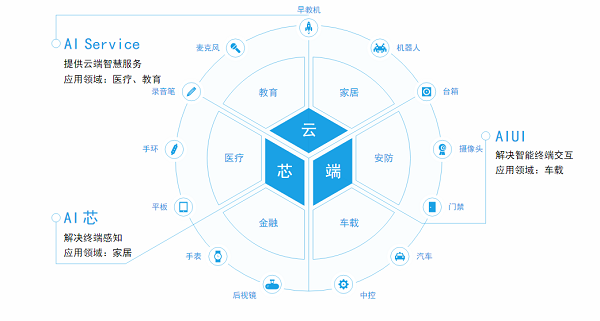
Unisound is a company dedicated to providing AI services for the Internet of Things (IoT). Leveraging its machine learning platform—which incorporates deep learning, reinforcement learning, and Bayesian learning—the company has established a leading core technology system in fields such as speech technology, language technology, knowledge computing, and big data analytics. Together, these technologies form Unisound’s comprehensive AI technology landscape. At the application level, three major solutions—AI Chip, AIUI, and AI Service—facilitate the deployment and realization of Unisound’s core technologies. The intelligent medical voice entry system mentioned above is one of the company’s applications.
In 2004, Huang Wei graduated from the University of Science and Technology of China. His initial research focus during his master’s studies was image processing, which later shifted to speech recognition. This field was relatively niche over a decade ago, when most professionals pursued careers in telecommunications, with few remaining dedicated to this industry. After graduation, Huang Wei joined Motorola, where he worked for five years, facilitating his transition from a student to an engineer.
During his tenure at Motorola, Huang Wei developed the world’s first mobile voiceprint authentication system. He later served as a core executive at Shanda Innovation Institute, where he established the Voice Technology Division. Upon joining Unisound, he brought along his former colleagues; at that time, while they were researching intelligent speech recognition, most people in China were still only familiar with artificial intelligence through science fiction films.
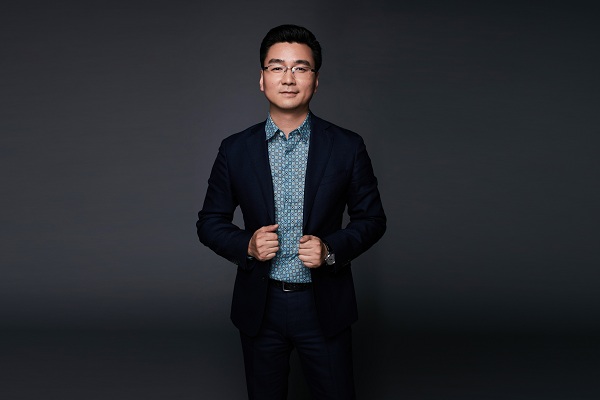
Huang Wei, CEO of Unisound
>>>>
Prominent Pain Points in Efficiency, Safety, and Data
Why Apply Technology to the Medical Field? Huang Wei Told Reporters That This Was Mainly Due to Three Obvious Pain Points in Hospitals:Efficiency, Safety, Data.Surveys indicate that 50% of resident physicians in China spend approximately four hours per day writing medical records. Radiologists report a substantial daily workload involving image interpretation and report generation. Due to the specialized nature of medical technology departments, clinicians must frequently switch between two screens—alternating between viewing images and documenting reports—making improved efficiency an urgent priority for physicians.
Due to heavy workloads, many doctors resort to copy-and-paste when documenting medical records. In extreme cases, this has led to confusion between the left and right legs, resulting in increased misdiagnosis rates and even medical malpractice incidents. Patient safety concerns must not be overlooked.
Due to some physicians cutting corners and engaging in non-standardized practices, there has been an overreliance on medical record templates. This has led to the homogenization of large volumes of patient medical data, rendering it largely unusable and incapable of providing effective support for future scientific research and big data analytics. Furthermore, the widespread use of such templates has caused physicians to lose the systematic, logical, and evidence-based frameworks and thought processes essential for clinical analysis and decision-making. Our intelligent medical voice entry system integrates seamlessly with existing electronic medical record (EMR) systems, significantly enhancing efficiency by enabling voice-based documentation of each patient’s condition.
Furthermore, during ward rounds, various hospital departments utilize mobile terminal systems such as tablets and mobile carts. Recording data on these portable devices has traditionally posed significant challenges. Now, the process is simplified: by integrating our API into mobile applications, our speech recognition technology can be embedded into mobile terminals. This facilitates real-time voice-based documentation and retention. Records can be captured in real time and integrated with PC-based systems, enabling convenient organization and editing on desktop computers.
Furthermore, due to the disparities between traditional Chinese medicine and Western medicine,Traditional Chinese medicine (TCM) lacks a standardized system comparable to that of Western medicine; therefore, TCM practitioners are eager to adopt such a system to streamline case entry and provide data support for subsequent TCM research.Thus, Unisound and the hospital reached an agreement to develop an intelligent medical voice entry system for the hospital.
>>>>
Accuracy rate reaches 95%
Nuance, a giant in the U.S. speech technology industry, has long deployed this technology in hundreds of American hospitals. However, numerous technical challenges remain to be overcome before it can become a reliable and user-friendly solution capable of functioning effectively in noisy environments, accurately recognizing complex medical terminology, and accommodating users with varying speech rates and accents.
The Intelligent Medical Voice Entry System is built upon Unisound’s professional, high-performance recognition engine tailored for the healthcare sector, supplemented by Philips handheld peripheral input devices. These devices enable seamless integration with various hospital systems, facilitating efficient processing of large-volume text entry through voice commands. Users can interact with hospital information systems, such as HIS and PCS, via voice inputs and function keys on the handheld devices.
Philips’ professional handheld data entry devices for healthcare hold over 70% of the overseas medical market share. In 2014, upon learning that Unisound offered a comprehensive healthcare solution, Philips proactively approached Unisound to seek collaboration. Currently, Unisound is the sole general distributor in China, which further reflects Philips’ recognition of Unisound’s overall technological strength.
In addition, Unisound has developed China’s first speech recognition engine for the medical field, implementing extensive model optimizations tailored to medical databases (comprising millions of specialized medical terms, thousands of hours of accumulated corpus data, and extremely complex Chinese-English mixed expressions).
To enable precise recognition, Unisound has also implemented deep customization for hospitals. The deeply customized medical speech recognition model calculates key phrases and corpus from complete medical records across different departments and disease types, providing scenario-specific support for more than 40 clinical and medical technology departments. It has demonstrated particularly strong performance in departments with a high volume of complex and refractory cases, such as Neurology, Immunology, Hematology, and General Internal Medicine.Currently, the speech recognition accuracy rate exceeds 95%, with certain departments achieving rates even above 98%. Coupled with cloud-based semantic correction technology, the overall recognition rate approaches 100%.
By adopting voice input, physicians not only improve work efficiency but also effectively avoid copy-and-paste operations, standardize medical record documentation, and enhance the security of medical record entry.Currently, this system can effectively save physicians more than 38% of their time.
>>>>
Implemented Intelligent Voice Entry System
Regarding market development, Huang Wei stated that Unisound’s AI system is currently the only intelligent voice entry system deployed in China. Although Unisound is not the leading player in the intelligent voice sector, its early entry into the healthcare field has given it a competitive edge. Foreign companies face significant barriers to entering the Chinese market due to regulatory policies and linguistic habits, allowing Unisound to prevail repeatedly in market competition.
Since the launch of the comprehensive healthcare solution, it has been officially implemented in more than 20 representative large tertiary Grade A general hospitals across China. These hospitals are located in Central, North, and South China, as well as the western region, and include Peking Union Medical College Hospital, Peking University People’s Hospital, Xijing Hospital of the Fourth Military Medical University, and The University of Hong Kong-Shenzhen Hospital, among others. Additionally, approximately 40 hospitals are currently in the pilot trial phase.In addition, Unisound has partnered with Ping An Good Doctor and Chunyu Doctor to apply the latest speech technologies to the mobile healthcare market.
In addition, as Unisound’s comprehensive healthcare solutions have gained wider recognition, many hospitals have proactively approached Unisound, expressing interest in adopting its products. Huang Wei stated that in 2017, the company would continue to promote its offerings among China’s top-tier tertiary Grade-A general hospitals, and subsequently consider expanding to primary-care and community hospitals, thereby enabling Unisound’s intelligent medical voice documentation system to serve a broader range of healthcare institutions.
In terms of product R&D, Unisound will next optimize its products in noise cancellation and human-computer interaction to achieve higher accuracy and stronger adaptability.
In terms of financing speed and amount, Unisound has also reported frequent good news:
October 2012: Secured RMB 10 million in angel financing at inception;
In October 2013, Unisound secured RMB 100 million in Series A financing from Qiming Venture Partners.
Secured $50 million in Series B financing from Qiming Venture Partners and Qualcomm Ventures in December 2014;
In December 2015, it secured another Series B+ financing round exceeding RMB 100 million.
These funding rounds have each exceeded $100 million., according to Huang Wei, the company has already initiated its Series C financing round...