

From Hospital Exit to Community Clinic Chain: Lü Fengping’s Grassroots Healthcare Success Story
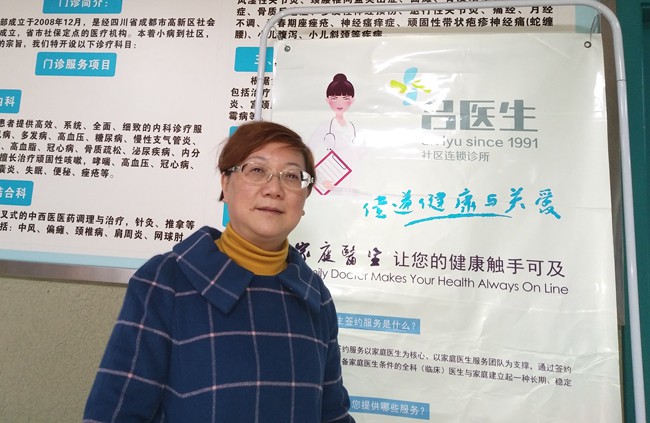
Photo: Dr. Lü Fengping
In 2014, Lü Fengping officially sold a Tier-II hospital with an area of over 8,000 square meters, leaving him with more than RMB 17 million in cash.
On the surface, she left a major hospital and made a foolish move. In reality, she chose to step out of the established medical system. This “veteran” physician, with over 20 years of clinical experience, has decided to embark on a different path this time.
In 2015, she founded Sichuan Haiao Hospital Management Co., Ltd. and established a chain of community clinics under her own name.
Community clinics, in terms of hierarchy, are medical institutions at the lowest level of primary healthcare; in terms of nature, they are privately operated; in terms of consultation costs, the average cost per visit is around RMB 100, with many health consultations provided free of charge; in terms of proximity, community clinics are the closest healthcare facilities to residents, aligning with the concept of being “close to patients.”
In fact, as early as August 2005, Lv Fengping launched her first community clinic at No. 17 Xinle South Street in Chengdu as a pilot venture. Within just one year, her initial clinic expanded from 70 square meters to 300 square meters, and her solo operation grew into a small team of eight members.
As of now, Dr. Lv has opened a total of 14 community chain clinics, all located in the High-Tech Zone, Tianfu New Area, Jinjiang District, Shuangliu District, and other areas. “Each individual store generates a monthly profit of over RMB 10,000.”
Riding the wave of healthcare reform, capital and most grassroots medical entrepreneurs have flocked to the community chain clinic sector, vying for control of community-level entry points.
Across China, many chain clinics are accelerating their expansion. After securing strategic investment, Shaanxi Qiangsen Medical has established 20 chain clinics in Xi’an and Chengdu, with plans to build 1,000 community healthcare institutions nationwide. Since 2012, Zhuozheng Clinic has successively opened 30 chain clinics across the country. In the same year, Lanka Clinic gradually expanded its footprint, establishing 74 clinics nationwide, among others.
In Chengdu, two chain clinic operators are accelerating their expansion. One is Dr. Lü Chain Clinics, the earliest entrant in the individual clinic sector, which aims to become the “Hongqi Chain” of the clinic industry. The other is Baihuiji, which seeks to integrate an internet-based model to build a chain clinic platform.
Dr. Lü’s foray into the chain clinic business occurred in 2005.
Many people wonder why large-scale hospitals are not expanding in this direction, and why the focus is on clinics. In Lv Fengping’s view, chain clinics hold greater promise for the future, with vast market potential. “I have conducted market research indicating that a clinic should be established within a five- to ten-minute walking distance. Each clinic typically serves a population of around 30,000. If the walking time exceeds 15 minutes, patients tend to perceive it as inconvenient and may choose not to seek care at the clinic,” she said. Therefore, communities need clinic coverage to serve the general public.
In her view, investing in clinics involves low costs and a short payback period. “Clinics have their unique characteristics; they must rely on long-term accumulation to build a customer base. Although there are cases where profitability is achieved within six months, such instances are extremely rare.” “Take the Vancouver Garden branch, which opened on February 28 this year, as an example. The clinic covers an area of over 180 square meters, with an investment of approximately RMB 800,000.
“It became profitable in just over four months of operation. Currently, it serves more than 600 patients per month, covering a population of 30,000. The payback period for hospitals is at least ten years, whereas for clinics it is no more than one year. Depending on the location, clinic sizes vary but generally exceed 200 square meters, with an investment of RMB 800,000 to 1 million per clinic,” said Lv Fengping. “Chain clinics have low management costs, and since they are located on community commercial land, the rent is not high.”
With the rollout of policies such as “Healthy China 2030,” incentives for private healthcare provision, and multi-site practice permissions for physicians, Dr. Lü’s chain clinics have ushered in a favorable spring, quickly becoming a bellwether for capital investors and entrepreneurs.
“Whenever he enters a newly developed community, Dr. Lv is warmly welcomed by the government and local residents, who offer numerous policy incentives.”
As the number of Dr. Lü’s chain clinic locations continues to grow, standardized management has become essential. “Without a chain operation license, we are unable to implement unified store fit-outs, standardized training, and other centralized initiatives.”
Therefore, reporters observed at the Gaoxin Xinyuan Outpatient Department on Nanhua Road in Wuhou District, Chengdu, that Lv Fengping has obtained the first license for a chain of general practice clinics, officially announcing the establishment of the Dr. Lv Chain Clinics. The document states that the application materials submitted by Sichuan Haiao Hospital Management Co., Ltd. regarding the establishment of Dr. Lv Chain Clinics have been reviewed and found to comply with national, provincial, and municipal regulations encouraging and supporting private medical institutions, thereby approving the establishment of “Dr. Lv Chain Clinics.”
It is reported that Dr. Lv Chain Clinics is not only the first in Chengdu but also the first in China to obtain formal approval as a chain of community-based general practice clinics. “The chain healthcare model has long existed, such as in dental chains and high-end specialized hospital chains; however, we are the first to officially secure a license for a chain of community-based general practice clinics,” said Lv Fengping. He added that Dr. Lv Chain Clinics will continue to root itself in local communities, adhere to the path of developing a chain of general practice clinics, serve community residents, and promote health and care.
At the outset of the competitive landscape for community-based chain clinics, scaling up serves as a key weapon for capturing the community market.
As a seasoned physician with over two decades of clinical experience, she has developed and implemented a highly effective management and practice model that has demonstrated strong operational results. Currently, Lv Fengping’s chain of clinics focuses primarily on the treatment of chronic diseases, frequently occurring conditions, and common illnesses. The service model is centered on in-clinic consultations, extending to both pre-consultation and post-consultation care. In the future, she plans to establish an O2O (Online-to-Offline) model for home-based rehabilitation and companionship services, thereby creating a community-based, in-home elderly care system. “According to our research, this market segment holds substantial potential,” she noted.
However, there is still a practical question: where will the doctors come from?
According to Lü Fengping’s plan, expansion requires not only substantial capital but also a large pool of talent. However, what truly concerns Lü is the shortage of qualified personnel. It is an undisputed fact in the healthcare industry that there is a scarcity of medical professionals, particularly at the primary care level. Professor Li Ling from the China Center for Economic Research at Peking University told reporters that the brain drain of primary care medical staff is currently severe; therefore, addressing the talent shortage is the foremost priority for developing chain clinics.
“We can’t even recruit basic staff, let alone top talent.” Lü Fengping has a deep understanding of the strain on medical personnel. She stated that to meet future expansion needs, she is urgently building a talent reserve. In some of her currently operating clinics, which require only six medical staff members, she employs ten. “The goal is to have experienced staff mentor newcomers and prepare for the opening of new clinics.” Lü Fengping noted, “The training cycle for talent is very long, and the hidden costs are substantial. It takes at least eight years to cultivate a relatively mature physician.”
In the process of implementing large-scale management, Lü Fengping introduced the Mayo Clinic’s management system and its knowledge management framework, established health management records for patients, and served community residents using the “Mayo approach.”
According to a Chinese physician who once trained at the Mayo Clinic, Professor Loftus, whom she shadowed in the gastroenterology outpatient clinic and who served as the head of the Inflammatory Bowel Disease group, was extremely busy yet always wore a warm smile.
During each outpatient consultation, he listens with exceptional patience. In addition to providing detailed medical advice, he places great emphasis on patient health education. At the end of the lengthy consultation, he always asks, “Any other questions?” If patients have further concerns, he continues to address them patiently to ensure their complete satisfaction. After the consultation, Dr. Loftus personally escorts patients to the nursing station to schedule their next appointment.
At Dr. Lü’s clinic, the reporter observed that with every patient who entered, Dr. Lü would always greet them with a smile and a gentle voice: “Hello, are you feeling better today? Do you have any discomfort? Are the prescribed medications working?”
In particular, during the interview, whenever a patient sought out Dr. Lv, she would always apologize, saying, “Excuse me, let me go see the patient first.” When interacting with patients, Dr. Lv consistently embodies the life creed of American physician Edward Livingston Trudeau: “To cure sometimes, to relieve often, to comfort always.”
In her view, when patients walk into the clinic, they are placing their trust in both the clinic and her personally. Since its inception, she has never engaged in any advertising, believing that word-of-mouth referrals from users provide the greatest support for a community clinic. “When you are ill, what you need is a doctor who can alleviate your suffering, not one you choose on a whim after seeing an advertisement for a hospital on a bus. You cannot gamble with your life.”
“On one hand, only by genuinely believing in the efficacy of your treatment for patients can you truly be responsible for their care; on the other hand, community-based medical services offer affordable diagnosis and treatment prices, with many consultations provided free of charge. I believe it is quite possible that today’s patient was referred by someone you treated yesterday—perhaps her neighbor from downstairs or upstairs.”
Since its inception, Lü Fengping has consistently been favored by investors. “He did the right things at the right time; since entering the industry, he has never taken any detours.”
“Our positioning has always been: to treat 30% of diseases, serve as a health gatekeeper, and promote community health and care.”
Perceptions of the Community: Individual clinics are often perceived as “small, disorganized, and substandard,” resulting in low public trust. Furthermore, they face challenges such as a singular business model, outdated operational practices, limited profit growth opportunities, high operating costs, and intense competitive pressure. Standalone independent clinics will struggle to survive; therefore, the inevitable trend is toward branded, scaled, standardized, and chain-based operations.
According to Lv Fengping, many private clinics remain stuck at the level of the 1990s, with poor operational performance and a lack of support for physicians to improve their skills. He believes that chain-based operation is the major future trend. Currently, government regulation and support for primary healthcare are mainly concentrated on community health service centers, with relatively little oversight of private clinics. There is significant room for growth for those willing to commit to developing grassroots clinics, and the chaining of such facilities represents a key direction for future development.
Key Areas for Future Profitability: Health Management and Disease Prevention, Enabling Patients to Fall Ill Less Often or Even Remain Healthy. This is an effective approach for national cost containment. In many regions, medical insurance funds have reached critically low levels. By implementing health management strategies and leveraging big data to provide decision-making support for users, high healthcare costs will naturally decrease.
Alternatively, rehabilitation services and home-based elderly care can be effectively delivered through an integrated model of medical and elderly care. This approach to elderly care aligns with China’s national conditions.
“Staying true to our original aspiration, returning to the essence of healthcare, and moving forward relentlessly” has been Lü Fengping’s enduring life creed. He is also open to collaborating with entrepreneurs who share a strong sense of mission and passion.
“I’ll go check on the patient.”