

Sense.ly Secures $8M in Series B Funding Led by Chengwei Capital with Participation from Mayo Clinic to Expand Virtual Nurse Platform
Sense.ly, a virtual nurse platform, secured $8 million in Series B financing. The round was led by Chengwei Capital from China, with participation from the Mayo Clinic, Bioved Ventures, and Stanford University’s StartX accelerator. The company plans to use the funding to expand its platform to better serve clinicians and patients, including increasing its market share in the United States, the United Kingdom, and international markets.
Sense.ly is a healthcare services startup that was incubated by the French telecommunications giant Orange S.A. and became an independent company in 2013. Sense.ly also provides users with a personal assistant named Molly. The company’s platform integrates technologies such as medical sensing, telemedicine, speech recognition, and augmented reality. In September 2014, it raised $1.25 million in angel funding from Launchpad Digital Health, Eastlink Capital Management, and several angel investors. In June 2015, it secured $2.5 million in Series A financing from Launchpad Digital Health, Fenox Venture Capital, and TA Ventures.
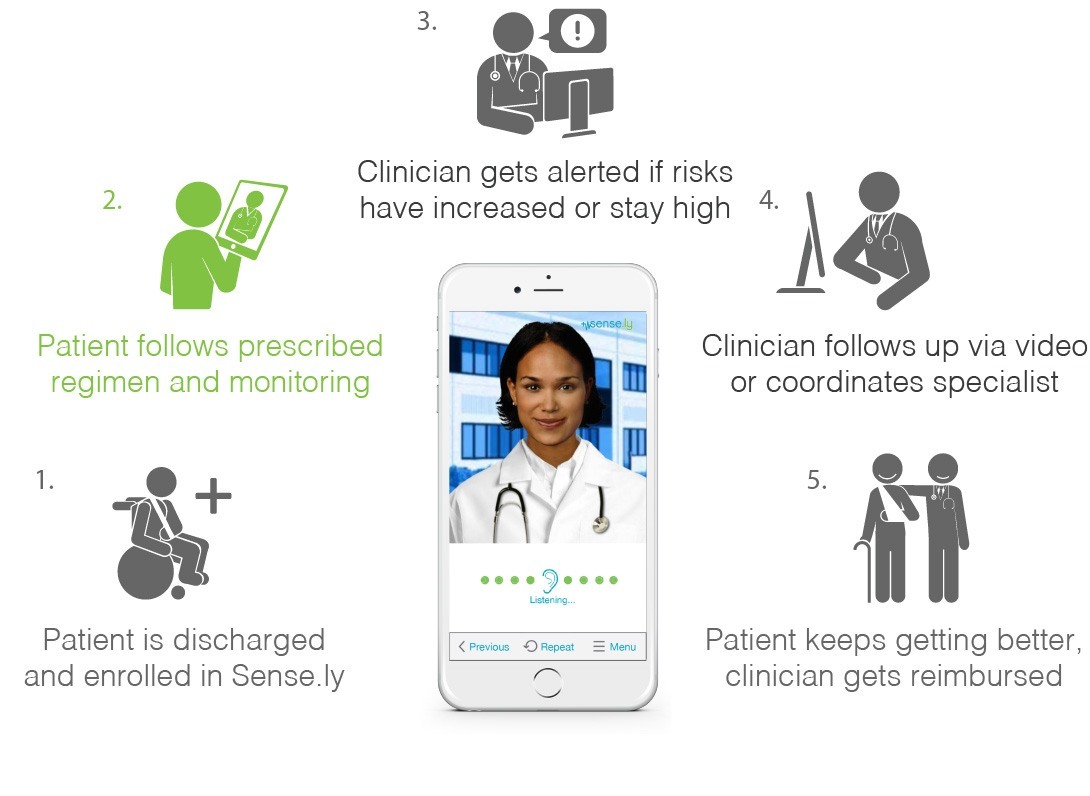
After registering on Sense.ly, patients can summon the virtual nurse with the press of a button, whether at home or in their care facilities. Sense.ly adheres to personalized care plans, enabling clinicians to seamlessly monitor risk factors encountered by patients and adjust medical orders as needed. Sense.ly provides a virtual nurse named Molly, with whom patients can engage in natural conversations. Serving as an intermediary between healthcare providers and patients, Molly assists with everything from basic needs to complex chronic disease management.
With Molly’s assistance, patients can share their vital signs data—including pain levels, sleep patterns, stress, and dietary habits—with the healthcare institution behind Molly, or connect directly with their attending physician via video call. If high-risk indicators are detected during patient interactions, the system alerts the attending physician to provide timely recommendations. The Sense.ly app delivers professional therapeutic support, offering long-term chronic disease monitoring and companionship to ensure patients receive appropriate clinical care.
“The world is currently facing a shortage of nurses and doctors, and we need such clinical intelligent assistants. By making technology more personalized and targeted, we can take on low-value tasks in healthcare institutions, allowing doctors and nurses to focus on more patients,” said Adam Odessky, founder and CEO of Sense.ly. Currently, several hospitals have signed contracts with Sense.ly to use its services.
News Source: hitconsultant