

MiXi Med+: Empowering Grassroots Healthcare Through Family Doctor Services – Targeting 50 Cities, 50,000 Doctors
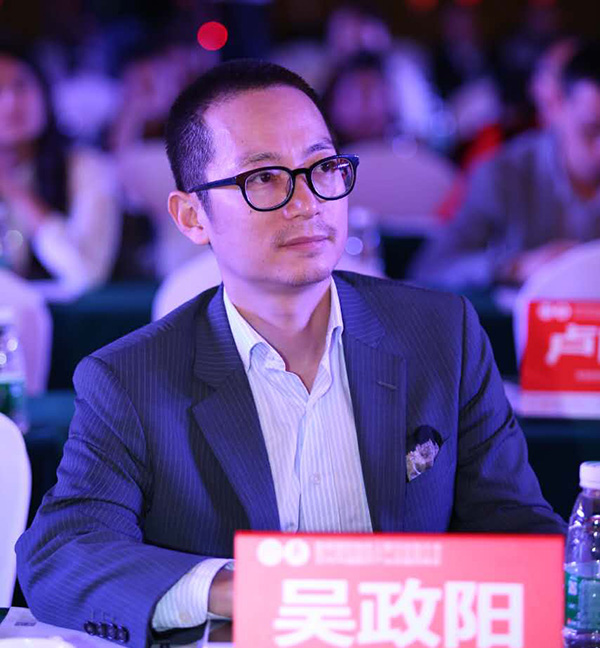
“China’s family doctor system will undoubtedly succeed, and the provision of family doctor services is imperative.” Wu Zhengyang, founder of Mixi, holds a very clear view on the future of family doctors.Wu Zhengyang believes that there are three key issues in the current family doctor market: changing healthcare-seeking habits, residents' perceived "consumption downgrade," and lack of trust in community health service centers. Addressing this situation requires concerted efforts from both sides: first, policy incentives and resident education; second, proactive outreach by community medical services.
How to Build Trust Between Residents and Primary Care Physicians: Wu Zhengyang Believes Community Family Doctors Should Take the Lead in Breaking the IceFamily doctors demonstrate care for community residents through proactive services. In return, residents reward these physicians with positive feedback after receiving attentive, high-quality care, which in turn provides the doctors with financial incentives.
MiXi Yi+ is such a platform. It helps community family doctors improve work efficiency, complete government-assigned tasks more easily, and reduce their workload. At the same time, it increases doctors’ market-oriented income by providing value-added services to residents, rewards proactive care, and enhances physicians’ motivation to deliver high-quality services.
Bullish on Family Doctor Services
Before founding Mixi, Wu Zhengyang worked at Sinopharm Group Co., Ltd., where he served as Executive Vice President of the Marketing Management Division. In 2006, Wu began overseeing Sinopharm’s Community Health Initiative, focusing primarily on expanding into primary care markets. That same year, China began transforming first-tier local hospitals into community health service centers, and Wu participated in the renovation of primary care hospitals in Shanghai. At the time, most companies paid little attention to primary healthcare institutions due to the low volume of business they generated. However, Wu believed that primary care represented the market with the greatest potential, and he began studying the development of community hospitals abroad.
After leaving Sinopharm Group, Wu Zhengyang chose to embark on an entrepreneurial venture not in pharmaceuticals or medical devices, but in community healthcare. This decision stemmed from his strong belief in the family doctor system, as well as his recognition of its industry value, inevitable trends, and capacity for resource reallocation. Wu Zhengyang maintains that only the family doctor system can truly advance China’s current healthcare reform.
“Primary healthcare reform is the lever for resolving China’s healthcare challenges, and family doctor services are the fulcrum of this lever.”Wu Zhengyang said。Therefore, when Wu Zhengyang started his business in 2012, he focused the company’s core operations on community healthcare and family doctor services, establishing a firm foundation at the grassroots level and within local communities.
Entrepreneurial Experience
Wu Zhengyang joined Sinopharm Group in July 2004, becoming one of its earliest employees. His seven-and-a-half-year tenure at the company coincided with a period of significant expansion. During this time, he witnessed Sinopharm’s annual sales surge from RMB 1.6 billion to RMB 120 billion, experienced its initial public offering (IPO), and participated in the extensive mergers, acquisitions, and restructuring that followed. As the company grew, so did his professional capabilities. Although Wu was only in his early thirties at the time, he was already contemplating his personal career development.
During his tenure at Sinopharm Group, Wu Zhengyang provided senior management with annual market reports at the end of each year, based on market feedback and policy directions. In late 2008, Wu proposed the development of a cloud-based Hospital Information System (HIS) and forward-lookingly suggested offering it free of charge to 10,000 hospitals across China. He argued that successful implementation would strengthen control over medical resources, but the proposal was not adopted by the group. In late 2009, Wu recommended establishing a pharmacy trusteeship team. By the end of 2010, he further proposed building an Internet of Things (IoT) network for pharmaceutical distribution in China. As with previous instances, these proposals were also rejected.
Looking back, Wu Zhengyang’s recommendations proved to be quite forward-looking, indeed identifying substantial market opportunities. Although the report received praise from leadership, his ideas could not be implemented within Sinopharm Group Co., Ltd.
In July 2011, the State Council issued the Guiding Opinions on Establishing a General Practitioner System (Guo Fa [2011] No. 23), and various regions launched pilot programs for family doctor contract services in diverse forms, aiming to promote family doctors as a fundamental national health policy. Wu Zhengyang recognized the opportunities in the family doctor market, however,This timeHe decided to start his own business to realize his ideals.
Wu Zhengyang stated, “By 2020, the primary determinant of China’s RMB 8 trillion health industry market will lie not in pharmaceutical distribution, but in healthcare services. The pharmaceutical market revolves around a single baton: prescription authority. This authority dictates the flow of pharmaceuticals, manufacturers’ budget allocations, national medical insurance reimbursements, and commercial insurance payouts. Consequently, this industry’s driving force will increasingly shift to community-level settings. In the future, 80% of our national medical insurance payments will also be directed toward community-based care, bringing greater commercial opportunities along with it. This is why I have chosen to enter this market.”
Serving the Entire Family Doctor Ecosystem
In July 2012, Mixi Company was established, but at that time, the family doctor market was not viewed favorably. Looking back, Wu Zhengyang described Mixi’s growth as “traveling on the road at 2 a.m.” In 2012, the focus of internet healthcare was still on appointment registration. When Mixi introduced the concept of family doctors, it faced repeated skepticism from investors. Do Chinese families have family doctors? No. Can family doctors provide medical consultations? No. Therefore, from 2012 to 2015, Mixi remained relatively isolated in the market, and the company’s development progressed rather slowly.
However, in the second half of 2015, with the advancement of China’s family doctor contract service system, increased attention from investors and entrepreneurs, along with greater policy support and market feedback, have collectively heightened interest in the family doctor market. Meanwhile, Mi Xi’s products have been gradually refined.
MiXi’s product matrix consists of a “1+4” product system, where “1” refers to the core product, Yi+, and the other four products were developed around the evolution of the Yi+ software. Yi+ is a service platform designed for general practitioners (family doctors) in China, primarily serving both the D-end (community general practitioners) and the C-end (community residents) through a contracted service model. In response to the current needs of family doctors, the platform offers multiple features, including intelligent matching for contract signing, patient classification management, and one-click chronic disease health education. These functionalities help family doctors improve work efficiency, increase income, and create value in terms of functionality, revenue, and professional development.
In addition, the other four products are the Family Doctor Organization Network, the Quanyiwei Platform, the Community Hospital Cloud OA System, and the Third-Party Assessment and Evaluation System for Family Doctor Services.
Family Doctor Organization NetworkDescribed by the National Health and Family Planning Commission as the “Dianping.com” for family doctors, this website serves as a publicly accessible third-party platform for evaluating physician services. It compiles a directory of community general practitioners within governmental jurisdictions and presents their profiles along two dimensions: professional competence and service attitude. Professional assessments are based on data provided by medical regulatory authorities, while service attitudes are rated through patient feedback. This approach offers an objective evaluation of physicians’ information, thereby reducing information asymmetry in doctor–patient interactions.
QuanYiWei Platform, it can assist community healthcare institutions and general practitioners in establishing or one-click linking their own WeChat Official Accounts, providing free menu-based content construction for these accounts, thereby lowering the threshold for account setup and enhancing convenience.
Community Hospital Cloud OA System, is an OA management platform launched by MiXi for community hospitals to enhance hospital management efficiency.
The last one provides services to the National Health and Family Planning Commission.Evaluation of Third-Party Family Physician Data. This evaluation system has been in use for four years in Pudong New Area, Shanghai. Within the government’s family doctor contract service program, the system performs proportional and simultaneous sampling at the finest data granularity on all reported data related to family doctor contracts, medical visits, and services. It then conducts targeted follow-up assessments with residents, thereby generating the most authentic data verification and genuine feedback from the grassroots population.
All of Mixi’s products are launched around family doctor services, targeting five roles in healthcare delivery—physicians, patients, medical institutions, hospital administrators, and the National Health and Family Planning Commission—with corresponding offerings for each, thereby providing a comprehensive solution for family doctor contract services.
From Shanghai to the Rest of China
Wu Zhengyang began his entrepreneurial venture in Shanghai in 2012, which proved to be an opportune moment. Following the issuance of Document No. 23 in 2011, Shanghai initiated pilot programs for the family doctor contract system. In November 2015, the city released the “Guiding Opinions on the Comprehensive Promotion of the Family Doctor System in Shanghai,” launching a new round of comprehensive reforms in community health services. The urgent need for advancements in family doctor services and community healthcare system reforms in Shanghai enabled Mixi to secure government contracts during its early development stage.
In June last year, the family doctor contract system was rolled out nationwide, setting a target of 30% coverage for family doctor contracted services. This laid the foundation for Mixi’s national expansion. Wu Zhengyang believes that the state’s requirements for community health services are consistent across grassroots medical reforms, and the required product offerings can be easily replicated on a national scale. After four years of refinement in Shanghai, Mixi’s family doctor service platform has begun to gradually expand across China.
Following the launch of the Yi+ platform in 2015, Mixi established an ecosystem for its family doctor service platform and began transitioning its business model. Mixi’s revenue model shifted from government-funded to consumer-paid, primarily providing value-added medical services to community residents. While basic medical insurance addresses residents’ fundamental healthcare needs, Mixi’s products cater to the significant upgrade in healthcare consumption demand within communities.
In August 2016, Yi+ entered the Beijing and Guangzhou markets, completing the registration and launch of 30% of its family doctors within just one and a half months. Currently, Yi+ is operational in 10 cities across China, with its primary focus on first-tier cities. This is because the family doctor service system is more widely promoted in first-tier cities, where mature markets generate substantial demand for family doctors first.
The Yi+ platform has onboarded 15,000 family doctors, with a total of 2 million community residents from the consumer end joining. Since March 2016, the company’s monthly revenue has grown gradually from tens of thousands of yuan to RMB 2 million by the end of 2016. Before the third quarter of 2017, Mi Xi aims to achieve a monthly revenue of RMB 10 million.
Target: 50 cities, 50,000 doctors, and 20 million users
As family physicians initially garnered limited market attention, Mixi did not secure its first angel investment until July 2014, two years after its establishment. The funding round was led by Aolifeng and Heli Capital, with a total investment of RMB 5 million. In April 2016, Mixi completed its Series A financing, led by Matrix Partners China, with participation from Shangshi Capital and Shenzhen Capital Group (SCGC), raising tens of millions of RMB.
In 2017, in addition to revenue growth, MiXi aimed to enhance its competitiveness along two dimensions. The first dimension was horizontal expansion, focusing on broadening its geographic footprint and improving the occupancy rate and utilization efficiency of scarce resources. By the end of 2017, the “Yi+” platform had launched in 50 cities, registered 50,000 family doctors, and reached 20 million users.
Another dimension of competitiveness is vertical. Community residents currently have low trust in family doctors; while these physicians possess professional expertise, they lack adequate service delivery, which is precisely where market-oriented companies hold an advantage. MiXi will develop standard operating procedures (SOPs) for 35 service items across three major categories of single-disease management services provided by family doctors. This will enable physicians to deliver health management and chronic disease management services before, during, and after treatment in accordance with established standards and processes, ultimately establishing MiXi’s irreplaceable influence within the family physician (general practitioner) industry.