

Singapore-Based Health Tech Platform mClinica Raises $6.3M Series A, Partners with 5,000 Pharmacies Across Southeast Asia
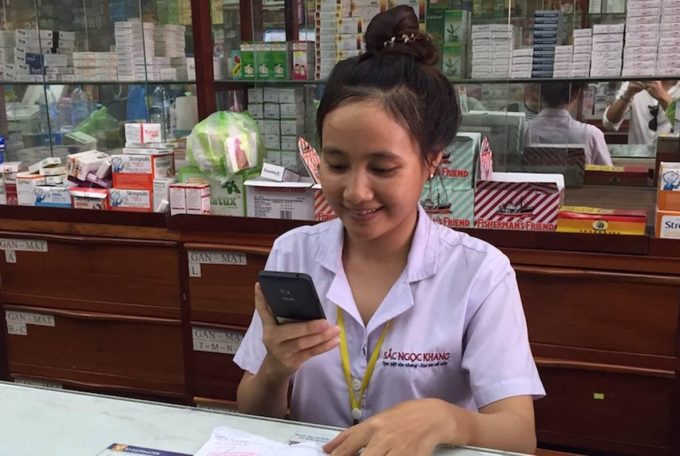
A pharmacist using mClinica software in Vietnam. Photo by Vasil Rusinov, COO of mClinica
Startup ventures in the healthcare and medical sector are gaining increasing momentum across Southeast Asia. Recently, mClinica, a Singapore-based pharmaceutical data platform, secured $6.3 million in Series A financing. The round was led by Unitus Impact from Silicon Valley, with participation from London-based Global Innovation Fund, Indonesia’s MDI Ventures, Endeavor Catalyst, and existing investors 500 Startups, IMJ Investment Partners, and Kickstart Ventures. The funds will primarily be used toFor developing pharmaceutical networks, expanding into new markets, accelerating product development, and recruiting talent.
mClinica is a health tech startup founded in 2012 that has already entered major Southeast Asian markets, including Singapore, Indonesia, the Philippines, and Vietnam. Its mission is to provide healthcare data services by partnering with local pharmaceutical retail alliances, akin to Nielsen.
In an interview, Founder and CEO Farouk Meralli explained that the South Asian region currently lacks pharmaceutical data, as the local market is dominated by small retail pharmacies. This forces pharmaceutical companies to devote greater efforts to understanding their operations, supply chains, and competitive landscape, while governments and non-governmental organizations are deprived of access to critical data for epidemic detection. “In the United States or the United Kingdom, the healthcare sector is primarily composed of chains such as Walgreens or Boots, but here it consists of thousands of independent pharmacies.”
mClinica leverages its platform to connect with multinational pharmaceutical companies, governments, non-governmental organizations, and academic institutions, enabling them to access extensive datasets. These data facilitate the improvement of patient health programs, enhancing operational efficiency and cost-effectiveness. Meralli aims to play a more transparent role by helping track how medications are utilized across Southeast Asia.
For instance, during the formulation of policies and other critical decisions, such data enables the Ministry of Health to rapidly generate visualized, real-time health information. mClinica’s team is currently collaborating with governments in multiple countries to deploy these data-driven solutions.
The mClinica app is designed for pharmacies rather than consumers. It features a highly efficient data capture system that tracks prescription medications, as well as drug distribution and purchases, in real time. Currently, it partners with more than 5,000 pharmacies, covering 70 million patients.
Farouk Meralli, Founder and CEO of mClinica, stated that they are addressing the “last mile” challenges in the pharmaceutical supply chain, specifically focusing on drug delivery to pharmacies and patient access to medications.
mClinica’s data also reveals some alarming findings. In Indonesia, at least 5% of individuals on cocktail therapy suffer from severe health complications. In the Philippines, nearly 60% of tuberculosis patients do not receive the standard care required for cure.
Nishant La, Chief Operating Officer of the Global Innovation Fund, stated that mClinica’s data is highly valuable to government aid agencies and philanthropists, as it guides them in directing targeted assistance to specific locations in Southeast Asia.
Beau Sei, a Managing Partner at Unitus Impact, has also emphasized that Southeast Asia needs more medical and pharmaceutical data. These data are used to compile reports that can be sold to parties interested in learning about pharmaceutical companies in Southeast Asia, or provided to public sector entities such as governments and non-governmental organizations.
In an official statement, Seil noted that the highly fragmented and multi-tiered nature of the pharmaceutical supply chain has led to significant data gaps. These gaps hinder the delivery of essential medicines and health services in developing countries. Market imperfections impair the effective functioning of the supply chain. This situation can only be improved when key stakeholders have a clear understanding of supply–demand dynamics.