

Zhejiang University First Affiliated Hospital Upgrades Internet Hospital with Seven New Platforms Including Tiered Diagnosis and Remote Consultation Services
On February 16, the First Affiliated Hospital of Zhejiang University School of Medicine’s Internet Hospital, supported by Zhuojian Technology, celebrated its first anniversary.
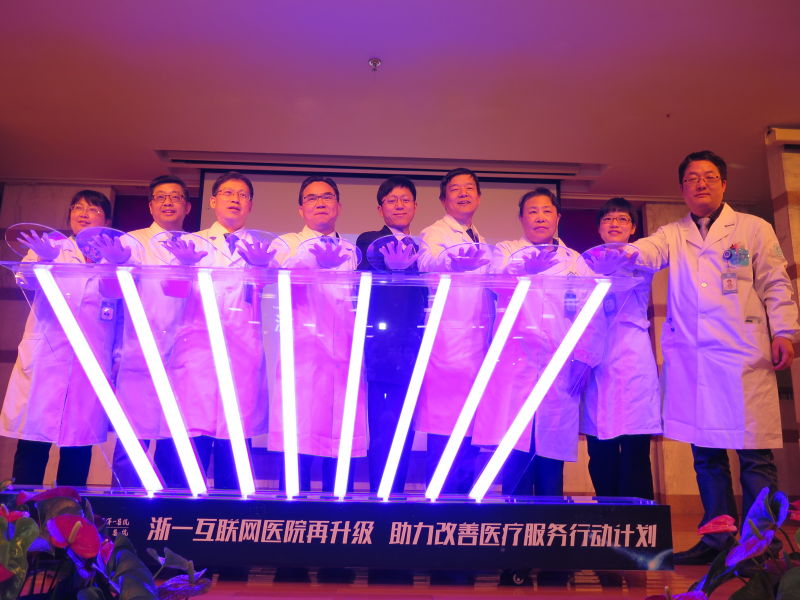
“FAHZU Internet Hospital+” Launch Ceremony
So, what achievements has the First Affiliated Hospital of Zhejiang University School of Medicine’s Internet Hospital made over the past year, what experience has it gained, and where is it headed?
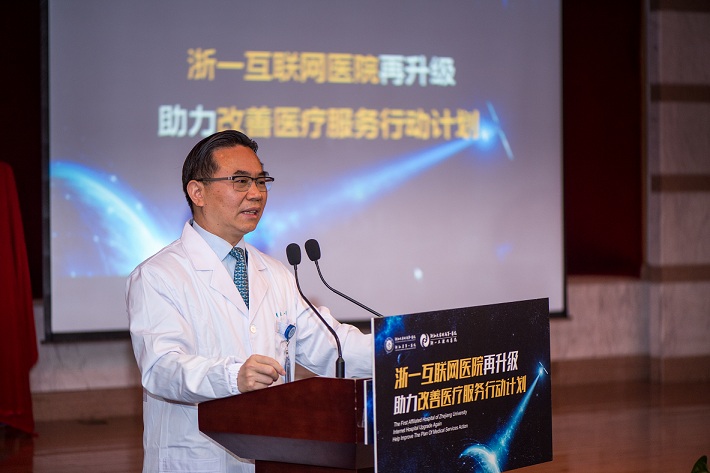
It is reported that since its launch on February 16, 2016, the First Affiliated Hospital of Zhejiang University School of Medicine Internet Hospital hasHas cumulatively served 10,123 patients, facilitating 9,774 online consultations with renowned physicians and 5,670 specialist consultations.。
By logging into the official website of The First Affiliated Hospital, Zhejiang University School of Medicine (FAHZU) or using the "Palm FAHZU" mobile app via smartphones, tablets, or personal computers, users can easily access a range of services. These include remote consultations with FAHZU’s renowned specialists, online payments, scheduling of diagnostic examinations and inpatient beds, medication delivery, and follow-up care for chronic diseases. Patients can even have medications delivered directly to their homes, truly enabling access to top-tier tertiary hospital experts without leaving home.
Zhuojian Empowers Seven Major Platforms as FAHZU Internet Hospital Makes Its Debut
At this press conference, The First Affiliated Hospital of Zhejiang University School of Medicine announced a comprehensive upgrade of its internet hospital, simultaneously launching seven major medical service platforms: the tiered diagnosis and treatment platform, the International Pathology Consultation Center, the International Medical Imaging Consultation Center, the Nursing College, the Geriatric Health Management Center, the Chronic Disease Management Center, and the Prescription Review and Medication Therapy Management Center. It also pioneered the branch hospital model for internet hospitals.
Regarding this upgrade, Wei Jianfeng, founder of Zhuojian Technology, the technical support provider, expressed strong confidence: “While the industry is still debating the business model of internet hospitals, we have already integrated internet medical services into practical scenarios. We have further opened up physician, nursing, and even medical technology services to patients, achieving comprehensive, end-to-end, and all-around patient management for the entire population. This enables patients, doctors, and hospitals to enjoy the convenience brought by internet healthcare, thereby supporting the Action Plan for Continuous Improvement of Medical Services.”
1. The First Affiliated Hospital, Zhejiang University School of Medicine Internet Hospital Tiered Diagnosis and Treatment Platform: Beilun Branch, Shengzhou Branch, Pujiang Branch
To promote the national tiered diagnosis and treatment system, diseases are classified based on their severity, urgency, and complexity of treatment. Medical institutions at different levels assume responsibility for treating corresponding conditions, thereby achieving initial consultations at primary care facilities and implementing a two-way referral system.
Following the launch of the tiered diagnosis and treatment platform on the First Affiliated Hospital, Zhejiang University School of Medicine (FAHZU) Internet Hospital, remote multidisciplinary team (MDT) consultations can be conducted across provincial, municipal, and county levels. Furthermore, referral criteria based on the tiered diagnosis and treatment system have been established. Medical records from primary care institutions and county-level medical facilities are accessible to tertiary hospitals via the platform, achieving seamless information interoperability.
When primary-care patients meet referral criteria, they can initiate a “one-click referral” on the platform, and the system of The First Affiliated Hospital, Zhejiang University School of Medicine will automatically prioritize bed allocation and other arrangements. Upon completion of treatment and when patients are suitable for transfer back to their local facilities, bed information is coordinated through the same “one-click referral” mechanism, truly enabling seamless two-way referrals. This achieves genuine integration across the provincial–county–township three-tier medical network and addresses key challenges in tiered diagnosis and treatment and two-way referrals.
2. International Pathology Consultation Center: “Patients Can Access Medical Care with Just a Smartphone”
The caliber of a hospital’s surgical expertise is fundamentally underpinned by the quality of its pathological diagnosis. Traditionally, remote pathology consultations have been conducted exclusively between hospitals, requiring patients to visit their treating facility to complete consultation procedures, thereby incurring significant time and financial costs. The First Affiliated Hospital of Zhejiang University School of Medicine Internet Hospital has transformed this hospital-to-hospital model into a direct patient-to-hospital relationship. Patients can now access remote pathology consultation services from The First Affiliated Hospital of Zhejiang University School of Medicine—even for international medical cases—simply by using a mobile phone at home to submit valid identification, details of their treating hospital, and their pathology case number.
3. International Imaging Consultation Center: Establishing an International Subspecialty Consultation Collaboration Platform
The era of carrying bags of CT films around in search of specialists is undergoing a transformation. With “cloud” connectivity between hospitals, patients consulting at the First Affiliated Hospital of Zhejiang University School of Medicine’s Internet Hospital can have their imaging data retrieved from primary care facilities, enabling authoritative diagnoses by the hospital’s radiology experts.
By leveraging internet technologies and big data transmission, an “Internet + Imaging” closed loop is being established, encompassing subspecialty-based consultations, teaching, quality control, and collaborative clinical diagnosis. This approach bridges the gap between doctors and patients, maximizes the realization of “patient-centered” care, deepens case-based research among physicians, and builds an international platform for consultative collaboration, thereby providing patients with more comprehensive and practical medical solutions.
4. The First Affiliated Hospital, Zhejiang University School of Nursing: Specialized Home Care
Discharged after surgery, but the wound hasn’t fully healed—how should it be cared for at home? Can expectant mothers with large bellies acquire essential healthcare and nursing knowledge through “at-home classes”?
The uniqueness of nursing care lies in the fact that discharge upon recovery does not mean that corresponding care can be discontinued. For instance, after the birth of a newborn, anxiety and bewilderment regarding neonatal care often persist for months or even years among new parents. Although hospitals offer specialized prenatal classes, factors such as limited mobility during the postpartum confinement period and excessive travel distance continue to constrain and trouble new parents.
With the further advancement of internet technology, remote home-based care has become feasible. To strengthen the development of the First Affiliated Hospital, Zhejiang University School of Medicine (FAHZU) Internet Hospital, FAHZU is establishing the FAHZU Internet Nursing Cloud Academy. This platform is built upon a comprehensive system encompassing collaborative nursing diagnosis, nursing consultations/inquiries, teaching and quality control, and health assurance (including chronic disease management, transitional care, and care for special populations). The initiative aims to provide remote nursing guidance and consultation services to patients in primary healthcare institutions, thereby improving the quality and accessibility of health services, helping patients enhance their health outcomes and reduce readmission rates, lowering medical costs, and increasing patient satisfaction.
Meanwhile, a unified information management system will be implemented to enhance the efficiency and management standards of standardized training across all hospital teaching bases, while progressively establishing a comprehensive individualized training database for healthcare professionals.
5. Geriatric Health Management Center: Bringing “Happy Healthcare” to the Homes of Elderly Patients
Population aging presents another major challenge to China’s healthcare system. Coupled with the characteristics of older adults—such as multimorbidity, high prevalence of chronic diseases, limited mobility, and frequent medical visits—the difficulty elderly patients face in accessing medical care has become even more pronounced.
The Geriatric Disease Management Center of the First Affiliated Hospital, Zhejiang University School of Medicine’s Internet Hospital has established geriatric healthcare groups that enable participation by geriatricians from the hospital, physicians from primary care institutions, and elderly patients. These groups provide health education, consultation, and training on geriatric medical knowledge, as well as convenient online healthcare services for home-dwelling older adults and their caregivers, thereby improving their quality of life and health outcomes.
6. Chronic Disease Management Center: Big Data Enables 24-Hour Call Follow-Ups
The development of big data technology has brought new directions and breakthroughs to chronic disease management. By monitoring online data for common and frequently occurring cardiovascular diseases, it enables effective chronic disease management, improves management efficiency, and ultimately achieves better secondary prevention outcomes.
7. Prescription Review and Medication Therapy Management Center
Leveraging cloud technology and networking to enable regional electronic prescription review, as well as monitoring and early warning of irrational drug use, thereby ensuring that clinical medication is safe, effective, appropriate, and cost-efficient. Standardizing medical insurance-related diagnosis and treatment practices, conserving limited healthcare resources, and providing individualized medication assessment, integration, and guidance to safeguard medication safety for individual patients and protect their pharmaceutical care.
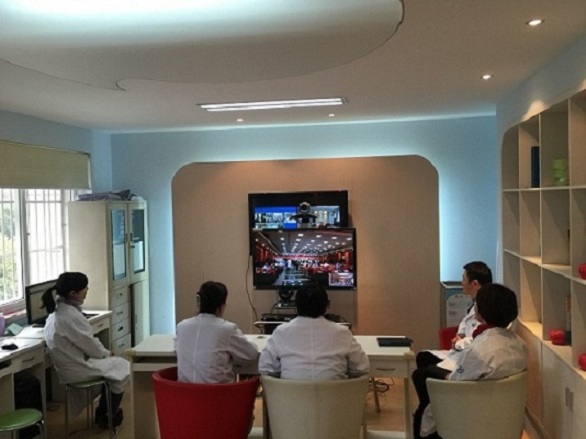 Hangzhou Zhalingkou Community Health Center Conducts Remote Video Consultation with The First Affiliated Hospital, Zhejiang University School of Medicine
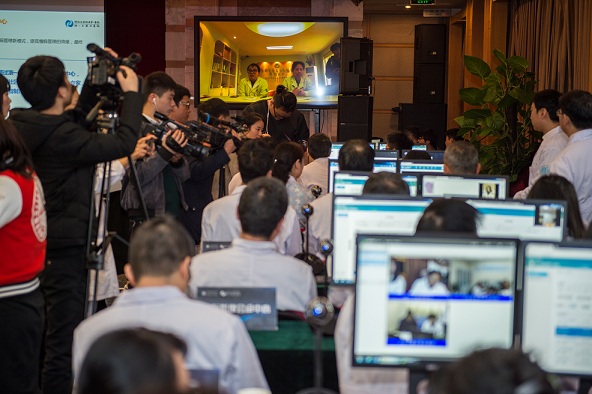
Seven Major Medical Service Platforms of the First Affiliated Hospital, Zhejiang University School of Medicine Internet HospitalOn-site Demonstration