

iFLYTEK's Three-Pronged Strategy in Smart Healthcare: Pioneering Voice-to-Structured-EMR Solutions
As the largest intelligent voice and artificial intelligence technology company in the Asia-Pacific region, iFlytek has become more widely recognized by the general public following the 2016 launch event for Smartisan’s new smartphones. When we mention iFlytek, the immediate associations are intelligent voice and artificial intelligence technologies, as well as products such as the iFlytek Input Method and iFlytek Tingjian.
In addition, iFlytek entered the smart healthcare sector as early as 2015. Leveraging its technological advantages and a robust AI R&D team, the company has not only applied intelligent voice technology to healthcare but also expanded its business to include medical imaging and cognitive computing-based clinical decision support systems similar to IBM Watson. To gain deeper insights into iFlytek’s strategic layout in smart healthcare, VCBeat interviewed Lu Xiaoliang, Deputy General Manager of iFlytek’s Smart Healthcare Division.
When asked about his entry into the healthcare sector, Lu Xiaoliang cited two primary reasons. Driven by iFlytek’s pioneering advancements in artificial intelligence (AI), the integration of “AI+” with education, healthcare, smart cities, customer service, smart homes, and robotics—combined with industry-specific expertise and big data—has already demonstrated significant application value across numerous sectors. This represents, first and foremost, a timely opportunity brought about by the AI era.
Second, the challenges of difficult and expensive access to medical care in China are particularly prominent. In the past two years, the state has introduced numerous new healthcare policies concerning tiered diagnosis and treatment, telemedicine, and general practitioners. However, a gap remains between the clinical expertise of primary-care physicians and that of specialists at large hospitals, and there is a severe shortage of general practitioners. These factors have hindered the effective implementation of many policies. iFlytek also recognizes that smart healthcare in China is at a critical juncture of rapid growth. Accelerating research into “AI + Smart Healthcare” and promoting its application can play a significant role in advancing healthcare infrastructure.
Therefore, leveraging its own strengths, iFlytek has established a presence in the healthcare industry across three domains: intelligent speech, medical imaging, and cognitive computing-based clinical decision support systems.
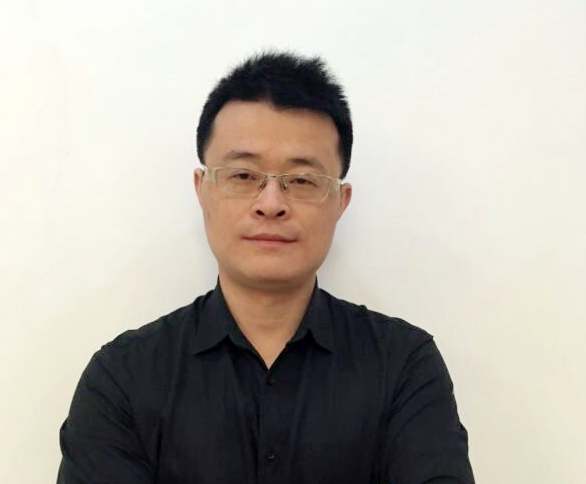
Lu Xiaoliang, Deputy General Manager of the Smart Healthcare Division at iFlytek
Directly convert speech into structured electronic medical records
In 2016, the first product of iFlytek’s smart healthcare business—the “Cloud Medical Voice” mobile application—was officially deployed in hospitals such as Anhui Provincial Hospital, marking the initial commercial implementation of iFlytek’s medical products. Leveraging iFlytek’s globally leading intelligent voice and artificial intelligence technologies, Cloud Medical Voice not only consolidates all patient data for convenient access by physicians at any time, but also directly transcribes and organizes physicians’ verbal medical orders into electronic documents, significantly reducing their workload. Additionally, it provides physicians with precisely targeted recommendations for medical literature and other relevant data.
However, if you think iFlytek’s voice input system merely converts speech to text, you are underestimating iFlytek.First, to address the noisy environment in hospitals, while taking into account that surgeons, radiologists, and dentists do not have free hands to document clinical conditions during surgery or work,iFlytek has developed a specialized microphone for physicians., during the communication process among doctors, nurses, and patients,The AI system automatically filters out irrelevant information and converts the required medical data into text, enabling physicians to maintain accurate records even while on the move.。
Meanwhile, to further enhance physicians' work efficiency and collect valuable medical data,iFlytek Based on Natural Language Processing Technology, directly structure the converted text to form a structured electronic medical record (EMR). The EMR includes the patient's examination history, medical history, various test results, and physical indicators. Physicians only need to make minor modifications and confirm the content of the EMR before printing it for the patient and saving the electronic file.Lu Xiaoliang revealed that the accuracy rate of iFlytek’s intelligent speech transcription system currently stands at 97%, covering all departments in hospitals.
In fact, to facilitate the effective implementation of its intelligent voice projects, iFlytek has undertaken extensive efforts. On June 21, 2016, iFlytek and Anhui Provincial Hospital jointly unveiled the Medical Artificial Intelligence Joint Laboratory, aiming to collaboratively promote the exploration and application of intelligent voice and artificial intelligence technologies in the healthcare sector.
On September 5, 2016, the voice-based outpatient medical record collection system, jointly developed by iFlytek and the National Engineering Laboratory for Digital Medical Technology and Materials in Stomatology at Peking University School of Stomatology, officially entered its pilot phase. Lu Xiaoliang revealed that iFlytek’s intelligent voice system has already been deployed and put into use at more than 20 hospitals, including Peking University School of Stomatology, Ruijin Hospital, and the PLA General Hospital (301 Hospital). In 2017, iFlytek will carry out large-scale market promotion of its intelligent voice system.
AI-Assisted Diagnosis in Medical Imaging
Radiologists face two prominent pain points: excessively long working hours and uneven levels of technical expertise, compounded by difficulties in information exchange and a lack of learning opportunities. Leveraging artificial intelligence (AI) systems to assist physicians in making diagnoses is a field that many AI companies have now entered. As a publicly listed company renowned for its intelligent voice technology, it came as some surprise to the reporter when Lu Xiaoliang introduced their medical imaging business to VCBeat.Lu Xiaoliang explained that iFlytek has profound technological accumulation in the field of artificial intelligence and a strong R&D team. Therefore, venturing into medical imaging is merely a matter of applying AI technology to a different domain for iFlytek.
iFlytek's Medical Imaging Assisted Diagnosis and Treatment SystemIts primary function is to assist radiologists in image interpretation by delineating tumor lesions and identifying pathological regions, thereby reducing misdiagnoses and missed diagnoses caused by technical limitations or fatigue. According to Lu Xiaoliang, iFlytek’s imaging system, in its latest R&D phase, can already detect pathological areas smaller than 3 mm. Furthermore, the integration of the imaging system with an intelligent voice recognition system helps improve physicians’ efficiency, alleviate the workload of radiologists, and consequently reduce their working hours.
Currently, intelligent imaging-assisted diagnostic systems have entered the market through lung CT image detection. In 2017, iFlytek will continue to intensify its R&D efforts, expanding into mammographic X-ray and MRI image analysis, with plans for large-scale clinical application by the end of 2017.
Cognitive Computing-Based Clinical Decision Support System
To address the challenges faced by primary-care physicians in China, iFlytek is developing an AI-assisted diagnostic system similar to Watson. By leveraging vast amounts of medical data, the system aims to enhance diagnostic accuracy for physicians and provide patients with personalized treatment plans.Lu Xiaoliang revealed that although there are similarities between the two, iFlytek and Watson have different positioning. Watson is mainly aimed at cancer patients, providing treatment plans as a reference for oncologists, making it a specialist doctor.
iFlytek's intelligent system, primarily designed for primary care physicians, is positioned as a general practitioner to help alleviate the shortage of general practitioners in China., with the aim of providing convenient, accurate, and humanized health management services to urban and rural residents.
iFlytek is not just paying lip service. First, the team of its Smart Healthcare Division already comprises 70–80 members, predominantly researchers. This indicates that iFlytek is dedicating greater resources to research and development, with a strong emphasis on technological innovation.
Furthermore, iFlytek has begun to accumulate medical data reserves. On November 24, 2016, iFlytek and Wanfang Data Co., Ltd. formally signed a strategic cooperation agreement, under which both parties will commit to advancing collaboration in smart healthcare and jointly leverage big data to facilitate progress in artificial intelligence research and applications.
On December 9, 2016, iFlytek and the Southern Branch of Shanghai Sixth People’s Hospital Affiliated to Shanghai Jiao Tong University signed a strategic cooperation agreement. The two parties will jointly establish a Joint Research Center for Smart Healthcare to explore the next possibilities in healthcare and artificial intelligence.
These two collaborations enabled iFlytek to acquire substantial medical data, which forms the foundation for artificial intelligence R&D. As is well known, in its development of Watson, IBM first partnered with Memorial Sloan Kettering Cancer Center to obtain its medical data. Later, in February 2016, IBM acquired Truven Health Analytics, a healthcare data and analytics provider, for $2.6 billion to expand its database. All these efforts constitute the foundational infrastructure for artificial intelligence R&D.
In terms of its profitability model, iFlytek Medical products operate under two models,One approach is to sell medical products directly to hospitals. The second involves collaborating with healthcare IT companies, such as Neusoft, to jointly market solutions to hospitals through integration with their hospital information systems.
Healthcare-related revenue accounts for 50% of the total revenue of Nuance, the world’s largest speech technology company. However, Nuance does not have healthcare operations in China. As the largest intelligent voice and artificial intelligence technology company in the Asia-Pacific region, iFlytek’s healthcare business is still in its early stages. Leveraging the momentum from China’s healthcare informatization and electronic medical record (EMR) initiatives, and with a strong focus on B-end users, the healthcare sector is poised to become a significant revenue source for iFlytek in the future.