

GE Engineers Develop VR Technology to Let Surgeons 'Walk Into' the Human Body for Preoperative Planning and Surgical Assessment
Imagine you are a physician entering a virtual environment that replicates a patient’s brain, where you can zoom in on specific regions of interest for detailed examination. How remarkable would this be for a clinician?
Recently, GE published an article stating that medical imaging engineer Le Berre envisioned using VR technology to create a way for doctors to “walk into” the human body. After several simple yet effective preliminary trials, he decided to collaborate with his colleague Avot to turn this idea into reality.
Drawing Inspiration from Games
Le Berre and Avot are both medical imaging engineers at GE, as well as avid gamers. They enjoy playing games with VR headsets, which allow them to “realistically” experience what Boston looks like after a nuclear explosion in the game. The realistic visuals inspired Le Berre with an idea: Could VR technology be used to enable doctors to enter the human body, much like the heroes in the sci-fi movie *Fantastic Voyage*, to examine organs and tissues and thereby detect diseases?
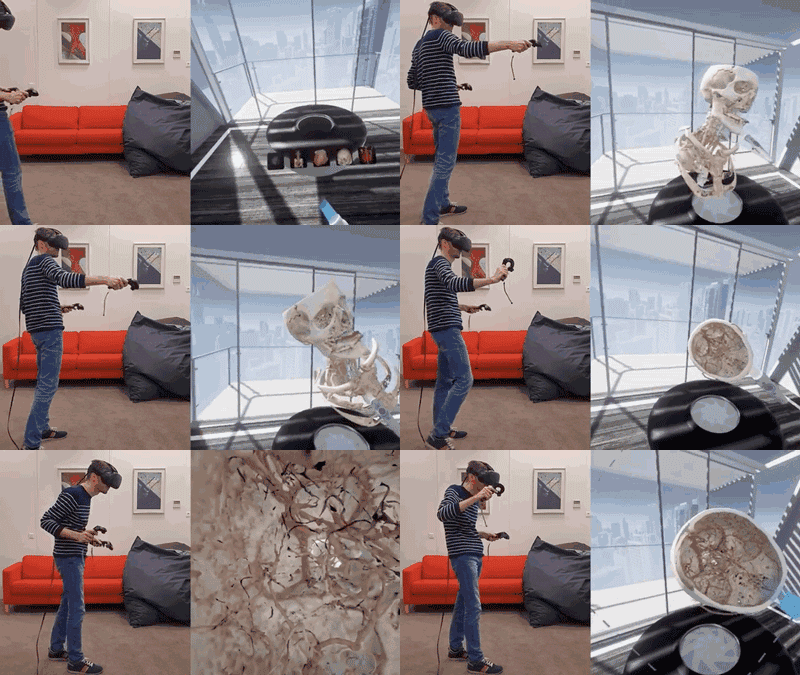
One of the advantages of being an engineer is the opportunity to put one’s ideas into practice. Two engineers validated their concepts at the GE Healthcare Global Medical Imaging Software Center of Excellence in Buc, France. They analyzed various VR design tools and gaming software to create a virtual experience using 3D data derived from CT and MRI human scans, incorporating features such as color, texture, lighting, and other characteristics.
Remarkably, the tracking system employed by Le Berre and Avot can precisely monitor various movements without inducing dizziness in users, thereby ensuring that surgeons can perform lengthy procedures. Furthermore, their model is compatible with existing VR headsets, such as the Oculus Rift®.
Physicians can use it to observe the pleura covering the lung surface or the pale pink tissue in the brain, and even “enter” specific regions of the human body to examine polyps, tumors, and other lesions.. This technology helps provide doctors with more intuitive imaging information, enabling them to better conductSurgical Preparation。
Constructing 3D Human Anatomical Models
Currently, 3D imaging has become the frontier of medical imaging technology. The Center of Excellence at Booke has taken the lead in constructing 3D human anatomical models using images acquired from GE scanning equipment. Physicians can utilize these models to conduct targeted observations of specific organs, such as assessing coronary artery stenosis, and can also produce portable organ models using 3D printers.
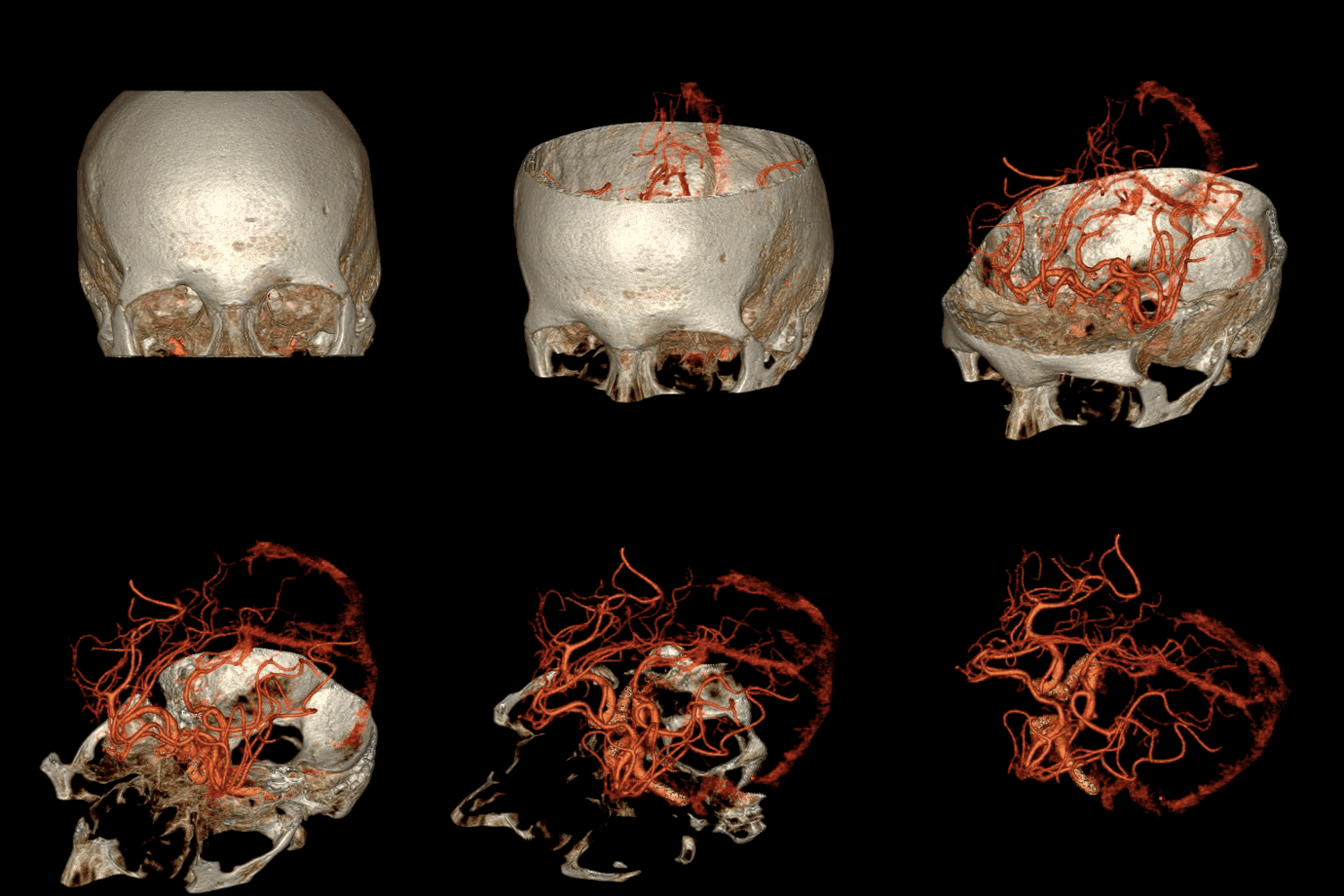
Avot and Le Berre have helped establish VR technology as a critical tool in the field of medical diagnostics through “open innovation and design thinking processes.” Their products have also gained recognition from experts.
According to reports, this technology is expected to be implemented soon. A French client of GE will pilot the VR system this year, with subsequent deployment anticipated in the United States and Asia. The first VR prototype developed will help physicians gain a more comprehensive anatomical understanding and facilitate more accurate determination of pathological types.Avot hopes that this technology will not only assist physicians in diagnosis, but also enable them to use VR models for procedural rehearsal prior to surgery and evaluate surgical outcomes postoperatively, thereby reducing surgical risks.
Chinese Enterprises Are Not Lagging Behind
VCBeat once reported on a company based in Shenzhen, China—MiaoZhi Technology. ItApplying VR technology in clinical settings to convert 2D images into 3D models,The core technology is intelligent segmentation, which can separate bones, blood vessels, and muscles, allowing doctors to extract and view the required areas at will.
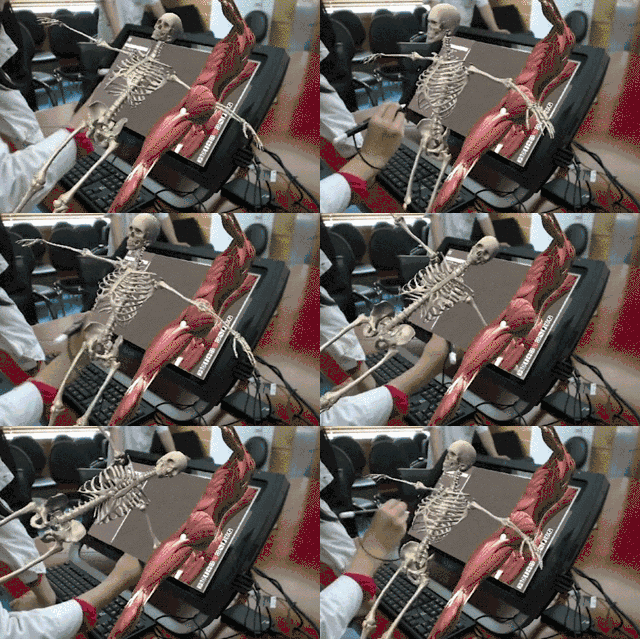
MiaoZhi Tech VR Medical Imaging Platform: Trial Footage at the Second Affiliated Hospital of Sun Yat-sen University
This product can be applied to precision surgical planning, medical education, and doctor-patient communication. It is currently primarily used in orthopedic surgeries. In the future, Miaozhi Technology plans to extend its VR medical imaging technology to clinical departments such as neurosurgery and cardiology/cerebrovascular medicine, aiming to improve surgical outcomes and expand the adoption of this technology across more hospitals. Miaozhi TechnologyFor details, please click:http://www.vcbeat.top/35215
Source: GE's official WeChat account and VCBeat