

Chengdu Zhengguangxing Completes RMB 160 Million Series B Funding Round, 70% of Revenue from General Practice Services, Plans Nationwide Expansion of Clinics
On September 11, Duan Minyi, founder of Chengdu Zhengguangxing Physician Group, told VCBeat: “Zheng Guangxing Family Doctor GroupSecured investment from an industrial fund company,Completed RMB 160 million in Series B financing。”
Zheng Guangxing is a family physician group that integrates industry, academia, and research thinking within the framework of general practice. It has consistently developed medical service products with market value and affordability, achieving a win-win outcome for residents, insurers, and healthcare institutions.
Over the years of operation, Zhengguangxing has established three physical medical institutions through replicable and standardized models, including the Nanxin Community Health Service Center in Chengdu High-Tech Zone, Chengdu Gaoxin Zhengguangxing General Outpatient Department, and the Outpatient Clinic of Chengdu High-Tech Administrative Committee.
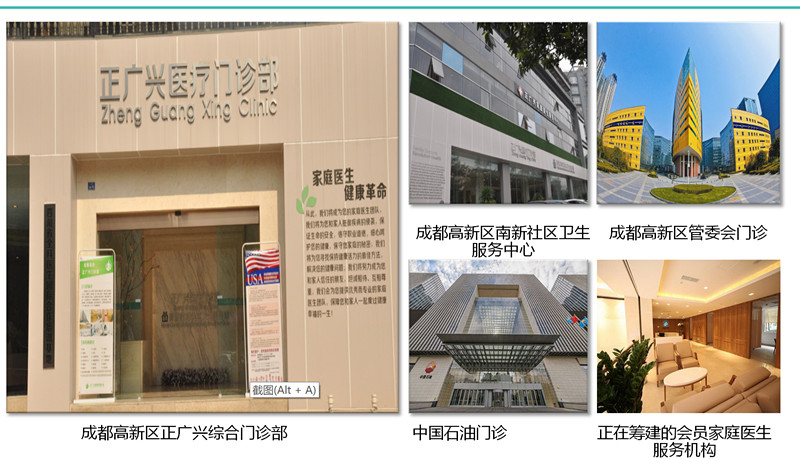
“We will successively open general practice clinics in Beijing, Shanghai, and Chongqing, replicating more ‘Chengdu Gaoxin Zhengguangxing General Outpatient Department’ models,” said Duan Minyi after the financing round.
Among the many healthcare entrepreneurs, Duan Minyi stands out as one of the few visionaries who truly grasp the essence of healthcare. He firmly believes that, against the backdrop of the state’s vigorous promotion of tiered diagnosis and treatment and pragmatic strengthening of primary care, offline physical medical institutions are the true solution to the healthcare industry’s longstanding “three longs and one short” dilemma.
Duan Minyi graduated from Chengdu University of Traditional Chinese Medicine. He has served as a senior executive at a publicly listed pharmaceutical company and worked as an investor. Currently, he holds positions including Visiting Professor at Chengdu University of Traditional Chinese Medicine, Expert Panel Member of the Gu Yuan Family Doctor Consulting Studio, and Committee Member of the Primary Care Group (Preparatory) under the General Practice Branch of the Chinese Medical Association. From 2005 to 2010, he conducted studies on family physicians and primary healthcare institutions in Australia, Europe, Southeast Asia, and other regions.
Upon returning to China, Duan Minyi established the Chengdu Zhengguangxing Family Doctor Group in 2007. Three years later, following market research and the integration of industry resources, he formally registered and founded Chengdu Zhengguangxing Health Consulting Co., Ltd. in 2011.
At that time, coinciding with the surge in internet healthcare startups, investors were highly enthusiastic about internet healthcare projects, and entrepreneurs attracted continuous capital investment by telling one compelling story after another. The dream of getting rich overnight, once considered delusional, became a reality for these entrepreneurs.
Amidst numerous temptations, Duan Minyi has remained steadfast in operating brick-and-mortar entities, dedicating himself to building a family doctor service organization focused on standardized primary care, refined health management, and targeted specialized interventions.
In his view, the seeds of trouble were sown at the very inception of internet healthcare. At that time, startup projects secured financing by relying on strategies of “cash burning,” “disruption,” and “restructuring.” However, the medical industry is characterized by three major barriers—high professional specialization, high market concentration, and high policy risk—which cannot be overcome merely by burning cash. The offline physical sector remains the primary battlefield.
According to data released by the third-party research firm iiMedia Research, the market size of China’s mobile healthcare sector was approximately RMB 2.95 billion in 2014; it grew by 44.7% in 2015, reaching RMB 4.27 billion, and is projected to reach RMB 12.08 billion in 2017. The number of mobile healthcare users in China stood at 72 million in 2014 and increased to 138 million in 2015.
The seemingly bustling internet healthcare sector ushered in a “cold wave” in 2015, as long-simmering problems—such as cash-burning subsidies, malicious order fabrication, and data falsification—came to the fore, exacerbating the spread of negative sentiment. The vast majority of mobile health apps secured only angel or Series A financing; just over 50 companies progressed to Series B, and fewer than 20 reached Series C, with the so-called “Series C curse” proving all too real.
Since then, multiple investors have stated that they will not consider investing in mobile health in the future. They have gradually realized that mobile health has always lingered on the periphery of traditional medical services, failing to truly reach the core; moreover, mobile health has not addressed the pain points of traditional healthcare, making its social and commercial value difficult to demonstrate.
“In August 2015, Zhengguangxing completed its Series A financing round of over RMB 20 million from Huagai Capital,” Duan Minyi told VCBeat.
In April 2016, the “winter chill” intensified as a report titled “The Latest Death Toll of Mobile Health Companies” sparked panic within the industry, with 27 moderately well-known mobile health companies declaring themselves “dead.” In May of the same year, “Yao Geili,” the first O2O medication delivery startup to secure Series A financing, collapsed on the eve of its funding round.
Numerous entrepreneurs and investors in the internet healthcare sector are anxiously seeking a path to breakthrough, shifting from online to offline operations in hopes of finding a profitable avenue.
As these entrepreneurs turned their attention back to offline physical operations, Zhengguangxing had already established three offline entities: the Nanxin Community Health Service Center in Chengdu High-Tech Zone, the Chengdu High-Tech Zhengguangxing Comprehensive Outpatient Clinic, and the Outpatient Clinic of the Chengdu High-Tech Zone Administrative Committee, leaving other entrepreneurs behind.
In May 2016, seven national departments issued the “Guiding Opinions on Promoting Family Doctor Contract Services,” which brought family doctors into the spotlight.
An increasing number of companies are focusing on or expanding their family doctor services, including Ping An Good Doctor, DXY, Anhao Shidai, Linjia Haoyi, 5U Family Doctor, and Family Doctor Online. Among these platforms, “Zheng Guangxing” is recognized as a pioneer in delivering on-the-ground family doctor services in China.
In fact, as early as 1993, China’s Ministry of Health began planning to introduce the Western family physician system and promoted the equalization of basic medical care and public health services as a fundamental national policy. Over the past two decades, this initiative has achieved considerable scale and made significant progress in ensuring “basic-level coverage with broad accessibility.”
However, in economically developed regions, particularly in their central cities, this model of “basic-level, broad-coverage” primary healthcare services still fails to meet the diverse needs of the large resident population for such services. Consequently, these residents continue to flock to large hospitals, resulting in overcrowding and exacerbating the problems of “difficulty and high cost in accessing medical care.”
In Duan Minyi’s view, the most robust primary healthcare system requires both equalization and diversification. The government should provide equitable medical services to residents, while the market addresses diverse service needs. Although the government has vigorously encouraged social capital investment in healthcare in recent years, primary care continues to face challenges such as shortages of medical personnel and medicines, as well as public distrust. Consequently, most entrepreneurs and investment institutions remain on the sidelines of the primary healthcare sector, with few making substantial inroads.
Social capital investments are primarily directed toward specialized and general hospitals, with revenue derived mainly from consultation and treatment fees. However, since these fees are predominantly covered by social medical insurance, investment in primary healthcare institutions remains rare.
“In fact, at the primary care level, I believe that patients are purchasing services. If primary healthcare institutions can provide distinctive and differentiated humanistic care along with continuous services, the current struggle for profitability will be overcome,” added Duan Minyi.
Emphasizing service may be one of the secrets to Zhengguangxing’s success. When a reporter visited the Chengdu Hi-Tech Zhengguangxing Comprehensive Outpatient Clinic, located at No. 38 Tianhui Road in the Chengdu High-Tech Zone, they happened upon an elderly patient, approximately 70 years old, seeking medical care. From the moment she entered the clinic, medical staff accompanied her throughout the entire visit, and the physician’s consultation lasted more than 20 minutes.
This outpatient clinic, covering an area of over 5,000 square meters, integrates medical services, planned immunization, maternal and child health care, medical aesthetics, chronic disease management, family physician services, individual and group health examinations, rehabilitation, and health education.。The most significant distinction from other primary care outpatient clinics is the absence of a large number of infusion beds; instead, the space features softly toned furnishings and separate children’s activity areas. There is no hierarchy among general practitioners—only differences in roles and responsibilities. These general practitioners are not only capable of accurately determining whether a patient is ill and diagnosing the condition, but also of referring patients to the most appropriate specialists.
As Duan Minyi has previously conducted field research on foreign general practice systems, he places great emphasis on the integrated development of industry, academia, and research. He has established two separate evaluation frameworks for outpatient physicians and family doctors, respectively. Family doctors are categorized into four levels: Lead Family Physician, Attending Family Physician, Supervising Family Physician, and Assistant Family Physician. Annual performance assessments for promotion are conducted across multiple dimensions, including patient satisfaction, team satisfaction, scientific research and innovation capabilities, learning ability, and clinical skill application. The implementation of a system that separates professional title evaluation from appointment helps fulfill physicians’ expectations for career growth, encompassing both income advancement and personal value realization. Furthermore, collaborations with academic institutions offering medical and nursing degree programs have been established to cultivate “dual-qualified” professionals who possess both academic credentials and practical clinical expertise.
Collaborate with medical institutions in Taiwan and North America to establish pathways for the ongoing continuing education and advanced training of family physician teams. Currently, cooperative teaching relationships have been established with Changhua Christian Hospital in Taiwan and the International Partnership for Continuing Education in Family Medicine (IPCEA) in the United States.
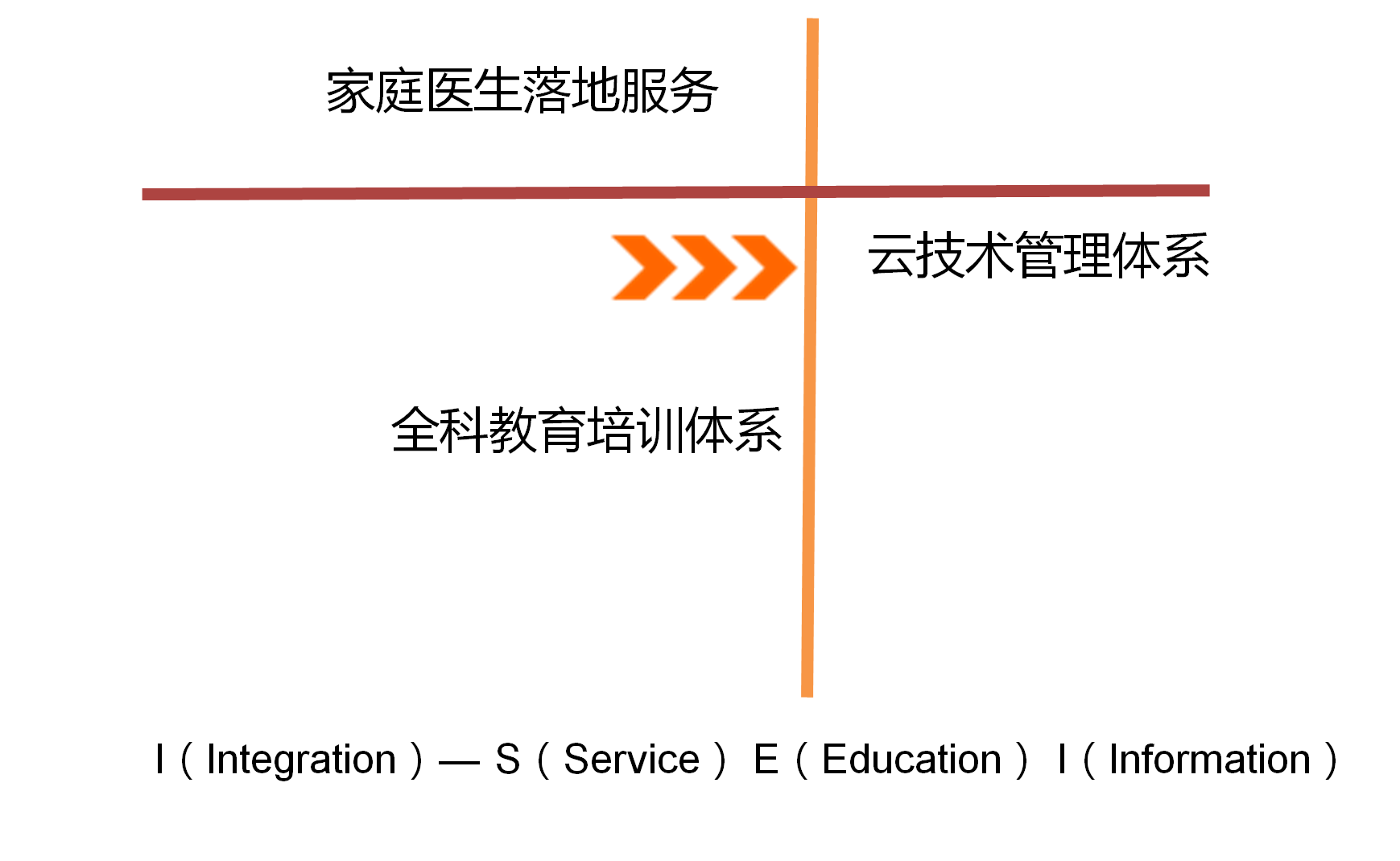
A comprehensive general practice education system is the source of Zhengguangxing’s acquisition of family physician talent. In the course of its development,Duan Minyi has pioneered a pathway for an integrated service system centered on the implementation of family doctor services, supported by continuous education for general practice teams and information systems, abbreviated as I-SEI.
Currently, it provides basic medical care, public health services, and childhood immunization services to 50,000 residents in the Chengdu High-Tech Zone. It also delivers family doctor services to over 2,000 staff members of the Administrative Committee, employees and clients of multiple banks and enterprises, as well as employees and clients of numerous real estate companies. To date, more than 2,000 community family doctor membership cards, over 300 pediatric family doctor membership cards, and more than 1,000 premium family doctor membership cards have been issued.
“Seventy percent of our revenue comes from members, most of whom are corporate executives. They fly to Chengdu from all over China to assess their health status. In response to member needs, Zhengguangxing also offers services such as appointments with specialist experts, overseas remote consultations, remote medical imaging diagnosis, and assistance with seeking medical treatment abroad,” introduced Duan Minyi.It is estimated that Zhengguangxing's total revenue in 2017 will be approximately RMB 30 million, with service-related income accounting for 70.8% and clinical diagnosis and treatment income accounting for 29.2%.”
On the other hand, Zhengguangxing was established in late 2014, building its foundation on the development of online information systems, the construction of a general practitioner education system, and the establishment and training of family doctor teams, and subsequently launched a series of family doctor service products to the market.
In terms of management, Duan Minyi achieved seamless integration of online and offline health management services provided by family doctors, establishing a comprehensive management system and an information technology platform based on a “hybrid cloud” architecture. He also led the design of service programs for whole-lifecycle health management, as well as the development of quality control and effectiveness evaluation systems.
After more than a decade of entrepreneurship in family medicine, Zheng Guangxing has continuously refined its approach through practice, ultimately establishing a health management philosophy centered on “preventive care” and adopting a novel “examination plus wellness maintenance” check-up model. By integrating premium global medical resources, the company has created a green channel for healthcare that features end-to-end tracking and guidance by family physicians, along with full-process accompaniment by triage nurses. This comprehensive management system aims to prevent fatal diseases from taking hold, achieving early prevention, detection, and treatment; timely management of minor and common illnesses; and targeted specialist interventions when needed.
A Brand-New SystemThis is one of the reasons why Zhengguangxing secured its Series B funding. “Over the years, we have honed our content, continuously refined our products, and improved the diagnostic and treatment capabilities of general practitioners. All operational segments are now highly coordinated, positioning us for external expansion.”
Next, Duan Minyi will establish multiple general practice clinics in cities such as Beijing, Shanghai, Guangzhou, and Chongqing through various models, including self-operation, mergers and acquisitions, and joint ventures. He aims to enable more people to benefit from Zhengguangxing’s years of accumulated expertise in family physician services.