

Prospectus Submitted by Professor Wang Yi, Vice President of Children's Hospital of Fudan University, on Precision Medicine Applications in Pediatrics
Source: GeneInsight PPT
Foreword
Precision medicine has become a national strategy, with upstream gene sequencing costs dropping to the hundred-dollar range; special projects involving cohorts of nearly one million individuals have been launched. At the application level, precision medicine is gradually transitioning from scientific research to clinical diagnosis and treatment. The era of digital life—characterized by microbiome research, cloud platforms, multi-omics integration, and artificial intelligence—has begun. Meanwhile, application scenarios for genetic testing remain unclear, and technical standards and industry regulations urgently need improvement. Concurrently, cross-industry giants have entered the market, and industry mergers and acquisitions are underway.
During the period of industry transformation, GeneHui planned and hosted“Discussions with Precision Medicine Leaders,” Season 1 invited12Representatives from the precision medicine industry co-authored an article, invited for the second quarter12Leading Clinical Experts Review the Translation and Application of Gene Technology in Clinical Practice,“Create Value Through Connectivity”, facilitating the orderly development of the industry. We extend our gratitude to VCBeat for its media support.
[Review]
Season 2, Episode 01: Professor Huang Shangzhi
Season 2, Episode 02: Dr. Gu Weihong
Season 2, Episode 3: Professor Yao Hong
Season 2, Episode 04: Professor Zhao Haitao
[Editor's Note]
According to incomplete statistics, there are more than 20 million patients with rare diseases in China, and 80% of rare diseases are genetic disorders. The policy environment surrounding the two-child policy, coupled with a high birth defect rate of 5.6%, creates an urgent need for genetic testing technologies to accelerate the implementation of primary and secondary prevention. On January 23, 2017, the National Health and Family Planning Commission issued a letter clearly stating that the National Children’s Medical Center (Beijing) would be established with Beijing Children’s Hospital, Capital Medical University as the main entity, and the National Children’s Medical Center (Shanghai) would be established with Children’s Hospital of Fudan University and Shanghai Children’s Medical Center, Shanghai Jiao Tong University School of Medicine as joint entities, together constituting the National Children’s Medical Center. Notably, Children’s Hospital of Fudan University had already established its Center for Precision Medicine in June 2015. In this issue of “Precision Medicine: Insights from Leading Experts,” we invite Professor Wang Yi, Vice President of Children’s Hospital of Fudan University, to share insights on the application of genetic testing in clinical practice, particularly in pediatric care.

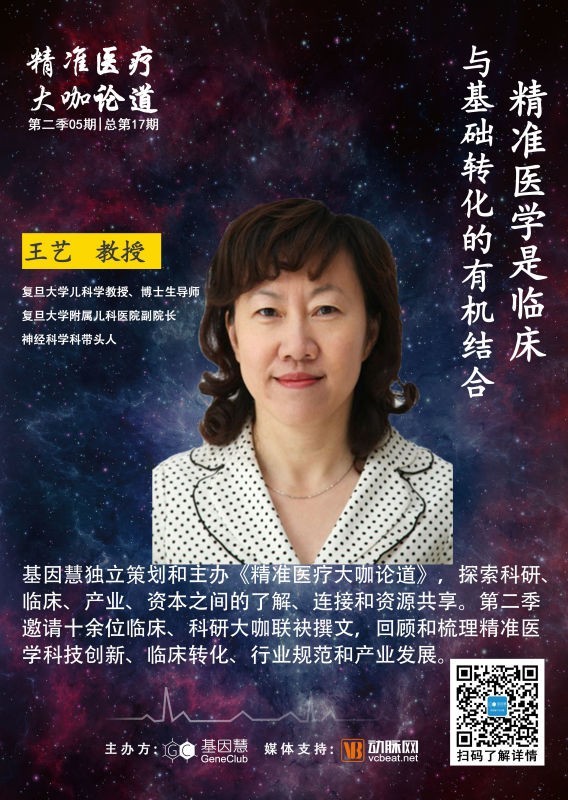
Professor Wang Yi
Professor of Pediatrics, Doctoral Supervisor, Fudan University
Vice President of Children's Hospital of Fudan University
Lead of Neuroscience Department

Wang Yi, Deputy Director of Children's Hospital of Fudan University; Discipline Leader in Neurology; Professor of Pediatrics at Fudan University; Chief Physician in the Department of Neurology; Doctoral Supervisor; Head of the Rare Diseases Group under the Pediatric Branch of the Chinese Medical Association; Vice President of the China Anti-Epilepsy Association; Vice Chairman of the Pediatrics Committee under the Neurology Branch of the Chinese Medical Doctor Association; Secretary-General of the Clinical Epidemiology and Evidence-Based Medicine Branch of the Chinese Medical Association; Vice Chairman of the Pediatric Branch of the Shanghai Medical Association; President of the Shanghai Anti-Epilepsy Association; Director of the Fudan University Clinical Diagnosis, Treatment and Research Center for Autism. Principal Investigator of the National Ministry of Science and Technology’s Major Special Project “Research on Molecular Subtyping of Epilepsy Based on Omics Characteristic Profiles”; Project Leader of the Health Industry Fund Special Project “Standardization Research on Diagnostic and Prevention/Control Technologies for Childhood Autism.”
Precision Medicine: The Organic Integration of Clinical Practice and Basic Translational Research
Author: Wang Yi Professor
Professor of Pediatrics and Doctoral Supervisor, Fudan University
Vice President of Children's Hospital of Fudan University
Head of Neuroscience Department
Key Points:
1. There is significant feasibility and substantial potential for the clinical application of genetic testing.
2. Precision medicine enables definitive diagnosis and targeted therapy for clinically complex and refractory diseases.
3. In Basic Research-Drug Discovery-In the closed-loop of clinical protocols, precision medicine serves as an effective link.
4. The greatest current limitation is the insufficient promotion, training, and professional guidance for genetic testing technologies in clinical practice.
5. It is crucial to organize case-based training for frontline clinicians and align with international standards, thereby securing a voice in the global arena.
I
GeneHui: The core of precision medicine lies in prediction, which is particularly significant for late-onset diseases and medication guidance. In pediatrics, early precise diagnosis and intervention are of great importance. As a renowned professor of pediatrics, could you discuss how current precision medicine technologies are driving research and clinical practice in pediatrics? Could you also provide one or two practical examples for the readers of GeneHui?
President Wang Yi: Precision Medicine Technologies Are Highly Significant for Clinical Diagnosis in Pediatrics. Clinically, many diseases, particularly neurodevelopmental disorders, are predominantly diagnosed based on clinical symptoms, signs, and ancillary tests (such as electroencephalography, magnetic resonance imaging, and metabolic screening). In recent years, we have applied molecular genetic diagnostic technologies—including genomics, proteomics, metabolomics, and epigenetics—to pediatric clinical diagnosis. This has enabled more precise and earlier diagnosis, while also identifying the molecular etiologies of neurodevelopmental disorders that present with similar clinical symptoms and signs. Below, I will provide several examples.
Example1: For early-onset epilepsy and cases with unfavorable treatment responses identified in clinical practice, precision medicine approaches enable more targeted diagnosis and therapy.. Without precision medicine approaches, clinical practice may still rely on multi-drug combinations and other options based on clinical experience, rather than on etiologically grounded, definitive diagnoses and targeted therapies.
Example2:For intractable, frequently occurring epilepsy in neonates or infants and young children, many anticonvulsants may fail to achieve adequate control; however,Through molecular genetic diagnosis,Identify the root cause of the disease,Seizures caused by pyridoxine deficiency can be treated with high-dose vitamin supplementation.B6can be clinically controlled, and the development of the patient's nervous system will neither be affected nor reversed.
Example3:One fructose-1,6Patients with fructose-1,6-bisphosphatase deficiency present with recurrent hypoglycemia; the patient experienced childhood infections and prolonged convulsions during episodes. We established a diagnosis of fructose-1,6-bisphosphatase deficiency based on genetic testing.-1,6Fructose-1,6-bisphosphatase deficiency: A strict dietary plan was formulated for him, including fructose intake control, with the requirement to administer glucose during infections or stress. Following this intervention, the patient experienced no relapses and no longer required antiepileptic medication. Through subsequent multidisciplinary diagnosis, treatment, and follow-up involving our clinical nutrition, internal medicine, and pharmacy teams, the patient’s cognitive and motor development significantly caught up to normal levels, and he is now essentially a healthy child. Additionally, his mother wished to have a second child. Through our prenatal counseling and diagnostic services, she is now nearing delivery, and the fetus has been confirmed to be free of genetic defects.
These examples illustrate significant advances and improvements in the clinical application of precision medicine.Beyond its role in clinical diagnosis and treatment, precision medicine facilitates the discovery of new mechanisms and conducts basic research in the scientific domain, thereby enabling the identification and screening of novel drugs (and targets). These agents are then subjected to rigorous clinical trials, ultimately yielding new pharmaceuticals and therapeutic modalities for diseases that were previously undiagnosable. This embodies the core essence of precision medicine: a translational cycle from clinical practice to scientific research and laboratory investigation, and back to the clinic, thereby enhancing the efficacy and effectiveness of diagnosis and treatment.
II
GeneHui: The core technology of precision medicine is gene sequencing. Gene sequencing has developed in recent years with the reduction of costs, technological R&D, and multidisciplinary collaboration. What are its limitations when applied in clinical pediatrics? What are the pain points and expectations of frontline clinicians when applying gene sequencing technology?
Dean Wang Yi: The feasibility and potential for the clinical application of genetic testing are substantial.Compared with international standards, the cost of genetic testing in China is relatively low. With access to high-quality patient resources, advanced technologies such as gene sequencing, and a robust R&D team, this genetic testing technology holds significant competitive advantages and promising prospects.
There are also certain limitations.The greatest limitation is the insufficient promotion, training, and professional guidance for the clinical application of next-generation genetic testing technologies in general pediatric practice. This limitation directly impacts the quality of molecular genetic diagnosis and medical safety.. If quality and safety are not properly ensured, and if the diagnostic process lacks the involvement of clinicians—including professional selection of genetic testing methods, interpretation of genetic test results, phenotype-based diagnosis, professional communication and explanation to patients, and follow-up genetic counseling—significant risks may arise. Our clinical pediatricians need further training, education, and standardization in their foundational knowledge and practical application skills related to genetic testing technologies.
III
GeneWisdom: You previously conducted the Global Epidemiological Study on Children's Health Status and completed multiple national-level key research projects in pediatric neurology, including epilepsy. Could you share some key figures to illustrate the current status of pediatric epidemiology in China and the application of precision medicine in pediatric neurology?
President Wang Yi:Epilepsy is the most common neurological disorder in children. Epidemiological surveys have revealed that the prevalence of epilepsy is significantly higher in children than in adults. Notably, the incidence of seizures is highest during the neonatal period. The first peak age for seizure onset occurs before the age of ten, while the second peak occurs after the age of 65, with most cases in the latter group being secondary in nature.
The etiology of epilepsy in pediatrics is highly complex. We categorize the causes into six groups:1) Genetic factors, accounting for60%-70%, some reports even go so far as to80%。2) Infection 3) Structural developmental malformations4) Immune-related 5) Metabolic aspects6) Secondary factors, such as poisoning, trauma, and asphyxial hypoxia.
For patients presenting with epilepsy, in addition to determining the specific type of epilepsy and any associated syndromes, more precise diagnostic evaluations are required. These should include identification of the underlying etiology, comorbid conditions, quality of life, presence of concurrent disabilities or functional impairments, and other relevant factors.. At times, our understanding of epilepsy may be limited to the symptoms themselves, such as convulsions, without a comprehensive grasp of the disease as a whole. For instance, epilepsy frequently co-occurs with numerous other conditions in clinical practice, including autism spectrum disorder, sleep disorders, gastrointestinal diseases, and immune system disorders. A pediatric case in clinical practice illustrates this complexity: in addition to epilepsy, the patient may present with autism spectrum disorder, strabismus or amblyopia, hearing impairment, inguinal hernia, skeletal deformities, and other comorbidities. Therefore, diagnosing the disease is highly complex. Relying solely on individual clinical symptoms, signs, or manifestations for diagnosis is rather rudimentary. The professional diagnostic approach for patients presenting with epilepsy should involve five steps:
1) Is it epilepsy?
2) indicates the type of seizure and whether there is an epilepsy syndrome
3) What are the substantial clinical etiologies?
4) Which comorbid diseases
5) Assessment of functional impairment and organ malformations
GeneWisdom:Children's Hospital of Fudan University (abbreviated as“Fudan Children's Hospital”) was approved to become the National Children's Medical Center. Fudan University Children's Hospital also joined forces with the Genetic Counseling Branch of the Chinese Society of Human Genetics to launch the 100,000 Newborn Genomes Project. Congratulations! As the Vice President of Fudan University Children's Hospital, could you discuss the hospital's investments and achievements in precision medicine in recent years, as well as its plans following its designation as the National Children's Medical Center?
The Children's Hospital of Fudan University has received support from national large-scale genomic initiatives and possesses a long-standing foundation and readiness in precision medicine, which include:
First, our strengths lie in clinical standardization and the diagnosis and treatment of complex and challenging diseases.Particularly for the diagnosis of rare diseases, it is not merely a matter for a single specialty but requires multidisciplinary collaboration., and each specialty must be highly proficient to ensure accurate diagnosis.
Secondly, implement precision medicine.Platform support is critically important.We are equipped with Key Laboratories of the Ministry of Health, Shanghai Key Laboratories, a Precision Medicine Center, and a Molecular Genetic Diagnosis Center, encompassing comprehensive technologies such as imaging, pathology, metabolic testing, and drug resistance testing.
Secondly,The Clinical Implementation of Precision Medicine Places High Demands on Clinical Databases, Phenotyping, and Biobanks, we have made adequate preparations in these areas.
It is precisely because of these conditions that we have been able to take a leading position nationwide in basic research and clinical diagnosis of pediatric diseases, becoming the National Children’s Medical Center (Shanghai). Of course, the path toward precision medicine remains long; there are no limits to our efforts in clinical diagnosis, treatment, and disease research. As the National Children’s Medical Center, we will take the lead in precision medicine, collaborating with peers to elevate the diagnosis and treatment of difficult and rare diseases in China to new heights; meanwhile, we will dare to be pioneers.in the areas of precision diagnosis for various diseases, establishment of disease cohorts, long-term disease management and prognosis improvement, as well as disease prevention and precision targeted therapy, achieving international recognition and securing a certain degree of influence in global discourse are the requirements and objectives we have set for ourselves in our future work.
GeneWell:According to historical data, China has nearly1600Millions of patients with rare diseases, reaching up to5.6%birth defect rate—has this figure been updated? Meanwhile, the majority of rare diseases are genetically related and have extensive applications in precision medicine; Fudan Children’s Hospital in rare diseases/What series of initiatives have been undertaken in areas such as platform development and training for genetic diseases?
President Wang Yi:According to the World Health Organization (WHO) definition, rare diseases are those where the number of patients accounts for a proportion of the total population0.65‰~1‰ of diseases. Rare diseases are, in fact, not rare; rather, our awareness and diagnostic capabilities need to be gradually improved.
Many rare diseases are birth defect-related conditions,In the diagnosis of rare diseases, both technological advantages and clinical capabilities are indispensable.Fudan Children’s Hospital has established a robust platform for rare diseases and genetic disorders. In addition to our molecular genetic diagnostic platform, the Key Laboratory of Birth Defects, and technologies related to metabolomics, proteomics, and epigenetic testing for rare diseases, we have developed a comprehensive clinical system encompassing phenotypic assessment, biological databases, biobanks, cohort establishment, and follow-up.
We also have an excellent project here, calledUDP(Undiagnosed Diseases Program, Fudan University Pediatric Center for the Diagnosis and Treatment of Undiagnosed Diseases), diagnostic programs for complex and rare diseases that are difficult to diagnose. And we participate in internationalUDN(Undiagnosed Diseases NetWork). This platform brings together our21Professional29Consultation by Renowned Experts. We include patients who have not been diagnosed at two tertiary-level or higher specialized children's hospitals, or at well-regarded, high-quality general hospitals in China.UDPConduct multidisciplinary consultations for the project, with our team performing further diagnostics. This includes newly identified gene mutations and novel disease entities, all of which are addressed throughUDPplatform for conducting consultations, comprehensive29Renowned experts’ extensive clinical experience and research capabilities, including the application of cutting-edge and advanced technologies, literature databases, knowledge bases, and brainstorming sessions.
In recent years, molecular genetic diagnostic technologies have not only been widely applied in our hospital but have also seen significant advancement in the pediatric departments of general hospitals in many major cities across China. A critical issue arising during this progression is the lack of training.With the widespread adoption of genetic testing technologies, how do clinicians make diagnoses based on genetic test results? This encompasses quality control of genetic testing data, phenotypic assessment, determination of pathogenic genes, interpretation of genetic test results, communication of genetic diagnostic findings to patients, discussion of potential risks, and implications for eugenics and healthy reproduction. Are our clinicians prepared for the rapid advancement of molecular genetic diagnostics in clinical practice? Extensive training is required., high-level experts provide guidance to frontline clinicians, conducting training, education, and improvement through real-world clinical cases.