

Wenshangyi Files IPO Prospectus: Aiming to Become a Leader in Precision Health Management
Bian Que, the founding figure of Traditional Chinese Medicine, once responded to King Wen of Wei’s question, “Which of you three brothers is the most skilled in medicine?” as follows: “My eldest brother is the most skilled, as he can predict and prevent diseases before symptoms appear; my second brother is next, able to provide timely treatment when symptoms manifest; while I am the least skilled, only diagnosing and treating conditions when they have become critical.” Yet people revere Bian Que as a “divine physician,” overlooking the “superior physician” who prioritizes health. The so-called “superior physician” does not focus on aggressive treatment during severe illness, but rather addresses issues before medical intervention becomes necessary, enabling people to avoid falling ill, reduce the incidence of disease, and prevent overtreatment. This work is the least conspicuous, yet the most important.
The name of the “Wen Shang Yi” platform is derived from this. In an interview, Song Xiongxiong, Founder and Chairman, emphasized: “Our company’s mission is to integrate cutting-edge knowledge, pursue technological excellence, and provide world-class personalized health management services to hundreds of millions of families. We do not perform the tasks carried out by physicians; instead, we address the issue of ‘unnecessary medical visits’ by providing pre-consultation and post-consultation services.”
The Shangyi Platform since last yearSince its beta launch in September, the platform has recorded a total of 9.22 million visits across its app, PC website, and WeChat official account. What potential and distinctive advantages does this health information and health management platform hold? VCBeat (WeChat ID: vcbeat) conducted an interview and published a report on it.
Last CenturyIn the 1990s, long before the concept of “mass entrepreneurship and innovation” gained prominence in China, Dr. Song Xiongxiong, Chairman of Wenshangyi, had already begun conducting research on entrepreneurship and innovation. He is now a globally leading scholar and educator in the field of entrepreneurship and innovation. During his time in the United States, he ventured into entrepreneurship in the healthcare sector by establishing a knowledge think tank for family physicians. As general practitioners, family physicians frequently needed to consult disease-related information. In those early days of the internet, this medical think tank greatly facilitated their work by providing comprehensive and professional medical knowledge and information.
In 2013, Dr. Song, aged 52, returned to China as a nationally distinguished expert under the Organization Department of the CPC Central Committee’s “Thousand Talents Plan.” With 22 years of experience in innovation and entrepreneurship abroad, he served as an expert in medical innovation and participated in the preliminary research for Shaanxi Province’s 13th Five-Year Plan for health and family planning development. He identified that a major cause of the public’s difficulty in accessing medical care was the lack of a readily accessible, professional, neutral, and trustworthy source of medical and health knowledge, leading people to feel reassured only after consulting doctors at large hospitals for all their health concerns.
His experience seeking medical care after returning to China also gave him firsthand insight into the stark differences between the Chinese and American healthcare systems. In the United States, nearly all health issues are initially assessed by a primary care physician, who then determines whether a referral to a specialist is necessary. In contrast, his friends in China immediately recommended that he visit a large hospital to see a specialist. The hospitals were overcrowded; he could spend an entire day waiting in line only to have a very brief consultation with the doctor, during which many other patients were present in the examination room.
Dr. Song was deeply moved by the severity of the difficulty in accessing medical care in China, but he recognized that resolving this issue requires addressing its root causes. Coinciding with the national initiative to promote mass entrepreneurship and innovation, he decided to embark onIntroducing Top U.S. Family Physician Knowledge Services to China, thereby enhancing the public’s health and medical knowledge. This entrepreneurial idea has also demonstrated its appeal.—Two PhD candidates from Xi’an Jiaotong University took a leave of absence, one U.S.-based PhD candidate abandoned his degree program, and a former employee of China North Industries Group Corporation joined Dr. Song to form the founding team. Later, one of Dr. Song’s students, who had eight years of experience in the healthcare sector and 12 years of internet entrepreneurship experience in Singapore, also joined the venture. The team now comprises 19 employees, nearly all of whom hold advanced degrees, including cross-disciplinary talents and individuals with successful entrepreneurial track records.
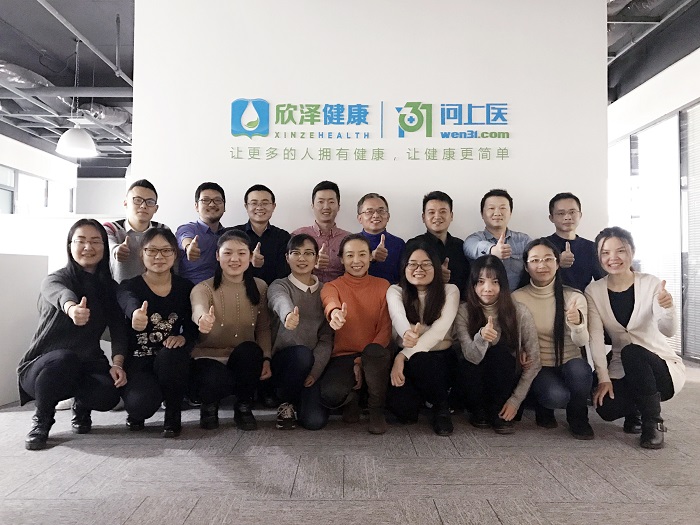
“While conducting medical research for Shaanxi’s 13th Five-Year Plan, my colleagues and I spent approximately nine months traveling across rural areas, communities, and cities throughout China, gaining firsthand insight into the numerous issues prevalent in the current state of healthcare access for the broadest segments of the Chinese population,” said Dr. Song.
A highly significant issue is overtreatment. Data from the World Health Organization indicate that among individuals who visit hospitals to see physicians, there are actually68% of cases do not warrant medication. In the United States, where the family physician system is well-established, the first step is for an individual’s primary care physician to determine whether further treatment is necessary. In contrast, the current situation in China sees a large number of individuals who do not actually require medical consultation or treatment insisting on visiting hospitals to obtain prescriptions, thereby overwhelming tertiary hospitals with conditions that could be effectively managed at clinics. Furthermore, healthcare institutions in China rarely consider patients’ medication histories when diagnosing and prescribing, creating a risk of adverse drug interactions.
“The reasons can be summarized in two points: first, the public’s health literacy urgently needs improvement; second, there is a lack of an authoritative, mass-market, one-stop health think tank.”
If the public had a better understanding of the importance of daily health care and could access reliable information from scientific medical knowledge platforms at any time, many issues could be resolved before visiting a hospital. This is precisely the gap that the Ask Doctor team aims to fill in China’s current healthcare landscape.—Addressing unnecessary medical visits and post-consultation health issues.
Wen Shang Yi, currently in public betaOn both the mobile app and PC platforms, users can access health content covering topics such as diseases, maternal and infant care, sexual health, senior health, and beauty. The platforms also offer health self-assessments and personalized health models, enabling users to review professional solutions for symptoms and acquire healthcare knowledge, thereby proactively managing their health and preventing illness. Over one million data entries on the platform are sourced from authoritative U.S.-based family physician think tank systems. Additionally, medical English literature is compiled by outsourced teams, and more than 70 physicians from public hospitals at Level II or above evaluate the content for accessibility and relevance to patient needs. The platform adheres to a one-stop, authoritative, neutral, and cutting-edge approach.
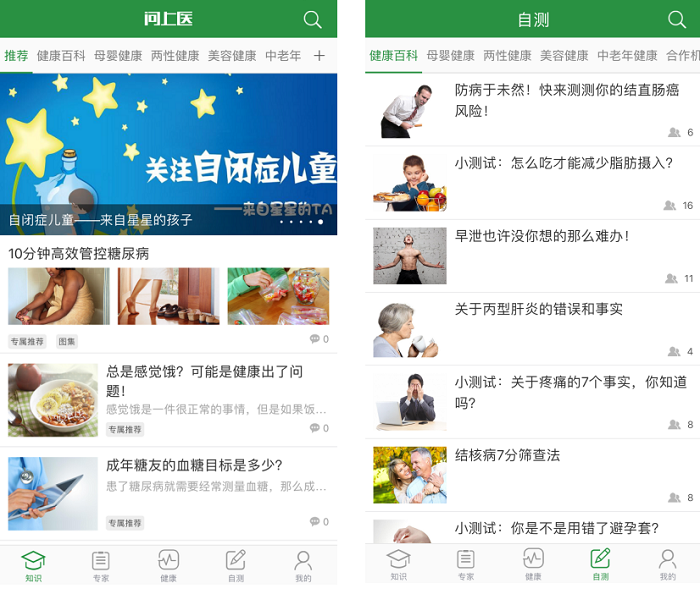
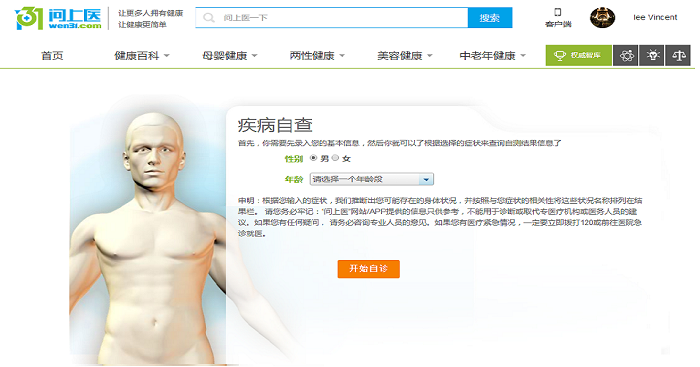
Features and Sections of the Shangyi Doctor App and PC Platform
In addition to its online platform, AskDoc also conducts numerous offline activities and partnerships. For example, it has launched twoPilot programs such as the “Healthy Community” initiative and the “Healthy Campus” campaign are designed to disseminate healthcare knowledge to residents and students, while providing answers to questions concerning physical and mental health. Additionally, Wen Shangyi will establish “Chronic Disease Service Centers” in several public hospitals, offering free consultation services to patients and referring them to appropriate physicians when necessary.
When the Shangyi Platform was established, family doctors were only being piloted in certain regions of China, whereas last yearThe “Guiding Opinions on Advancing Family Doctor Contract Services” issued in June directly pointed out thatAchieve near-universal coverage of the family doctor contract service system by 2020. Seize this major trend,The Shangyi Platform will have the opportunity to truly leverage the top U.S. family physician think tank to serve Chinese family physicians.。
Imagine that the medical consultation process, enhanced by the use of a think tank, unfolds as follows: First, a physician assistant collects the patient’s basic information, symptoms, and medication history, inputs this data into “Wen Shang Yi,” and establishes a longitudinal medical record. Simultaneously, “Wen Shang Yi” provides an initial disease assessment. Next, the family physician consults with the patient, integrating the collected data, the system’s auxiliary diagnostic suggestions, and clinical observations to reach a definitive diagnosis and recommend subsequent treatment plans. “Wen Shang Yi” also offers intelligent medication recommendations, streamlining this entire process to just a few minutes. Finally, the database records the patient’s condition and achieves data interoperability with all electronic medical record (EMR) systems, thereby providing data support for future visits. In such an advanced healthcare model, the “Wen Shang Yi” think tank will become a crucial component.
Another direction that Shangyi places great emphasis on isCustomized Precision Health Management. The team stated that after the platform is officially launched, it is expected toLaunch genuine personal health management and precision information push features based on human factors engineering and data technology within three years. Specific directions may include integrating personal genetic information with VBInsight to analyze health issues; providing alerts for specific screenings based on user demographics such as age and gender, such as regular colonoscopies for individuals over 40; and combining with physical examination services to longitudinally compare an individual’s check-up results over several years to identify potential health problems.
Dr. Song stated that the significant difference between Wen Shang Yi and online medical consultation platforms lies in the fact that many such products aim to replace certain diagnostic and medical guidance functions of physicians to facilitate healthcare access; however, Wen Shang Yi does not perform the duties of doctors, but instead focuses on health education, patient triage, physician support services, and health management. This type ofDifferentiated positioning is a major advantage of the Shangyi Platform, and the key to achieving this lies in the authoritative content accumulated by the US Family Physician Think Tank. Technology constitutes another significant advantage; the platform currently hasMore than 20 technological areas have the potential for patent applications, such as intelligent disease pre-diagnosis systems based on the RDM risk management model.
Currently, the health education initiatives on the Wenshangyi platform are offered on a pro bono basis as part of its user acquisition phase. However, the company has already developed a clear business model strategy. Next year, it plans to launch a paid segment for precision health management, initially focusing on two areas: pediatric health and cognitive enhancement, as well as management of the “three highs” (hypertension, hyperglycemia, and hyperlipidemia).
The platform last yearCompleted its Pre-A financing round in October, with total fundraising to date exceeding RMB 20 million.. Perhaps due to the favorable outlook on Wen Shangyi’s team, technology, and resources, the platform has garnered significant interest and support from investors. The team plans to release the official version of the Wen Shangyi platform this year and expects toComplete Series A financing before the beginning of 2018. They also have a smaller goal: to have 80 million Chinese families using Wenshangyi by 2020.
As for the most significant insight gained during the entrepreneurial journey, Dr. Song said:“Our team truly feels that Ask Shangyi has helped many people, and numerous users are deeply grateful for the platform’s existence. Although this is our busiest period, we are delighted to contribute our share to public health, empowering more people to achieve well-being and making health simpler.”