

Philips Unveils 'Swarm' Magnetic Microrobots for Precision Drug Delivery in Cancer Therapy
Philips Researchers Master New Technology: Controlling Individual Microrobots Within a Swarm Using Magnetic Fields for Precise, Non-Interfering MotionUnder the influence of magnetic fields, researchers at Philips have developed a technology that enables precise control over any single microrobot within a swarm, allowing it to move freely without interfering with the activities of other microrobots. With this technology, physicians can utilize these microrobots as drug carriers to deliver therapeutic agents precisely to tumor sites.
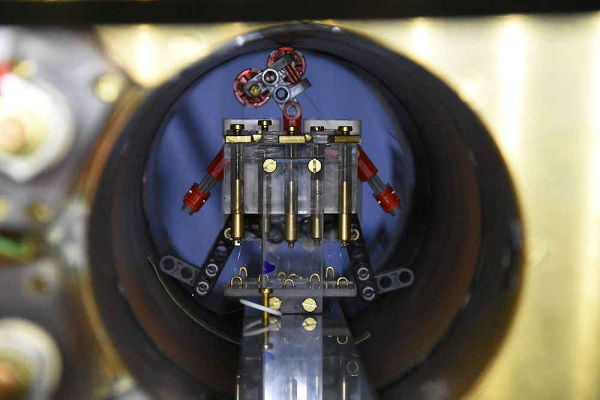
Lego robots demonstrate jumping and grasping movements using limbs connected to magnetic screws; notably, they can move independently without affecting surrounding robots.
A new study suggests that magnetically controlled microrobots may one day help combat cancer within the body. Over the past decade, scientists have demonstrated the ability to manipulate magnetic fields to guide medical devices inside the human body, allowing researchers to apply forces for remote control of objects. For instance, previous studies have used magnetic fields to manipulate catheters within the heart and navigate video capsules through the intestines.
On February 22, VCBeat reported that Anhan Medical has leveraged precise magnetic control technology to enable physicians to maneuver capsule endoscopes freely within the human stomach. The Anhan Capsule Gastroscope overcomes the limitation of first-generation capsule endoscopes, which were restricted to small intestine examinations, thereby facilitating precise gastric examinations.
Previously, some researchers utilized magnetic fields to simultaneously control swarms of microscopic magnets. In principle, these systems could assist in the treatment of major diseases such as cancer; however, individually controlling a single microdevice to move in a specific direction and at a desired speed remains a challenge, as magnets typically exhibit identical motion under the same magnetic field.
Latest research shows that scientists have developed a method to control any one of a group of magnetic devices to perform individual actions.
“Jürgen Rahmer, an innovation physicist and research lead at Philips, stated, ‘Our technology enables the control of magnetic robots within the human body.’”
In the experiment, researchers were able to precisely position several magnetic screws simultaneously and rotate them in different directions. The scientists indicated that, in principle, they could manipulate hundreds of microscopic robots at the same time. First, the scientists fabricated numerous identical microscopic magnetic screws.
Next, the researchers used a strong, uniform magnetic field to fix these magnetic screws. Within this field, there are small, thin regions where the magnetic screws can move freely. The researchers stated that if a relatively weak rotating magnetic field is superimposed, the magnetic screws can rotate freely.
“Some researchers have suggested using a screw-drive mechanism, so that the robot would not require batteries when operating inside the human body,” said Rahmer.

One of the most likely applications of this technology is to enable the magnetic screws on these robots to carry injectable pills.Researchers state that physicians can utilize magnetic fields to control these magnetic screws, enabling drug release at targeted sites. This approach ensures precise drug delivery to tumor tissues rather than healthy tissues, thereby reducing side effects. Once the therapeutic dose is achieved, the magnetic screws are controlled to halt drug release. (The tablets will be made of metallic materials; otherwise, there would be radiation risks.)。
Rahmer stated that another potential application could be medical implants that change over time., for example, during the recovery process, magnetic fields can alter the shape of implants to better conform to the patient's body.
In the future, researchers will develop new technologies to control microrobots and use imaging techniques, such as X-ray machines or ultrasound scanners, to visualize the location of these devices within the body.
Source:http://www.livescience.com/57898-magnetic-robot-swarms-could-fight-cancer.html