

Can Yunxing's Medical SaaS Spark an Information Revolution Across 200,000 Grassroots Healthcare Institutions?
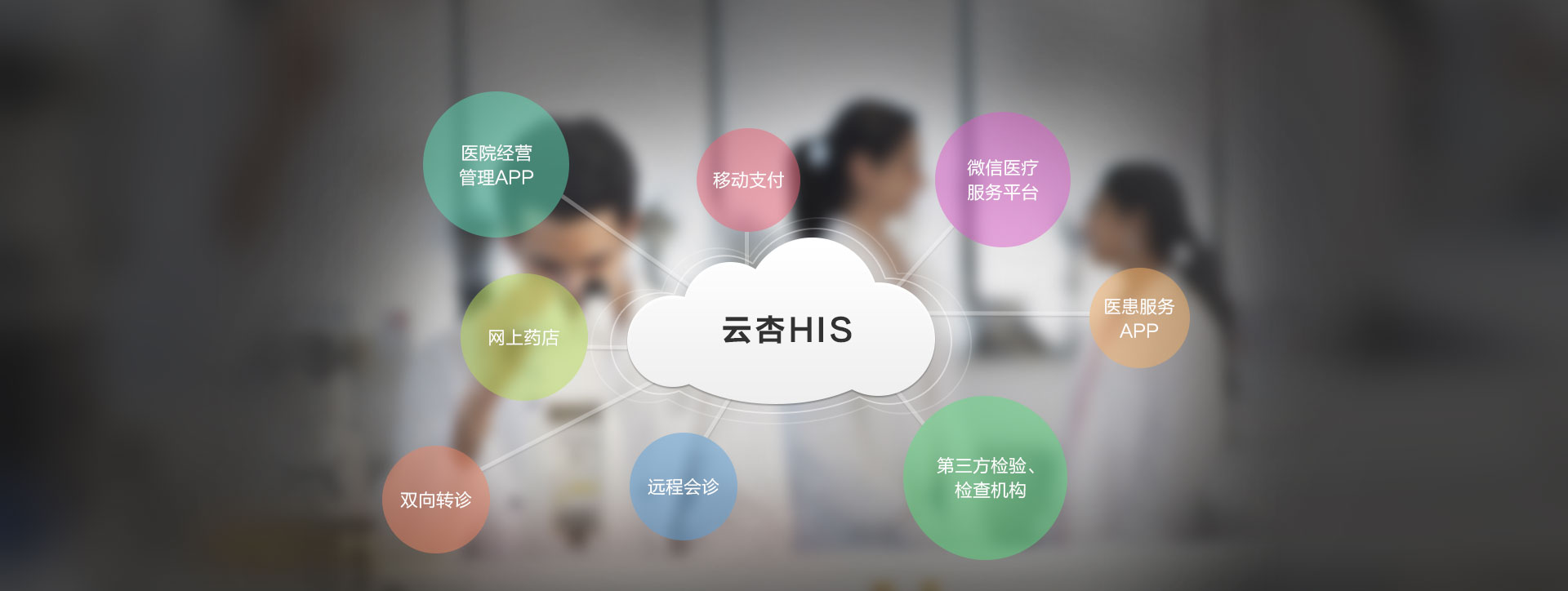
Founded by the Sanjiu Enterprise Group in 1999, Jiumingzhu has, over more than a decade of development, become one of China’s well-known developers and service providers of healthcare information technology software.
In May 2016, Jiumingzhu established Yunxing as an independently operated business unit, entering the medical SaaS sector in the form of a subsidiary. It pioneered the concept of a new ecosystem for small and micro healthcare institutions, positioning itself as a primary entry point for such facilities under the “Internet + Healthcare” model to expand into the broader interconnected healthcare ecosystem.
Currently, primary healthcare institutions suffer from relatively low patient volumes and limited medical resources. Cloud Apricot positions its products for small and micro primary healthcare institutions, with the core rationale being the direction of China’s new healthcare reform policies. The concentration of medical resources in tertiary hospitals has led to difficulties and high costs for patients seeking care. Addressing tiered diagnosis and treatment and the uneven distribution of medical resources is a top priority of the new healthcare reform.
In the coming years, as national policies evolve, the focus of healthcare resources will continue to shift downward, leading to a sharp increase in the volume of services at the primary care level. In terms of healthcare informatization, cloud computing has become globally recognized as the next-generation information technology. Compared with traditional standalone or networked application models, cloud services are characterized by virtualization, universality, hyperscale, high scalability, high reliability, on-demand service, and cost-effectiveness. These advantages have made healthcare SaaS an increasingly popular target for capital market investment.
How Large Is the Market for Primary Care SaaS?
According to the latest statistical data from the National Health and Family Planning Commission, as of April 2016, there were approximately 34,000 urban community health centers and about 37,000 township health centers in China. Nationwide, privately owned clinics numbered around 198,000. Extending further down the hierarchy, including approximately 600,000 village clinics in rural areas, this constitutes the fundamental base of primary healthcare institutions in China.
In November 2016, the Legislative Affairs Office of the State Council released the National Health and Family Planning Commission’s “Decision on Amending the Detailed Rules for the Implementation of the Regulations on the Administration of Medical Institutions (Draft for Comments),” proposing revisions to, among other things, the classification of medical institutions in China. The draft explicitly proposed deleting the provision that barred “medical personnel who are currently employed by medical institutions, have retired due to illness, or are on unpaid leave” from applying to establish medical institutions. This signaled the formal commencement of preparations for the nationwide implementation of a new system allowing practicing physicians to open clinics, potentially leading to full liberalization of this practice. As policy advancements continued, an increasing number of enterprises and individuals joined the ranks of entrepreneurs establishing small and micro medical institutions.
Primary-level micro medical institutions are mostly family-run and have low daily consultation volumes. Therefore, information management software is often considered non-essential for them, with many variable factors at play. Most clinics encounter a series of challenges during their development, including operational management, technical proficiency, and chain management. The Yunxing Platform provides personalized and professional resource services tailored to the specific needs of each user category.
As of December 2016, Yunxing, established only six months prior, had already amassed over 1,000 users nationwide, demonstrating remarkably rapid growth.
Market Pain Points of Medical SaaS
Yunxing’s more than 1,000 clients fall primarily into three categories: the first comprises over 2,000 primary healthcare institutions originally served by Jiumingzhu that are migrating to the cloud; the second consists of scattered primary healthcare providers with digitalization needs, such as community clinics; and the third includes group-based chain users, encompassing private medical groups like iKang Guobin, as well as health bureau-affiliated medical groups that operate chained facilities including community health centers and township health centers. Overall, group users account for approximately 40%, while scattered individual users make up about 60%.
Group users, typically comprising chain organizations, face challenges related to centralized group management. The cloud represents the optimal model for such management, as cross-regional institutional oversight is otherwise difficult to achieve. This constitutes their most rigid and essential requirement. Given that group users often possess strong financial capabilities, they also demonstrate the highest willingness to pay.
The second category comprises scattered grassroots medical institutions, whose primary concern is cost. Traditional healthcare IT software solutions are often prohibitively expensive, making them unaffordable for community clinics. Currently, the penetration rate of information technology in private grassroots medical institutions is very low, at approximately 5%, while mobile office adoption is nearly nonexistent. Due to their limited financial resources, these institutions exhibit a relatively weak willingness to pay.
Yunxing’s SaaS management platform is highly cost-effective, requiring only a modest annual subscription fee, which presents virtually no barrier to entry for community clinics. Compared with public medical institutions, primary-care clinics tend to place greater emphasis on patient engagement. Therefore, adopting cloud-based systems and mobile apps can help primary-care medical institutions build strong user stickiness. Moreover, given the limited medical resources available at the primary-care level, there is a need to integrate external third-party medical resources. Building on its informatization and mobile capabilities, Yunxing has added medical resource matching functionality. As Yunxing’s features continue to expand, coupled with the high cost-effectiveness of its subscription-based pricing model, users’ willingness to pay has been gradually increasing.
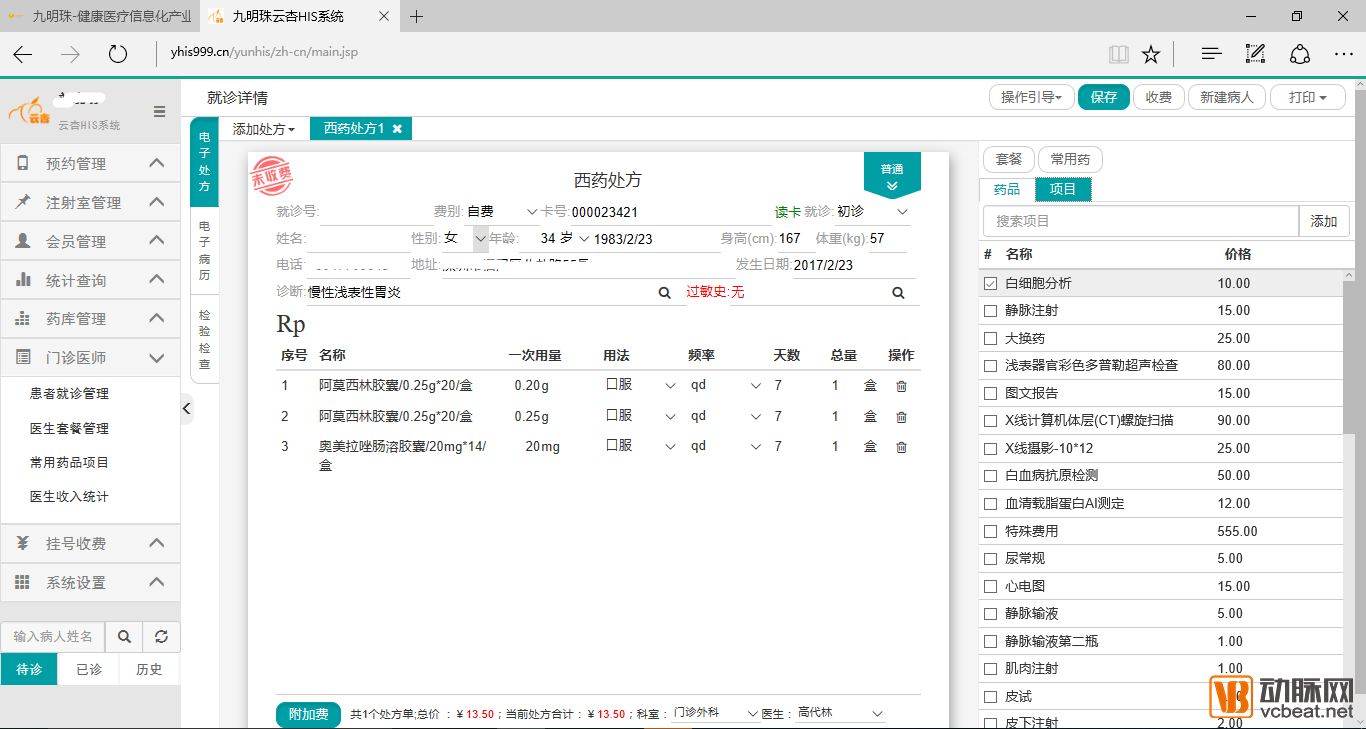
Yunxing PC Client Main Interface
In terms of enhancing user engagement, Yunxing SaaS also integrates a foundational data dictionary similar to Wikipedia, such as a drug dictionary. Even a small community clinic often uses as many as 600 to 700 types of medications. If data were entered manually one by one using traditional methods, the workload would be extremely heavy and cumbersome. To address this issue, Yunxing has established a standardized dictionary library. By collaborating with pharmaceutical companies, barcode-linked drug information is pre-loaded into the system. Although the data is not initially complete, Yunxing encourages users to voluntarily refine and supplement these drug records within the Yunxing SaaS platform through an incentive system of points and prizes. Following the internet-based sharing economy model, this approach enables all clinics using the system to share the enriched data, thereby resolving a significant pain point in the industry.
The third category comprises traditional IT users, who opt for cloud-based SaaS solutions primarily to enable mobile management.
Jiumingzhu serves over 2,000 users distributed across China, primarily consisting of small and medium-sized primary healthcare institutions. In the Handan region alone, more than 120 medical institutions utilize Jiumingzhu’s HIT products. Collaboration between these institutions and village doctors mainly focuses on patient referrals. Previously, referral management was quite loose, typically relying on telephone communication followed by the payment of referral fees by the medical institutions to village doctors. Therefore, these institutions seek to leverage information systems to scientifically manage medical data, patient information, and referral details throughout the referral process.
Driven by this demand, along with the broader trends of tiered diagnosis and treatment and the strengthening of primary healthcare, Yunxing has developed a product tailored for community physicians. The product is currently being piloted in Handan and Fujian Province. It enables independent community physicians to document medical information, such as prescriptions and medical records, through the use of this platform.
In addition, to meet the mobile workflow needs of hospitals and small grassroots institutions, Yunxing has developed three mobile apps: Doctor-Patient Connect, Medical Staff Connect, and Smart Operations Connect.
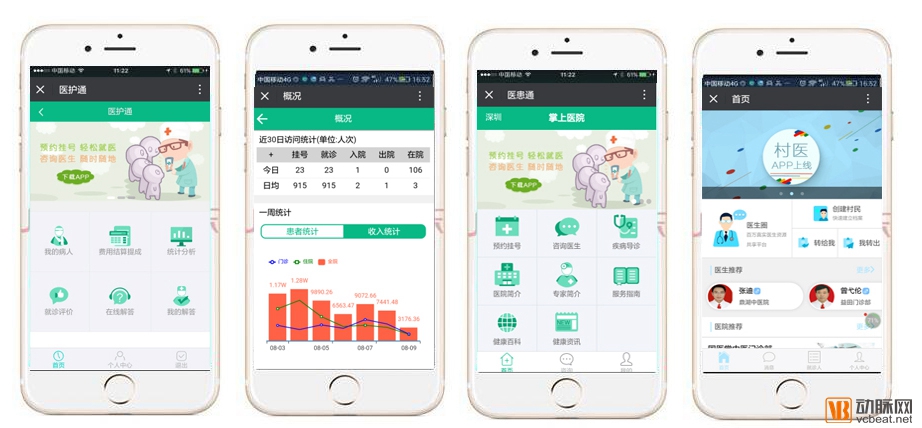
Yunxing Mobile App
Patient-Doctor Connect primarily provides patients with functions such as appointment scheduling, online consultations, and online inquiries. Medical Staff Connect offers services to hospital doctors and nurses, enabling online consultations, access to patient diagnosis and treatment information, prescription and medical record management, peer-to-peer communication among physicians, and the establishment of professional physician communities. Smart Operations Connect provides hospital administrators with query and analytics capabilities, allowing them to monitor healthcare institution operations anytime and anywhere.
These mobile products not only help healthcare institutions build a closed-loop ecosystem, but also serve as value-added services to the SaaS cloud system, integrated into the solution at no additional cost.
Blockbuster Theory and the Long Tail Economy
Compared with products from other medical SaaS providers, Yunxing’s advantage lies in its high starting point. Since 2002, the Jiumingzhu team has been developing standardized software suites tailored to the primary healthcare market, accumulating extensive experience in addressing users’ standardized needs, management, and operations. Among Jiumingzhu’s 2,500 traditional IT clients, 80% are small and micro primary healthcare institutions; therefore, its products are designed to closely align with their specific requirements. It is precisely for this reason that prominent Chinese healthcare enterprises such as iKang Guobin, Ping An Good Doctor, and Kangkang Internet Chronic Disease Hospital have chosen to partner with Yunxing.
Building on this foundation, Yunxing has established a collaborative alliance: its chronic disease management services partner with Kangkang Internet Chronic Disease Hospital; its cloud prescription review services collaborate with Sichuan Meikang and Hangzhou Yiyao; and its commercial insurance services work with Ping An Good Doctor, among others, including e-commerce platforms. Coupled with Yunxing’s own value-added services such as group-level management and multilingual support, these elements form a comprehensive, professional medical SaaS cloud platform capable of meeting diverse needs. This system fully demonstrates the scalability of cloud-based SaaS solutions, offering significant advantages over traditional Hospital Information Systems (HIS). Furthermore, as all data operate within a single platform, seamless data interoperability is readily achieved.
At this stage, Yunxing is still in a period of strategic investment and is expected to achieve profitability in 2018. Out of Jiumingzhu’s team of more than 100 employees, the Yunxing team already accounts for 30 members. In January of this year, Yunxing successfully completed its Series A financing round, raising RMB 20 million. According to the Yunxing team, while the RMB 20 million is more than sufficient for Yunxing’s own development, they will still proceed with launching a Series A+ financing round. This is because Yunxing’s current equity structure includes some foreign ownership; therefore, the team hopes to transfer out the foreign-owned portion through financing, transforming into a purely domestically funded enterprise, thereby optimizing its equity structure.
Yunxing’s development adheres to two principles: the blockbuster theory and the long-tail economy. First, it aims to capture market share through its core product, Yunxing SaaS. Second, it continuously expands industry entry points by offering a diverse range of products. Looking ahead, the Yunxing team is committed to ensuring that the majority of primary healthcare institutions can find sufficient value on the platform.