

After Google Glass Exits, LLVision Steps In: Powering Medical Innovation with AR Smart Glasses
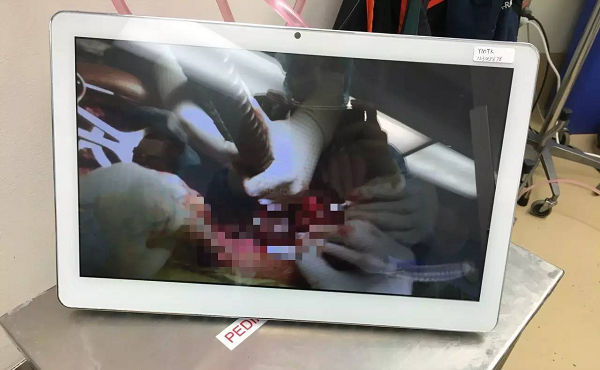
The image has been pixelated for dissemination purposes.
October 2016: A pediatric spinal correction surgery was performed at NewYork-Presbyterian Hospital/Children’s Hospital in New York, USA. The procedure was led by Dr. David Roye, known as the “Norman Bethune of the United States.” During the surgery, the surgeon wore LLVision GLXSS smart glasses to record the entire process.
Postoperatively, Dr. Luo Dewei shared his insights on the GLXSS smart glasses, noting that they did not hinder the surgical procedure. Meanwhile, the high-definition first-person recording enables surgeons viewing the footage to clearly understand each step of the operation.In the smart glasses sector, Google Glass has failed, while Liangliang Vision has continued to expand, becoming China’s largest B2B smart glasses manufacturer.VCBeat has been following his story to see how he leverages new technologies to serve grassroots physicians.
My entry into the healthcare sector was purely accidental.
Initially, Liangliang Shijie’s smart glasses drew inspiration from Google Glass and launched the general-purpose GLXSS model without focusing on any specific sector. The GLXSS was introduced on the JD.com crowdfunding platform. After some time, user follow-ups revealed a significant proportion of industry-specific users, with physicians representing a major segment. Accordingly, the company conducted surveys targeting physicians, particularly surgeons.
The survey found that when a surgeon encounters a representative or highly challenging case, they are often eager to share it with peers and students.For physicians, there is a strong desire to regularly engage with peers and stay abreast of the latest information. Although annual society meetings, academic exchanges, interdisciplinary conferences, forums, and surgical competitions are organized to meet this need, effective medical communication remains insufficiently addressed due to constraints such as time and geographic location.
Previously, if physicians wished to conduct a surgical demonstration, they had to apply for access to a professional remote live-broadcast operating room at their hospital. Such specialized facilities were available only in top-tier tertiary hospitals. While major cities like Beijing had relatively better resources, second- and third-tier cities lacked such infrastructure entirely. This was primarily due to the high cost—construction expenses typically ran into several million RMB—and the complexity involved, which required careful planning from setup and network deployment to electromagnetic compatibility (EMC) compliance. Even when access was granted, same-day use was not feasible; scheduling usually required advance booking, with wait times often extending one to two weeks. Therefore, there was a clear need for a live-streaming tool that would not interfere with surgeons’ operative workflows.
Live Surgery Broadcast
Google Glass was the first to apply smart glasses to medical video live streaming. When Google Glass was first released, it was very popular, but it was discontinued shortly thereafter. Doctors who have used it stated that there are three main issues with using Google Glass for surgical live streaming:
First, there is the issue of battery life. Second, as a consumer product, Google Glass creates a large, non-functional field of view when used for live surgical broadcasting. Third, under surgical lighting, the central area of the live feed becomes overexposed and washed out, severely compromising the broadcast quality.
In response, LLVision has made improvements to its smart glasses. The guiding philosophy of LLVision is to enable"Let the device adapt to the doctor, not the other way around."Therefore, to address battery life issues, the company did not simply add more batteries, as this would make the glasses heavier and impose an additional burden on surgeons during procedures that often last several hours. Instead, the company’s solution was to relocate all components except for the camera and its virtual display—such as computing elements and the battery—to a separate accessory device.Its true application involves pairing with another smartphone, which also serves as its power source.
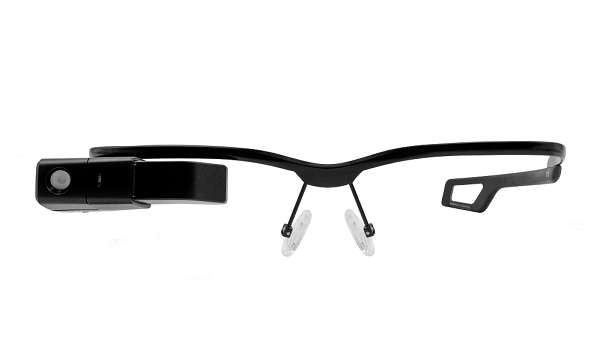
Addressing the second question, Ma Yin, co-founder and business director of LLVision, told VCBeat that the biggest difference between GLXSS smart glasses and Google Glass is that Google Glass is consumer-oriented, whereas GLXSS smart glasses are optimized for physicians’ needs. Therefore, to avoid interfering with surgical procedures while achieving better live-streaming quality, the designers placed the camera in the upper right corner of the right lens, ensuring it does not obstruct the surgeon’s downward line of sight.
The third issue concerns focusing. Liangliang Vision has improved its algorithms, allowing users to adjust the focus to capture the desired live-streaming view. For instance, in dentistry, the primary focus is on the teeth within the oral cavity. However, conventional smart glasses often render the surrounding skin with excessive clarity while causing distant teeth to appear blurred, due to incorrect focusing. By using computational methods to narrow the field of view sufficiently, focusing accuracy can be significantly enhanced.。
GLXSS smart glasses adopt a design from Google Glass:A small virtual screen is positioned in front of the eyeball, offering the advantage of allowing real-time verification during recording to ensure the captured footage corresponds precisely to the area of interest.。
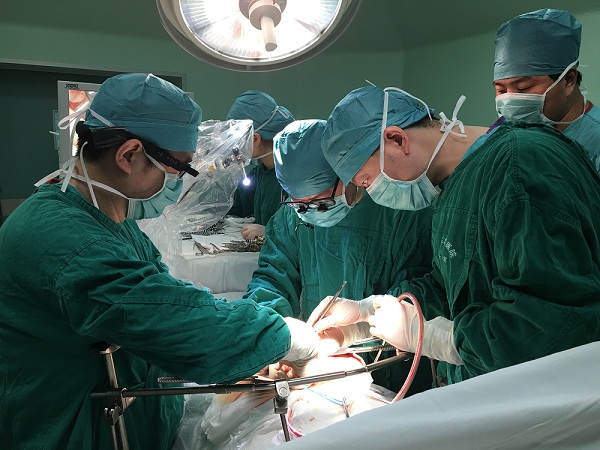
Surgeon Performs Surgery Wearing Smart Glasses
Ma Yin stated,Liangliang Vision’s smart glasses are not sold separately but are bundled with products from information technology and telemedicine companies. After several years of development, Liangliang Vision has become China’s largest manufacturer of smart glasses, with the broadest range of industry applications.
Assist in New Drug Development
Among Liangliang Vision’s partners are several pharmaceutical companies, with numerous case studies focusing on clinical trials of new cancer therapies.
The traditional drug development process involves physicians maintaining records, which pharmaceutical companies periodically collect. By using smart glasses to comprehensively video-record procedures, the progress of new drug clinical trials can be tracked. In the event of an on-site emergency requiring communication, patients, physicians, and pharmaceutical companies can connect remotely for consultation.
In addition to new drug development, smart glasses can also be applied to the introduction of bio-devices such as cardiac stents, capturing medical data based on patient responses. Smart glasses provide physicians with convenient documentation and real-time support.
Pre-hospital Emergency Care
China’s pre-hospital emergency care process involves patients calling 120, after which hospitals dispatch ambulances equipped with accompanying physicians and basic emergency medical equipment. However, compared with the pre-hospital emergency systems in Taiwan Province of China and Europe, our emergency care system remains less comprehensive. In Taiwan, emergency physicians are certified through professional assessments; the emergency care system operates independently from the hospital system; there are established training materials and information databases; standardized protocols exist for the use of specialized medications; and standardized emergency care procedures have been implemented.
In this regard,Smart glasses can also provide convenient and efficient first-aid solutions.。
When smart glasses are deployed in ambulances, they can integrate with the vehicle’s monitoring instruments to access patients’ baseline data, which is then overlaid with clinical signs and symptoms to assess the patient’s condition.In addition, emergency physicians wearing smart glasses can clearly record patients' vital signs.Data for each patient is stored, with regional data accumulated and analyzed for each disease condition.
In addition to data collection, the backend system can also push auxiliary information to physicians. For instance, if a patient was previously treated in an emergency setting for an anterior myocardial infarction within the past month, the system can automatically deliver the patient’s historical medical records to the emergency care team during a subsequent encounter, along with standardized clinical pathway guidance for recurrent cases. Meanwhile, hospital-based specialists can provide real-time remote guidance to ambulance-based physicians based on transmitted imaging data.
This is a viable plan, yet it still requires collaborative efforts from all industry stakeholders. We look forward to upstream and downstream enterprises in the pre-hospital emergency care informatics sector, hospitals, and specialized emergency medical institutions joining forces to place greater emphasis on protocols and solutions for pre-hospital emergency care, ultimately ensuring tangible benefits for patients.
Surgical Navigation
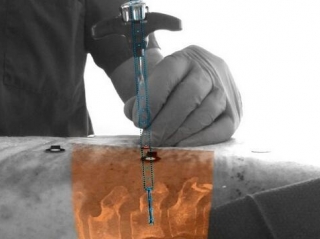
Regarding future development, Ma Yin revealed that the company is researching how to use smart glasses for surgical navigation.
We are no strangers to the use of AR (augmented reality) for surgical navigation. In January 2017, physicians performed minimally invasive spinal surgery using the Philips AR Surgical Navigation System. This system acquires low-dose X-ray images, which are captured by cameras to generate 3D stereoscopic imaging of the patient, providing surgeons with a real-time view of the spine at the incision site. It offers optimal surgical pathways and assists physicians in accurately placing pedicle screws through AR-guided navigation.
Compared with traditional open spinal surgery, minimally invasive surgery performed through small incisions in the skin can better reduce blood loss, soft tissue injury, and postoperative pain. However, minimally invasive surgery limits visibility, and the introduction of real-time imaging and AR navigation systems effectively addresses this limitation.
Once this technology matures, it will be a boon for patients at the primary care level. If a patient’s condition precludes transfer and specialists from tertiary hospitals cannot arrive in time, junior doctors can perform precise surgeries with the assistance of smart glasses, thereby helping primary care physicians enhance their diagnostic and therapeutic capabilities.
Liangliang Shijie currently has approximately 50 employees, primarily technical personnel. The team includes many developers from companies such as Broadcom, Nokia, Microsoft, Intel, and Lenovo, as well as algorithm developers from prestigious universities like Tsinghua University.Liangliang Vision previously secured tens of millions of yuan in Series A financing from Matrix Partners China, Cheetah Mobile, and Tianfeng Securities, and is poised to close a B-round financing round worth tens of millions of yuan from a U.S. dollar-denominated fund in the near future.The company plans to expand its team after completing this round of financing, and seeks to recruit talent in key areas such as core algorithms, product development, and business development.