

Precision Medicine Insights Season 2 Ep. 06: Prof. Qi Ming on Establishing a Clinical Genomic Laboratory Director Accountability System
Source: GenePPT

Introduction
Precision medicine has been elevated to a national strategy, with upstream gene sequencing costs dropping to the hundred-dollar range; large-scale cohort studies involving nearly one million participants are being launched sequentially; at the application level, technologies are gradually transitioning from scientific research to clinical diagnosis and treatment; the era of digital life, characterized by the microbiome, cloud platforms, multi-omics integration, and artificial intelligence, has begun; meanwhile, application scenarios for genetic testing remain uncertain, and technical standards and industry regulations urgently need improvement; concurrently, cross-industry giants have entered the market, and industry mergers and acquisitions are underway.
During a period of industry transformation, GeneWisdom conceived and hosted the series “Dialogues with Precision Medicine Leaders.” Season 1 featured 12 representatives from the precision medicine industry, while Season 2 invited 12 leading clinicians to examine the translational application of genetic technologies in clinical practice, thereby “creating value through connectivity” and facilitating the orderly development of the sector. We extend our gratitude to VCBeat for their media support.
[Review]
Season 2, Episode 1: Professor Huang Shangzhi
Season 2, Episode 02: Dr. Gu Weihong
Season 2, Episode 3: Professor Yao Hong
Season 2, Episode 4: Professor Zhao Haitao
Season 2, Episode 5: Wang Yi, Vice President
[Editor's Note]
In 1940, the University of Michigan in the United States established the world’s first genetic counseling clinic, The Heredity Clinic. Six years later, John Fraser Roberts opened the second genetic counseling clinic on Great Ormond Street in the British Isles, which remained in operation for 35 years. To date, the United States has developed a comprehensive training system for genetic counseling, overseen by organizations such as the American Board of Medical Genetics and Genomics (ABMGG) and the American Board of Genetic Counseling (ABGC). This system encompasses clinical geneticists, clinical laboratory geneticists and pathologists (with subspecialties in clinical and pathology laboratories), and genetic counselors. In the early 1990s, Professor Qi Ming studied under renowned American geneticist Dr. Peter Byers and Academician Arno Motulsky at the University of Washington. He obtained board certification in Clinical Molecular Genetic Medicine. Upon returning to China, he established the Clinic of Genetics and Genomic Medicine at the First Affiliated Hospital, Zhejiang University School of Medicine, in 2005—the first “Gene Clinic” in the country. The diagnosis of bacterial infections, along with the application of vaccines and antibiotics, brought about a revolutionary impact on clinical practice in the 20th century; in the 21st century, gene-based diagnostics, genetic counseling, and personalized medication are driving a new revolution.Technological revolutions have ushered in the establishment of new systems. Here, we invite Professor Qi Ming to share his professional insights on the director-responsibility system for clinical genetics and genomic diagnostic laboratories.
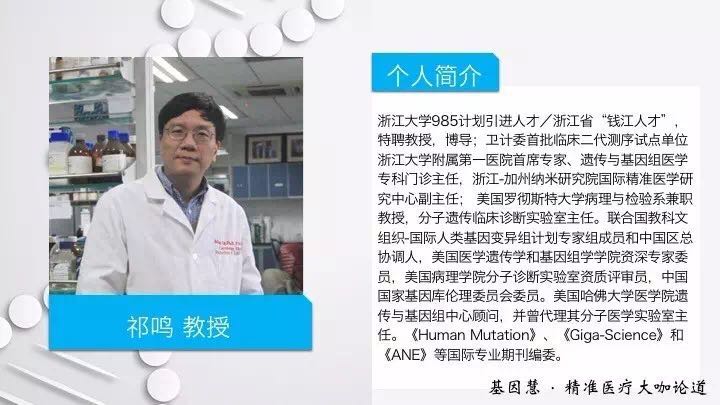
Director, Clinical Genetics and Genomic Diagnostics Laboratory
The Establishment of an Accountability System Is Imminent
Author: Qi Ming
Ph.D. in Molecular Biology and Medical Genetics (FACMGG)
Abstract:In recent years, the theory and technology of genomics have developed rapidly, and medical and health genetic testing institutions around the world have sprung up like mushrooms after rain. However, clinical genetics and genomic laboratory diagnostics are not a simple new technical product that anyone can engage in by purchasing the latest instruments with enthusiasm. Even scientists with numerous research achievements and excellent technical skills cannot do so casually.The detours taken and successful experiences of developed countries in Europe and America demonstrate the need for a laboratory director responsibility system centered on “professionals–facilities–products.”. The director overseeing the clinical laboratory must undergo specialized training, pass certification examinations administered by professional industry bodies, and hold a valid license before assuming duties. Laboratory operations are strictly standardized and subject to regulatory oversight. Every test report must employ scientifically sound methodologies, ensure reliable data, and deliver accurate results, all of which require final review and authorization by the director.
Medical Genetics and Genomics: The Latest Clinical Specialty
In the latter half of the 20th century, with advances in human genetics and genomics, new insights emerged regarding the etiology and pathogenesis of diseases. It is now recognized that all diseases (except for traumatic injuries) result from the interaction between an individual’s genes and external environmental factors, including personal lifestyle habits.
Thus, a new clinical specialty gradually emerged and took shape:
In 1980, the American Board of Medical Genetics (ABMG; www.abmgg.org), composed of experts in medical genetics, launched the establishment and training programs for the medical genetics specialty. Accredited training centers were gradually established at major U.S. medical schools to conduct training and assess and certify clinical practice qualifications.
In 1991, the American Board of Medical Specialties (ABMS, www.abms.org) recognized medical genetics as a new medical specialty. This was the last of the existing 24 medical specialties to be established in the United States.
The American College of Medical Genetics (ACMG, www.acmg.net), established in the same year, has become the premier authority for setting standards in clinical genetics policies and related practice guidelines.
Over the past five years, the rapid development of genomic theories and technologies has been introduced into clinical practice. The specialty of “Medical Genetics” has evolved into “Medical Genetics and Genomics,” and the ABMG has also been renamed as ABMGG.
The United States has established a well-developed specialty system in medical genetics and genomics, built on three pillars: clinical geneticists and genomic physicians, directors of clinical genetic and genomic diagnostic laboratories, and genetic counselors. Each group possesses its own unique expertise and responsibilities, while also engaging in interdisciplinary collaboration and organic coordination.
Director Responsibility System for the Clinical Genetics and Genomic Diagnostics Laboratory
Clinical genetic and genomic laboratory diagnostics is not a simple new technological product. Patients and physicians will ask:
Why is this test/screening performed (Purpose of the Test)?
Who Should Undergo This Test (Clinical Indications)?
When is the appropriate time to undergo testing?
What is the pre-test disease risk/recurrence risk for the examinee?
What will it be after testing?
What is the scientific basis for this test?
What are the benefits and risks of this test?
Do I have other options?
What are the false negative rate and false positive rate of the test?
How is the cost-effectiveness?
......
The successful experiences of developed countries in Europe and America demonstrate the need for a laboratory director responsibility system centered on “personnel–facilities–products.” Laboratory directors must undergo more than two years of specialized training, pass the certification examination administered by the American Board of Medical Genetics and Genomics (ABMGG), obtain licensure before assuming their duties, and be subject to regular performance evaluations and recertification.
The core professional competencies of the Director of the Clinical Molecular Genetics and Genomics, Cytogenetics and Genomics, and Biochemical Genetics Diagnostic Laboratory include:
Fully master and understand the principles, methods, and quality control procedures of genetic and genomic diagnostic tests related to this specialty;
Supervise diagnostic testing procedures, guide technicians in laboratory skills, and continuously improve diagnostic quality and efficiency;
Comprehensively and thoroughly master the genetic polymorphisms, familial inheritance patterns, etiology, pathophysiology, clinical manifestations, and preventive and therapeutic measures involved in the corresponding professional field;
Provide accurate result analysis and diagnostic reports, and offer follow-up diagnostic and treatment recommendations to clinical geneticists and other healthcare professionals;
Participate in clinical research on genetic diseases and track the introduction of new genetic diagnostic methods.
Diagnostic laboratories must have appropriate spatial configurations, qualified instruments and reagents, and standardized management, and must be certified and regulated under the Clinical Laboratory Improvement Amendments (CLIA).
Genetic testing products/items need to be registered and regulated by the state government. Most of the products/items are developed in-house by the laboratory (LDT), and any method, reagent, or instrument can be used. The director of the genetics and genomics diagnostics laboratory has significant authority, as well as substantial responsibility.
Current Status of Genetic and Genomic Diagnostic Laboratories in China
Currently, China suffers from a severe lack of regulatory standards for genetics and genomics diagnostic laboratories. Laboratory directors in clinical settings are only required to be licensed medical laboratory physicians, with a significant proportion of personnel lacking adequate knowledge or familiarity with clinical genetics and genomics. Regulatory oversight of laboratory facilities is limited to PCR laboratories. Furthermore, genetic testing services offered by some biotechnology companies operate entirely without regulation. This situation poses a substantial risk of major medical malpractice incidents. Therefore, it is imperative to urgently establish a robust and effective laboratory director responsibility system, which has been explored and refined internationally for many years, to support the rapid and healthy development of the medical genetics and genomics specialty.