

Breakthrough in Novel Cell Culture Technology: Is the Challenge of Personalized Cancer Therapy Finally Overcome?
“One day, the doctor suddenly informed me that my cancer had metastasized.”That is2015At the end of the year, Ms. Li was diagnosed with well-to-moderately differentiated adenocarcinoma of the rectum. Following surgery, she underwent standard chemotherapy3months later, liver metastases were detected again, at the age of46years old.
According to an analysis and statistical review of 139,000 cases from 17 national cancer registries conducted by the National Cancer Registry Center and the Office for Cancer Prevention and Control, the five-year survival rate for cancer patients in China is 30.9%, merely half that of the United States (66%).
Ms. Li continued to receive standard cancer therapy, but believing it might not be the most effective approach, she took an unusual additional step: she engaged a domestic research institution to culture her tumor tissue and used the resulting population of tumor cells proliferated in the laboratory to test dozens of drugs, hoping to identify the regimen most effective for her. “As a patient, I personally do not have the time to undergo each of these therapies one by one, nor can my body tolerate them,” Ms. Li explained.
This idea may seem bizarre, but the underlying logic is quite simple: to understand the enemy, one must first cultivate it. Currently, researchers around the world are striving to use tissue engineering techniques to grow real tumors in vitro. Researchers from Georgetown University Medical Center in the United States have developed and tested a revolutionary laboratory technique [1] called “conditional reprogramming.” This CR technology allows for the unlimited cultivation of both normal and diseased cells in the laboratory.
However, this technology has a critical weakness: the CR system simultaneously amplifies both normal and tumor cells from patients, making it impossible to determine which cell subpopulation the drug sensitivity signals originate from, thereby severely limiting its clinical application. Beijing-based Percans Oncology began developing clinical drug sensitivity testing technology based on the CR principle three years ago. It has now successfully achieved a breakthrough in selective CR amplification of tumor cells, becoming the first company in China to provide personalized drug sensitivity testing services to patients using this technology.
In February 2017, ZhiKang BioPharma and Peking Union Medical College Hospital jointly launched a formal clinical study targeting patients with advanced colorectal cancer, holding promise for rapidly identifying effective personalized treatment regimens for each patient. Ms. Li had initially sought assistance from ZhiKang BioPharma and, through drug sensitivity testing, quickly identified suitable medication recommendations within standard treatment protocols. Dr. Chen Yiyou, President of the company, pointed out: “There is significant heterogeneity among tumors, and different patients respond differently to the same treatment regimen. There is an urgent clinical need for a new adjunctive tool to guide physicians in medication decisions, marking a shift from the relative independence of diagnostics and therapeutics to an integrated theranostics approach.”
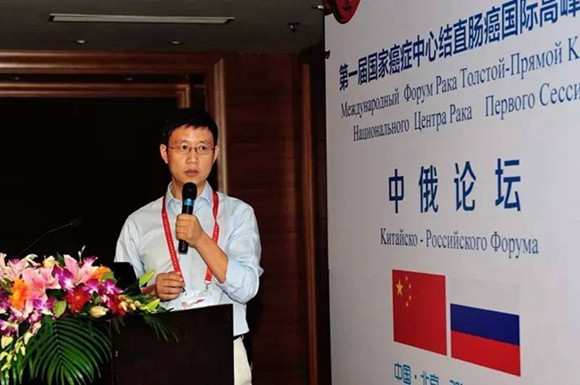
Dr. Chen Yiyou Attends the First International High-Level Forum on Colorectal Cancer Hosted by the National Cancer Center
Dr. Chen’s observation reflects a consensus within the industry. Based on the tissue of origin and microscopic imaging, cancer can already be classified into hundreds of distinct types; however, in reality, there are likely millions of types. Cancers often harbor hundreds of genetic mutations, along with even more diverse epigenetic alterations. Each tumor is unique and continuously undergoes change and evolution.
Technological Upgrade!
May Break Through the Bottleneck of "Personalized Tumor Therapy"
For this very reason, the more a therapy can target the unique underlying cause in a patient, the more likely it is to be effective. Personalized oncology treatment is now ushering in a new wave of transformation. For instance, some patients’ tumors overproduce a protein called “Her2,” and clinicians tailor their treatment by using drugs specifically indicated for this type of cancer. Previous studies have found that certain mutations can influence the behavior of cancer cells, and researchers are increasingly leveraging genetic testing to identify these alterations. However, despite rapid progress in this field, relying solely on genetic testing to predict the optimal drug combinations remains a distant goal.
Currently, Conditional Reprogramming (CR) is the only experimental technique in the world capable of enabling the indefinite proliferation of both cancer cells and normal cells. However, its application in clinical tumor drug screening still requires improvement, which is where ZhiKangBo Pharma leverages conditional reprogramming technology to make significant advancements. Dr. Zhang Yihong, Chief Scientist at ZhiKangBo Pharma, stated, “Our technology takes conditional reprogramming a step further by culturing only cancer cells and completely eliminating signal noise from normal cells, thereby enhancing the precision of drug sensitivity testing and entirely ruling out false-negative errors.” Inducing the growth of these cells does not require genetic modification; all that is needed are specific “feeder” cells and a chemical inhibitor. Moreover, up to one million new cells can be cultured within a week if required. This approach allows patients to simultaneously test several or even dozens of drugs or drug combinations using the cultured cancer cells, quickly identifying the most effective treatment option.
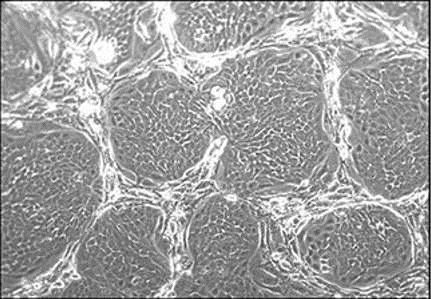
Tumor epithelial cells grown on a feeder layer
It is not difficult to imagine that “conditional reprogramming” technology may spark a new medical revolution, including the construction of living biobanks, the development of personalized therapies, the realization of regenerative medicine, and the advancement of novel cancer research.
Several research institutes have leveraged conditional reprogramming platforms to discover anticancer drugs or novel targets. For instance, researchers at Harvard Medical School used conditional reprogramming technology to identify targeted therapies effective for lung cancer patients [2]. Researchers from the University of Helsinki in Finland employed conditional reprogramming to establish the first castration-resistant prostate cancer cell lines and assessed their sensitivity to both known and novel drugs [3]. These novel drugs include navitoclax, which is currently being evaluated in clinical trials for the treatment of castration-resistant prostate cancer. Researchers at Yale University in the United States identified Notch1 and SOX10 as potential new targets for adenoid cystic carcinoma [4]. Investigators from the Fox Chase Cancer Center in the United States discovered MYC-ERCC3 as a novel target in human pancreatic cancer and applied this finding to drug discovery efforts [5].
References:
【1】Conditional reprogramming and long-term expansion of normal and tumor cells from human biospecimens
Nature Protocols, doi:10.1038/nprot.2016.174
【2】Patient-derived models of acquired resistance can identify effective drug combinations for cancer
SCIENCE, VOL 346 ISSUE 6216,1480-1486(2014 )
【3】Comprehensive Drug Testing of Patient-derived Conditionally Reprogrammed Cells from Castration-resistant Prostate Cancer
European Urology, doi:10.1016/j.eururo.2016.04.019
【4】NOTCH1 and SOX10 are Essential for Proliferation and Radiation Resistance of Cancer Stem–Like Cells in Adenoid Cystic Carcinoma
Clinical Cancer Research, doi:10.1158/1078-0432.CCR-15-2208
【5】Screening of Conditionally Reprogrammed Patient-Derived Carcinoma Cells Identifies ERCC3–MYC Interactions as a Target in Pancreatic CancerClinical Cancer Research, doi:10.1158/1078-0432.CCR-16-0149