

18 Medical AI Companies Poised to Break Through in 2017
Artificial intelligence is currently the hottest sector in the medical community. An increasing number of companies are anchoring their business prospects in the broader AI landscape, aiming to disrupt the healthcare industry with the aid of artificial intelligence. We have compiled a list of some of the most prominent companies in the current market, ranging from startups to tech giants, which are poised to be the leading forces in the field of AI in 2017.
No one doubts the unimaginable potential of artificial intelligence. In the coming years, it will revolutionize every aspect of our lives, including medicine. Many people remain filled with fear and skepticism about the possibility that AI may one day take over the world; even the renowned scientist Stephen Hawking warned that the development of full artificial intelligence could spell the end of the human race. However, I believe that if humanity makes appropriate preparations to address its implications, artificial intelligence will prove to be the next successful frontier of collaboration between humans and machines.
This includes healthcare, which AI will transform—and improve. AI can assist medical professionals in designing treatment plans and identifying the most suitable approach for each patient. It can handle mechanical, repetitive, and monotonous tasks, allowing doctors and nurses to focus on their core responsibilities.
“Data mining of medical records is the most prominent application of artificial intelligence in medicine. Collecting, storing, and normalizing data, as well as tracing its provenance, constitutes the first step toward revolutionizing existing healthcare systems.”
Examine the following case, and you will recognize the demand for artificial intelligence.
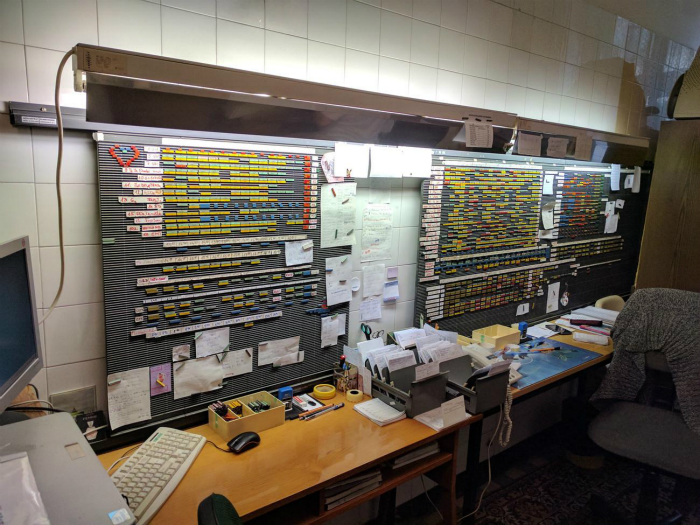
Take a look at this photo taken in a hospital in Budapest, the capital of Hungary. Medical staff are manually managing patients' surgical schedules on a huge blackboard. I don't want to comment on the hospital that owns these index cards, but the entire scene looks like a hospital from the early 20th century, rather than how a medical institution with over two decades of history in the 21st century should operate.
It is evident that such a system is unsustainable, and artificial intelligence can offer assistance in this regard. Some entrepreneurs have already recognized the transformative impact and financial potential of AI in the healthcare industry. According to Frost & Sullivan, AI systems are projected to generate $6.7 billion in revenue from the healthcare sector by 2021, a significant increase from just $811 million in 2015.
The market is booming, with startups springing up like mushrooms. These companies are democratizing healthcare through artificial intelligence, striving to build a more transparent and efficient healthcare system.
We now live in the era of “big data,” and there is no doubt about how invaluable valuable patient data is. When tech giants such as Google or IBM invest their capital in the field of patient data mining, it becomes clear that this is indeed a worthwhile endeavor.
1、Google Deepmind
Recently, Google’s AI research division launched the Google DeepMind Health project to mine medical records for data, aiming to deliver better and faster healthcare services. These are not mere slogans; Google DeepMind can indeed process tens of thousands of medical records within minutes. Although research into such data collection and machine learning is still in its early stages, Google is collaborating with the Moorfields Eye Hospital NHS Foundation Trust to improve current ophthalmic care.
Furthermore, Verily, the life sciences division of Alphabet (Google’s parent company), is conducting a gene data collection initiative known as the Baseline Study. Its objective is to leverage algorithms similar to those powering Google’s search engine to analyze the factors influencing human health. This includes experimental disease surveillance technologies and the development of digital contact lenses capable of monitoring blood glucose levels.
2、IBM WatsonPaths
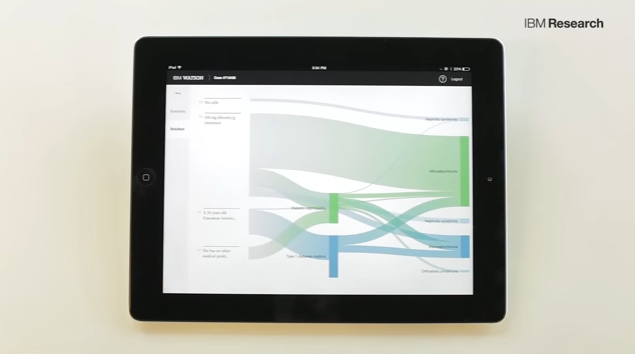
IBM Watson, in collaboration with the Cleveland Clinic Lerner College of Medicine at Case Western Reserve University, launched a project named WatsonPaths. WatsonPaths is primarily responsible for developing two types of cognitive computing technologies that can be utilized by Watson through artificial intelligence methods. This will assist physicians in making more accurate decisions and updating patient diagnoses based on electronic medical records (EMR).
3、Careskore
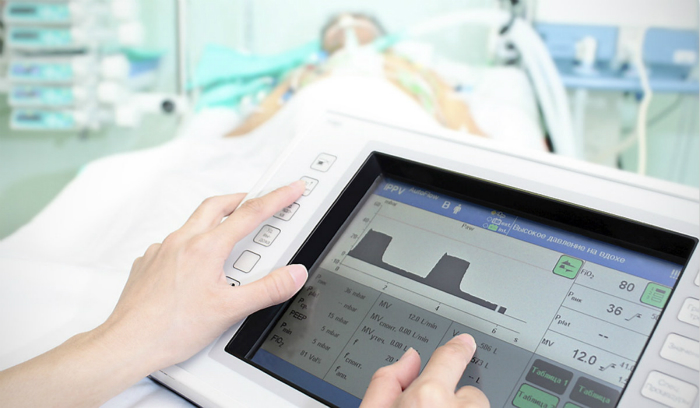
Careskore is developing a cloud-based predictive analytics platform for health systems and physician organizations: such is the vision of this Chicago-based startup. Many have expressed strong enthusiasm for the platform, which secured $4.3 million in funding in August 2016.
Careskore leverages the Zeus algorithm to deliver real-time predictions by integrating clinical, laboratory, demographic, and behavioral data to calculate the likelihood of patient readmission. By utilizing these insights, hospitals can enhance the quality of care, while patients gain a clearer understanding of their health status. In particular, for patients who register for a personalized Careskore account, the AI-powered communication service platform enables them to receive real-time notifications regarding their health risks and physical conditions.
4、Zephyr Health
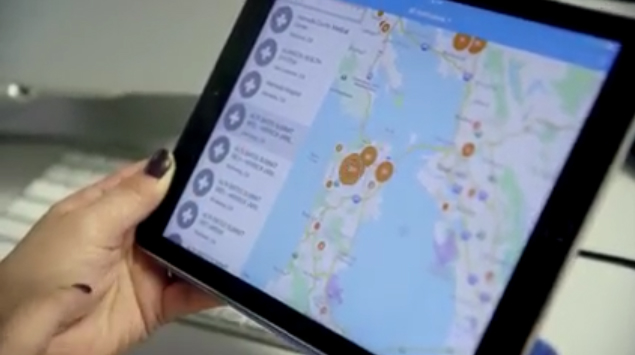
After five years of data mining, Johnson & Johnson’s diverse datasets are helping physicians identify better treatment options. William King launched the Zephyr Health initiative in 2011 to help life sciences companies improve their research and reduce the time required to bring their therapeutic products to market.
This startup has entered a fertile field, distinguished by its unique talent and vision. King was named by the readers of PharmaVOICE magazine as one of the 100 Most Inspiring People in the Life Sciences Industry in 2016. The company combines databases with machine learning algorithms; notably, its data visualization capabilities enable healthcare companies to understand diverse datasets more quickly and intuitively.
5、Oncora Medical

This Philadelphia-based startup aims to advance cancer research and treatment, particularly in the field of radiation therapy. David Lindsay, a co-founder who holds an M.D./Ph.D. from the University of Pennsylvania, recognized during his clinical practice that radiation oncologists lacked an integrated digital database for collecting and organizing electronic health records. Consequently, he decided to build a data analytics platform to help physicians design robust radiation treatment plans for patients. It was this very idea that propelled Oncora Medical to thrive! In 2016, the startup secured $1.2 million in seed funding from investors. In 2017, it planned to deploy its precision radiation oncology platform across three major medical centers, helping 10,000 patients receive personalized treatment.
6、Sentrian
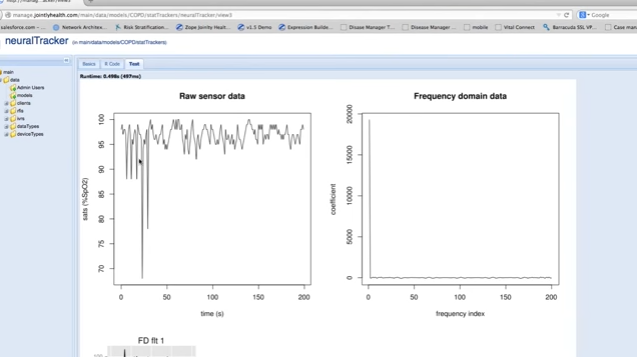
“Remote Patient Intelligence Company” aims to bring the healthcare community closer to a future where intelligent algorithms will predict whether individuals will fall ill, even before they experience symptoms. Sentrian was launched two years ago and is currently valued at $12 million. The company focuses on chronic diseases, with the goal of eliminating all preventable hospitalizations through remote patient monitoring.
This goal may sound ambitious, but Sentrian aims to achieve it in two steps. First, it collects patient data from increasingly widely used biosensors, then processes this massive volume of data with precision and speed. The company seeks to enable machines to perform the work of a specialized clinical team, such as continuously monitoring each patient’s data, detecting subtle physiological signs, and alerting clinicians to impending health issues.
7、CloudMedX Health

This Silicon Valley startup is dedicated to optimizing patients’ financial situations through predictive analytics. CloudMedX leverages algorithms, machine learning, and natural language processing to generate real-time clinical observational data across all points of care, thereby improving patients’ medical outcomes. Tashfeen Suleman, co-founder and CEO, stated in a recent interview, “We are bringing physicians back to their core role in hospitals, rather than having them serve merely as data entry clerks. I hope that many others will be able to truly assume leadership roles in other aspects of healthcare by freeing medical professionals from administrative and data-related burdens.”
Medical imaging technologies encompass a variety of techniques and methods that allow for the examination of the human body’s internal structures, such as X-rays, electrocardiograms (ECGs), MRI, ultrasound, and computed tomography (CT). What comes to mind when you think of these technologies? Is your immediate reaction that you need to be in a large, seemingly unwelcoming room—often the largest room in any hospital—housing the biggest, most expensive, and most complex machinery? Furthermore, 60% of hospitals worldwide lack comprehensive medical imaging technologies and equipment, because current imaging-related technologies are bulky and costly, not to mention the associated training requirements. This is precisely what the following innovative artificial intelligence technologies aim to change.
1、Butterfly Network

In 2011, Jonathan Rothberg founded the startup Butterfly Network with the goal of creating a novel handheld medical imaging device that would significantly reduce the costs of MRI and ultrasound, thereby improving efficiency. His ultimate ambition is even to automate the majority of medical imaging processes. This bold entrepreneur already owns two DNA sequencing companies.
Meanwhile, in 2014, he secured $100 million in investment to develop a scanner the size of an iPhone, capable of capturing real-time, moving 3D images—for instance, allowing users to scan a person’s chest and visualize its internal structures. These images would then be processed by ultrasound specialists using a series of deep learning algorithms. Although Rothberg promised three years ago that this goal would be achieved within 18 months, we are still waiting for the butterfly to emerge from its thick cocoon.
2、3Scan

San Francisco-based startup 3Scan aims to help laboratories and researchers better observe human cellular tissues through robotic microscopy and machine vision. According to Megan Klimen, the company’s co-founder and Chief Operating Officer, 3Scan can alleviate some of the burdens faced by drug researchers, who previously relied on manual processes for tissue analysis. However, 3Scan’s machines are so much more efficient than traditional manual methods that they can analyze tissue samples in just one day—a task that used to take a year.
3、Enlitic

Enlitic leverages deep learning technology, particularly its prowess in image recognition in certain areas, to collect data derived from radiological images and apply it to unique medical cases. Deep learning essentially refers to the process by which computers receive data and then interpret that information based on extensive knowledge derived from other data.
The launched technology can interpret medical images in milliseconds—10,000 times faster than the average radiologist. Furthermore, a June 2016 report in The Economist stated that in tests involving three expert human radiologists working collaboratively, Enlitic’s system outperformed them by 50% in analyzing and diagnosing malignant tumors, achieving a zero false-negative rate (i.e., no missed cancer diagnoses). This is quite impressive, isn’t it?
4、Arterys
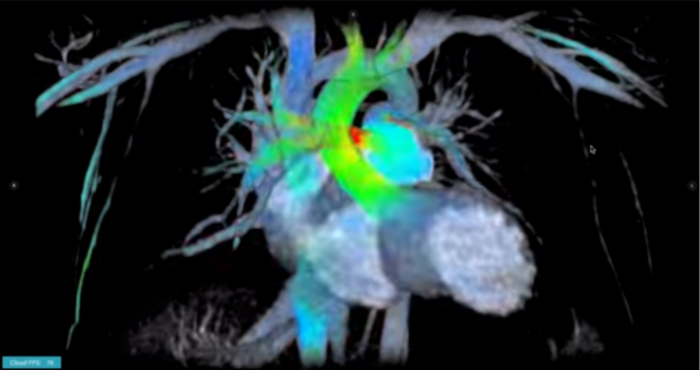
In the cloud space, where artificial intelligence meets medical imaging, lies the starting point of Arterys’ work. This pioneering startup technology promises to “unlock the power of the cloud for medical imaging.” Consequently, they partnered with GE Healthcare to transform cardiac MRI through their ViosWorks project. Using this new approach, the scanning process takes only 6 to 10 minutes, rather than the previous hour, and patients no longer need to hold their breath throughout the examination. According to records, Arterys’ platform is designed to acquire seven-dimensional data, including valuable information such as 3D cardiac anatomy, blood flow velocity, and direction of blood flow.
5、Bay Labs
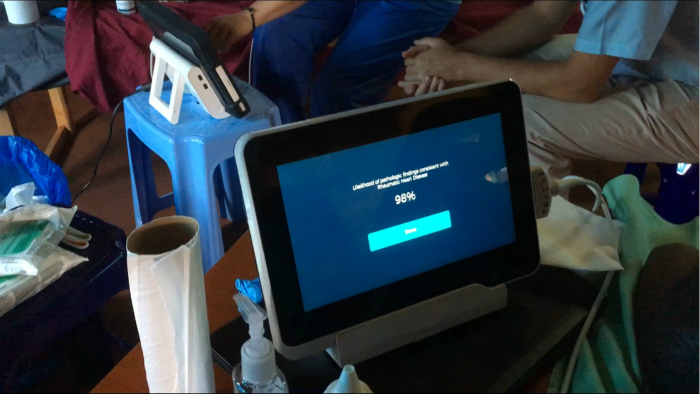
Bay Labs, launched last year, uses deep learning to help medical professionals in developing countries interpret ultrasounds for better treatment of heart disease.
In September 2016, Bay Labs and its collaborators applied this technology in Africa to help Kenyan students identify symptoms of rheumatic heart disease (RHD). The Bay Labs software analyzes data from ultrasound scans. During this trip, medical professionals scanned 1,200 children over four days and identified 48 cases of RHD or congenital heart disease. Furthermore, Johan Mathe of Bay Labs stated that training an ultrasound technician to operate the algorithm typically takes only a few minutes!
Clinical trials for drug development can sometimes take more than a decade and cost billions of dollars. Accelerating the drug development process through artificial intelligence technology and making it more cost-effective will have a tremendous impact on today's healthcare.
1、Atomwise

Atomwise aims to reduce the cost of drug development by using supercomputers to predict which potential drugs will be effective and which will not, based on molecular structure databases. In 2015, Atomwise began virtually screening existing safe drugs for repurposing to treat the Ebola virus. They found that the company’s AI technology predicted two drugs could significantly reduce the infectivity of the Ebola virus. Previously, similar analyses typically took months or even years, but now they can be completed in less than a day! Imagine if such clinical trials could be conducted at the “ground zero” level of healthcare—that is, in pharmacies—we could carry out drug development more effectively. Therefore, I hope this will happen faster than we imagine!
2、Recursion Pharmaceuticals
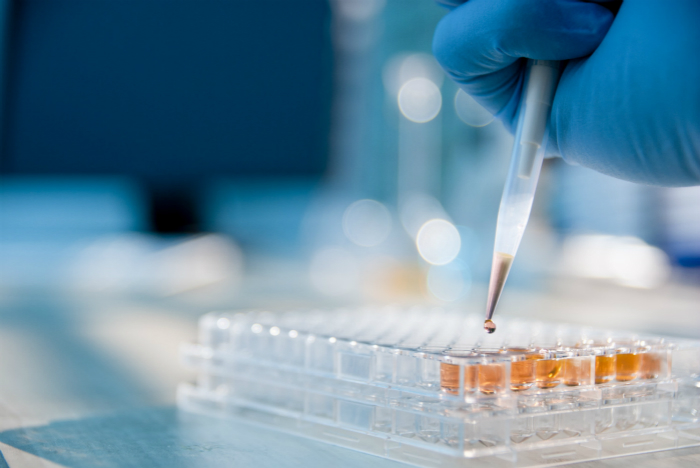
Founded in 2013, this drug discovery company aims to build a proprietary drug discovery platform that combines the best elements of high-throughput biology and automation with the latest advances in artificial intelligence. The company has identified opportunities for drug delivery in the rare genetic disease space, as well as new uses for bioactive compounds and shelved pharmaceutical assets. They are committed to achieving the ambitious goal of successfully curing 100 diseases within the next decade.
3、Whole Biome

The company’s mission statement declares its goal to become a trusted brand that empowers the public to improve health solutions through the microbiome. The microbiome is defined as all microorganisms existing both inside and outside each individual.
The human body contains microbial cells that outnumber human cells by a factor of ten. Throughout our development, humans and microbes have co-evolved, resulting in the presence of numerous microorganisms within our bodies that are beneficial to our health. Decades of scientific research have revealed that the microbiome represents a significant opportunity for shaping health outcomes. However, it is only recently that genomic technologies and analytical tools have made this possible. Therefore, Mayo Clinic has partnered with Whole Biome to help women reduce the risk of preterm birth through microbiome diagnostic testing.
4、iCarbonX

iCarbonX is the only Chinese startup on our list, with the ambition to “digitize everyone’s life information.” It has secured nearly RMB 600 million in funding. In fact, WeChat, China’s largest social media app, is among its backers, signaling that the company holds considerable promise.
It essentially aims to build a purely “digital” repository of human health information, encompassing biological samples such as saliva, proteins, and DNA; environmental measurements, including air quality; and lifestyle factors, such as exercise routines and dietary habits. The company, which has been in operation for less than a year, has already begun developing algorithms to analyze this data, with the goal of recommending personalized health plans, food choices, and potential prescription medications to its customers.
5、Deep Genomics

Brendan Frey’s company has pledged to tackle the biggest mystery in genetics—the genome. It is well established that most genomes can provide us with a wealth of useful information. To this end, Deep Genomics leverages artificial intelligence, particularly deep learning, to help decipher the meaning encoded within the genome.
Their learning software is attempting to predict the impact of specific mutations based on an analysis of hundreds of thousands of mutation instances, even though we currently lack records for these mutations. To date, Deep Genomics has developed a database using its computational system, providing over 300 million predictions on how genetic variants affect the genetic code. Consequently, their findings will be applied to therapeutic development in genomics, molecular diagnostics, targeted biomarker discovery, and the assessment of genetic disease risk.
6、Turbine
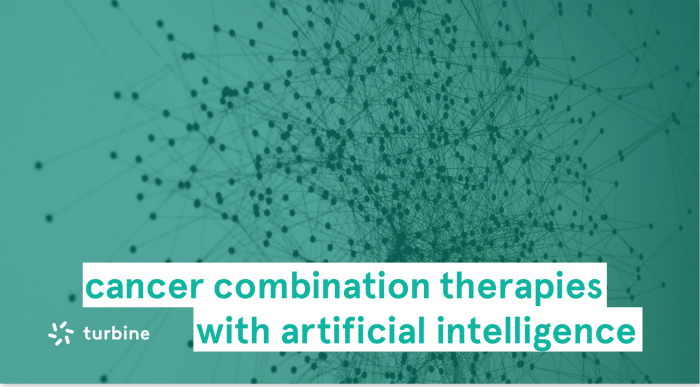
A professional AI developer, together with a team of medical professionals and bioinformaticians, spent six years researching and building an artificial intelligence solution designed to deliver treatment services that are more personalized than any traditional healthcare offering, for any cancer type or patient. The personalized treatment technology simulates cell biology at the molecular level; it can identify the optimal drugs needed to target specific tumors, and furthermore, it identifies complex biomarkers and designs combination therapies by conducting millions of simulated experiments daily.
The key to Turbine’s uniqueness lies in its molecular model of cancer biology, which leverages AI-guided simulations to identify biomarkers predictive of therapeutic response. Consequently, this technology has been deployed in collaborations with Bayer, the University of Cambridge, and leading Hungarian research consortia to discover novel cancer therapies. Accelerating time-to-market for these treatments could significantly enhance the prospects of saving patients suffering from currently incurable, life-threatening diseases.
The article is from http://medicalfuturist.com/ and was compiled by VCBeat.