Investment Insights on Smart Healthcare in 2017: Empowering Physicians through AI, Big Data, and Internet Technologies
Author:Rong Laoshi
Article from the WeChat Official Account: Rong Laoshi's Eagle
Recently, several developments in the internet healthcare sector have captured the attention of social media circles:
- Baidu Dissolves Its Healthcare Division, Pivoting to AI-Driven Healthcare
- IBM Watson’s collaboration with MD Anderson, a world-leading cancer research institution, has been suspended
- The National Health and Family Planning Commission issued the "Administrative Standards for the Application of Electronic Medical Records (Trial)," providing national-level guidance for electronic medical records.
Healthcare is changing, and so is the internet. This is an inevitable trend; whether you embrace it or not, it awaits you. Over the past year, the internet healthcare sector has fallen silent after a period of exuberance, even tinged with sorrow (as Zhang Rui of Chunyu Doctor unfortunately passed away). Having had close contact with internet healthcare, these developments resonate deeply with me.
Especially yesterday, I was on my way to meet a friend for tea when I suddenly received a call from them midway. They informed me that they were experiencing abdominal pain and hematochezia, and thus could not keep the appointment. After offering some perfunctory words of comfort, I felt utterly powerless and came to realize the helplessness one faces in the presence of illness.
Out of a sense of resignation, during this quiet interlude before the transformation of smart healthcare, Mr. Rong shares his insights on the field, hoping to contribute his modest efforts to advancing smart healthcare.
The healthcare sector encompasses a vast array of industries, making it impossible to cover them all in this brief article. Therefore, I will focus solely on smart healthcare. Smart healthcare refers to the new services and ecosystems created by integrating technologies such as the internet, big data, and artificial intelligence into medical services. Examples within the scope of this discussion include Chunyu Yisheng, Haodafu, DXY, Watson Health, and PubMed.
The Game-Theoretic Equilibrium Between Physicians and Hospitals
Industries such as healthcare, education, and legal consulting share a common characteristic: core services are delivered by individual professional specialists. When seeking medical care, we are concerned about which physician is on duty; when enrolling our children in advanced mathematics programs, we inquire about the reputation of the instructor. The quality of such services depends largely on the provider rather than the service location or the affiliated institution.Have you not noticed the constant news reports of renowned instructors at training institutions either jumping ship to competitors or striking out on their own? The most famous example is Yu Minhong, who left the “Dongfang Foreign Language Training School” in his early years to establish New Oriental. A recent case in the healthcare sector mirrors this trend: the director of the Psychiatry Department at Guihang Guiyang Hospital defected to Guiyang No. 6 People’s Hospital, taking with him not only himself but also the majority of the department’s physicians and patients.

At this point, some readers may wonder: job-hopping occurs in every industry. What makes the healthcare sector different?
Rong Laoshi answers: The key point is not job-hopping, but whether an individual professional can provide end-to-end services. When you use a WeChat Subscription Account, you don’t care which programmer developed it. When you use an iPhone, you don’t care which Foxconn assembly-line worker put it together for you.
These services or products are more often delivered as a collective outcome. No single core technical professional provides a complete service to the user. Therefore, industries such as healthcare and education tend toward individual practice, giving rise to business models like private tutoring and solo medical clinics.

It is precisely due to these characteristics that a delicate game-theoretic equilibrium exists between hospitals and physicians. On the one hand, hospitals expect their physicians to possess strong clinical competencies and enjoy a favorable reputation, thereby attracting more patients and increasing revenue. On the other hand, as physicians’ reputations improve, they may change employers, engage in multi-site practice, or perform freelance surgeries (“flying knife” procedures), which consequently reduces the hospital’s income.
What is the hospital's strategy?
In addition to certain administrative mechanisms within the system (such as the personnel management system), a key response strategy for hospitals is to enable“Decentralizing doctors” highlights the hospital brand while downplaying individual physician recognition, steering patients’ healthcare decisions toward the institution rather than the practitioner. On Beijing’s appointment registration platform, appointments cannot be booked by specific physicians, and physicians’ names are not even searchable. Consequently, physicians’ professional value is increasingly subsumed by hospitals. This reflects the current state of public Grade-A tertiary hospitals in China.
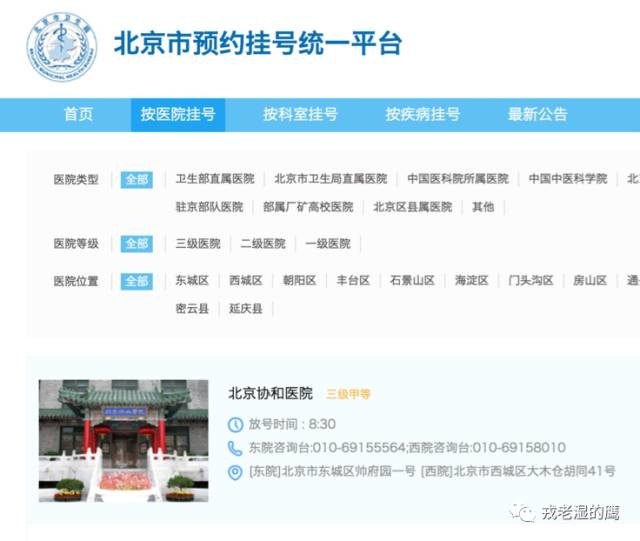
Of course, doctors have their countermeasures, which is why many actively maintain their Q&A sections and reviews on Haodf. Doctors and hospitals exist in a dynamic equilibrium, but overall, hospitals hold the dominant position.
The reason for recounting this story is to convey that innovations in smart healthcare will disrupt this equilibrium, and the reactions following such disruption will determine whether these innovations can survive and thrive.
Mr. Rong offers a judgment: If the balance of innovation in smart healthcare tips toward hospitals, the likelihood of success is low; conversely, if smart healthcare innovations side with physicians and empower them, the probability of success increases significantly. The rationale is simple, as Cousin tells you:
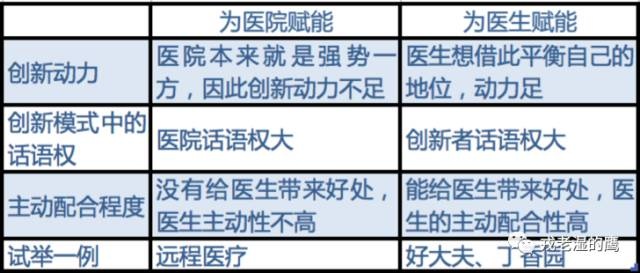
Therefore, the overarching strategic direction of smart healthcare is to stand with physicians and empower them.
Investment Recommendations for Smart Healthcare
With the overarching strategic direction set, the focus of implementation must return to the core scenarios of medical practice.。
The core objective of medical practice is to eliminate or alleviate patients’ pain and suffering, which occurs in face-to-face clinical settings such as consultation rooms or operating theaters. Within this core scenario, intelligent healthcare can empower physicians through the following three levels:
- Enhancing Medical Skills: Clinical Decision Support
- Enhancing Healthcare Efficiency: Intelligent Triage
- Convenient Medical Services: Online Consultation
A visual summary simplifies understanding; I will use a single figure to illustrate the most important conclusion of this article.
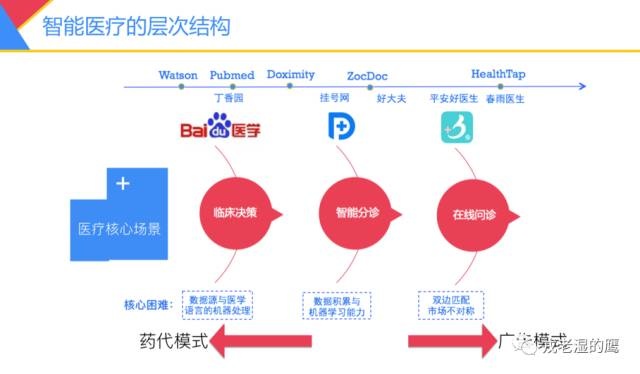
A brief explanation:
Closest to the core scenario is clinical decision support, which assists physicians in making diagnoses, determining disease etiology, and identifying optimal treatment plans. The most critical factor for success in this area is having accurate and professional data sources. Different data sources give rise to distinct business models:
The first type of data source is complete medical records from hospitals. IBM Watson for Oncology follows this approach. It collaborates with cancer hospitals in the United States to obtain medical record data and train its intelligent models, providing physicians with references for diagnosis and treatment plans. This is a pure technology cooperation business model based on technical service fees, requiring close collaboration and endorsement from the data providers. There are few startups in China that rely on this as their core technology.
Key investment considerations for such enterprises include: whether the data supply is comprehensive, scalable, and stable—the first two ensuring the effectiveness of AI methods, and the last ensuring the sustainability of data source partnerships; and whether the methodology can be generalized to other hospitals to guarantee commercial returns.

The second type of data source is communication among physicians. In China, platforms such as DXY represent this model, where clinical solutions to challenging cases are obtained through peer-to-peer exchange among healthcare professionals. Sermo in the United States is similar to DXY and was the largest physician community in the U.S. prior to 2012. Currently, Doximity holds a dominant position among physician social networking apps; it connects physicians based on their professional credentials and facilitates the secure transmission of medical records in compliance with U.S. regulatory requirements.
There is no social application in China similar to Doximity. As private hospitals gain greater recognition in China and the government encourages multi-site practice, physician mobility will increase, thereby strengthening the demand for physician networking and recruitment. However, this shift is expected to be gradual and protracted; therefore, short-term investment in this area is not viewed favorably.

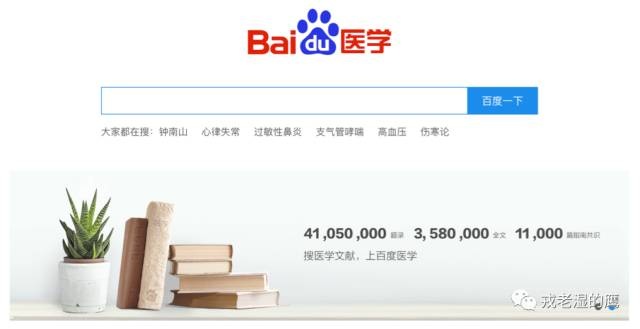
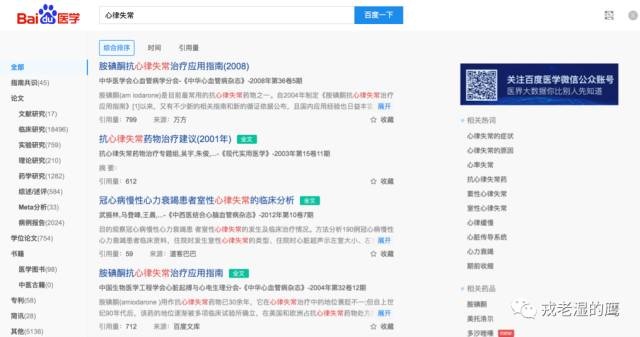
The third type of data source is medical documents, including medical journals, guidelines and consensus statements, medical images, and videos. During my tenure in the Healthcare Division, I strongly promoted the product “Baidu Medicine,” which supports clinical decision-making through knowledge deconstruction of scientific literature. The comparable product in the United States is PubMed. In China, platforms such as DXY and Medlive perform some similar functions, but they fall far short of being suitable for clinical decision support.
The core challenge lies in the seamless integration of medical professionals and AI technology teams. The business model can partner with pharmaceutical and medical device manufacturers to digitalize and intelligentize the traditional pharmaceutical representative model. I strongly recommend investing in teams that are seriously committed to this approach.
Slightly removed from the core scenarios is the intelligent triage business. The purpose of triage is to conserve precious medical resources by ensuring that appropriate patients are seen by suitable physicians. Unlike clinical decision support, which translates professional information into other professional formats for easier retrieval, triage requires converting patients’ natural language into medical terminology and matching them with the corresponding doctors. Clearly, triage is more challenging. In China, Haodafu is engaged in similar efforts; however, its triage process relies heavily on manual operations, resulting in high operational costs that hinder large-scale adoption.
Baidu Doctor’s initial positioning was to undertake this task, aiming to achieve intelligent triage primarily through machine-based triage. However, the challenge lies in the completeness of patient consultation data, which is essential for accurate triage. Therefore, Baidu Doctor initially launched a medical service distribution business, with the primary goal of accumulating comprehensive data on medical consultations and services. Yet, this process proved too lengthy, and practical experience demonstrated that it was difficult to accumulate high-quality consultation data from the patient side.
Further removed from core scenarios is online consultation. The purpose of online consultation is also to allocate medical resources rationally. Cases that can be easily resolved online should not consume the time of both parties. However, this model has an inherent flaw: asymmetric supply-demand matching.
Patients need to consult doctors about their conditions, but doctors lack the incentive to spend time answering their questions. Good doctors are busy earning income and conducting research, mid-level doctors are focused on securing professional titles, and junior doctors are occupied with studying and obtaining certifications. Essentially, doctors who have spare time are generally not the most competent ones. This is not what patients need, and online consultations cannot address the root of the problem. In this regard, companies such as Chunyu Doctor and Ping An Good Doctor are exploring different approaches, while Baidu Thumb Doctor is undertaking similar initiatives.
The latter two categories of intelligent healthcare (triage and consultation) are not recommended for investment, unless artificial intelligence can replace medical assistants in conducting basic, unambiguous conversations with patients.
Finally, a tribute to Baidu Medicine (yixue.baidu.com), which I once spearheaded and vigorously promoted.