

Founder Realizes Dream of Building China's First Mobile Healthcare Stock, Now Serving Over 100 Million Users and Connecting 400+ Community Health Centers for Free
“Without tranquility, one cannot reach far; without indifference to fame and fortune, one cannot clarify one’s aspirations.”
Luo Ningzheng, 44, has passed the age of “no longer being perplexed.” Having founded Shenzhen Ningyuan Technology Co., Ltd. twelve years ago and weathered its ups and downs, he has consistently adhered to this saying by Zhuge Liang as his guiding principle for business decision-making.
In 2005, Luo Ningzheng resigned from his position as Director of the Hospital Information Department and assembled a team of over a dozen people to embark on the entrepreneurial journey of Jiuyi 160, entering China’s most heavily regulated industry—healthcare. The healthcare sector is considered more constrained than other industries for two main reasons: first, the government imposes extremely strict controls on healthcare; second, although the internet was just emerging and people had some awareness of it, its penetration and disruptive impact across industries were still limited. The only glimmer of hope at the time was that the number of internet users in China had surpassed 100 million. The advent of the internet revealed countless possibilities, with labels such as “trendy,” “fervent,” and “wealth” becoming synonymous with the digital era.
Over the course of 12 years, JiuYi160 has transformed from an obscure small team into the first publicly listed internet healthcare company in China. Having navigated both the blue and red oceans of the industry, its founder Luo Ningzheng remains steadfast in his conviction: connectivity is more important than ownership; connectivity represents relationships, whereas ownership represents material assets.
Throughout the development of JiuYi160, Luo Ningzheng has consistently put his beliefs into action.
In today’s era of fierce competition in the internet healthcare industry, standing out from tens of thousands of competitors has become a significant challenge. When the SARS outbreak hit China in 2003, JiuYi160 developed the Blue Dragonfly Hospital Infection Control Software to monitor infectious diseases in domestic hospitals. This initiative attracted thousands of hospital users and played a pivotal role in its subsequent expansion into mobile healthcare. In 2009, the Ministry of Health issued the "Opinions on Implementing Appointment-Based Diagnosis and Treatment Services in Public Hospitals," explicitly requiring all public tertiary hospitals to provide real-name appointment registration services and allowing collaboration with third-party intermediaries for appointment scheduling.
As policies continue to be relaxed, the Jiuyi 160 platform has, to date, integrated more than 3,000 large hospitals across China. The platform boasts over 100 million registered users, approximately 500,000 registered physicians, and more than 300 million user visits.

Luo Ningzheng once posted this sentence on Tencent Weibo: “The only thing in this world that can withstand the ravages of time is talent.”
December 15, 2015, was a date of profound significance for Luo Ningzheng. First, it marked the day when Ningyuan Technology was listed on the National Equities Exchange and Quotations (NEEQ), earning it the industry moniker of “the first stock in China’s mobile healthcare sector.” Second, it served as an indirect testament to his personal talent.
For a time, media articles praising JiuYi 160 were ubiquitous, with cameras and microphones from across China focused on the platform; the relentless “click-click” of shutter sounds left Luo Ningzheng’s ears ringing.
Although widely covered by the media, Luo Ningzheng is well aware of the immense sweat and perseverance hidden behind this glamorous facade. It was through enduring countless all-nighters, writing lines upon lines of code, and facing repeated rejections from hospitals that he achieved today’s success.
On the other hand, this also signals that Jiuyi 160’s healthcare model has gained recognition from various stakeholders. According to Luo Ningzheng, Jiuyi 160 has currently established a comprehensive product chain tailored for hospitals, physicians, and patients. For hospitals, Jiuyi 160 provides SaaS-based hospital patient management services, including outpatient scheduling, specialized disease management, and patient follow-up, helping hospitals achieve efficient information-based management. For patients, Jiuyi 160 offers end-to-end internet-based healthcare services, such as online triage, appointment registration, payment, report inquiry, and follow-up care, thereby continuously delivering high-quality hospital healthcare services to users and establishing competitive barriers. For physicians, Jiuyi 160 enhances interaction between doctors and patients through tools such as appointment management, online consultations, post-consultation follow-ups, mutual doctor-patient evaluations, chief complaint documentation, referrals, and additional appointment slots, making doctor-patient communication more efficient and thus strengthening user stickiness.
“In 2016, Juyi160 broke down traditional barriers to medical information, continuously deepened platform resources, achieved integration with over 90% of tertiary hospitals, and scaled the deployment of its ‘Internet + Healthcare’ solutions for hospital providers across 50 key cities in China.”
Meanwhile, after completing its connectivity infrastructure, JiuYi160 accumulated substantial user traffic, creating an opportune moment to build a comprehensive platform. In 2016, JiuYi160 announced the extensive introduction of high-quality partners across the medical and health industry chain to share in the traffic dividends. By collaborating with private hospitals, physical examination centers, pharmaceutical distributors, medical device manufacturers, financial and insurance institutions, wearable medical device companies, and health management organizations, it aimed to co-build an internet healthcare ecosystem. Furthermore, by engaging partners in various specialized fields—such as diabetes, cardiovascular diseases, oncology, maternal and child health, hepatology, nephrology, and rehabilitation—the platform sought to deepen service offerings and enhance user stickiness. This strategy involved deeply integrating service resources across the medical and health industry chain, improving the risk resilience of all participating parties, and jointly fostering an open, mutually beneficial internet healthcare ecosystem. These efforts positioned JiuYi160 as a larger, open platform, thereby strengthening its medical consultation services.
However, the focus has always remained on the company’s profitability. Although an investor once remarked that “Jiuyi 160 is the mobile health company that burns the least cash,” it is undeniable that the question of how to achieve profitability has always been a sword hanging over Luo Ningzheng’s head.

Since its IPO, every financial report disclosure has sparked speculation among industry insiders: Is the company losing money? How does it achieve profitability?
In fact, the challenges faced by Jiuyi 160 are also encountered by many other mobile health companies. The difference is that those other companies are not publicly listed and thus are not required to disclose their financial reports. This illustrates that going public is a double-edged sword for a company. While it enhances brand visibility and brings a period of widespread acclaim, it also exposes the company to public scrutiny, much like a performer stripped bare on stage, fully exposed under the spotlight without any reservation.
“As the first publicly listed internet healthcare company, we often end up taking the heat for the entire industry,” said Luo Ningzheng, with a sense of helplessness.
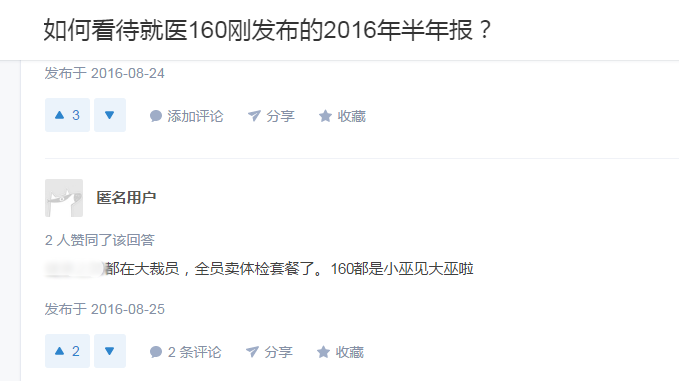
In 2016, Jiuyi 160 became the target of widespread criticism in the mobile healthcare industry due to a layoff incident. Traditional media and self-media outlets extensively covered the event, publishing articles that criticized Jiuyi 160’s heartlessness from the perspective of laid-off employees and discussing how to view the layoffs. Such content went viral within the media circle. “It was similar to the earlier reports hailing Jiuyi 160 as the first listed stock in its sector, except that the narrative turned negative.”
When Luo Ningzheng recalls this episode, he remains calm and slightly humorous. To this seasoned entrepreneur, it all seems like fleeting clouds; life is lived for oneself, so let others talk.
After weathering this turmoil, JiuYi160 will also focus its strategic layout on primary healthcare in 2017. On January 20 this year, JiuYi160 and the medical O2O platform YiHeNi officially entered into a strategic partnership. Moving forward, the two parties will leverage their complementary resources and business synergies to jointly promote the development of medical services, with deep cooperation focused on medical system product businesses, internet-based O2O medical services, the joint establishment of internet outpatient centers, and capital operations.
Day Surgery Centers: A Critical Component of Primary Care. Yihe has entered the market by focusing on minimally invasive and day surgeries, establishing clinical centers and day surgery operating rooms. With a strategic emphasis on the day surgery sector, Yihe possesses extensive resources in the offline healthcare domain.
In addition to offering a comprehensive “Internet + Healthcare” information technology solution for hospitals, JiuYi160 also provides targeted mobile products for patients and physicians, drawing on extensive experience in the internet healthcare sector. Industry experts have hailed this collaboration as a “match made in heaven,” particularly the joint establishment of an Internet Outpatient Center, which directly addresses the pain point of incomplete business models in internet healthcare and marks another significant step in JiuYi160’s efforts to build a closed-loop mobile healthcare ecosystem.
However, another critical channel for primary healthcare is the tiered diagnosis and treatment system, coupled with the decentralization of high-quality medical resources. Only by establishing robust channels can primary healthcare be truly implemented; otherwise, it remains a castle in the air.
Regarding tiered diagnosis and treatment, in June 2016, JiuYi160 officially launched China’s first patient-centered internet-based tiered diagnosis and treatment system. With “condition priority” as its entry point, this platform leverages the internet’s advantage in connecting information to effectively link patients and physicians, stimulate the enthusiasm of specialists, and rationally match medical resources through a model of free patient applications followed by physician review, thereby improving the efficiency of medical care for referred patients.
Meanwhile, the Jiuyi 160 tiered diagnosis and treatment platform fully supports contract-based services with community general practitioners. Through the Jiuyi 160 platform, patients can easily access health education, cultivate proper healthcare-seeking habits, and establish a care model centered on “initial consultation at the primary care level.”
In addition to patient guidance and triage, the "Jiuyi 160" platform leverages its extensive resources of physicians, patient base, and traffic to facilitate "two-way referrals" between hospitals and community health centers. By integrating with Hospital Information Systems (HIS), it supports online referrals and can serve as an operational platform for the existing tiered diagnosis and treatment system.
Community Health Centers serve as the "last mile" of primary healthcare. Therefore, in addition to online hospitals and tiered diagnosis and treatment platforms, Online Community Health Centers are a crucial component of the Jiuyi 160 medical service platform, providing services such as appointment registration, consultations, and family doctor contract signing for communities. Building upon these free basic service modules, Jiuyi 160 connects with a large number of B-side clients, including county-level hospitals, community hospitals, and postpartum care centers. By directing user traffic to these institutions, it helps revitalize underutilized medical resources.
To date, JiuYi160 has provided free informatization services to over 400 community health centers in Shenzhen, offering functionalities such as medical services, referrals, and doctor-patient interaction.
“We have also partnered with the Primary Care Medical Internet Alliance, becoming one of their first mobile internet company partners.” Currently, the platform serves over 50,000 primary care physicians. In the future, it should further explore areas such as precision push of health service information, interactions between village doctors and new media platforms, and engagement between village doctors and residents.
The 12-year entrepreneurial marathon has cultivated in JiuYi 160 and Luo Ningzheng the temperament to endure solitude. As Alibaba Health CEO Wang Lei stated, “We are not in a hurry to make quick profits; we will focus on building the platform first. Once the business model is proven, profits will naturally follow.”
For any enterprise, profitability is an unavoidable hurdle. This is especially urgent for internet healthcare companies, which struggle with monetization; how to convert traffic into revenue and achieve corresponding commercial value is a pressing imperative.
At present, the revenue models of internet healthcare companies can be broadly categorized into two types. The first type involves monetizing traffic through advertising or user referral services, primarily serving upstream and downstream entities in the healthcare ecosystem, such as medical device manufacturers, pharmaceutical companies, and insurance providers. While this model demonstrated strong monetization capabilities during the PC era, its effectiveness has diminished significantly in the mobile environment. This decline is attributed to immature ad display formats and low potential conversion rates, which have substantially dampened advertisers’ willingness to invest.
Another category is a comprehensive monetization model, which involves providing end-to-end healthcare services—including appointment scheduling, patient triage, and payment processing—and earning commissions or revenue shares with partners at certain service stages. Compared to the former, this comprehensive approach is more intrinsic to the industry, provided that the end-to-end services delivered by internet healthcare companies can create greater value for all stakeholders across the care continuum.
Luo Ningzheng stated that within the current strategic framework of 160 Healthcare, community health centers, hospitals, and pharmacies constitute the core business segments, which also serve as the primary sources of revenue. These include: first, online hospital services represented by end-to-end hospital operations; second, a tiered diagnosis and treatment platform; and third, online community health center services.
“Only by ensuring the company’s survival can we help more users and improve medical services. In the future, we hope to promote better health among users of the 160 Healthcare Platform, serve as their health stewards, provide more health management content, and introduce collaborative initiatives with fitness enterprises.”
Furthermore, by assisting primary healthcare institutions in providing treatment for basic diseases and leveraging the big data accumulated through the 9160 Healthcare platform, support can be offered to community rehabilitation centers in chronic disease management and health management. It is an inevitable trend to cultivate among users the habit of seeking care at large hospitals for serious conditions and at community health centers for minor ailments.
As Zhang Xiaolong, the father of WeChat, said, “You sense a trend prevailing in society or among certain groups, moving in a certain direction like a tide. This undercurrent is the most cutting-edge and revolutionary force.”
In the face of a new wave of undercurrents, the healthcare industry is no longer what it once was, and Luo Ningzheng is no longer the man he used to be.