

Why Jiang Xiaodong Left NEA to Found Longling Capital After Investing in 9 Healthcare Startups, 4 of Which Surpassed RMB 3B Valuation
Long Hill Capital
Venture Capital Institution
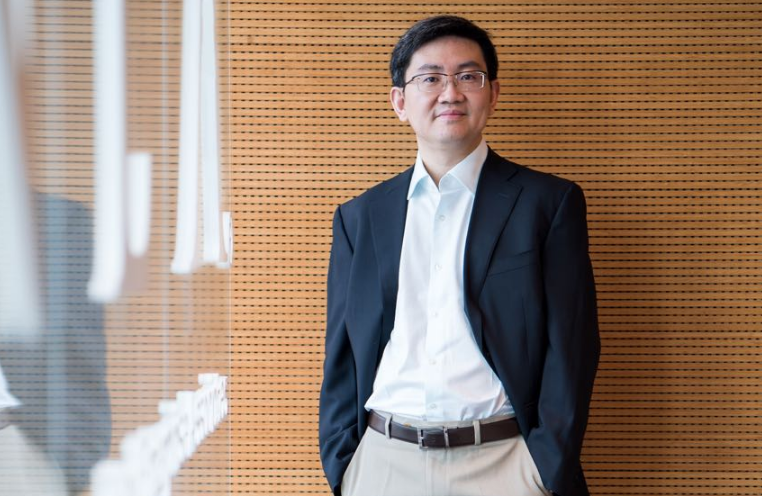
Jiang Xiaodong, Managing Partner of Long Hill Capital
Following his departure from NEA, Jiang Xiaodong sat down for his first interview with VCBeat. With a slightly deep voice and calm, measured words, he conveyed an unmistakable sense of composure and equanimity, even across the distance.
In early 2005, Jiang Xiaodong joined NEA (one of the largest venture capital firms in the United States, with a 40-year history since its founding and over $17 billion in assets under management). In 2006, Jiang Xiaodong moved from Silicon Valley to Shanghai. For more than a decade thereafter, he served as the head of NEA’s investments in China, overseeing the firm’s Chinese operations.
Regarding his departure from his former employer, NEA, to establish Long Hill Capital, Jiang Xiaodong believes that a significant factor was market changes, particularly in the healthcare services and consumer services sectors. In his view, an independent fund can more efficiently capture future developments in the health and consumer sectors.
In October 2016, Long Hill Capital was officially established, raising $125 million in its initial fund. NEA joined as one of the limited partners (LPs). As agreed, many of the projects previously invested by NEA continued to be managed by Jiang Xiaodong, maintaining a productive collaborative relationship between both parties.
Focusing on Early-Stage Projects in the Greater Health Sector
「Novel diagnostic and therapeutic services, mobile healthcare, life sciences technology, and public health: these are the four key investment sectors of Long Hill Capital in healthcare services.」Jiang Xiaodong told VCBeat.
Long Hill Capital’s DNA in healthcare investment stems primarily from its founder’s investment experience. Since 2008, Jiang Xiaodong has been investing in the health services sector. At that time, NEA invested in nine projects, most of which were early-stage Series A and Series B deals. These included physical medical services (diagnosis and treatment) and internet healthcare (mobile health).
Over an eight-year period, four of the nine companies achieved valuations exceeding RMB 3 billion.「“WeDoctor” is one of them. Jiang Xiaodong participated in the Series A and Series B financing rounds of WeDoctor. In just a few years, “WeDoctor” grew from “Guahao.com” into one of the most successful enterprises in the internet healthcare sector.
“CITIC Pharma” is a company invested in by Jiang Xiaodong in 2008. It primarily engages in pharmaceutical distribution, focusing on high-margin products, including cold-chain logistics for vaccines, with a valuation exceeding RMB 3 billion. The company was later acquired by Shanghai Pharmaceuticals for RMB 3.5 billion, marking a successful exit for NEA.
In 2011, Jiang Xiaodong invested in a chain oncology hospital project in Shanghai named "Hygeia Healthcare." The company operates through a chain model, primarily targeting third- and fourth-tier cities. When NEA entered the project, Hygeia Healthcare had already achieved an annual revenue of RMB 20 million; its current annual revenue exceeds RMB 1 billion. The group owns more than 10 self-operated oncology hospitals and over 50 oncology centers, establishing itself as one of the leading enterprises in China’s chain-based oncology services sector.
High-Quality "Content"
“The healthcare industry has changed completely compared to five years ago,” said Jiang Xiaodong, after a brief pause. Entrepreneurs from both healthcare and non-healthcare backgrounds are adopting different perspectives to develop more in-depth service models, thereby getting closer to the essence of medical care. This shift has also created new opportunities for the venture capital industry.
Opportunities often come with pitfalls, the most critical of which is connectivity overload. In recent years, connectivity has become a business venture that entrepreneurs have flocked to. Too many companies have attempted to link medical resources through simple and lightweight means. As a result, numerous “platforms” have emerged in a bandwagon effect, covering areas such as doctor-patient interaction, consultation and follow-up, post-discharge management, and chronic disease management. These diverse and complex platforms have sprung up like mushrooms after rain.
In response, Jiang Xiaodong appeared somewhat helpless,“While connectivity is not a false premise, not everyone can master it. The vast majority of enterprises should still focus on how to create high-quality content.”
High-quality resources in the healthcare industry are severely scarce, and the imbalance between supply and demand is continuously widening. In this process, the excessive interconnection fueled by capital bubbles inevitably gives rise to pseudo-demand. Once capital becomes relatively rational, such pseudo-demand will have no room to survive.
“What’s the next big trend? No need to look—it’s definitely high-quality content.”Jiang Xiaodong stated with conviction. In his view, high-quality content should encompass resources, services, products, and supply. It is not merely about connectivity—making the inaccessible accessible—but rather about creating new value boundaries for the industry through innovative technological means and business models, thereby increasing effective supply.
Long Hill Capital’s 4 MajorHealthPortfolio Card (Chain Medical Services, Mobile Health, Life Sciences, Public Health), which essentially involves leveraging various emerging technological means (IT, Medical Devices, Genomics, Bioinformatics), fostering the emergence of new forms of medical services and business models.
"In the healthcare industry, the easy business opportunities have long been snapped up; all that remains are the tough nuts to crack!"
Standards for High-Quality “Content”
Currently, China has only a few thousand highly qualified psychological counselors with more than two years of professional experience and specialized training, while statistics indicate that over 100 million people in the country have a demand for mental health counseling. In Beijing, a city with relatively concentrated medical resources, there are fewer than 100 registered psychiatrists across all tertiary Grade A hospitals, dispersed among various institutions.
Given the severe shortage of practitioners, only a small fraction of patients can access high-quality psychological counseling services.
What is the situation in developed countries? Jiang Xiaodong told VCBeat that in the United States, with a total population of just over 300 million, approximately 80 million people seek psychological counseling and therapy each year. In other words, there is one psychological counselor for every 1,000 Americans. If clinical psychologists, psychological counselors, psychiatric nurses, and other social workers are included, the total number of professionals in this industry exceeds 300,000, whereas in China, there are fewer than 10,000.
“The demand for psychological counseling among the Chinese population has clearly been significantly underestimated; if calculated based on U.S. proportions, the number would likely exceed 300 million,” said Jiang Xiaodong.
In October 2016, the “Outline of the ‘Healthy China 2030’ Plan” issued by the State Council repeatedly mentioned key terms such as “mental health,” “psychological counseling,” and “the Internet.” This also indicates that the state is increasingly attaching importance to the status of mental health in the healthcare sector, and Internet-based psychological counseling services may become an important component of national future planning.
"Jiandan Xinli," invested by Long Hill Capital, is a startup that provides psychological counseling services to users via the internet.
Traditional psychological counseling has typically been conducted on a one-on-one basis. Through “Jiandan Xinli,” face-to-face counseling is transformed into remote guidance. This one-to-many model significantly expands the service reach and capacity of psychological counselors, enabling them to serve a larger number of clients with the same resources.
Currently, “Jiandan Xinli” serves over 10,000 clients per month for counseling and therapy, having cumulatively provided services to hundreds of thousands of clients. It has been exactly one year since Long Hill Capital invested in “Jiandan Xinli” in early 2016; during this period, the company not only achieved break-even well ahead of schedule but also saw its business volume increase by more than fivefold.
Jiang Xiaodong believes that “Jiandan Xinli is not merely creating a simple connection, but rather generating supply, which is built upon actual demand.”
Among Long Hill Capital’s investment portfolio, such cases are not uncommon; “Qingsong Kanghu” and “LinkDoc Technology” are also two highly representative companies.
In terms of increasing effective supply, “Qingsong Kanghu” is similar to “Jiandan Xinli.” This company, which specializes in home-based care for the elderly, provides services such as in-home rehabilitation and nursing care, offering immense value to China as it enters an aging society.
Two years ago, Long Hill Capital invested in LinkDoc Technology, a cancer big data company, as the sole investor in its Series A round. At the time the agreement was signed, LinkDoc Technology was still in the process of being established, and artificial intelligence and big data were not yet as highly sought after by capital as they are today.
The market landscape in the United States led Jiang Xiaodong to foresee that leveraging big data and artificial intelligence to assist physicians in diagnosis and decision-making, thereby enhancing the average quality of care across the medical profession, would undoubtedly represent a promising market in China. Since this approach essentially constitutes a means of increasing effective supply, the two parties quickly reached an agreement.
After completing its Series A financing in 2015, “LinkDoc Technology” successfully secured tens of millions of U.S. dollars in funding in 2016, with its current valuation reaching hundreds of millions of U.S. dollars.
The Root Problem Lies at the Grassroots Level
Long Hill Capital adheres to a fundamental investment principle: regardless of the business model or product, companies should not merely provide differentiated services tailored to an elite segment. Instead, they must deliver benefits at scale to the broader general population. Only by addressing the healthcare needs of hundreds of millions of people in China can the market be truly expanded.
According to Jiang Xiaodong’s assessment,Primary healthcare will become a hub for high-quality resources; precisely because of its current deficiencies, it presents greater opportunities.“This market will give rise to many interesting industrial forms, and Long Hill Capital hopes to identify companies that align with its investment thesis through various opportunities.” Jiang Xiaodong is full of anticipation regarding this prospect.
In 2014, Long Hill Capital invested in “Gushengtang TCM,” a chain of primary care clinics specializing in traditional Chinese medicine. At the time, Gushengtang TCM’s revenue stood at only RMB 20 million. By 2017, it had successfully completed three rounds of financing, operated more than 30 clinics across China, and achieved annual revenue of nearly RMB 1 billion.
Prior to the emergence of "Gushengtang TCM," although traditional Chinese medicine (TCM) clinics represented a business model with a history spanning thousands of years, the formation of large-scale chain operations across China has only just begun to gain momentum in the past two to three years.
Ultimately, whether viewed from the perspective of market dynamics or demand, the core of China’s most pressing healthcare challenges lies at the primary care level. Leveraging innovative product technologies and business models to deliver valuable medical services to the general public is precisely what Long Hill Capital aims to achieve.
Theme-Driven Investment Methodology
During the Spring and Autumn Period, there lived a renowned horse connoisseur named Bo Le. One day, as he passed through Yuban, he noticed a horse hauling a salt cart neighing incessantly at him. Approaching the animal, Bo Le recognized it as a thousand-li horse—a steed of extraordinary endurance and speed. Deeply moved by the profound injustice suffered by such a magnificent creature, he was overcome with sympathy and wept sorrowfully. Sensing that Bo Le truly understood its worth, the horse lowered its head, foaming at the mouth, then raised it high to let out a wild, heart-wrenching neigh, its voice filled with tragic grandeur.
Later, this connoisseur of horses used the steed as a model to write a book complete with illustrations. His son, believing he had mastered his father’s art of equine appraisal, took the book and searched far and wide for a “thousand-li horse.” To his surprise, all he found were inferior steeds; not a single thousand-li horse was to be found. This is the origin of the idiom “searching for a steed according to a picture” (àn tú suǒ jì).
“Investing and identifying exceptional talent are essentially the same endeavor; preliminary industry research is of paramount importance. Only by focusing on, delving into, and systematically understanding the cyclical dynamics of an entire industry, while leveraging theme-driven strategies, can one truly identify exceptional opportunities.”"Jiang Xiaodong said."
Long Hill Capital, which focuses on healthcare investments, has consistently adhered to a theme-driven investment strategy. By analyzing structural, cyclical, and institutional trends in the real economy, it identifies potential factors with broad-reaching impacts on economic transformation. It then categorizes and invests in industries and companies that share similar attribute indicators and consequently benefit from these trends.Clearly, this is fundamentally different from following clues mechanically.
"Focus"this term, during the interviewJiang XiaodongMentioned many times. Over a twelve-year investment career, countless lessons and experiences have been accumulated. InHeIt seems that most of the money in this world is not meant for him to earn. Much like the philosophy of “Danshari” (decluttering), one should set aside all distractions while keeping a sharp focus on the target.
Symbiotic Rules for Entrepreneurs and Investors
“70% of startup failures are people-related!”
Between business models and entrepreneurs, Jiang Xiaodong places greater emphasis on the latter. Markets are constantly evolving, and corporate business models are never static; therefore, it is particularly crucial for entrepreneurs to engage in continuous learning and growth.
Jiang Xiaodong has summarized two common traits among outstanding entrepreneurs: first, they are committed to tackling tasks that others deem difficult to accomplish; second, they can quickly identify the “path of least resistance.” Achieving both simultaneously is no easy feat.
“Entrepreneurship is a perilous endeavor with slim odds of survival; the vast majority of paths lead to dead ends!”
In the early stages, most startups face infinite possibilities, yet founders are often uncertain which path offers a higher probability of success.
The most valuable contribution capital can offer entrepreneurs is the experience honed through long-term market observation, along with the ability to think and judge independently. An experienced and communicative investment institution should, at critical junctures of a company’s development, objectively share its industry insights with entrepreneurs from a mature perspective, while providing them with ample space for independent and autonomous reflection, ultimately facilitating informed decision-making.
On the issue of corporate profitability and cash burn, Jiang Xiaodong’s response was highly dialectical. “A company’s inability to achieve profitability in the short term is fundamentally different from its inherent difficulty in sustaining profitability over the long run.”
Industries with high cash burn rates are not necessarily incapable of achieving profitability in the end. Some industries, even if their short-term cash burn is relatively low, are fundamentally constrained by a narrow market in the long run.
What Has the Cash Burn Actually Yielded? Can the Acquired Resources Be Translated into Sustained Long-Term Profitability? This Is What Investors Truly Prioritize.
“Good businesses and bad ones always exist in a dialectical relationship; the core responsibility of investment institutions is to determine whether this path will ultimately lead to broad success.”"Jiang Xiaodong said."