

Freenome Secures $65M Series A Funding to Advance Multi-Cancer Liquid Biopsy Platform

GV
Google's Investment Fund

Freenome Holdings
Disease Screening Product Developer

a16z crypto
Venture Capital Fund
Freenome is a two-year-old liquid biopsy diagnostics platform that uses cell-free DNA sequencing for cancer screening. Yesterday, it announced a substantial $65 million Series A financing round, led once again by A16Z, which had led its $5.5 million seed round a year earlier. Other investors included a long list of participants, such as Google Ventures, the venture capital arm of Google.
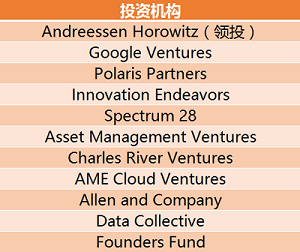
The massive funding amount not only demonstrates that Freenome is facing significant opportunities, but also underscores the substantial challenges ahead. In recent years, numerous liquid biopsy companies have emerged, favoring DNA sequencing to detect cancer cells in patients over traditional tissue extraction methods. However, what these medical testing companies fail to achieve is precisely locating the site of cancer development, assessing the level of threat it poses to the human body, and determining whether a specific therapy will be effective against it.
Distinguishability: Providing More Refined Cancer Information
Among companies conducting liquid biopsies for cancer, there is no shortage of formidable competitors: Guardant Health, a California-based company founded four years ago, performs non-invasive cancer screening via gene sequencing using just two small vials of blood and has raised $190 million to date; GRAIL, a wholly owned subsidiary of Illumina that also focuses on early cancer screening, disclosed the first closing of its $900 million Series B financing round in the early hours of this morning. These companies are all backed by powerful venture capital firms, with financing rounds frequently reaching hundreds of millions of dollars.
But Freenome is fully aware of its competitive advantages. In an interview last year, CEO and co-founder Gabe Otte stated, “Our most distinctive feature lies in our technology’s ability to answer more questions by tracking a broader range of biomarkers. Freenome aims to address not only binary questions such as ‘cancer’ versus ‘no cancer,’ but also whether a lesion is benign or malignant, and even the location of the cancerous tissue.” Therefore, Freenome analyzes all genetic material in the blood, rather than merely tracking a few gene mutations already known to be associated with cancer.
No Rush for Financing: Solid Research and Steady Progress
In an interview last year, Otte also mentioned that Freenome had already validated its test using hundreds of samples, but the company did not intend to seek $100 million in venture capital funding for the platform until it could demonstrate the practical value of its technology.
To date, Freenome has clearly gained a significant edge in terms of practical application value. The 25-person company has tested thousands of blood samples to date and has outperformed other commercially available tests in screening for prostate cancer, breast cancer, colorectal cancer, and lung cancer.
Following the financing round, Freenome will continue to invest substantial funds into clinical trials, including collaborative studies with institutions such as the University of California, San Diego (UCSD) and the University of California, San Francisco (UCSF), aiming to elucidate various aspects of each cancer type. Additionally, the company has established partnerships with five pharmaceutical companies to provide precise treatment recommendations upon cancer diagnosis, determining the most effective therapeutic approach for each patient. In summary, this new round of funding will help accelerate the scale and progress of research into non-invasive early cancer detection.
For example, in the case of lung cancer, the company aims for its test to distinguish between non-small cell lung cancer (NSCLC) and small cell lung cancer (SCLC), as the former responds far less favorably to chemotherapy than the latter. They also believe that incorporating machine learning components enables “software-based screening that continuously learns from and corrects errors, while simultaneously addressing multiple questions,” making it highly effective for screening applications.
If all goes well, Freenome will complete testing on 10,000 blood samples within the next 12 months. Following this, it will be in a position to engage with regulatory authorities to seek approval. By then, Freenome’s technology will also have been developed into a new product for use in physicians’ offices.