

QiYun Nuode Files IPO Prospectus: A One-Stop Genomics Data Solution Provider Backed by German-Educated Founder
In 2014, the cost of whole-genome sequencing for humans dropped to $1,000, ushering in the first boom for the global genetic testing industry, with China’s market experiencing explosive growth. In 2017, Illumina further reduced the cost of whole-genome sequencing to $800. As sequencing costs declined, genomic data worldwide continued to accumulate at a rate exceeding Moore’s Law. Computational analysis and interpretation of genetic data have always been critical components of genetic testing. Amid this surge in data, how to perform faster and more accurate data analysis and interpretation will become the next key challenge in the field of genetic testing. Seizing this opportunity, VCBeat is launching its “Genes & Data” series of reports; stay tuned for more details.
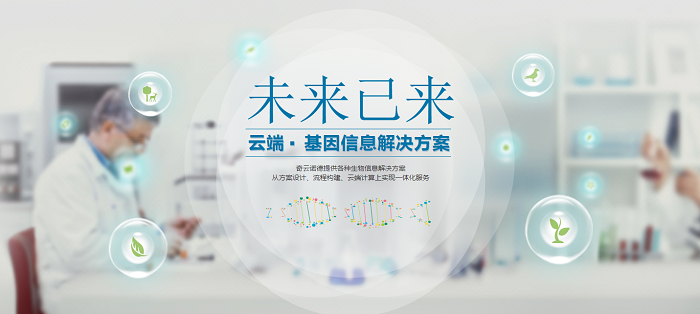
Qiyunuodeis an AI company focused on big health and genetic data,Precision Medicine Health Management Through Artificial Intelligence.Qiyunuode positions itself as a backend computing service provider for genetic testing companies, serving genetic testing enterprisesProviding the most comprehensive bioinformatics analysis applications and a one-stop big data platform for bioinformatics to enable health data mining, drive the development of precision medicine, and ensure that data truly serves health.
The company not only pioneered the launch of the SaaS-based DNA APP Store in China but also introduced integrated health management kiosks, precision medicine all-in-one systems, and high-end whole-genome health management products. Its subsidiary brand, “Gene Space,” is one of the largest vertical media communities dedicated to the genomics industry in China.
The Gap in Industrial Commercialization Fuels Entrepreneurial Drive
In 2012, Luo Qibin returned to China after earning his Ph.D. from Ludwig Maximilian University of Munich in Germany. According to his original plan, he was to stay in China for two years. During those two years of conducting scientific research in China, Luo Qibin keenly perceived the gap between China and other countries in translating scientific achievements into industrial applications. Perhaps driven by impulse, he decided to remain in China after the two-year period.

Luo Qibin, Founder of QiYunNuoDe
China was one of the first member countries to participate in the Human Genome Project, and its genomics research stands at the forefront globally. This once gave Luo Qibin, who was studying abroad, a strong sense of pride as a Chinese national.
“After returning to China, I realized that what the country lacks is not talent in academia, but rather individuals capable of translating scientific research achievements into industrial momentum,” Luo Qibin told VCBeat. “My decision to start a business was partly driven by a sense of defiance. There are indeed many gaps in the translation of scientific research into industry within China.”
Luo Qibin pointed out that there is a significant difference between China and other countries in the subsequent industrial transformation of scientific research projects. For example, in Germany, if a project fails to develop into a product within one year, it will basically be cut off. However, such situations are rare in China. Many projects are not established with the goal of industrial transformation from the beginning, but rather to fill the gaps left by previous unfinished projects.
Although Chinese people frequently read about the numerous contributions made by ethnic Chinese in scientific research in newspapers and magazines, and see Chinese names in many research fields, China lags far behind developed countries in the translation and commercialization of scientific achievements. In 2011, China’s R&D investment exceeded one trillion yuan, accounting for 1.98% of its GDP, yet the conversion rate of scientific achievements was only around 10%, significantly lower than the 40% level observed in developed nations. In terms of national innovation capacity rankings, China ranked 43rd in 2010, rose to 29th in 2011, and stood at 34th in 2015. These figures served as stark warnings that jolted Luo Qibin’s nerves. However, upon careful reflection, he saw through these data a rapidly growing market and a path toward strengthening the nation.
User-Centricity Is the Core Theme of Development
In the current sequencing industry, data analysis, processing, and interpretation constitute high-barrier segments. Without years of experience in the genomics sector and a solid foundation in bioinformatics, it is difficult to comprehend the underlying application value hidden within genomic data. Companies in China providing bioinformatics analysis services can be categorized into two types: one comprises startups with data analysis as their core focus, most of which are in their early stages and relatively small in scale; the other consists of larger biotechnology firms, where bioinformatics operates merely as a sub-department supporting their primary business. The prevailing trend in the life sciences industry is specialization, and the genomics sector is no exception; its development will inevitably move toward greater segmentation.
Whether in healthcare or scientific research services, bioinformatics analysis is widely recognized as a critical component of genetic testing. On the other hand, the ownership and usage rights of genetic data remain an open secret in China, and are inevitably poised to become a publicly debated issue in the future. Luo Qibin believes that against this broader trend, a “gene data acquisition-centric” approach is not sustainable in the long run; instead, a “user-centric” model aligns with the current developmental theme.
In October 2014, Qiyunnuode was officially established. Luo Qibin targeted hospital physicians as his core user base, aiming to transform genomic data into clinically actionable information to drive the industrial integration of genomic technologies with clinical practice. Luo Qibin stated, “When physicians provide me with genomic data, I can immediately convert it into medical information they can use. This is akin to winning their trust and loyalty. Whoever can translate data into information more quickly will gain users.”
Twists and Turns: Internal Strife and External Threats in the Early Stages of Entrepreneurship
Despite a relatively clear strategic plan, Qiyun Nuode’s journey over the past two-plus years since its inception has been fraught with twists and turns. The first challenge arose at the team level: existing core members were unable to commit full-time yet were unwilling to depart. Compounding this, foreign venture capital firms delayed issuing term sheets, resulting in prolonged funding shortages. “If no investment comes in, I will invest my own capital; product R&D must not be abandoned.” During that period, the company’s largest R&D expenditure was the salaries of two product managers, while the founders drew no compensation. Remaining costs, such as operational maintenance, were covered out-of-pocket by Luo Qibin. After considerable hardship, the product demo was finally launched. However, as product upgrades and marketing promotions required substantial capital infusion, disagreements emerged within the team regarding product positioning and target user demographics.
After the biological big data platform entered the market, the company’s first step was to recruit a group of beta users for testing. On one hand, Luo Qibin mined and analyzed user behavior data from the backend every day. On the other hand, internal conflicts within the team remained unresolved, with persistent disagreements over whether members should work full-time or part-time. Daily divergent opinions continued to influence the company’s decision-making. “It was clear to me that the team was bogged down by internal friction,” Luo Qibin recalled.
What plunged him into even deeper despair was his discovery, through analysis of user behavior data and market feedback, that the overseas bio-big-data platform model was not viable in China. No independent bio-big-data analytics company in China had been able to demonstrate a profitable business model in the marketplace, nor had any bio-big-data application company managed to survive and scale up. This came as a major blow to Luo Qibin.
“At the time, I felt like I had hit a dead end, even believing that the entrepreneurial path in biological big data was a cul-de-sac,” Luo Qibin told reporters. This situation left him in a dilemma. Although the state has issued regulatory policies concerning the storage, transmission, and analysis of biological data, no mature business model has yet emerged domestically, while foreign models have struggled to adapt to local conditions.
Revisiting the Market: Transformation Amid Crisis
“In other words, we need to undertake the exploratory journey from 0 to 1.” Gradually, Luo Qibin calmed his mind and began to analyze the market. During the most challenging times, Luo Qibin and his team members made a decisive choice: to build a technology-driven company belonging to the genomics industry. This decision also brought a turning point for QiYunNuoDe.
Building on its existing health management pathway, the company has launched B2B solutions, with products encompassing whole-genome analysis software, a genetic health report interpretation system, an all-in-one gene data appliance solution, and an online intelligent marketplace. Through independent R&D, QiYunNuoD has achieved seamless integration of genomic big data and multi-dimensional health data.
Luo Qibin believes that although there are numerous end-user products currently on the market, most companies have concentrated their efforts in the field of prevention. This is because diagnostic enterprises require dual approval from the National Health and Family Planning Commission (NHFPC) and the China Food and Drug Administration (CFDA). In contrast, health prevention products guided by genetic testing are easier to launch. The relatively high technical barriers in the gene sequencing market will limit participation by more enterprises and also constrain industry development. Therefore, QiYun NuoDe aims to provide end-user enterprises with diversified bioinformatics solutions, including integrated services in solution design, workflow construction, and cloud computing. This approach is intended to enhance enterprises’ vertical technological research capabilities, help end-user companies connect with midstream enterprises, streamline the industrial chain, and enable traditional companies seeking to cross into the sector or those intending to expand their genetic product businesses to achieve rapid and seamless transformation.
Currently, no segment of the genetic industry chain has achieved full utilization and optimization of resources, resulting in low efficiency across many stages and an inability to rapidly adjust production or upgrade R&D in response to market demands. Meanwhile, a majority of biotech companies continue to operate under traditional closed-loop models, exhibiting insensitivity to market needs and yielding R&D outputs that are disproportionate to their inputs. These drawbacks and bottlenecks have further raised the entry barriers for the genetics industry, creating obstacles for companies seeking to cross over into this sector.
“When you discover a gold mine, you can either be a gold digger or the one who provides shovels and water to enable more people to dig for gold. QiYunNuo has chosen the latter,” said Luo Qibin. He explained that QiYunNuo did not choose to become a genetic testing company; instead, it stands behind these enterprises, helping each genetic testing company grow: “If China needs 1,000 genetic testing companies in the future, we will provide every one of them with shovels, water, and a gold-digging manual.”
Over a decade ago, designing a corporate website required a team to spend half a year on development, whereas today any enterprise can generate one with a single click via website platforms. “A similar trend will emerge in the future healthcare sector,” Luo Qibin told reporters. Nowadays, no one would invest millions to build a corporate promotional platform; likewise, if a platform could enable the one-click generation of diagnostic products, who would still need to spend millions on product R&D? Guided by this logic, QiYunNuoDe aims to leverage its strengths in big data and cloud computing to revitalize the industry.
In May 2015, Qiyunuode secured RMB 5 million in angel funding from Kaitai Capital. Following the financing, the company rapidly launched China’s first DNA App Store and commenced research and development on AI-powered all-in-one machines. In 2016, the company raised another RMB 10 million in Pre-A funding and released an AI-driven health management all-in-one device in September, bringing more precise management solutions to the health industry.
Over the past two years, QiYunNuo has focused primarily on developing big data mining solutions and intelligent systems. The company has established a competitive edge through patent applications for core technologies and software copyrights, earning recognition as a National High-Tech Enterprise. After two years of consolidation and exploration, its core values and capacity for transformation have become increasingly clear: to turn cancer into a chronic disease, achieve precision medicine, and enable everyone to enjoy a high-quality, healthy life. Meanwhile, it aims to support the growth of the genomics industry by removing barriers to bioinformatics analysis, thereby facilitating precise management of human health.
Going forward, the company will continue to advance the research and development of its genomic data and interpretation systems, offering B2B users a broader portfolio of premium whole-genome health products. Technologically, the company plans to extend its DNA APP Store platform and intelligent all-in-one systems to other vertical sectors. In addition to its existing whole-genome health management domain, it will integrate multi-dimensional health data across insurance, medical check-ups, and real estate. Meanwhile, the company seeks appropriate strategic investments to help deploy the software tools and intelligent systems on its platform across various verticals in health management.