

How Community 580 Became the National Leader in Primary Care Within Two Years: Signed 2,000 Grassroots Clinics and Expanded to 84 Cities Across 23 Provinces
In 2017, VCBeat launched a case solicitation campaign themed “The Power of Downward Reach: Seeking Best Practices in China’s Primary Healthcare.” Starting from February 15, we invited submissions of practical cases in primary healthcare services from across the industry. We will explore development trends in the primary healthcare sector from perspectives including industrial policy, technological evolution, business models, and industry collaboration, and select and report on innovative medical enterprises that truly represent and are deeply rooted in primary care. Stay tuned.
ClickRegistration Address, go to the event introduction page.
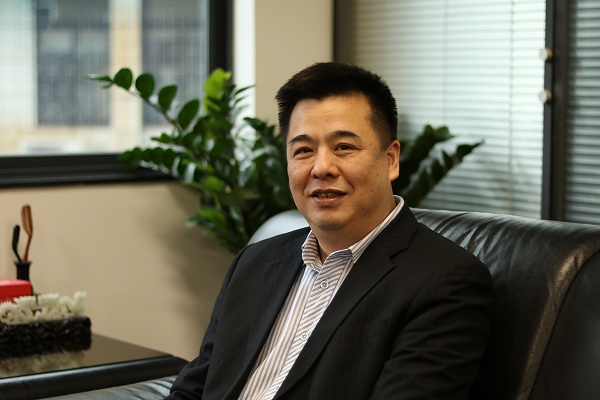
Jiang Ning, Founder of Community 580
Prior to founding Community 580, Jiang Ning was consistently engaged in the informatization construction and physician education at Grade A tertiary hospitals. As the Vice President of the China Medical Education Association, Jiang Ning has a deep understanding of the core pain points and needs of hospitals and physicians.
The proliferation of information silos in healthcare inspired Jiang Ning to establish Community 580, with the original intention of leveraging internet-based solutions to enhance medical efficiency and improve residents’ experience.
From 2015 to the present, in just two short years, Shequ 580 has signed contracts with2,000 Urban Community Health Centers, in Shanghai, Nanjing, Hangzhou, Shenzhen, Wuhan, Changsha, Chongqing, Chengdu,Tianjin and Fuzhou bothEstablished an office to provide servicesCovering 23 provinces and 84 cities across China, users exceed80 million people, generate4 Million Resident Health Records, withMore than 25,000 family doctorsServices are provided through the Community 580 platform.
Primary Care Is the Breakthrough
“Community healthcare and primary care will become the primary entry point for medical services in the future. For a mobile health company, capturing this initial patient access channel is core to its strategy.”
Family doctors, referred to as "team-based services" in China, are organized into teams led by general practitioners (GPs) and comprising public health physicians and nurses. Currently, there are approximately 160,000 GPs in China, a stark contrast to the more than 2 million specialists.
The proportion of general practitioners in the United Kingdom and the United States is approximately 40%–50%. It can be inferred that there is a severe imbalance between supply and demand for general practitioners in China. Jiang Ning believes that “China Should Have at Least a Million-Level Team of Family Doctors!”
The core of tiered diagnosis and treatment is strengthening primary care, and the family doctor system, both abroad and in China, is a key component of primary care.
The primary pain point for family doctors lies in physician incentives. In this regard, Jiang Ning stated that medical methods and technologies are not the core issue. The requirements for family doctors’ clinical proficiency are actually not high; resolving the distribution problem is the key challenge.
Community hospitals, which are closely linked to family physicians, currently suffer from generally low outpatient volumes. Residents’ awareness of community hospitals remains insufficient, leading to reluctance to seek care there. Enhancing service capacity is a critical issue that community hospitals must address.
“Addressing the incentive issues for family doctors also resolves the issue of resident trust in community hospitals, as these are linked.”
SaaS Cloud Platform
The entire product framework of Shequ 580 is built on the premise of serving primary healthcare.
First is the family doctor contract service. As a brand-new B2B2C service model, Shequ 580 signs contracts with hospitals and leverages SaaS cloud platforms, hospital information systems, and standardized service workflows to enable rapid deployment, thereby extending community medical services to the internet.
Current product offerings include the Mobile Family Doctor App, Mobile Follow-up App, Two-way Referral Platform, Integrated Communication System for Community Hospitals, Chronic Disease Management and Assessment System, and Family Doctor Performance Management Platform. By integrating with existing Hospital Information Systems (HIS), Laboratory Information Systems (LIS), Picture Archiving and Communication Systems (PACS), and regional public health platforms—covering electronic health records, chronic disease management, and maternal and child healthcare services—an internet-basedCompleteTiered Diagnosis and Treatment Solution.
“Historically, internet healthcare platforms have centered on doctors and patients as their core resources, whereas the core resource of Community 580 is hospitals.“Jiang Ning said.
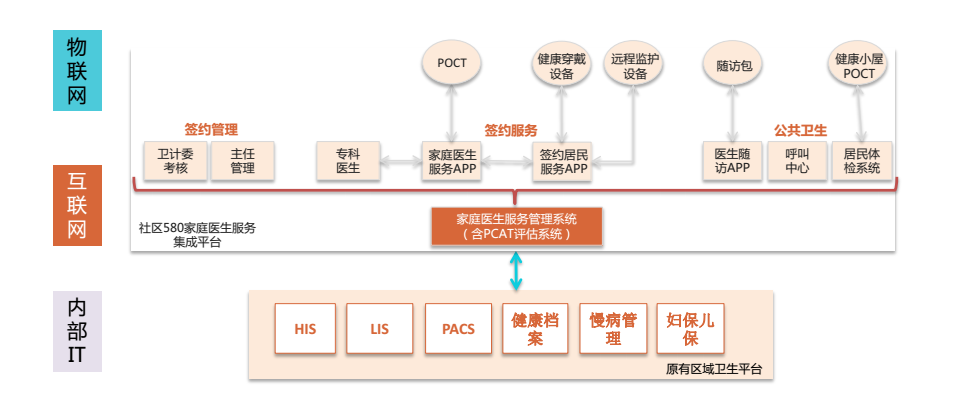
Community 580 Product System
Zhuanzhen 580, distinct from traditional diagnosis and treatment platforms, is China’s only physician-to-physician tiered diagnosis and treatment platform, breaking away from the conventional institution-to-institution model. Through a mobile app, family doctors can directly identify the most trusted and suitable specialist physicians. By sharing case records, they enable specialists to review the cases; once a specialist accepts the referral, the patient can be directly transferred to that hospital. As Jiang Ning describes it, Community 580 facilitates precise matching.
“Once Community 580 strengthens its physician-facing platform, tertiary hospitals willNature“Willing to collaborate. Meanwhile, tertiary hospitals can obtain the screened, precise patient populations they need through community hospitals and family physicians.”
The Community 580 Chronic Disease Management Assessment System (hereinafter referred to as PCAT) is an assessment tool for community health management services within the Family Doctor Service Integration Platform. The PCAT scoring system incorporates the most mature and advanced international technologies to provide multi-dimensional chronic disease health management assessments for primary care community hospitals. Currently, this PCAT system from Community 580 has been adopted and implemented by the Shenzhen Municipal Health and Family Planning Commission.
Community 580 focuses on smart community healthcare IoT.Concept. Jiang Ning believes, “In the Internet era, information technology development should shift from the IT age to resident services, integrating more intelligent devices to form the Internet of Things.”
Therefore, Community 580 collaborates with Baidu Medical Brain and numerous smart hardware manufacturers to connect smart devices, enabling the direct transmission of residents’ vital signs monitoring results to themselves, their relatives, and family doctors. This approach not only improves efficiency but also shifts health management from a passive to a proactive model.
By leveraging SaaS systems and various mobile apps, Community 580 can also deliver a comprehensive suite of family doctor services, including contract signing, appointment scheduling, patient-provider interaction, health device integration, and follow-up care. It is currently the most feature-rich platform within China’s family doctor service ecosystem.
Due to its involvement in the development of the family doctor assessment indicators for the National Health and Family Planning Commission, the Community 580 Family Doctor Service Management System became the only system in which the National Health and Family Planning Commission participated.“Family Doctor Performance Assessment Indicator System Project”service system.
Health Service Package
Community 580’s future business model is built upon offline services, extending from online platforms to offline operations and penetrating the entire medical service sector—including health checkups, insurance, pharmaceutical distribution, chronic disease management, elderly care, and even vaccine repository development. By deeply engaging in grassroots offline medical services, it creates value for community hospitals.
In response, Community 580 has adopted an open collaboration model, establishing partnerships with various medical and health enterprises. Companies such as AstraZeneca, Pfizer, China Resources Medical, BGI Group, PICC, China Life, Baidu, and 7lecare have already developed business models with Community 580 and are currently actively exploring the operation of these new models.
Community 580 integrates services such as insurance, pharmaceuticals, caregiving, and chronic disease management into a series of comprehensive product-service packages, which are sold on its platform. All these service packages are integrated within the Community 580 mobile app, allowing C-end users to purchase them directly, akin to personalized value-added services.
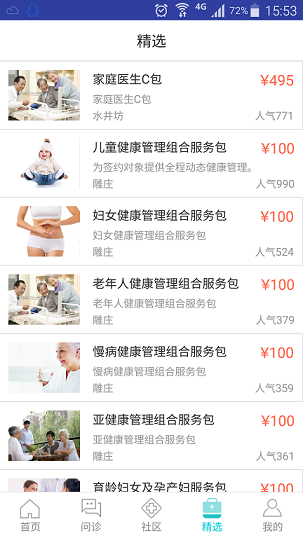
Community 580 Health Service Package
Deepening B2B Engagement + Intensifying Offline Presence
「As of now, Community 580 is widely recognized as the number one player in China’s primary healthcare market!」Jiang Ning told VCBeat.
Jiang Ning has his own unique approach to covering such a large number of hospitals, doctors, and users in just two years.
First, a sound business model.This is built on Jiang Ning’s in-depth understanding of hospital operational systems. Healthcare is not a high-frequency service, and cultivating usage habits among doctors and residents requires a prolonged process. Therefore, Community 580 currently does not allocate significant resources or funding to promoting its services to end-users (C-side). Instead, it focuses on the promotion and training of physicians, leveraging them to drive resident sign-ups and thereby establish stable doctor-patient relationships.
Second, a robust BD team.Community 580 places great emphasis on building its business development (BD) team. Although the sales and promotion staff consists of only 50 to 60 individuals, all have undergone rigorous training and are subject to strict management.
Both the business development (BD) and sales teams of Community 580 begin with cold calls, visiting hospitals one by one to promote the product philosophy of Community 580. They then gradually guide government agencies to accept their products and establish partnerships. As their offline presence continues to expand, health and family planning commissions in many regions have recognized and understood the advantages of Community 580’s products, leading them to proactively seek collaboration.
Jiang Ning believes: “For internet healthcare companies, generating revenue from the B2B sector is more realistic..” In response, he summarized a theory—the optimal growth point for C-end users.
In this era, the costs associated with the attention economy and online promotion have become prohibitively high, with BAT dominating the primary entry points.Application-level products similar to Shequ 580 should delve deeper into offline channels to address user needs., once medical insurance cost containment measures are implemented at the community level, enterprises will inevitably usher in an excellent inflection point for explosive growth.