

Guo Guangchang's CPPCC Proposal: C2M Model, AI, and Healthcare Big Data as Pillars of Medical Reform
Fosun Pharmaceutical
Healthcare Industry Group
Guo Guangchang of Fosun Group pointed out in his proposal to the Two Sessions:
C2M ModelNot only can it upgrade and transform the manufacturing industry, but it can also be applied in finance,Healthapplied in service industries;
Currently in ChinaMedical Artificial IntelligenceNumerous challenges persist in its development; for instance, there remains a gap in the maturity of artificial intelligence applications within the healthcare sector.
Foreign Enterprises Lead China in Clinical Research and Application of Health and Medical Big Data;
Imperfections in the Open Innovation Mechanism for Industry-Academia-Research Collaboration andHealthcare Big DataManagement systems are inadequate.
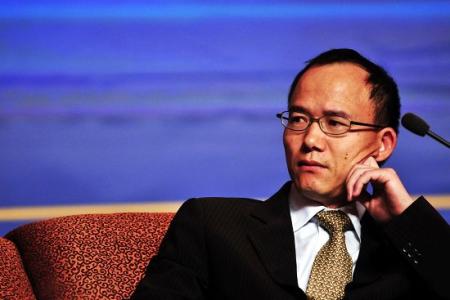
VCBeat has learned that one of the proposals submitted this year by Guo Guangchang, a member of the 12th National Committee of the Chinese People's Political Consultative Conference, suggests increasing encouragement and support for the transformation of traditional industries to the C2M (Consumer-to-Manufacturer) model amid continued deepening of supply-side structural reform. The proposal advocates promoting the implementation of C2M initiatives from multiple perspectives—including comprehensive coverage, end-to-end supply chain management, and societal-level governance—with the aim of leveraging this approach as a key driver to build a Version 2.0 smart economy for the entire society.
How to Implement Supply-Side Structural Reform? Guo Guangchang Believes One Path Is the C2M Model. C2M, or Consumer-to-Manufacturer, leverages internet penetration into industries to seamlessly integrate customer demand with design, manufacturing, and services, thereby establishing a new type of supply-demand relationship.
Through the C2M model, it is possible to achieve:
(1) Direct reach and interaction between production and consumers;
(II) Eliminate redundant intermediate links, and guide and optimize the structure of new demands;
(3) Enhance supply chain efficiency to transform traditional manufacturing into flexible, intelligent, and low-cost production that adapts to new and personalized demands. Meanwhile, as most enterprises transition to the C2M model, the overall level of intelligence in society will significantly improve, making China’s economy a more agile and efficient smart economy.
Guo Guangchang pointed out that the C2M model can more efficiently match demand with supply, significantly improving service quality, particularly for personalized and mid-to-high-end needs.The C2M model can not only upgrade and transform the manufacturing industry, but also be applied to service sectors such as finance and healthcare.For instance, a newly established health insurance provider in China has deeply integrated with medical and elderly care institutions, designing differentiated insurance products tailored to various demographics and diseases based on consumer needs. This approach compels these institutions to deliver more targeted diagnostic, treatment, and nursing services, thereby creating a more refined, service-oriented C2M (Consumer-to-Manufacturer) closed loop.
Similarly, in the healthcare services sector, innovative models such as Wuzhen Internet Hospital have integrated online and offline channels to provide remote patient care.This breaks down geographical barriers, enabling the most efficient utilization of medical resources, and serves as a concrete manifestation of the C2M model.。
Meanwhile, Guo Guangchang also submitted“Proposal on Accelerating the Construction of a Support System for Medical Artificial Intelligence”。
Guo Guangchang believes that the next five to ten years will be a critical period for the new global round of technological revolution and industrial transformation, shifting from accumulation to widespread eruption. In particular, artificial intelligence has become the technological high ground in the new round of global competition. Promoting the application of AI technologies in the healthcare sector is of great significance for accelerating breakthroughs in the prevention and control of major diseases, securing leadership in the development of emerging strategic industries related to biomedicine, and optimizing China’s healthcare service system.
However, in Guo Guangchang’s view, there are still many problems in the construction of medical artificial intelligence in China. For example, there is still a gap in the development level of artificial intelligence in the field of health and medical care; foreign companies lead the way in clinical research and application of big data in health and medical care in China; the "industry-academia-research" open innovation mechanism is not perfect, and the management system for big data in health and medical care is not sound.
Therefore, Guo Guangchang suggested in the proposal:
(1)Promote the conditional opening and sharing of big data in health and medical care.Accelerate the opening and sharing of healthcare big data in the fields of malignant tumors, hypertension, diabetes, birth defects, and rare diseases; improve the construction of artificial intelligence models and the training of deep learning algorithms for these diseases; achieve capabilities for the collection, analysis, and mining of big data such as genomics; and effectively enhance the efficacy of artificial intelligence technologies in precision prevention, diagnosis, and treatment.
(II)Establish the National Medical Artificial Intelligence Engineering Center.Guided by the National Development and Reform Commission (NDRC), comprehensive universities with first-class academic standing in medicine, pharmacy, and information technology will take the lead in attracting broad participation from various social sectors, including enterprises with a foundation in health and medical big data applications, artificial intelligence technology developers, and pharmaceutical R&D companies, to jointly develop an intelligent cognitive healthcare system with independent intellectual property rights.
(III)Encourage and support enterprises and universities with a large-scale foundation for medical applications.Establish Long-Term and In-Depth Cooperation Mechanisms. The government leverages policy measures such as fiscal support and tax incentives to foster collaboration between enterprises and universities in establishing R&D institutions and pilot-scale testing bases. This facilitates the sharing of technology, data, and disciplinary resources, fully unleashing the synergistic innovation effects of industry-academia-research partnerships, enhancing R&D efficiency, and accelerating the deployment of AI applications and services in the healthcare sector.
(4)Strengthen the security management of health and medical big data in China.Investigate the current status, permission boundaries, and final disposition of medical data usage, and clarify the fundamental principle that the storage and analysis of China’s health and medical big data must be conducted within the country. Accelerate the introduction of laws and regulations governing the application and development of health and medical big data to standardize activities such as its development, mining, and application. For medical big data with significant commercial value and application prospects—such as population health information, electronic medical records, radiological images and pathology reports, laboratory test results, and physicians’ progress notes—necessary access controls should be established to ensure proper oversight and management.
Source: Yicai, Yicai.com