

Alibaba Health Restructures Pharmaceutical Industry Chain, Ushering in the Era of 'New Retail' for Medicines
A search for the keyword “New Retail” on Baidu yields 21,200,000 results. This neologism, coined by Jack Ma at the Yunqi Conference in October 2016, swept through the industry in less than six months and captured widespread public interest. Its popularity not only underscores the market influence of Alibaba Group or Jack Ma himself, but also highlights the urgent need for a chief architect of “New Retail” in today’s business ecosystem.
At that time, Mr. Ma’s words still ring in our ears, “"In the next ten to twenty years, there will be no such thing as e-commerce; there will only be New Retail. In other words, online and offline channels must be integrated with logistics to give rise to true New Retail."“E-commerce has indeed transformed our lives over the past decade and nearly reshaped the ecosystem of brick-and-mortar commerce. Quantitative changes lead to qualitative leaps; only as e-commerce is on the verge of becoming a new pillar of China’s economic transformation do reflections on e-commerce and the real economy become so thought-provoking, and does ‘New Retail’ hold such inspiring significance for the future landscape of the business ecosystem, akin to the Battle of Baekgang.”

Jack Ma’s concept of “New Retail” represents a paradigm shift for the industry.
Data shows that in 2016, total e-commerce sales exceeded RMB 20 trillion, accounting for more than 10% of the total retail sales of consumer goods. In fact, apart from a few non-standardized products, it is difficult to find any product category with an e-commerce penetration rate below 15%. For “products” such as pharmaceuticals and medical services, which fall between standardized and non-standardized offerings, internet penetration has been cautious yet holds significant exploratory value.
The heated debate surrounding new retail has also influenced Alibaba’s moves in the healthcare sector—AliHealth. VCBeat (WeChat ID: vcbeat) conducted an exclusive interview with Kang Kai, Director of AliHealth and General Manager of Tmall Pharmacy, to discuss the impact of policies on internet healthcare and how AliHealth is breaking through the current impasse.
Quality First, Quantity Second
“The development of the internet and e-commerce has actually increased the cost of non-compliant practices. In the past, if a company had a factory in a remote area, even if there were issues, they would only affect a small local region and were difficult to detect. However, in the e-commerce era, products circulate via the internet; once a problem arises, information spreads rapidly, becoming known to the general public,” said Kang Kai, Director of Ali Health and General Manager of Tmall Pharmacy, in a recent interview with VCBeat (WeChat ID: vcbeat).
In his view,The development of the Internet has increased information transparency while empowering ordinary people with a greater voice., everyone has the ability to speak out against corporate misconduct and become a “regulator” of the business ecosystem.
Kang Kai recalls that online transactions of pharmaceuticals and other products emerged around 2005. At that time, many small websites sold drugs and health supplements through mail-order consignment, but most lacked proper business qualifications. The pharmaceutical products they sold were fraught with issues, and after consumer complaints, these operators could simply reappear under new identities, making regulatory enforcement extremely challenging. Subsequently, the food and drug administration authorities successively introduced regulations such as the Internet Drug Transaction Service Qualification Certificate and the Internet Drug Information Service Qualification Certificate. As a result, legitimate channels began to emerge, and the problem of counterfeit and substandard drug manufacturing and sales was effectively curbed.
“Blocking is less effective than channeling; consumers do have this demand. Mere suppression cannot solve the problem,”The more unobstructed the legitimate channels are, the smaller the illegal and gray-market ecosystems will become.“Kang Kai believes that the government should encourage compliant large enterprises to enter the pharmaceutical e-commerce sector. On one hand, their operations are standardized, making them less prone to quality and safety issues; on the other hand, large enterprises have sufficient influence in the industry to drive its overall positive development.”
Recently, the State Council issued an administrative order abolishing the review requirements for Class B and Class C licenses in pharmaceutical e-commerce, while the new national plan for pharmaceutical production and distribution encourages pharmaceutical O2O models. In Kang Kai’s view, this represents a policy advancement, bringing favorable developments to internet healthcare and pharmaceutical e-commerce.
Kang Kai believes that,Policymakers should adhere to the principle of "baseline regulation.", establishing clear red lines for business operations—such as prohibiting the manufacture and sale of counterfeit drugs and banning the sale of prescription medications without valid prescriptions. However, regulatory authorities should refrain from excessive intervention in the specific forms and scales of business activities. Only by encouraging enterprises to fully leverage their autonomy and initiative can internet healthcare and pharmaceutical e-commerce achieve robust development.
If the fight against counterfeiting is viewed as a war, the primary force is undoubtedly large enterprises, especially platform-based companies. Citing the Taobao ecosystem as an example, Kang Kai stated that Alibaba has developed systematic expertise in quality control. According to a public letter submitted by Alibaba Group to the U.S. Trade Representative on February 7 this year, during the twelve-month period ending August 31, 2016, the group removed 380 million product listings and shut down approximately 180,000 Taobao online stores.
Kang Kai believes that, in fact, the rapid dissemination of information makes it difficult to conceal issues within internet-based channels. Meanwhile, the online pharmaceutical sector itself is subject to strict regulations; for instance, relevant qualification certificates and business licenses are verified by offline regulatory authorities. As public understanding of the internet becomes more widespread and in-depth, consumers will adopt a more positive attitude toward online pharmaceutical services. This is because the application of new internet technologies and more transparent management practices will ensure stricter protection of their rights and interests.
The rapid development of pharmaceutical e-commerce has followed a “quality first, quantity second” trajectory. E-commerce in other sectors already has standardized processes and cultivated consumer habits; what is needed is to transplant operational expertise from these sectors to comprehensively meet consumer demands.
Kinetic Energy and Potential Energy
During the interview, Kang Kai repeatedly emphasized the term “user needs.” For the Alibaba ecosystem, users can refer to the tens of thousands of enterprises coexisting within its ecosystem, as well as direct end consumers. To better meet user needs, Alibaba Health has built an “online-offline integrated pharmaceutical and healthcare service network,” encompassing four major segments: pharmaceutical retail, medical networks, product traceability, and health insurance. This initiative aims to provide a one-stop solution for healthcare services, ensuring that both business-to-consumer (B2C) and business-to-business (B2B) clients can access satisfactory services.
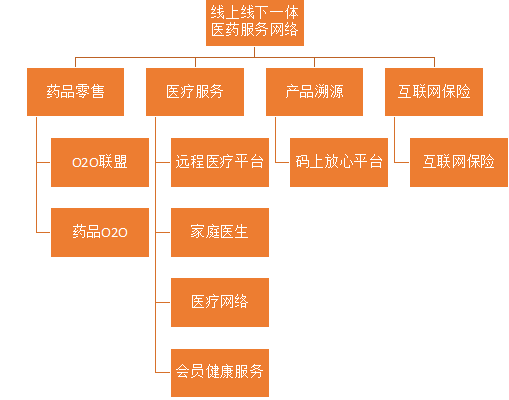
Alibaba Health Product and Service Architecture
“Alibaba’s vision is to achieve its own success by enabling the success of others. When formulating our product strategy, our primary consideration is the value we can deliver to users, rather than how much Alibaba itself stands to gain. If a product lacks value, we would rather not pursue it; conversely, we are willing to sacrifice certain benefits to ensure its development, thereby maintaining the integrity of the platform’s functionality,” emphasized Kang Kai. He noted that Alibaba Health’s vision is inherited from Alibaba and possesses strong platform and ecosystem DNA.
Tracing the formation of Alibaba Health’s business framework reveals both the momentum of its proactive internal adjustments and the coordination driven by changes in the external environment.
In early 2014, Alibaba Group, together with Yunfeng Capital, announced the subscription of 4.423 billion placed shares of CITIC 21st Century (listed in Hong Kong) for approximately HK$1.327 billion, thereby jointly achieving controlling interest. Upon completion of the acquisition, Alibaba and Yunfeng Capital, affiliated with Jack Ma, held more than 54% of the shares in CITIC 21st Century. In October 2014, CITIC 21st Century announced that it had completed its name change in early September, with the group’s new name being “Alibaba Health.”
As a key strategic move by Alibaba in the healthcare sector, Alibaba Health (HK: 00241) saw its share price surge from less than HK$1 in early 2014 to over HK$14 at its peak in mid-2015, with a total market capitalization exceeding HK$100 billion. As the market stabilized and speculators exited, the stock price returned to normal levels. As of February 2017, Alibaba Health had a total share capital of 8.182 billion shares, with its market capitalization maintaining around HK$30 billion.It is the only listed company in China whose core businesses are internet healthcare and pharmaceutical e-commerce.
Alibaba Health’s Strategic Approach and Profitability Draw External Attention. According to Alibaba Health’s financial report, its revenue for the fiscal year 2016 ending September 30 amounted to RMB 55.027 million, an increase of RMB 37.832 million year-on-year, representing a growth rate of 220.0%. Among this, revenue from the electronic regulatory code system reached RMB 48.983 million, up by RMB 3.188 million year-on-year, with a growth rate of 184.9%. Alibaba Health stated that the growth in this business segment was primarily driven by the rapid increase in the number of healthcare institutions and pharmacies joining its network since the second half of 2015.
The formation of the other two business segments is also noteworthy. In August 2016, Ali Health completed its acquisition of Guangzhou Wunianqian Pharmaceutical Chain Co., Ltd. and renamed it Ali Health Pharmacy, thereby launching its self-operated B2C business.
On September 13, 2016, the service agreement between Ali Health and Tmall came into effect. Under this agreement, Ali Health exclusively provides outsourcing and value-added services to the Tmall Pharmaceutical Platform, including merchant recruitment, merchant support, and technical support, and charges corresponding service fees (such fees amount to 21.5% of the fees paid by merchants to the Tmall platform). According to data disclosed by Ali Health in its financial report, the company generated revenue of RMB 3.074 million during the period from the effective date of the agreement to September 30, a span of slightly more than half a month. Ali Health also stated that, with the growth of e-commerce business in the pharmaceutical category on Tmall, this service agreement will provide Ali Health with a stable and rapidly growing source of revenue.
Alibaba Health’s growth is, in fact, driven by both kinetic and potential energy: the kinetic energy stems from the increasingly clear internet healthcare model, while the potential energy arises from the mismatch between user demand for internet healthcare services and market supply.
Ship of Theseus
The ancient Greek philosopher Plutarch proposed a famous thought experiment: a ship that sails the seas for a hundred years, with every worn-out part replaced by a new one, until, in the end, none of the components of this ever-voyaging vessel remain as they were when it first set sail.
This philosophical proposition, known as the Ship of Theseus, is equally applicable to today’s business environment. As e-commerce, precision customization, O2O (Online-to-Offline), and other business models gradually replace traditional commercial modules, has the vessel of commerce become different from what it was yesterday?

You can think of Alibaba Health as the Ship of Theseus, with new planks constantly being fitted into the vessel.
“Some companies may form a closed loop through the expansion of their own businesses, but their closed loop is not scalable. Our model is customer-demand-oriented, continuously bringing in external enterprises to enrich the platform’s ecosystem.” Kang Kai believes that Alibaba Health’s inherent platform nature gives it strong scalability. Its relationship with medical service providers, pharmaceutical manufacturers, and retailers is more of a symbiotic one, meeting user needs by integrating different functional modules.
In Kang Kai’s view, healthcare is a societal issue that spans the entire industry chain, from upstream to downstream. With hundreds of thousands of enterprises involved and implications for every individual’s life and health, the shortcomings and entrenched problems within the healthcare industry cannot be resolved by any single company, as the capabilities of an individual enterprise are limited. Only through collective action by the industry can these existing issues be effectively addressed.
To this end, Alibaba Health has launched initiatives such as pilot programs for tiered diagnosis and treatment, the O2O Pioneer Alliance, the Smart Care Program, online pharmacies, product traceability systems, health insurance, and family doctor services. The aim is to leverage Alibaba’s technological expertise and capabilities to help healthcare stakeholders better adapt to change, while also offering the medical industry a new perspective on solving problems through technological means and centralized service models.
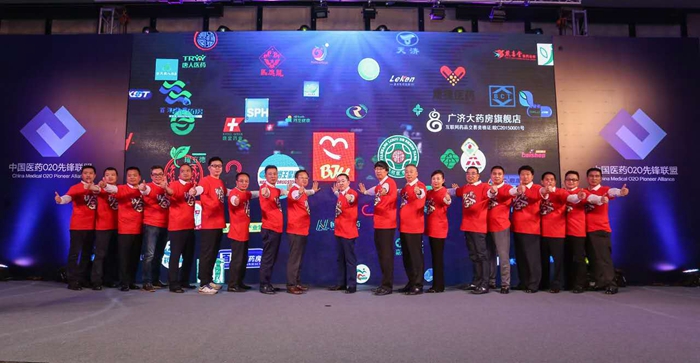
Alibaba Health Partners with 65 Chain Pharmacies to Establish the “China Pharmaceutical O2O Pioneer Alliance”
Kang Kai’s remarks are further corroborated by Alibaba Health’s business-level strategic deployments in recent years.
VCBeat (WeChat: vcbeat) previously participated in the pilot program for rural telemedicine implemented by Alibaba Health in Fengjie County, Chongqing. This county is a highly representative impoverished area in Southwest China, characterized by an extreme scarcity and uneven distribution of medical resources. Leveraging the rural penetration capabilities of its Rural Taobao initiative, Alibaba Health helped install remote consultation equipment in dozens of natural villages. Through this equipment, these villages can directly connect via online hospitals with local county hospitals and Southwest Hospital, among others, to address villagers’ diagnostic and treatment needs. Previously, residents of Fengjie County often incurred significant time and effort when seeking care at institutions such as the county hospital or Southwest Hospital. The cost of resolving this issue through the new system is limited merely to remote video consultations and the scheduling of a few general practitioners by the participating hospitals.
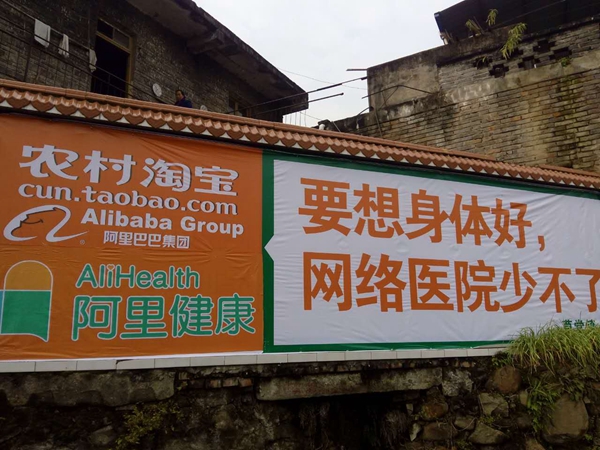
Ali Health Fengjie Remote Diagnosis and Treatment Pilot
Alibaba Health’s initial foray into proprietary pharmaceutical e-commerce was also driven by policy changes. After the pilot program for third-party platforms in online pharmaceutical transactions ended, consumer demand persisted. Alibaba Health chose to fill this gap through its proprietary operations to ensure service integrity. A similar shift occurred with the “Ma Shang Fang Xin” (Code of Assurance) platform. Following the discontinuation of updates to the drug regulatory code system, responsibility for product traceability shifted from the government to enterprises. With the rise of third-party technology platforms, Alibaba Health launched the “Ma Shang Fang Xin” platform, leveraging the technical infrastructure and data of the former drug regulatory code system.
“"Adapting to trends and leveraging momentum can summarize the logic behind Alibaba Health's business layout."“The demands of end-users and ecosystem partners are the determining factors. Problem-solving is a gradual process that requires collaboration among all stakeholders; it is a systematic endeavor,” said Kang Kai, analyzing the business logic of Alibaba Health.
Notably, the Ship of Theseus is also powered by updated modules that determine its course.
Overture to New Retail in Pharmaceuticals
As Alibaba actively collaborated with Bailian Group to pilot the implementation of New Retail, Alibaba Health also began planning how to build an “integrated online-offline pharmaceutical service network.” Online-offline synergy is the central theme of New Retail; together with New Manufacturing, New Technology, New Finance, and New Energy, as well as an integrated platform, it constitutes the future business ecosystem.
How Can Alibaba Health Break Through the Impasse? Kang Kai Believes Three Points Are Crucial.
I. Internet Thinking
Alibaba Health is an enterprise imbued with internet thinking—characterized by openness, inclusiveness, sharing, and an ecosystem mindset. Our logical framework and cognitive habits shape a perspective on problem-solving that is fundamentally different from that of traditional enterprises. The key to new retail lies in its “newness”: a novel perspective and cognitive approach, such as the integration of online and offline channels, the unification of services and products, the convergence of technology and data, and an ecosystem-oriented mentality. This determines that our implementation path is centered on end-consumer experience and guided by the interest mechanisms of ecosystem partners, which has been embedded into our “operating system.”
What it brings, I believe the most important aspect is the synergy across various sectors. When end-users have a demand, we choose to either develop solutions in-house or engage external service providers to fill the gaps, ultimately ensuring our service system is the most comprehensive and continuously strengthening our competitiveness.
II. One-Stop Shopping
Today’s consumers favor one-stop shopping services. What does “one-stop shopping” mean? For example, when you visit a department store, it offers everything from fast-moving consumer goods to apparel and cosmetics, providing a closed-loop service that delivers the most complete consumer experience. From the perspective of healthcare and pharmaceuticals, we naturally hope for users’ good health; however, the most critical factor is ensuring that they can access care in the most convenient way whenever needs arise. Since patients already have such needs, we should provide solutions through the most accessible channels.
Furthermore, whether in pharmaceuticals or healthcare, consumption is inherently low-frequency; no one would download a dedicated app or set up an account system solely for medical purposes. We already offer a diverse product portfolio and have reserved access points, ensuring that the service value for end users is guaranteed.
III. Experience in Commercial Services
From the perspective of our ecosystem partners, Alibaba possesses a strong commercial DNA and extensive experience in serving merchants. As part of this ecosystem, we can draw insights from other industries—such as FMCG marketing, home appliance supply chains, and fresh food cold-chain logistics—and apply these best practices to our services for the pharmaceutical industry.
Furthermore, regarding how we create value for our ecosystem partners—such as by providing big data tools and marketing analytics solutions—we enable upstream enterprises to better enhance their products and services, thereby achieving a win-win outcome. Taking pharmaceutical e-commerce as an example, traditional pharmaceutical manufacturers have historically faced significant marketing challenges. Launching a single product category required substantial upfront efforts, including the training of pharmacy staff and cultivating consumer awareness. However, we have provided them with a convenient channel, which will evolve into an empowerment platform in the future.
How to do it: Leverage tools such as technical analysis, data analytics, and user profiling to precisely deliver products and services to end consumers. Meanwhile, collect feedback from end users to provide recommendations for product customization and optimization, offering an integrated solution.
Kang Kai made an analogy: other internet pharmaceutical companies may have forged a formidable knife, only to use it themselves.Alibaba Health has armed its ecosystem partners with a blade and taught them the swordplay, empowering them to become formidable warriors navigating the competitive landscape.
From a competitive standpoint, Alibaba Health does not engage in direct interest conflicts with pharmaceutical e-commerce platforms, industrial enterprises, or chain pharmacies; rather, it fosters a symbiotic and mutually beneficial model. Its integrated strategy, omnichannel marketing, and user engagement solutions will herald the dawn of new retail in the pharmaceutical sector.
(Note: All data mentioned in this article were provided and verified by the interviewed enterprises.)