

BGI Genomics and Foxconn Forge Strategic Alliance to Revolutionize Gene Sequencing and Precision Health
Foxconn, the global “contract manufacturing empire,” produces more than 40% of the world’s consumer electronics, providing contract manufacturing services for brands including Apple, Dell, HP, Lenovo, Nokia, and Motorola.
BGI, the world’s largest genomics research and development institution, was named one of the “Top 50 Most Innovative Technology Companies Worldwide in 2013” by MIT’s Technology Review magazine and ranked first in Nature’s 2015 global ranking of industry–institution collaborations. BGI has nurtured the development of China’s gene sequencing industry.
One is the world’s largest electronics manufacturer, and the other is a leader in the high-tech sector. The two companies might seem to have little in common. Yet this time, they have indeed found common ground.
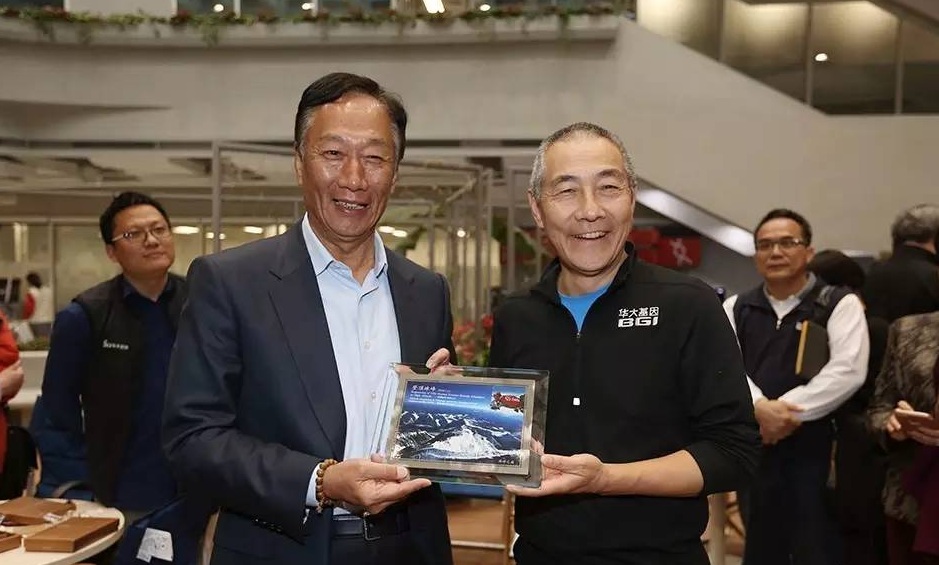
On March 1, Foxconn President Terry Gou revealed to the media that Foxconn had entered into a strategic partnership with BGI Genomics. This announcement initially left many puzzled, wondering what kind of collaboration could exist between BGI and Foxconn. Subsequently, Wang Jian, Chairman of BGI Genomics, clarified the matter: certain instruments, equipment, and products from BGI Genomics would be mass-produced by Foxconn.
This clarifies things considerably: After manufacturing countless iPhones, Foxconn is now set to produce gene sequencers!
Terry Gou and Wang Jian had known each other for some time, bonded by their shared commitment to life and health; both hold positions in disability associations. Half a month ago, Terry Gou led a delegation from Foxconn Technology Group to visit BGI. Wang Jian gave Gou a tour of the China National GeneBank in Shenzhen, where they discussed whole-lifecycle biological storage, achieving centenarian-level health through life sciences, and leveraging gene technology for the benefit of humanity. While acting as a guide, Wang Jian also playfully teased Gou about his age spots, remarking, “I adhere to a more scientific, healthier, and more precise approach to eating, drinking, and leisure, which has significantly improved my age spots.”
I presented Terry Gou with my own photographic works from my Mount Everest expedition. As we walked and talked, our conversation ranged from leisure and entertainment to philanthropy and precision health. Wang Jian held Terry Gou’s hand and said, “We must eliminate birth defects and conquer cancer. So, my friend, I need your support. Let us join forces with stakeholders worldwide to eradicate gene-related diseases—and, as a bonus, even remove age spots.”
Despite being teased about age spots, Terry Gou was captivated by the allure of genetic technology and decided to have Foxconn develop cutting-edge technological products.
BGI Group: Freeing Up Resources for R&D
The device identified for contract manufacturing is the BGISEQ-50, a compact benchtop gene sequencer that received its production license from BGI Genomics in late last year. This marks another significant achievement by BGI Genomics following the launch of its first desktop high-throughput sequencing system, the BGISEQ-500, on October 24, 2015. Compact and easy to install, the BGISEQ-50 not only fully supports basic sequencing applications in both clinical and research settings but also offers broad applicability that overcomes spatial constraints. It operates reliably even in low-pressure environments at high altitudes. The instrument is suitable for clinical applications such as non-invasive prenatal screening (NIPS), preimplantation genetic testing for aneuploidy (PGT-A), detection of chromosomal abnormalities, and rapid identification of unknown pathogens, as well as for research applications including RNA expression profiling.
“This instrument will be manufactured by Foxconn; we need at least hundreds of thousands of units,” said Wang Jian. “With this gene sequencer, everyone will be able to easily access their genetic information in the future. The market size will be no smaller than that of mobile phones.”
Illumina is BGI’s primary competitor in the upstream market. In recent years, Illumina has maintained a pace of launching one new sequencer per year. With the newly introduced NovaSeq series this year, Illumina has further solidified its position in the global market, and its stock price has shown an upward trend. BGI faces considerable pressure in the upstream market.
In the technology sector, innovation capability can be described as the lifeblood of an enterprise, yet it remains a term that causes considerable embarrassment for many Chinese companies.China is by no means short of manufacturing capabilities, and Foxconn is even less so. Entrusting the production of equipment with established intellectual property rights to reliable contract manufacturers allows companies to redirect their time and energy toward research and development—a strategy that is clearly more prudent than in-house manufacturing. For instruments produced on such a large scale, could there be a more suitable partner than Foxconn?
Foxconn: Seeking Partners to Sound the Strongest Note of Transformation
Foxconn, known as the “world’s contract manufacturer,” appears prosperous on the surface but remains at the bottom of the production chain, with workers rarely involved in upstream research and development. As a contract manufacturer, Foxconn can focus on fulfilling orders but cannot share in brand value, resulting in extremely low profit margins. With China’s continued development, labor costs are rising steadily. If this trend persists, it will be difficult for Foxconn to achieve its ambition of becoming a century-old enterprise.
Since 2014, Foxconn has been seeking a transformation. Initially, Terry Gou set his sights on e-commerce. However, the ambitious launch of “Feihu Legou” ultimately ended in near failure due to insufficient investment, internal strife among employees, and ambiguous positioning. Despite lingering apprehensions, the company made several further forays into e-commerce after Feihu’s collapse. Nevertheless, Foxconn’s e-commerce journey has been fraught with challenges amid intense competition.
After repeatedly stumbling in the e-commerce arena, Terry Gou seemed to realize that his company lacked an e-commerce DNA and was better suited for a “real-economy” path. He spared no expense in acquiring Sharp and then set his sights on Toshiba. While many Chinese tourists flocked to Japan just to buy toilet seats, what caught Gou’s eye were Japan’s most representative high-tech enterprises. He participated in the Apsara Conference, transformed old factory buildings into R&D centers modeled after Silicon Valley, and recruited 12,000 college graduates as “general workers.” With more than 4,700 global patent rights—over 80% of which are invention patents—Foxconn is steadily transforming from a manufacturing-focused Foxconn into an innovation-driven Foxconn.
Yet the awkward reality is that the label “Contract Manufacturing Empire” is so firmly entrenched that it cannot be easily shed. Foxconn needs to ramp up its promotional efforts and amplify its voice. Could its collaboration with BGI, and its foray into the high-tech sector, prompt a reevaluation of Foxconn?
Following its acquisition of Sharp, Foxconn successfully secured 8K technology. This also represents another appeal for BGI. Wang Jian introduced that the strategic cooperation with Foxconn also includes the application of 8K technology in gene research and precision medicine.
Currently, the mainstream digital image clarity on the market is generally 2K, while 8K increases the resolution by 16 times based on the existing full high-definition standard. With such ultra-high-definition imaging technology, more subtle image data can be observed, which also holds application prospects in precision medicine.
“8K imaging technology” is the foundational technology for artificial intelligence learning. “Currently, AI (artificial intelligence) cannot be widely deployed in the medical field due to a lack of detailed and nuanced imaging data, which prevents AI from achieving deep learning,” explained Wang Jian. This suggests that the collaboration between the two companies will not stop here. With years of foundation in hardware manufacturing and frequent acquisitions in recent years, Foxconn is rapidly embarking on a path of innovation. Leveraging its hardware manufacturing capabilities and innovative technologies, Foxconn may provide strong support for BGI in competing in the upstream market in the future.
In addition to outsourcing instrument manufacturing to Foxconn, BGI Genomics will collaborate with Foxconn to build the “Foxconn Technology Town” in Zengcheng, Guangzhou. According to Wang Jian and Terry Gou, this area is envisioned not only as an IT hub but also as a health and technology hub in the future.