

China's 2017 Government Work Report Highlights: Advancing Healthy China through National Health Insurance Integration, Tiered Diagnosis and Treatment, and Enhanced Regulatory Oversight
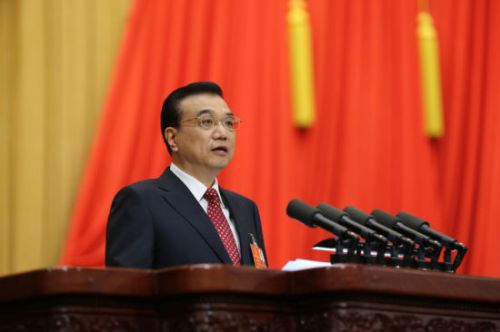
On the morning of March 5 at 9:00 a.m., Premier Li Keqiang delivered his fourth Government Work Report during his tenure, which explicitly outlined the advancement of the Healthy China initiative.
>>>>
2017 Advancing the Construction of a Healthy China
The Premier’s report this year contained 377 words related to healthcare. VCBeat first takes you through the key points of the Premier’s speech:
Advance the construction of a Healthy China. Fiscal subsidies for urban and rural residents' basic medical insurance have been increased fromThe annual per capita amount increased from 420 yuan to 450 yuan., simultaneously raise individual contribution standards and expand the scope of medication coverage.
ChinaPromote the Interconnection of Medical Insurance Information Systems, to enable direct settlement of inpatient medical expenses for cross-regional healthcare.
Improve the critical illness insurance system and raise the level of coverage.
Comprehensively launch various forms ofPilot Program for the Construction of Medical Consortiums, tertiary public hospitals must fully participate and play a leading role by establishing assessment and incentive mechanisms that promote the vertical integration of high-quality medical resources, thereby strengthening primary care capacity and facilitating convenient access to healthcare services for the public in their local communities.Pilot programs for tiered diagnosis and treatment and family doctor contract services expanded to over 85% of prefecture-level cities. Continue to raise the subsidy standards for basic public health services funding.
Respond to public health emergencies in a timely, transparent, and effective manner. Protect and motivate healthcare workers. Foster harmonious doctor-patient relationships. Adapt to the implementation of the universal two-child policy and strengthen maternal and child healthcare services. Support the development of traditional Chinese medicine and ethnic minority medicine.
Food and Drug Safety Is Crucial to Public Health, we must enforce strict and rigorous oversight. It is essential to improve the regulatory system and mechanisms, strengthen grassroots regulatory capacity, consolidate responsibilities across all parties, adhere to source control, place equal emphasis on production and regulation, and impose severe penalties to rectify disorders, thereby resolutely safeguarding every checkpoint of food and drug safety for the public.
>>>>
Medical Insurance Network Integration
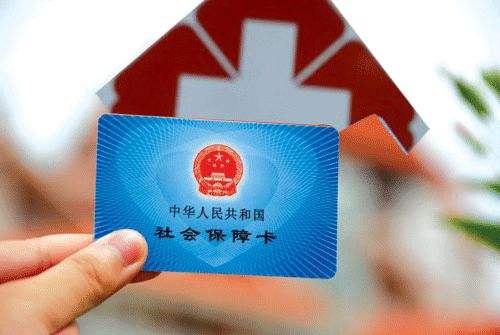
In recent years, there has been a strong call to promote the nationwide networking of medical insurance information and to achieve direct settlement of inpatient expenses for cross-regional medical treatment.The Ministry of Human Resources and Social Security recently stated that, with the exception of Tibet, direct settlement for cross-regional medical treatment within provinces has been implemented in 30 provinces (autonomous regions and municipalities) across China.; In the first half of this year, direct settlement of inpatient medical expenses incurred outside the home region is to be achieved for retirees residing in different locations. The Ministry of Human Resources and Social Security is confident that by the end of this year, it will fulfill the task requirement put forward by Premier Li Keqiang to “achieve nationwide interconnectivity of medical insurance systems and resolve direct settlement for cross-regional medical care.”
The National Inter-Provincial Medical Expense Settlement System, developed by the Ministry of Human Resources and Social Security (MOHRSS), was launched for trial operation at the end of last year. During the trial period, 15 provinces have been connected to the system to initiate pilot programs. Meanwhile, according to MOHRSS statistics, the number of social security card holders reached 972 million by the end of last year, covering 70% of China’s population. This year, the MOHRSS plans to increase the number of social security card holders to 1.05 billion, aiming to ensure that over 90% of the Chinese population holds a social security card by 2020.
Regulation:
VCBeat has learned that the State Council recently issued the “13th Five-Year National Food Safety Plan” and the “13th Five-Year National Drug Safety Plan,” which clarify the guiding ideology, basic principles, development goals, and major tasks for food and drug safety work during China’s 13th Five-Year Plan period, and deploy measures to safeguard the public’s food and medication safety.
The head of the China Food and Drug Administration (CFDA), while interpreting the plan, stated that source control must be strengthened to hold the bottom line against any systemic or regional food and drug safety incidents. Full-process supervision should be implemented to ensure controllability across the entire chain, from farm to table and from laboratory to hospital. Adhering to a problem-oriented approach, priority will be given to addressing the use of food additives beyond approved scopes and limits, and strict investigations will be conducted into adulteration and fraud in drug production.
>>>>
Tiered Diagnosis and Treatment: Full Launch of Medical Consortium Pilots
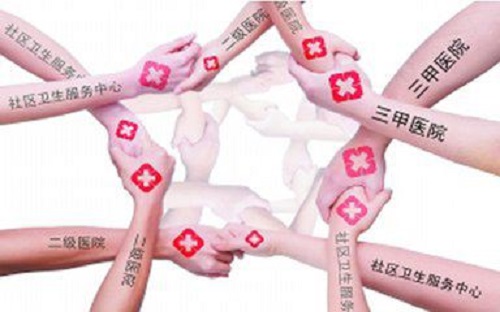
Only two months have passed this year, and the state has already issued multiple policies to promote the advancement of tiered diagnosis and treatment.
In January 2017, the National Conference on Medical Administration made specific arrangements for medical administration work in 2017. The five key priorities for 2017 were as follows: First, advance the development of a tiered diagnosis and treatment system to establish an orderly healthcare-seeking pattern. Second, continue implementing the Action Plan for Improving Medical Services and optimize the allocation of medical resources to enhance the public’s sense of gain in health. Third, deeply implement targeted health-focused poverty alleviation initiatives to support the overall campaign against poverty. Fourth, safeguard medical quality and safety, upholding the baseline standards of service. Fifth, comprehensively strengthen Party building and professional conduct improvement, fostering a clean and upright industry ethos.
In January 2017, the State Council issued the "Plan for Deepening the Reform of the Medical and Health Care System during the 13th Five-Year Plan Period." During the 13th Five-Year Plan period, China will achieve new breakthroughs in the development of five key systems: tiered diagnosis and treatment, modern hospital management, universal health insurance, drug supply guarantee, and comprehensive supervision. The Plan places tiered diagnosis and treatment at the forefront of the reforms, with the family doctor contract system serving as a crucial driver for its implementation.
In January 2017, the National Health and Family Planning Commission convened the 2017 National Conference on Primary Healthcare in Beijing. The conference advanced primary healthcare work according to a roadmap characterized by “two verticals and three horizontals.” The “two verticals” refer to strengthening the construction of primary healthcare service networks in both rural and urban areas. The “three horizontals” focus on effectively addressing key issues in basic public health services in urban and rural grassroots settings, shortcomings in healthcare personnel, and the guiding and supportive role of medical insurance.
In June 2016, the “Guiding Opinions on Promoting Family Doctor Contracted Services” were jointly issued by seven national ministries and commissions. The targets set forth in the “Opinions” were to achieve a family doctor contracted service coverage rate of over 30% by 2017, with a coverage rate of over 60% for key populations. By 2020, efforts would be made to expand contracted services to the entire population, establish long-term and stable contractual service relationships, and basically achieve full coverage of the family doctor contracted service system.
Increased from 70% to 85%. Tiered diagnosis and treatment is a key focus of China’s national healthcare reform, with its coverage further expanding, while medical consortia will become an important pathway to achieving tiered diagnosis and treatment.The implementation of tiered diagnosis and treatment will inevitably drive the development of related industries, including medical hardware, insurance, and family physician services. VCBeat will continue to monitor case studies in primary healthcare and provide ongoing coverage.
>>>>
Adapting to the Implementation of the Universal Two-Child Policy
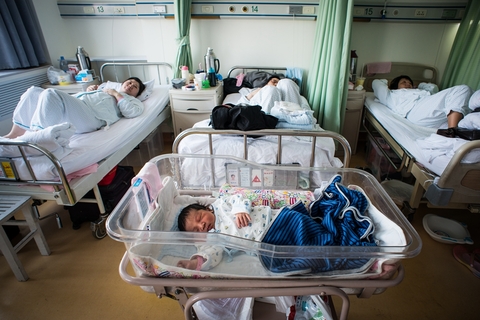
Following the implementation of the universal two-child policy, accumulated demand for childbirth was released in a concentrated manner, leading to an increased proportion of pregnant women of advanced maternal age.Urgently strengthen the management and treatment of maternal patients, enhance full-process services for eugenics and healthy childbearing, improve the capacity for treating critical and severe cases, refine coordination and support mechanisms, and institutionally establish a safety assurance system for mothers and infants.. The National Health and Family Planning Commission stated at relevant meetings that by the end of 2017, provinces should establish several critical care centers for pregnant women and newborns, while cities and counties should each establish at least one critical care center for pregnant women and one for newborns.
China’s high-quality obstetrics and gynecology medical resources were already scarce. Following the implementation of the universal two-child policy, there was a sudden surge in childbirth demand, while the number of obstetrics and gynecology healthcare professionals and the service capacity of midwifery institutions could not be increased significantly in the short term. As the number of births gradually approaches its peak, the mismatch between supply and demand for maternal healthcare resources will become even more pronounced.
Taking major cities such as Beijing and Shanghai as examples, VCBeat has learned from the statistical data of the Beijing Municipal Health and Family Planning Commission that,2015In Beijing, the bed occupancy rate of tertiary-level midwifery institutions had already reached108%, with as many as secondary-level institutions89%, while advanced maternal age pregnant women are2014annual10%Rise to2016Annual14%, high-risk pregnant and postpartum women are managed by2014annual48%Rise to2016annual60%Above.
To ensure the smooth implementation of the universal two-child policy, it is essential to guarantee an adequate health workforce. The “13th Five-Year Plan for Promoting Equalization of Basic Public Services,” recently issued by the State Council, calls for accelerating the training of obstetricians, pediatricians, midwives, and nurses during the 13th Five-Year Plan period, with a target of adding 140,000 obstetricians and midwives.
>>>>
Building Harmonious Doctor-Patient Relationships
In June 2016, nine departments, including the National Health and Family Planning Commission, the Office of the Central Leading Group for Comprehensive Management of Public Security, and the Ministry of Public Security, jointly issued the “Action Plan for Severely Cracking Down on Illegal and Criminal Activities Involving Medical Care,” requiring a one-year nationwide special campaign to severely crack down on such offenses to be launched in July.
The Supreme People’s Procuratorate issued the “Opinions on Fully Performing Procuratorial Functions to Provide Strong Judicial Safeguards for Advancing the Healthy China Initiative,” emphasizing intensified crackdowns on medical-related crimes. At a concurrent press conference, officials from relevant departments of the Supreme People’s Procuratorate stressed that all cases involving violent assaults on medical personnel shall be classified as major and sensitive cases.
For the development of traditional Chinese medicine and ethnic minority medicine,National Policy Issued"The Law on Traditional Chinese Medicine" Clarifies That Classical Formulas Are Exempt from Clinical Registration. In addition, the collation of classical formulas in Traditional Chinese Medicine has been underway for several years, whereas the collation and cataloging of classical formulas from ethnic medical systems such as Tibetan, Mongolian, and Uyghur medicine have not yet commenced.