

2016 Financial Performance Overview of 13 U.S. Genomics Public Companies
Source: Global Corporate News
In 2016, the United States launched the Cancer Moonshot Initiative, while the patent battle between Jennifer Doudna and Feng Zhang raged on. The blood-testing unicorn Theranos fell from grace, and 23andMe announced a suspension of its next-generation DNA sequencing services. If China’s gene sequencing industry experienced rapid growth in 2016, the U.S. genetic market advanced amid turbulence. This article reviews the 2016 annual financial reports of 13 publicly listed U.S. genetic companies to examine how industry giants navigated these turbulent times.
Illumina is the global leader in the sequencing industry, serving a wide range of scientific research, government, pharmaceutical, biotechnology, and other major institutions worldwide. In 2016, Illumina achieved total revenue of $2.4 billion, an 8% year-over-year increase. R&D investment reached $500 million, a 26% year-over-year increase, accounting for 21% of total revenue. Annual net profit was $460 million, flat year-over-year (0% growth). In 2016, the gross margin remained at a high level of 69.5%.
In 2016, driven by strong growth in emerging markets such as China, Thermo Fisher Scientific achieved total revenue of $18.3 billion, an 8% year-on-year increase. The revenues for its four business segments—Life Sciences Solutions, Analytical Instruments, Specialty Diagnostics, and Laboratory Products and Services—were $5.0 billion, $3.67 billion, $3.3 billion, and $7.0 billion, respectively. R&D expenditure amounted to $750 million, a 9% year-on-year increase, accounting for 4% of total revenue. Net profit for the year reached $2.0 billion, up 2% year-on-year.
In 2016, third-generation sequencer manufacturer Pacific Biosciences achieved total revenue of $90.7 million, a year-on-year decrease of 2%. During the reporting period, product revenue reached RMB 640 million, a year-on-year increase of 72%. R&D investment amounted to $67.6 million, up 12% year on year, with R&D expenses accounting for 75% of total revenue. The net loss for the year was $74.4 million, representing a 43% year-on-year increase in losses.

In 2016, Fluidigm, a manufacturer of bio-microfluidic chips, reported total revenue of $100 million, a 9% year-over-year decline. R&D expenditure amounted to $38.4 million, down 2% year over year, representing 37% of total revenue. The company posted an annual net loss of $76 million, with the loss widening by 43% compared to the previous year.
In 2016, liquid biopsy company Foundation Medicine tested a total of 43,700 samples, generating $120 million in total revenue, a year-on-year increase of 25%. R&D investment amounted to $67.37 million, up 54% year-on-year, with R&D expenses accounting for 58% of total revenue. The net loss for the year was $113 million, representing a 26% year-on-year increase in losses.
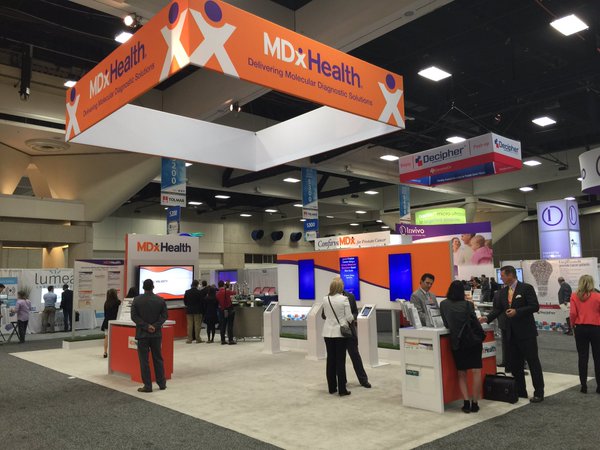
In 2016, benefiting from the success of its first liquid biopsy test product, SelectMDx, MDxHealth, a company focused on liquid biopsy for prostate cancer, achieved total revenue of $29.97 million, a year-on-year increase of 70%. R&D investment amounted to $1.977 million, a year-on-year decrease of 39%, with R&D expenses accounting for 7% of total revenue. The annual net loss was $13.15 million, representing a 9% year-on-year reduction in losses.
In 2016, genetic testing company Myriad Genetics achieved total revenue of $750 million, a year-on-year increase of 4%. R&D investment amounted to $70.6 million, a year-on-year decrease of 6%, with R&D expenses accounting for 9% of total revenue. The annual net profit was $130 million, a year-on-year increase of 56%. In August 2016, Myriad Genetics acquired Assurex Health for up to $450 million, thereby obtaining the psychotropic pharmacogenomic product line, GeneSight. This product has now become the largest source of revenue for Myriad Genetics, second only to its hereditary cancer testing business.

In 2016, the sample volume for Oncotype DX, the oncology diagnostic product of genomic testing company Genomic Health, reached 120,000, representing an 11% year-over-year increase. During the reporting period, the company achieved total revenue of $300 million, a 14% year-over-year increase. R&D expenditure amounted to $61.72 million, up 3% year-over-year, accounting for 19% of total revenue. Benefiting from significant growth in total revenue while total operating expenses remained unchanged, the company reported an annual net loss of $13.92 million during the period, reflecting a 12% year-over-year reduction in losses.
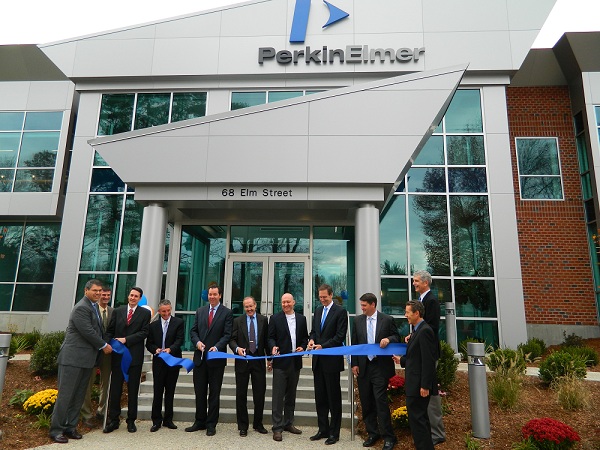
In 2016, PerkinElmer, a company specializing in mass spectrometry instruments and newborn screening, achieved total revenue of $2.1 billion, representing a 1% year-on-year increase. R&D investment amounted to $124 million, a 10% year-on-year increase, accounting for 6% of total revenue. Annual net profit reached $234 million, up 10% year-on-year.
In 2016, molecular diagnostics company Invitae achieved total revenue of $25 million, a year-on-year increase of 199%. R&D investment amounted to $44.6 million, up 4% year on year, with R&D expenses accounting for 178% of total revenue. The annual net loss was $100 million, representing a 12% year-on-year increase in losses.
In September 2016, Danaher acquired the molecular diagnostics company Cepheid for $4 billion. For the full year 2016, Danaher reported total revenue of $16.9 billion, a 17% year-over-year increase. R&D expenditure amounted to $980 million, up 13% year over year, representing 6% of total revenue. Net income for the year was $2.55 billion, a 24% year-over-year decline.
In July 2016, U.S. third-party independent laboratory LabCorp announced the acquisition of molecular diagnostics company Sequenom for $371 million. In 2016, LabCorp achieved total revenues of $9.6 billion, an 11% year-on-year increase. Its annual net profit was $730 million, a 67% year-on-year increase.

In 2016, Quest Diagnostics, a U.S.-based independent third-party laboratory, reported total revenue of $7.5 billion, comparable to the $7.49 billion recorded in the same period of the previous year. Annual net income amounted to $690 million, representing an 8% year-over-year decline.