

Central Authorities Respond to Proposal on Internet-Enabled Primary Care: Emphasize Supporting Policies and Infrastructure
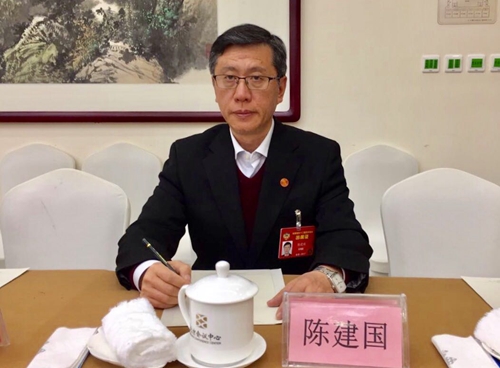
Chen Jianguo, Member of the National Committee of the Chinese People's Political Consultative Conference (CPPCC) and Standing Committee Member of the Central Committee of the Chinese Peasants and Workers Democratic Party
“The development of the general practitioner workforce indeed needs to be further strengthened!” According to Xinhua News Agency, on March 4, General Secretary Xi Jinping and Yu Zhengsheng, Chairman of the National Committee of the Chinese People's Political Consultative Conference (CPPCC), participated in a joint group discussion with members from the China Association for Promoting Democracy, the Chinese Peasants and Workers Democratic Party, and the Jiusan Society. After listening to the proposal titled “On Strengthening the Construction of the General Practice Medical System Through Internet Technologies,” submitted by Chen Jianguo, a CPPCC member and Standing Committee Member of the Central Committee of the Chinese Peasants and Workers Democratic Party, General Secretary Xi responded that the proposal to strengthen the general practitioner workforce was excellent, warranted careful study, and emphasized the importance of supporting policies and measures for primary healthcare.
Proposals concerning general practitioners have been frequently raised in recent years. However, the systematic proposal put forward by CPPCC member Chen Jianguo, following his research, to comprehensively support general practice through internet and information technology has been relatively rare. What exactly does this “Internet + General Practice” proposal entail? What recommendations does it offer? And what current practices can serve as references? On March 6, CPPCC member Chen Jianguo granted an interview at the Two Sessions press center, providing further elaboration on these matters.
The proposal points out that “the current situation in China’s healthcare sector, which remains centered on disease treatment rather than prevention and holistic care, has not been fundamentally reversed. The issue of ‘emphasizing specialized care while neglecting general practice’ within the diagnosis and treatment system remains prominent. The slow development of general practice services has constrained the establishment of a tiered diagnosis and treatment system, becoming a ‘bottleneck’ to the further deepening of China’s healthcare system reform.”
After investigating the current state of general practice in China and drawing on advanced international experience, Committee Member Chen Jianguo summarized the issues facing China’s general practice medical services into four main areas: a significant overall shortage of general practitioners, insufficient standardization and continuity in general practice training, inadequate clinical collaboration between general and specialty care, and relatively low overall income for general practitioners.
“Therefore, I hope to fully leverage the efficiency advantages of internet technology to substantially strengthen the development of the general practice medical system in areas such as personnel training, service capacity, performance management, referral informatization, and insurance support,” stated Committee Member Chen Jianguo.
“For instance, in terms of talent training, we need to establish an internet-based, standardized, full-cycle training platform for general practice.” During his research, Chen Jianguo found that primary care physicians generally have limited clinical diagnostic capabilities, low enthusiasm for participating in family doctor contract services, and limited access to relevant training opportunities. According to data from the National Health and Family Planning Commission, there are 170,000 family doctors nationwide, with a shortfall exceeding 180,000. Under the traditional education and training system, bridging this gap could take decades. “I ran the numbers: by leveraging internet technology to build a general practice training platform, we could reduce this shortfall to just tens of thousands.”
Chen Jianguo cited as an example that in 2016, WeDoctor collaborated with Zhu Shanzhu’s General Practice Studio, headed by the Director of the Department of General Practice at Fudan University Shanghai Medical College, to establish the “WeDoctor Academy of General Practice.” Leveraging the internet, this initiative channeled expert resources connected by WeDoctor down to the grassroots level, conducting online training alongside offline guidance. This internet-based platform enables a more accurate assessment of the needs of general practitioners (GPs), mobilizes training faculty from across China, and designs training curricula tailored to the diverse requirements of primary care physicians. It is understood that, in addition to online training, the WeDoctor Academy of General Practice also provides offline training for grassroots doctors by undertaking continuing medical education (CME) credit programs for GPs in provinces and cities such as Shanghai and Tongxiang City in Zhejiang Province. By combining online and offline approaches, the academy helps general practitioners access higher-quality training with greater efficiency.
In addition to the shortage of healthcare professionals, the inadequate service capacity of primary care physicians is also a prominent issue. In his proposal, Chen Jianguo pointed out the need to “leverage internet-based tools to enhance the service capabilities of existing general practitioners.” Currently, in regions with relatively advanced development of general practice, governments have collaborated with medical informatics service providers to explore innovative models that utilize internet information technologies to improve the quality of primary healthcare services.
The proposal states: In Tongxiang, Zhejiang, the local government has established “general practitioner + specialist” family doctor teams through the “Family Doctor Contract Service Platform,” fostering stable collaborative relationships between primary care family doctors and specialists at higher-level medical institutions. Leveraging an “information-based communication platform,” it provides patients with comprehensive health records, online diagnosis and treatment, online follow-up visits, chronic disease management, and health education services.
The aforementioned family doctor contract signing service platform is the “National Family Health Service Platform,” jointly operated by China Family News and WeDoctor since June 2016. Leveraging this “Family Doctor Contract Signing Service Platform,” family doctors can vertically connect with expert and physician resources nationwide, while horizontally providing patients with health management services such as mobile contract signing, online health record establishment, online interventions, and post-consultation follow-ups, thereby effectively implementing the philosophy of prevention-first and proactive health.
It is understood that mobile contract signing and online health management have significantly reduced the workload of family doctors, improved service efficiency, and increased the number of households served per doctor from an initial 300 to 500. Currently, in the operation of the National Family Health Service Platform, multiple provinces and municipalities—including Sichuan, Jiangsu, Zhejiang, and Shandong—have implemented and advanced “Internet+” family doctor contract services. If the National Family Health Service Platform were widely promoted across China, it could reduce the shortage of family doctors from hundreds of thousands to tens of thousands, thereby effectively advancing the realization of the goal of universal health.
Two-way referral is a key component of tiered diagnosis and treatment. Chen Jianguo proposed that information technology should be applied to two-way referrals on the basis of standardized referral criteria and processes. A referral standard system for tiered diagnosis and treatment, grounded in clinical practice, along with highly operational referral guidelines, should be established. Building upon this foundation, a regional two-way referral information platform linking tertiary hospitals with primary healthcare institutions should be developed to enable “information precedes patient movement,” thereby driving the efficient integration of medical resources through information flow.
“We urgently need to establish an information platform that enables two-way referrals between primary healthcare institutions and higher-level hospitals; otherwise, large hospitals will remain perpetually overcrowded,” stated Chen Jianguo. It is understood that Weiyi’s internet healthcare services currently possess not only “upward” capabilities—online connectivity and services—but also “downward” capabilities—offline patient reception and support for primary care facilities. In March 2015, Weiyi began exploring an online team-based collaboration model, operating its onboarded physicians in “teams.” This approach combines the expertise of senior specialists with the availability of younger physicians. Primary care doctors form online teams with specialists from major hospitals to jointly conduct collaborative online triage, consultations, and referral services, thereby enhancing the professional competencies of young physicians and building greater patient trust.
According to reporters, more than 7,000 expert teams from across China have gone online on the WeDoctor internet healthcare platform. Among them, the largest team is led by Professor Wang Jiansheng of the First Affiliated Hospital of Xi’an Jiaotong University. This team heads a collaborative network comprising over 3,000 individuals from more than 90 hospitals in 107 counties across Shaanxi Province. More than half of the members are grassroots medical practitioners, including village doctors and community health center physicians.
Regarding the income issue that concerns general practitioners the most, Chen Jianguo’s research found that the current fee standard of approximately 120 yuan per person per year for family doctor contract services is far from sufficient to meet the demands of high-level development in general practice medical services and the personal professional development needs of general practitioners. Therefore, Chen Jianguo recommends increasing the income of general practitioners and establishing a performance management and distribution platform for general practice medical services based on internet technology.
During the research, Chen Jianguo found that internet-based family doctor contracting platforms can facilitate convenient and efficient performance management through their systems. These platforms enable multi-dimensional assessments—covering efficiency, quality, and workload—to reflect the implementation of family doctor contracting and services. By assigning weights to various assessment criteria and automating the scoring process, these platforms achieve refined performance evaluation.
“A reasonable income distribution mechanism should be established to incentivize family doctors’ service enthusiasm,” Chen Jianguo stated in his proposal.
Data sharing is also an indispensable step in the development of general practice. In his proposal, Chen Jianguo pointed out that a platform for sharing continuous care data should be established, and commercial insurance companies should be encouraged to design new health insurance products based on general practice medical services.
Chen Jianguo learned that the launch of China’s ACO-style product, the WeDoctor Health Plan, at the end of last year has made it more convenient for residents to leverage internet technologies for health management. The plan offers membership services centered on assigned physician services for individual, family, and corporate users. It comprises three sub-products: Health Accounts, HMO, and ACO (health insurance), providing members with proactive, continuous, and integrated online-offline health maintenance and medical services, including integrated health financing, precision health management, ongoing health maintenance, coordination of medical services, and coverage of medical expenses.
In light of this, Chen Jianguo recommended in his proposal that data access be granted to commercial insurance companies with strong capabilities, medical professional backgrounds, and compliance with data security standards. “By designing new insurance products aligned with the holistic health perspective, general practitioners can deliver continuous and proactive primary care services.”
“Within the broad field of healthcare, I believe general practitioners should possess the most comprehensive medical and health knowledge, as they directly serve the general public. For this workforce, we must certainly employ the most effective measures, provide them with the best compensation, and offer clear career development pathways to address the challenges of building a Healthy China.” To turn Chen Jianguo’s vision of general practitioners into reality, we need to leverage the internet and explore solutions together.