

365 Hospital Network Partners with Chibi Traditional Chinese Medicine Hospital to Enhance Rural Healthcare via Teleconsultation
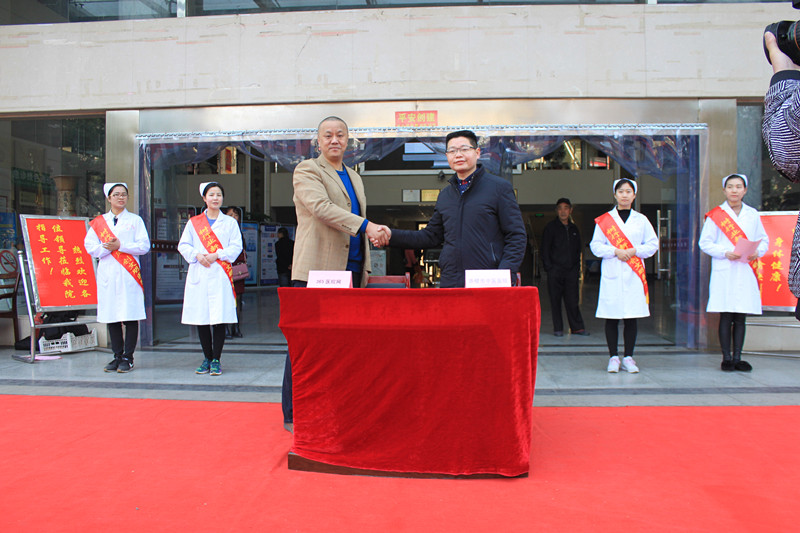
Signing Ceremony
On March 8, Chibi City Hospital of Traditional Chinese Medicine in Hubei Province and the 365 Hospital Network held an event to launch a remote consultation collaboration model. At the event, Zhu Jinghua, President of Chibi City Hospital of Traditional Chinese Medicine, told VCBeat that this initiative is a significant positive development, as it vigorously promotes tiered diagnosis and treatment by bringing renowned TCM experts to the hospital, thereby enhancing the level of medical services.
Chibi City Traditional Chinese Medicine Hospital of Hubei Province was established in 1988. It currently has 323 officially registered employees, including 4 with senior professional titles, 19 with associate senior professional titles, and 125 with intermediate professional titles. The hospital operates 320 inpatient beds. As a publicly owned, non-profit, Grade II excellent traditional Chinese medicine (TCM) hospital, it is a designated provider for Chibi City’s urban employee basic medical insurance, urban resident basic medical insurance, subsistence allowance programs, the New Rural Cooperative Medical Scheme, and China Life Insurance. It is the only “Public Benefit-Oriented Hospital” in Chibi City, as well as a job training base for university graduates and a teaching internship hospital affiliated with Hubei University of Chinese Medicine.
365 Hospital Network was established in August 2015 and is affiliated with Yijia Interconnect (Wuhan) Information Technology Co., Ltd. It aims to center on primary healthcare institutions and connect with specialists from higher-level hospitals to conduct telemedicine services.
“Following this collaboration, renowned experts from the Traditional Chinese Medicine Hospital come to our facility every Wednesday and Thursday to provide medical services such as ward rounds, training, and clinical consultations, bringing patients one step closer to top-tier specialists,” Zhu Jinghua, President of Chibi City Traditional Chinese Medicine Hospital in Hubei Province, told VCBeat.
The drivers behind the collaboration between the two parties are as follows: First, in September 2015, the state issued the “Guiding Opinions on Advancing the Construction of a Tiered Diagnosis and Treatment System.” Establishing such a system is a critical measure for the rational allocation of medical resources and promoting the equalization of basic medical and health services. It constitutes an important component of deepening healthcare reform and building a basic medical and health system with Chinese characteristics. This initiative holds significant importance for fostering the long-term, healthy development of the medical and health sector, improving public health levels, and safeguarding and enhancing people’s livelihoods.
Second, at the Fifth Session of the 12th National People’s Congress convened on March 5, Premier Li Keqiang pointed out in his Government Work Report the need to advance the construction of a Healthy China. Pilot programs for various forms of medical consortiums will be fully launched, with all tertiary public hospitals participating and playing a leading role. Assessment and incentive mechanisms will be established to facilitate the vertical integration of high-quality medical resources, strengthen primary care service capacity, and make it more convenient for the public to access medical services locally. Pilot programs for tiered diagnosis and treatment and family doctor contract services will be expanded to over 85% of prefecture-level cities.
As outlined in the objectives of the Guiding Opinions on Tiered Diagnosis and Treatment, by 2017, the policy framework for tiered diagnosis and treatment had been progressively refined; a basic mechanism for division of labor and collaboration among medical and health institutions had been established; high-quality medical resources had been systematically and effectively decentralized to lower levels; the development of primary healthcare workforce, with a focus on general practitioners, had been strengthened; the efficiency of medical resource utilization and overall benefits had further improved; the proportion of consultations handled by primary healthcare institutions out of the total nationwide consultations had increased significantly; and patient flow had become more rational and standardized.
By 2020, the service capacity for tiered diagnosis and treatment had been comprehensively enhanced, with support mechanisms gradually improved. A healthcare delivery system characterized by rational layout, appropriate scale, optimized hierarchy, clear responsibilities, comprehensive functions, and high efficiency was basically established. A tiered diagnosis and treatment model featuring initial consultation at primary care institutions, two-way referrals, separate management of acute and chronic conditions, and coordinated care between different levels of healthcare providers had taken shape, thereby establishing a tiered diagnosis and treatment system suited to China’s national conditions. The main functions accomplished are as follows:
First, initial consultation at the primary care level. Adhering to the principles of voluntary participation by the public and policy guidance, we encourage and gradually standardize the practice whereby patients with common and frequently occurring diseases seek medical attention first at primary healthcare institutions. For conditions that exceed the functional scope and service capacity of these primary healthcare institutions, they shall provide referral services for patients.
Second, two-way referral. Adhere to scientific medical practices, facilitate access for the public, and improve efficiency by refining two-way referral procedures, establishing and improving referral guidance catalogs, and prioritizing the smooth downward referral of patients in the chronic and recovery phases, thereby gradually achieving orderly referrals between medical institutions of different levels and categories.
Third, separate management of acute and chronic conditions. Clarify and implement the diagnostic and treatment service functions for acute and chronic diseases across medical institutions at all levels, improve the service chain encompassing treatment, rehabilitation, and long-term care, and provide patients with scientific, appropriate, and continuous diagnostic and treatment services. Patients with acute and critical conditions may seek direct care at secondary hospitals or above.
Fourth, vertical coordination. Guide medical institutions at different levels and of different categories to establish a division-of-labor and collaboration mechanism with clear objectives and well-defined responsibilities and authorities, prioritizing the decentralization of high-quality medical resources to promote rational allocation and vertical flow of healthcare resources.
Within the broader context of tiered diagnosis and treatment, 365 Hospital Network has launched a telemedicine information service platform centered on primary care institutions. On this platform, each primary hospital can establish its own ecosystem with itself at the core, featuring supporting specialists, in-house physicians, and independently managed operational workflows.
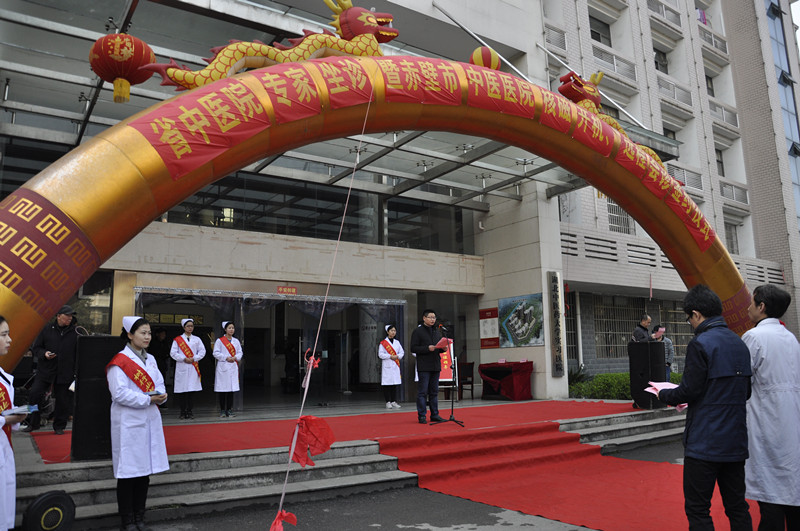
Speech by President Zhu Jinghua
This collaboration with the Chibi City Traditional Chinese Medicine Hospital in Hubei Province has also gained strong endorsement from President Zhu Jinghua, who regards it as a positive development. In China, patients seeking care at large hospitals often face the predicament known as “three longs and one short”—long waits for registration, long waits for consultation, and long waits for medication pickup, but only a short duration of actual doctor-patient interaction. Through tiered diagnosis and treatment, high-quality medical resources can be decentralized to primary care institutions, enabling the general public to access services from renowned physicians at the grassroots level.
Therefore, “Chibi City Hospital of Traditional Chinese Medicine has officially signed an agreement to join the Provincial TCM Medical Group, becoming the first affiliated branch hospital established under the Hubei Provincial Hospital of Traditional Chinese Medicine,” with the aim of promoting the downward flow of high-quality medical resources from provincial-level TCM hospitals through “vertical coordination between upper- and lower-tier institutions,” thereby serving the basic healthcare needs of the people in Chibi.
Hubei Provincial Hospital of Traditional Chinese Medicine is a large-scale, comprehensive provincial-level TCM hospital integrating medical care, teaching, and scientific research. As the leading institution in Hubei Province’s traditional Chinese medicine sector, it boasts robust technical expertise, a complete range of academic disciplines, parallel development of traditional Chinese and Western medicine, and distinctive TCM characteristics.
Currently, the experts at Chibi City Traditional Chinese Medicine Hospital mainly include: Professor Li Zhiqing from the Department of Liver Diseases, Professor Wang Zhigang from the Department of Orthopedics and Traumatology, and Professor Wang Songyang from the Department of Cardiovascular Medicine.
“In the future, expert professors will come to our hospital every Wednesday and Thursday to provide support. On one hand, they will adopt a ‘short-term immersion’ assistance model: conducting outpatient consultations in the morning to serve the general public of Chibi City, and performing teaching ward rounds in the afternoon to guide our treatment plans, while also providing education and training to enhance the professionalism and technical skills of our medical staff. On the other hand, for departments where patient demand is high but our technical capabilities are relatively weak, such as our Rehabilitation and Physiotherapy Department, experts will be stationed here for ‘long-term immersion’ assistance, providing guidance for 3–6 months until we have mastered the relevant techniques. This approach aims to establish a combined ‘short- and long-term’ immersion assistance model,” Zhu Jinghua told VCBeat.
He hopes that, through the model of remote consultation, medical personnel will work together in a pragmatic and down-to-earth manner, taking steady steps to achieve tangible results. The goal is to gradually realize the objective of “managing serious illnesses within the county,” enabling residents of Chibi to access high-quality medical services comparable to those provided by provincial-level medical institutions. Meanwhile, through continuous assistance and ongoing learning, they aim to promote the healthy development of traditional Chinese medicine (TCM), thereby better fulfilling the mission to “inherit TCM culture and serve public health.”
In addition to the experts, Zhu Jinghua also told VCBeat that in order to improve the hospital’s medical standards, they had made every effort to introduce GE Healthcare’s second-generation new fiber-optic 1.5T MRI system. In Wuhan, only a few hospitals, such as Tongji Hospital and Hubei Provincial People’s Hospital, are equipped with this device. In other words, “Undergoing an MRI at Chibi City Traditional Chinese Medicine Hospital delivers results comparable to those at Tongji Hospital and Hubei Provincial People’s Hospital, as we utilize the most advanced equipment and technology! This is a boon for the people of our city, significantly enhancing the diagnostic capabilities of MRI at our hospital and across the city, thereby better meeting the public’s demand for high-end medical examination equipment. Moreover, as a public welfare-oriented hospital, our TCM hospital offers examination fees that are 40% lower than those of private hospitals,” said an enthusiastic Zhu Jinghua.
"To enhance the quality of MRI diagnostic reports, Zhu Jinghua has adopted the latest telemedicine technology to transmit our hospital’s imaging data in a timely manner to experts in Wuhan via the 365 Hospital Network. ‘This allows them to provide diagnoses and generate reports for us, thereby effectively ensuring the accuracy of our reports. Therefore, the third item on today’s agenda is the signing of the telemedicine agreement.’"
In fact, Zhu Jinghua had already conducted a three-month pilot of this remote consultation model. He found that modern cloud-based imaging services enable fast, mature, simple, and secure image transmission, with expert reports being accurate and timely. Through telemedicine technologies, patients incur no additional costs, allowing them to access high-quality care from provincial-level experts right at the Chibi City Hospital of Traditional Chinese Medicine.