

How Mnchip's In Vitro Diagnostic Devices Gained Popularity: Endorsed Twice by the Premier and Deployed Across 24 Countries
In 2017, VCBeat launched a case solicitation campaign themed “The Power of Downward Reach—Seeking Best Practices in China’s Primary Healthcare.” Starting from February 15, we invited submissions of practical cases in primary healthcare services from across the entire industry. We will explore development trends in the primary healthcare sector from perspectives including industrial policy, technological evolution, business models, and industry collaboration, and select for coverage innovative healthcare enterprises that truly represent and are deeply rooted in primary care. Stay tuned.
ClickRegistration Address, go to the event introduction page.
“In December 2013, during the Premier’s research visit to Tianjin, he was introduced to Tianjin Micro-Nano Core’s products for the first time. In May 2015, while inspecting Legend Star, the Premier once again reviewed the products of Tianjin Micro-Nano Core. On both occasions, the Premier gave full affirmation to Tianjin Micro-Nano Core’s in vitro diagnostic products.”
Additionally, the company has been established for six years,The two products have been adopted by more than 3,000 medical institutions at various levels worldwide (including nearly 10% of tertiary hospitals).“In addition to being installed in all provinces and regions across China, our products are also exported to 24 countries, including South Korea, Russia, France, and Italy.” Wang Zhanhui, CTO of Tianjin Micro-Nano Core, was filled with pride as he introduced VCBeat to the company that he and his colleague Zhang Kaining had worked hard to establish.
Using Tianjin Weinaixin’s Celercare and Pointcare fully automated biochemical analyzers, only 2–3 drops of whole blood are required from the subject. With a compact testing device, 14 biochemical parameters can be measured within 10 minutes. This equipment enables primary healthcare institutions to easily conduct high-standard biochemical tests, effectively helping grassroots facilities, especially those in remote areas, address the challenge of “difficult access to medical care.”
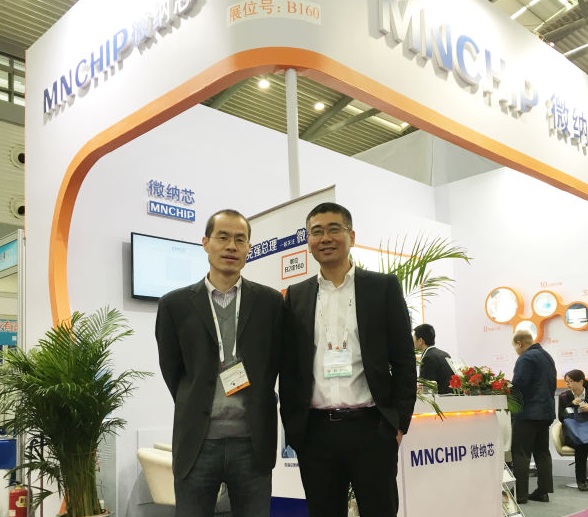
Wang Zhanhui (left) Zhang Kaining (right)
Prior to launching their startup, both individuals worked at the Shenzhen Institute of the Chinese Academy of Sciences. Wang Zhanhui told VCBeat that Zhang Kaining, who holds an MBA degree, never abandoned his entrepreneurial aspirations despite holding a secure “iron rice bowl” position. Having spent over a decade researching microfluidic chip technology at the institute, he aimed to translate his research into marketable products and gain market recognition.
In 2008, the “Legend Star” CEO Training Program selected startup projects from research institutes under the Chinese Academy of Sciences across China. The two individuals discussed and decided to launch a venture, forming an entrepreneurial team that combined scientists with entrepreneurs, and management expertise with technical skills. This structure was hailed by “Legend Star” as the “Golden Partner” startup model.
Given Wang Zhanhui’s research focus, the newly established company is oriented toward developing biochemical analysis systems based on microfluidic chip technology. However, it remains unclear to the two founders whether the product should be designed to serve tertiary hospitals or primary healthcare institutions.
In subsequent market research, Zhang Kaining discovered that while there are nearly one million medical institutions in China, only 20,000 to 30,000 are truly capable of performing blood biochemistry tests, representing a significant market gap. Primary care medical institutions either cannot afford the products due to their high cost or find existing equipment too complex to operate, resulting in a severe shortage of suitable blood testing devices. Such equipment is crucial for determining the cause of diseases.
Furthermore, although some primary healthcare institutions have purchased existing large-scale equipment, they are unable to operate it daily for testing due to low daily sample volumes and cost pressures. The inability to rapidly consume large-pack diagnostic reagents after opening leads to reagent waste or significantly compromises the accuracy of results. Therefore, primary healthcare institutions require equipment and consumable packaging tailored to their specific needs.
Although Tianjin Micro-Nano Core's fully automated biochemical analyzer is specifically designed for primary healthcare institutions, its accuracy has not been compromised.The product is based on microfluidic technology, employs optical detection principles consistent with those of large-scale automated biochemical analyzers, and utilizes imported core components to ensure the precision and stability of each device and its test results.Therefore, many tertiary hospitals and above are also using it.
In addition, the Tianjin Micro-Nano Core microfluidic biochemistry analyzer has passed the rigorous tests of the China Astronaut Research and Training Center thanks to its excellent performance. It is scheduled to be deployed on China’s first space station around 2020, providing health care services for astronauts onboard.
Additionally, in light of the actual conditions at primary healthcare institutions, the product features ease of operation, compact size, and moderate pricing. Furthermore, considering the low testing volume at these facilities, a matching single-test kit has been specifically developed.
Operationally, primary care physicians can eliminate the need for ancillary equipment such as centrifuges and water purification systems, along with the cumbersome and costly processes of equipment maintenance and calibration. With just three simple steps, the device’s built-in real-time quality control system comprehensively monitors each test, automatically flagging abnormal samples affected by hemolysis, icterus, or lipemia. This enables non-specialists to easily operate the device and obtain accurate, reliable results.
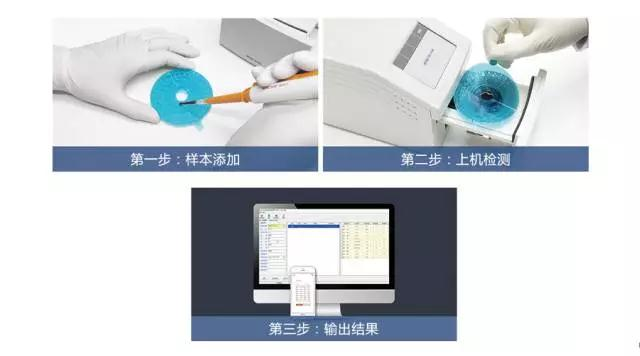
Wang Zhan told VCBeat that their device is priced significantly lower than large-scale equipment, weighs only 2 kg, and does not require a dedicated operational space. It is accompanied by single-use test kits, with reagents pre-loaded into discs at the factory. All reactions take place within the reagent disc, thereby avoiding issues such as reagent waste and cross-contamination, which reduces testing costs.
The device is currently capable of testing more than 30 parameters, covering all routine blood biochemical indicators, including liver function, renal function, blood glucose, blood lipids, electrolytes, and cardiac enzymes. Based on customer requirements, different test panels can be selected; using only 2–3 drops of whole blood, up to 14 biochemical parameters can be tested at once, with results available in 10 minutes.
Wang Zhan revealed to VCBeat that the company has sold more than 3,000 units of its products. In the near future, Tianjin Micro-Nano Core will develop testing devices suitable for internet-based mobile healthcare, contributing to the increasingly demanding management of chronic diseases. The products are expected to be launched in the second half of 2017.
Tianjin Micro-Nano Core secured tens of millions in angel funding from Legend Star in 2010, and raised tens of millions in Series A financing from Legend Capital in 2015.