

Kuaixingfang: Rapidly Expanding in Primary Care with a Cloud-Based Clinical Decision Support Platform
In 2017, VCBeat launched a case study collection campaign themed “The Power of Reaching Down—Seeking Best Practices in China’s Primary Healthcare.” Starting from February 15, we invited submissions of primary healthcare service practice cases from across the industry. We will explore development trends in the primary healthcare sector from perspectives including industrial policy, technological evolution, business models, and industry collaboration, and select for coverage innovative healthcare enterprises that truly represent and are deeply rooted in primary care. Stay tuned.
ClickRegistration Address, go to the event introduction page.
Primary Care Faces the Most Pain Points
For a long time, one of the key issues in China’s healthcare system has been the uneven distribution of medical resources. High-quality medical resources have concentrated in tertiary hospitals, while primary care institutions suffer from weak service capabilities, resulting in an “inverted pyramid” structure. As the new round of healthcare reform deepens, with the advancement of policies such as “promoting the hierarchical diagnosis and treatment system,” “integrating medical care with elderly care,” and “family doctor contract services,” increasing attention within the healthcare industry is being directed toward the primary care sector.
For primary healthcare institutions, challenges include fragmented distribution, a large number of facilities, and relatively weak performance across various indicators such as clinical capability, service quality, medical equipment, level of informatization, and pharmaceutical supply assurance. The current core focus of healthcare reform lies in addressing doctor-patient conflicts, optimizing the allocation of core medical expert resources, and leveraging the driving role of health insurance payers. As information systems for primary healthcare become increasingly sophisticated, it is essential to fundamentally enhance the clinical service capabilities and overall medical service quality of primary healthcare institutions, as well as to improve the diagnostic, treatment, and prescribing practices of primary care physicians. Ensuring medication safety, promoting rational drug use, and reducing pharmaceutical costs are also critical components of the clinical service system.
Kuaixingfang focuses on the niche vertical within the healthcare industry—clinical decision support—and aims to address these pain points by centering on the core scenario of prescription writing.
Veteran Internet Entrepreneurs Enter the Healthcare Industry
Zhu Pei, founder of Kuai Xing Fang, is a veteran of the internet industry who has previously worked at leading tech companies such as Sohu, Yahoo, Alibaba, and Qunar.com, bringing with him extensive experience in e-commerce and payment finance. “The defining characteristic of internet professionals is their ability to apply internet thinking to solve problems faced by traditional industries. If our efforts can make the world a better place, then they are meaningful and worthwhile,” Zhu Pei stated in an interview with VCBeat.
Zhu Pei’s entry into the internet healthcare industry was purely coincidental. Several years ago, due to prolonged desk-bound work, Zhu Pei developed cervical spondylosis. Following an examination, his physician recommended surgery, but he believed it was unnecessary. While searching online for information about his condition, he discovered various digital tools that could recommend medications and treatment plans based on user-reported symptoms and descriptions. This experience gave Zhu Pei, who has a background in science and engineering, the initial impression that the clinical diagnosis and treatment process might be assisted by a specially designed robot.
After resigning from Qunar.com, Zhu Pei assembled a team of partners with medical backgrounds and founded Kuaima Medical. Apart from Zhu Pei, most members of the founding team also came from technical backgrounds, including Zhu Maosheng, who holds a Ph.D. in Molecular Genetics from the University of Idaho in the United States and possesses extensive professional expertise in biomedicine.
After the company was established, the Kuaixingfang team swiftly conducted an industry analysis. “Our meeting venue was right next to Longquan Temple on Phoenix Ridge (hailed as the temple with China’s strongest scientific research capabilities). Over the course of a month, our team thoroughly mapped out more than 400 subsystems and dozens of roles within the healthcare industry, aiming to identify market breakthroughs and opportunities,” said Zhu Pei. “The analysis revealed that the entire healthcare sector essentially revolves around two core pillars: ‘medical care’ and ‘pharmaceuticals.’ For technology-driven companies, entering the market through the ‘pharmaceutical’ segment is more suitable, as pharmaceutical products are relatively easier to standardize, systematize, and digitize.”
Thus, at the outset of its founding, Kuaima Medical positioned its products around “pharmaceutical care services,” aiming to help physicians improve their diagnostic, therapeutic, and medication management capabilities through pharmaceutical knowledge support. “Pharmaceutical care services constitute only a small segment of clinical decision support. This entry point allowed us to gradually establish user scenarios, based on which we could progressively build out the entire Kuaixingfang Clinical Decision Support System,” said Zhu Pei.
Since its establishment, Kuaima Medical secured two consecutive rounds of financing in 2015. The angel round received RMB 3 million in investment from ZhenShun Fund, while the Pre-A round secured a multi-million RMB investment from Matrix Partners China.
Cloud Services for Clinical Decision Support, Initiated via Prescriptions
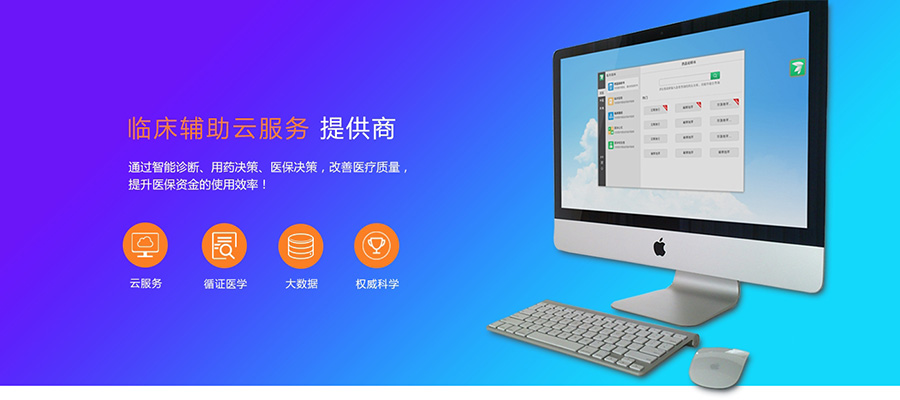
The uniqueness of KuaiXingFang is also evident in its product design. Currently, KuaiXingFang’s product resembles desktop antivirus software; once installed on a physician’s computer, it leverages a backend supported by 240 million data factors encompassing medications, diagnoses, and medical insurance to provide medication information queries, prescription recommendations, and medication risk alerts during the clinical consultation process.
“Based on our historical data, the probability of identifying risks is approximately 30%, and among those cases, 10% of physicians revised their prescriptions in accordance with our recommendations,” said Zhu Pei. “Few internet healthcare companies integrate as closely with Hospital Information System (HIS) vendors as we do. This close integration enables Kuai Xing Fang to deeply embed itself into clinical workflows. Within the existing hospital informatics infrastructure, we leverage internet-based approaches to provide physicians with the content and tools they need, thereby helping them deliver higher-quality diagnostic and therapeutic services and improve doctor-patient relationships.”
When introducing the advantages of the Kuai Xing Fang product to VCBeat, Zhu Pei summarized them from three aspects: breadth, depth, and speed.
First, Kuai Xing Fang covers all 210,000 drugs (170,000 commonly used ones) approved by the China Food and Drug Administration, enabling decision support for all physicians’ prescribing activities.
Second, KuaiXingFang exclusively provides clinical decision support services for traditional Chinese medicine (TCM) and has participated in the formulation of standards for the rational use of TCM decoction pieces under the National Administration of Traditional Chinese Medicine.
Third, Kuai Xing Fang maintains a rapid update cycle for its drug database. As a data service company with an internet background, internet thinking has always been the core DNA of Kuaima Medical. The number of drugs doubles approximately every 15 years, and 50% of medical knowledge becomes obsolete every 10 years; therefore, the database must be updated at a high frequency to avoid compromising user experience. Consequently, similar to antivirus software databases, Kuai Xing Fang provides data updates and upgrades on a nearly daily basis.
Thanks to this, the product has rapidly expanded since its market launch and is now deployed in over 3,800 primary healthcare institutions across 21 provinces and municipalities.
Kuaixingfang’s Vision: Advancing the Implementation of PBM in China
“Another core business of the company is the development of PBM, and PBM and clinical decision support will serve as strong complementary components to each other,” said Zhu Pei.
Currently, Kuaima Medical has entered the internet healthcare sector by starting with pharmaceutical affairs management. It has developed into one of the few Pharmacy Benefit Management (PBM) service providers in China that integrate multiple services, including improving insurance and payment processes and enhancing the quality of medication use. It is also the fastest-growing physician access point and prescription entry point for medical institutions in China.
PBM (Pharmacy Benefit Management) is essentially a specialized third-party service in the healthcare services market. It supervises, manages, and coordinates among payers (such as commercial insurance institutions and employers), pharmaceutical manufacturers, hospitals, and pharmacies. Its aim is to influence the prescribing behaviors of physicians or pharmacists to control the growth of drug costs without compromising the quality of medical care, with the core objective of improving the efficiency of healthcare expenditure.
Zhu Pei stated that the current macro-environment in China’s healthcare sector, which emphasizes expanding health insurance coverage, improving medical quality, and reducing healthcare costs, is conducive to the promotion of Pharmacy Benefit Management (PBM) services. The recently released “13th Five-Year Plan for Deepening the Reform of the Medical and Health System” adheres to the coordinated reform of medical care, health insurance, and pharmaceuticals, promotes the development of commercial health insurance, and advances the separation of administration from operation. These developments serve as positive signals for PBM with Chinese characteristics. Kuai Xingfang is confident that its PBM business will be gradually implemented in the near future.
2017: Continued Service to Primary Care
In 2017, Kuaima Medical will continue to focus on primary healthcare services, delving deeply into physicians’ clinical service needs. Building on its existing product portfolio, Kuaima Medical will incubate several new projects. The core of China’s trillion-yuan healthcare market lies in prescription authority, which determines drug distribution channels, manufacturers’ budgets, medical insurance support, and drug transactions. Prescription extension will be a new challenge for Kuaima Medical in 2017.