

The Maverick Investor Aims to Build a Shared Economy Platform for the Healthcare Industry
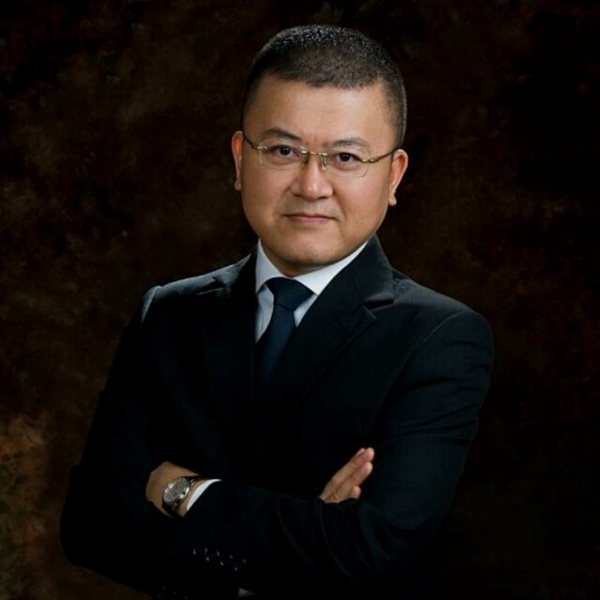
Tang Guoping, Founder of Yidaoshe
“Mobile health has gone quiet this year, with everything returning to the real economy. In an economic downturn, cash flow is paramount. For healthcare companies, marketing is now critical; whether it involves pharmaceuticals, medical devices and consumables, or healthcare services, how can products and services be converted into profits without distribution channels? This is the background behind the establishment of Yidaoshe (Medical Way Society). No matter how impressive your product is, how dazzling your team appears, or how many hundreds of millions you have raised in financing, it is all for naught without channel relationships,” remarked Tang Guoping, founder of Yidaoshe.
Although the term “silence” may sound somewhat disheartening, the monetization challenges facing mobile health are evident to all. As the healthcare industry shifts from virtual concepts to tangible services, it has become a prevailing trend for numerous internet healthcare platforms to establish offline medical institutions and directly provide healthcare services.
In the healthcare industry, as enthusiasm wanes for the models and technological innovations driven by “Internet+,” the principle that “distribution channels are king” has returned to strategic prominence.
Tang Guoping, a graduate of Tongji Medical College of Huazhong University of Science and Technology, who practiced as a physician for five years, served for over a decade in senior executive roles at multinational corporations such as Siemens, Philips, and Samsung Medison, and subsequently spent five years engaged in specialized healthcare investment, describes himself as an “outlier” among investors. This distinction stems from two factors: first, few investors possess such a multidisciplinary background; second, and more importantly, it lies in his investment philosophy grounded in the “Yi Dao She” framework.
Beyond Venture Capital Services: Uncovering “Harder” Demands
Tang Guoping stated that the establishment of Yidaoshe was not an overnight occurrence; in fact, it involved a rather lengthy yet quite interesting process.
While still active in healthcare investment, he co-founded the “Healthcare Investment Ivy League” with friends, bringing together healthcare investors across China to source high-quality healthcare projects and host monthly project roadshows.
After running the program for a while, he identified an issue with these free events. Although each event was well-executed—typically featuring eight high-quality projects selected from over 100 candidates for pitch presentations—there was little interaction among the participating companies across multiple sessions, and no cumulative resource building occurred. The root cause was the lack of funding to support a dedicated, full-time operations team. Consequently, he began considering the launch of paid events to generate revenue for hiring a team that could provide ongoing services to enterprises.
In 2015, Tang Guoping left his position at an investment firm and established his own specialized healthcare investment platform, Woniu Investment. Subsequently, in 2016, he founded the White Horse Club, a healthcare venture capital community, with other key initiators including healthcare investors from renowned firms such as Sequoia Capital.
Activities such as training sessions and roadshows organized by the White Horse Club were quickly launched. However, Tang Guoping, who was responsible for member recruitment, soon identified a significant issue: it was difficult to effectively leverage the resources of White Horse Club members. Given the club’s positioning in venture capital and investment services, many participants primarily sought funding. Nevertheless, from Tang Guoping’s perspective, the success rate of fundraising was less than ideal.
For students, it is impossible to attend classes every month; if the desired financing outcomes are not achieved, they lose interest in attending courses, and some enterprises may even shut down due to failure to secure timely funding.
At this point, Tang Guoping realized that many of his entrepreneurial friends were not short of funds—given the relatively high profit margins in the healthcare sector, once a stable cash flow is established, funding is generally not an issue; rather, they faced a significant shortage of distribution channels.
“Even companies listed on the A-share market lack distribution channels. No single company listed on the ChiNext Board has managed to establish robust distribution networks across all regions of China. Therefore, many ChiNext-listed companies resort to acquiring local distributor firms after their IPOs, as building channel presence in certain regions is not simply a matter of pouring in money, resources, and time. This holds true not only in China but also in the United States,” said Tang Guoping.
Furthermore, Tang Guoping, a healthcare investor with years of experience, noted that while investors have funded numerous projects, many founders are technically oriented and lack marketing expertise. These teams often struggle to recruit individuals with strong channel resources, as such talent is scarce. Why? Because professionals with robust distribution networks can earn faster and greater returns by operating their own pharmaceutical or medical device agencies or trading companies, rather than joining early-stage startups.
To help companies that have secured financing address their sales channel challenges; to assist listed companies in refining their nationwide distribution networks across China; and even to facilitate Chinese enterprises’ entry into overseas markets while introducing high-quality foreign products into the domestic market. In Tang Guoping’s view, this substantial market demand is beyond the reach of typical healthcare investors. However, his unique competitive advantage lies in the extensive domestic and international channel resources he has accumulated over ten years of experience in healthcare marketing.
Yi Dao She currently gives the impression of being more like a training institution; however, what Tang Guoping is truly building is a community for healthcare channels, with training activities serving merely as one of the means to maintain relationships among its members.
Tang Guoping told VCBeat, “Much like Mobike, Yidaoshe is a community-based sharing economy platform tailored for the healthcare industry. I aim to build a nationwide medical distribution network by attracting the most capable distributors from across China to share their established channel networks, while ensuring that each party’s interests remain mutually non-infringing.”
No single company can effectively cover the entire Chinese market; however, every manufacturer aspires to expand into national and even global markets. The most effective approach is to leverage established, robust distribution channels through strategic alliances, thereby building the most efficient distribution network across China and worldwide.
While still engaged in the real economy, Tang Guoping had already envisioned establishing a nationwide network; however, in his view,
The healthcare industry is highly unique, making it difficult to build trust. This is largely because the sector often falls into homogeneous competition, where manufacturers and distributors alike are constantly on guard against competitors. As a result, trust is severely lacking in the healthcare industry.
In contrast, the Medical Community adopts a community-based operational model. For instance, each training session recruits only 30 participants. Once these individuals establish mutual trust as classmates, they each recommend one acquaintance for the next cohort. This approach resolves enrollment challenges and significantly reduces the cost of building trust between returning and new participants. Conversely, if the Medical Community were to rely solely on its own efforts to continuously recruit new participants who are unfamiliar with one another, establishing trust would be considerably more difficult.
Tang Guoping emphasized that communities can effectively address issues of mutual trust. As mentioned above, all newly recruited students must have a referrer, meaning that existing students provide credit endorsement for the individuals they recommend.
Secondly, since all members are recruited exclusively through referrals, the Medical Dao Society has eliminated its admissions department; even its nationwide expansion across China relies entirely on internal member referrals. Furthermore, all members must possess genuine resources, targeting truly high-end individuals and industrial resources.
Of course, and perhaps most importantly, behind the community-based model lies Tang Guoping’s vision to build a sharing-economy platform. He stated that, compared with other training institutions and business schools on the market, Yi Dao She aims to leverage the hard-won trust relationships within the healthcare industry to create a novel industrial platform and an ecosystem model. This approach enables more efficient matching between high-quality products and distribution channels, while integrating previously fragmented and isolated resources into a nationwide, even global, channel network.
Of course, trust cannot remain merely at the level of empty talk.
According to Tang Guoping, members of the Yidao Society currently fall into two main categories: those who have products but lack distribution channels, who serve as investment targets; and those who possess distribution channels and are seeking products, who represent potential limited partner (LP) candidates. The Yidao Society is establishing an investment fund jointly with its members, primarily targeting projects developed by these members. Once investments are made, members will pool their collective resources to efficiently connect high-quality products with various advantageous distribution channels, thereby rapidly expanding market scale.
With equity partnerships, students become shareholders of Yidaoshe, and cross-shareholding establishes a tightly knit equity relationship. Thus, Yidaoshe is more than just an organization; it is an investment platform with strong resource integration capabilities. It simultaneously addresses channel distribution challenges, secures fund contributors, and resolves issues related to healthcare industry platforms.
Moreover, many funds are unable to invest overseas; even if they identify promising markets such as India and Malaysia, these opportunities remain out of reach. In contrast, VCBeat can readily extend its presence into these regions. By first establishing channel networks and gaining a certain level of understanding and control over the local markets, subsequent investments may then follow naturally.
Clinic operations have recently become a hot topic. In late March, the Medical Dao Society will travel to Taiwan to study clinic management practices. With UK hospitals and nursing schools enjoying global renown, and German rehabilitation hospitals recognized as the most successful worldwide, the Medical Dao Society will organize overseas study tours to the UK and Germany in July and August, respectively.
In the United States, Tang Guoping also recruited three protégés from Harvard, Yale, and Johns Hopkins, aiming to transfer some of America’s cutting-edge technologies to China, given its vast market potential.
In Tang Guoping’s view, the Yidaoshe community may foster a significant number of publicly listed companies in the future. For instance, there are many manufacturing enterprises in China. Through the Yidaoshe platform, these companies can connect with suitable domestic and overseas channels. This not only enables rapid expansion of their business scale but also, by spinning off the corresponding channel companies and leveraging favorable conditions such as the increasingly relaxed revenue and profit requirements for IPOs in the current securities market, many of these previously ineligible manufacturing enterprises could meet listing criteria after restructuring with trading companies.