

AI in Healthcare: High Hopes, Gradual Adoption – A Prospectus Overview
Many people fear that AI will eventually replace some of our current jobs. However, the reality is that this is gradually happening, and we can only stand by in awe at AI’s unparalleled efficiency. Of course, this will lead to certain adjustments in the global division of labor, but ultimately, we may reap the rewards of a miraculous world once seen only in science fiction.
Today, artificial intelligence has begun to take root in the healthcare sector, permanently transforming the way services are delivered. Natural language processing, hypothesis generation technologies, and evidence-based learning capabilities are being integrated into clinical decision support systems to serve medical professionals.
Medical AI Leading Example: IBM Partners with Hospitals to Train AI
Earlier in 2017, VCBeat (WeChat: vcbeat) came across a news report: Fukoku Mutual Life Insurance Company of Japan, founded in 1923, wouldTermination of 34 Workers, Replaced by an AI System, the company will thus save approximately $1.1 million annually in employee compensation expenses. Reportedly, the initial investment in this system can be recouped within two years, while delivering services that are more precise than before.
IBM’s use of AI to replace human labor predated that of Fugu Mutual Life Insurance. In February 2013, IBM announced that the first commercial application of its Watson software system would be deployed at Memorial Sloan Kettering Cancer Center (MSK) in New York for the treatment of lung cancer. It is reported that 90% of nurses currently using this system refer to the guidance provided by the AI.
IBM Watson Browser is a cognitive search and content analytics platform that extracts insights from any relevant data, unlocks the hidden value within all data, and provides a 360-degree view of the full context of a patient’s condition. For over a year, a team of physicians and analysts at Memorial Sloan Kettering Cancer Center has been “training” IBM Watson with the aim of developing a system capable of selecting optimal treatment plans tailored to each patient’s individual circumstances.
This is the concept behind the Watson for Oncology system: leveraging cognitive analytics to support oncologists in making treatment decisions. Memorial Sloan Kettering Cancer Center (MSK) has stated, “As mentors to IBM Watson, we aim to extend our mission by creating an advanced medical resource to assist those who cannot access specialized cancer centers like MSK. In collaboration with IBM Watson, we can accelerate the translation of new therapies from the laboratory to clinical practice, help physicians synthesize critical information, and enhance the quality of care.” MSK treats at least 130,000 cancer patients annually, serves as a leading oncology institution, and pioneers groundbreaking clinical trials. Its specialist oncologists will integrate decades of longitudinal clinical data to “train” the IBM Watson system.
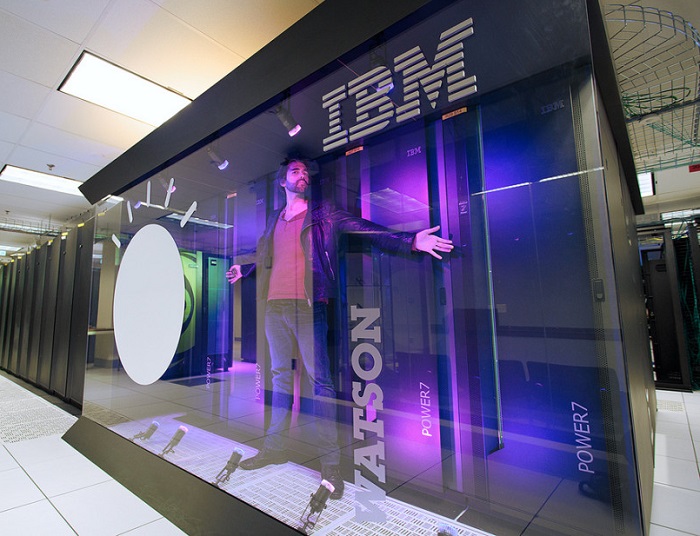
IBM: Precision Medicine as a Service (Image source: VentureBeat)
MSK concluded that Watson defined cognitive computing. Its core capabilities—natural language processing, continuously evolving machine learning models, and the ability to rapidly process large volumes of data—are all leveraged to address the challenges facing oncologists today.
In addition to its partnership with MSK, IBM has deployed its cognitive systems in more than 30 hospitals worldwide, including MD Anderson Cancer Center (which recently announced the termination of their collaboration), Maine Medical Center’s Cancer Institute, Westmed Medical Group in New York, Manipal Hospitals—a leading hospital chain brand in India—and Cleveland Clinic, among others.
According to IBM's vision,Its goal is to enhance the system’s medical expertise, ultimately enabling computers to interact directly with humans across various application domains., understand questions posed by humans, and provide answers that are understandable and verifiable to humans.
High Profile: AI Becomes the Center of Healthcare Discussions in 2017
In 2016, artificial intelligence frequently appeared in news reports. A high-profile organization that has attracted worldwide attention in the AI field is the “Partnership on AI,” jointly established by Facebook, Google, Amazon, IBM, and Microsoft in September 2016. In early 2017, the organization added new members, including the American Civil Liberties Union, the MacArthur Foundation, OpenAI, and AAAI; Apple also joined the partnership as a founding member.
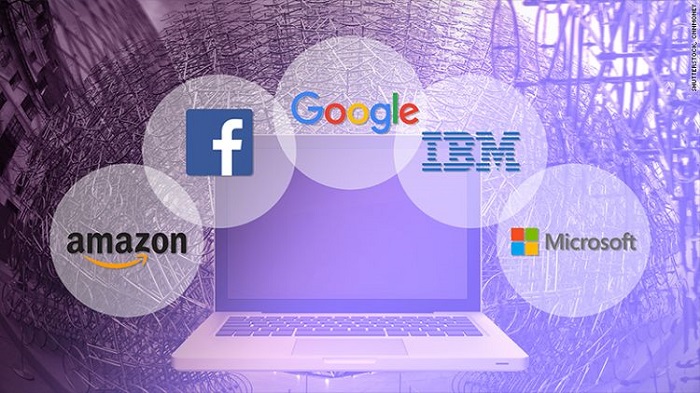
Star-Studded AI Alliance (Image source:Opptrends)
For the healthcare industry, AI will also becomeTop Topics of 2017At the HIMSS Health Information Technology Conference held early this year, IBM CEO Ginni Rometty outlined five essential characteristics of medical artificial intelligence: provision of diverse services, assurance of data transparency, deployment of specialized AI solutions for each domain, support for hybrid cloud computing, and operation as an open platform. Microsoft also announced its collaboration with the University of Pittsburgh Medical Center to leverage artificial intelligence for enhancing workflow efficiency. Meanwhile, GE Healthcare, Optum, and other companies have repeatedly emphasized the critical role of AI in personalized precision medicine.
Question: Is the era of medical AI arriving too quickly?
Many large corporations are heralding the arrival of AI in healthcare, prompting a natural question: Is this all happening too quickly? After all, the medical industry has long had a reputation for being slow to adopt new technologies.
It must be acknowledged that although the concept of artificial intelligence sounds exciting, it remains relatively new to the healthcare industry, and its widespread implementation is still premature. Many initiatives have emerged to augment traditional electronic medical record (EMR) systems with new features, but these have not universally enhanced efficiency; indeed, many physicians still rely on email to communicate with patients. For the current medical technology infrastructure, the adoption of cutting-edge technologies such as AI represents an overly ambitious leap.
On the other hand, AI is not something you can simply deploy at will. For instance, if you are a medical supplier in a remote rural area, you may have significant concerns after seeing the AI implementation costs discussed by large institutions. At the AI roundtable during the HIMSS Conference, participants were discussingThe startup capital required to enter the AI field is $15 million to $20 million.。
James Golden, Managing Director at PwC, stated that for most institutions, there is currently no strong demand to increase the efficiency of reviewing medical images from 15 per day to 100 per day, nor is it cost-effective to invest heavily in expensive AI tools. During the roundtable Q&A session, many representatives from smaller hospitals indicated that they do not have $10 million to spend on AI; instead, they are leveraging open-source data from nearby universities to address their needs.
The wave of automation has transformed industries across the board. However, it remains uncertain whether artificial intelligence will emerge as a beacon illuminating the future of healthcare. For medical AI, the current priority lies in collecting and deciphering fragmented data to provide clinical recommendations for physicians, while transcending temporal and spatial constraints to facilitate seamless, real-time connectivity among healthcare professionals, ultimately enhancing population health outcomes.