

Silver-Haired Elders, Golden Opportunities: The Rise of China's Integrated Medical and Elderly Care Industry
Elderly care and healthcare have clearly become a hot topic at this year’s Two Sessions, with the term “integration of medical and elderly care services” being frequently mentioned. However, in ChinaEntering a Period of Rapid Population Agingat the present moment,Healthy Aging IndustryofDevelopment faces many practical issues that need to be resolved.
In response to the increasingly urgent demand for elderly care, recently, Policies on the Development of the Elderly Care IndustryFrequent Occurrences:
In February, the Ministry of Industry and Information Technology, the Ministry of Civil Affairs, and the National Health and Family Planning Commission jointly issued the Action Plan for the Development of the Smart Elderly Care Industry (2017–2020). Its core objective is to leverage next-generation information technology products—such as the Internet of Things, cloud computing, big data, and intelligent hardware—to effectively connect and optimize the allocation of health and elderly care resources among various stakeholders. In March, the State Council issued the 13th Five-Year Plan for the Development of National Undertakings for the Aged and the Construction of the Elderly Care System, which also emphasized the need to improve an elderly care service system that is home-based, community-supported, institution-supplemented, and integrates medical and elderly care services.
From the current situation, the development and growth of the integrated medical and elderly care industry have become an urgent priority. It is not only necessary to supplement medical and elderly care resources but also to make elderly care smarter and healthier through modern technology. VCBeat (WeChat:(VCBeat) has distilled several key perspectives from the discussions on this topic during the Two Sessions, exploring innovative ideas for promoting the integration of medical care and elderly care, as well as their potential impact on the elderly care and healthcare industry.
Elderly Care Facilities: Can Be Converted from Hospitals, Hotels, and Other Buildings
As the phenomenon of only children solely supporting their parents becomes increasingly common, traditional family-based elderly care is beginning to place immense pressure on young people. Elderly care institutions and geriatric nursing facilities will face a significant shortage.Many people have begun to advocate for the conversion of various types of building sites into elderly care facilities.
Xu Rongmao, Vice Chairman of the Economic Committee of the National Committee of the Chinese People's Political Consultative Conference and Chairman of the Board of Directors of Shimao Group, proposed encouraging private capital to enter the health and elderly care industry, repurposing abandoned factories, poorly performing shopping malls, resorts, and otherCommercial Transformation of Large-Scale Land for the Elderly Care Industry; and encourage non-state actors to participate through the joint-stock system and the shareholding cooperative system,Acquire, integrate, and repurpose idle social land resources for elderly care through various models such as PPP; public and private elderly care institutions shall advance in tandem and enjoy equal treatment.
while addressing the shortage of elderly care institutions"Integration of Medical and Elderly Care": A Natural and Ingenious Proposal: LetHospitals with low utilization rates are transitioning into nursing homes. Standing Committee Member of the National Committee of the Chinese People's Political Consultative Conference, Deputy Director of the Committee on Education, Science, Culture, Health and Sports, and former Vice Minister of the Ministry of HealthHuang Jiefu proposed:“Currently, some elderly individuals suffer from chronic diseases, cancer, cardiovascular and cerebrovascular disorders, and psychological conditions, yet hospital beds are limited and admission is difficult. If we could integrate elderly care with healthcare reform by decentralizing resources from tertiary Grade A hospitals to local levels,”Integrate the brands of Grade A tertiary hospitals with underutilized Grade B secondary hospitals and township health centers to transform them into an elderly care service industry combining medical treatment and nursing., the difficulty of hospital admission can be resolved.”
Community and Home-Based Elderly Care Must Be "Smart"
Home-based and community-based elderly care enable seniors to receive assistance within the familiar surroundings of family and acquaintances, making them still the most popular models of eldercare among the general public today. However, it is projected thatBy 2050, the number of elderly individuals in China who will pass away without children is projected to reach approximately 79 million, with those living alone or in "empty-nest" households accounting for more than 54%. The provision of daily life support and medical care for home-dwelling seniors has become a significant challenge.
Here, the "Action Plan for the Development of the Smart Elderly Care Industry (The “Smart Elderly Care (2017–2020)” initiative highlights intelligent aging solutions, offering a novel and convenient model for home-based elderly care. With the assistance of smart devices and application systems tailored for older adults, functions such as monitoring, health tracking, medical care, rehabilitation, and domestic companionship can be integrated. This holistic approach ensures that seniors receiving care at home and within their communities have their daily living, healthcare, and emotional needs met.
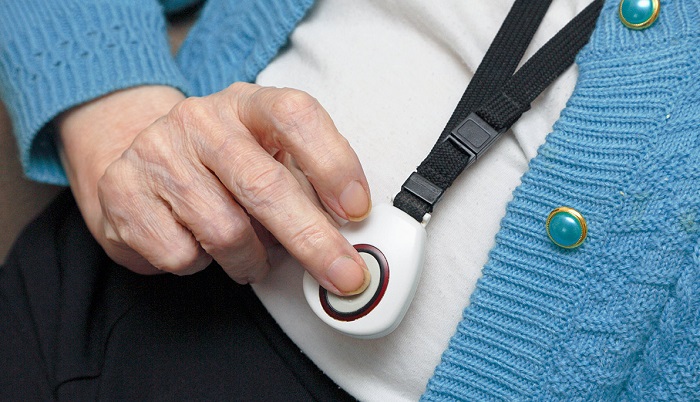
At the Two Sessions, Zhai Meiqing, a member of the National Committee of the Chinese People’s Political Consultative Conference and President of Heungkong Group, submitted a “Proposal on Promoting the Development of Smart Home-Based Elderly Care Services,” proposingDevelopment under the “Internet Plus” InitiativeSmart Elderly Care Is a New Trend in the Future Home-Based Care Model. However, due to the imperfection of the social service system for elderly care, many smart home-based elderly care services are still stuck atAt the “conceptual” level, issues such as weak supporting infrastructure, lack of standards, and poor implementation of services are prominent. Moreover, there is a lack of access standards for related facilities and equipment, particularly for smart terminal devices with mobile health functions; some exhibit significant errors and fail to meet the needs of older adults.
In the development of integrated medical and elderly care, smart elderly care products may become an indispensable part of seniors’ lives, much like smartphones today. The Action Plan has explicitly called for the creation of a number of smart health and elderly care service brands. As policies become more open, a large wave of intelligent devices and services tailored to the needs of older adults will emerge, and big data on elderly care will gradually take shape across various health and elderly care institutions and service providers. As this ecosystem takes form, corresponding regulatory oversight will also become stricter.
“Medical and Elderly Care” Faces Staff Shortages, Adding 10 Million to Employment Index
Huang Jiefu, a Standing Committee Member of the National Committee of the Chinese People's Political Consultative Conference, also believes that integrated medical and elderly care services constitute a sunrise industry. Community-based elderly care, home-based elderly care, institutional elderly care, and palliative care all exhibit high demand rates and strong employment indices. Developing these sectors,There is a need to increase supporting positions such as caregivers, rehabilitation therapists, and geriatric physicians and nurses; the state may accordingly expand these roles.10 million justIndustry Index.
Lan Nianying, a deputy to the National People’s Congress and Party Branch Secretary of Xinyue She Ethnic Village in Wushi Town, Zixi County, Fuzhou, Jiangxi Province, submitted the “Proposal on Increasing Targeted Training for Geriatrics, Rehabilitation Medicine, and Elderly Care Personnel.” She pointed out that there is a significant shortage of professionals in geriatrics, rehabilitation medicine, and elderly care. Only by initiating targeted training programs now can the needs of integrated medical and elderly care services be met.
Whether in elderly care institutions, homes, or communities, the most critical aspect of elderly care lies in health maintenance, medical treatment, and rehabilitation for older adults. Therefore, qualified personnel constitute the most important resource in the elderly care industry. Currently, however, the low skill levels, insufficient professionalization, and lack of advanced training among elderly care workers have become a bottleneck constraining the development of home-based elderly care. In the coming years,Qualification recognition and professional management for personnel in integrated medical and elderly care institutions will be strengthened, and the number of professional training and educational institutions and platforms specializing in geriatric medicine and nursing will increase.。