

Celmatix Files IPO: The Fertility Tech Pioneer Leveraging Genomic Big Data to Transform Infertility Care
Imagine a scenario where a 41-year-oldRita and39 years oldDennis, this elderly couple wants a baby. After 15 months of arduous efforts, Rita has still not conceived successfully.
Fertility specialists typically rely on only a limited set of data: Dennis’s sperm count and various hormone levels, as well as Rita’s body mass index (BMI). Therefore, when they attend their consultation, the doctor will inform them that, based on these data, their probability of achieving a successful natural conception and pregnancy is 2%, the success rate with intracytoplasmic sperm injection (ICSI) is approximately 8%, and the success rate with in vitro fertilization (IVF) is approximately 24%.
In other words, the most common thing they hear is: “Don’t get your hopes up.”
“So, what is it that they won’t hear?” said Piraye Yurttas Beim, a molecular biology expert. “After four cycles of treatment, their success rate with intracytoplasmic sperm injection (ICSI) will rise to 26%, while the success rate for in vitro fertilization (IVF) will increase to 58%. If they are also willing to attempt IVF using donor eggs, the success rate soars to 92%. Doctors currently lack practical and feasible methods to substantiate these figures—at least not with the precision I have described.” This insight served as the starting point for Polaris, a big data platform developed by Celmarix, the biotechnology company founded by Beim, which aims to help physicians validate the aforementioned data.
VCBeat has learned that Celmatix, founded in 2009 and headquartered in New York, is currently the only personalized medicine startup focused exclusively on fertility big data and women’s health.The company’s first product, Polaris—named after the North Star that guides direction—is built on a database containing data from hundreds of thousands of patients, enabling fertility specialists to compare individual patient fertility metrics against the database.
It can then leverage similar cases in the database to provide more targeted treatment plans, predicting and analyzing the conception method with the highest success rate for the patient, such as determining the optimal timing for in vitro fertilization (IVF).The software underwent intensive, large-scale testing in mid-2015. It is now widely used by more than ten of the largest fertility clinics in the United States, serving 7% of patients with infertility nationwide. Polaris can also predict other outcomes, such as age-related changes in conception probability and the risk of multiple gestations.
“Although we cannot perfectly present success rates, we have done better than in the past and can better help couples struggling with infertility to make pregnancy plans,” said Beim.
The Arduous Entrepreneurial Journey of Academics
Founder Piraye Yurttas Beim, a Turkish-born immigrant to Texas, first conceived the idea of establishing a fertility assistance company while studying at the University of Cambridge, during the university’s commemoration of the 40th anniversary of the first successful artificial insemination.
Beim has long focused her research on cancer targeted therapy and pharmacogenomics. It was during this period that she realized gene therapy might hold potential for applications in reproductive medicine. “I began discussing with clinicians the pain points they encountered in their practice, and I recognized that, as a researcher in gene therapy, I had many opportunities to help patients with fertility disorders. At the time, I learned that many women had undergone treatments in this area that ultimately failed, yet no clear cause could be identified.”
Thus, as soon as Beim returned to New York, she began implementing her entrepreneurial plan, despite the global financial crisis raging at the time. Initially, her company had not yet adopted the big data computing methods it uses today. “At that time, we were developing Biotech 1.0, and people were not yet particularly enthusiastic about information technology,” Beim admitted.
Celmatix’s seed-round investor, Topspin Partners, challenged the company to become a leaner startup. According to Beim, their response was to maintain their positioning as a technology company as much as possible: “We began exploring a service-based business model leveraging big data analytics.”
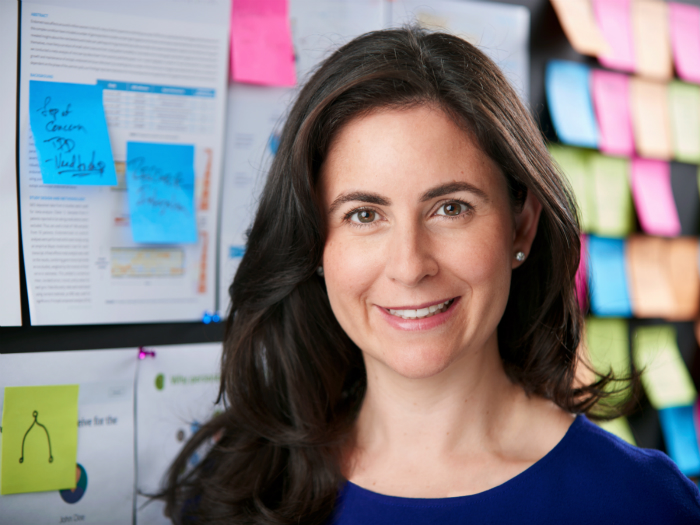
Piraye Yurttas Beim, Founder and CEO of Celmatix, is a stunning beauty.
During that period, Beim was rushing between various fertility clinics, driven by the urgent need to accelerate progress. Since co-founding Celmatix with Laura Towart Bandak in 2009, they had secured substantial investment through seed and Series A funding rounds, and she needed to commercialize their product before these funds were exhausted.
Although Celmatix’s team is continuously expanding and gradually establishing a strong reputation within the industry, time is money, especially in the fast-changing environment of New York.
Like most startups that choose to stay in New York, Beim feels that she can access more research partners, investors, and creative talent here, full of unknown possibilities. That said, it is actually not common for a biotech startup like Celmatix to maintain such a long presence in Manhattan.
Before investors truly embraced “virtual biotechnology,” startups often outsourced their capital-intensive R&D departments to research institutions. Many companies were initially established in Manhattan but did not remain there for long, with numerous teams relocating to suburban areas of Boston, Silicon Valley, and other regions.
On the entrepreneurial journey, she encountered numerous obstacles. After operating her company for one year in the early stages, she gradually mastered the art of pitching to investors and refined her business plan through continuous trial and error. As a scholar from a prestigious university, she experienced the hardships of life for the first time, yet still found joy in the process.
“She stated, ‘We have a responsibility to develop genetic testing and apply it to female fertility guidance; this is a lifelong concern for women. In our early thirties, each party we attend seems to constantly reinforce just how crucial it is to be well-informed.’ Bei Ming, who is in the same age group, felt a sense of urgency: ‘When you want to conceive but find yourself unable to do so, you begin to question what exactly you might have done wrong.’”
“Even as a professional who understands various physiological indicators, I was surprised to find that I, too, was inevitably swayed by feelings of frustration.” After continuously trying with her husband for a year, Beim finally conceived naturally. Looking back, she couldn’t help but lament, “That year was truly difficult, filled with all sorts of twists and turns.” However, this experience strengthened her resolve to develop Celmatix’s product well, bringing hope to more women suffering from such challenges. “Everyone with fertility information needs should use it,” said Beim.
By 2015, many clinics across China were trialing their newly launched software—Polaris—which features a proprietary DNA database focused on fertility and boasts strong visual design, effectively facilitating discussions between patients and physicians regarding treatment options.According to data from Marketdata Enterprises, the infertility market is expanding with technological advancements, and may reach a demand of $4 billion by 2018.
In October 2015, the UK government announced seven U.S. technology companies as the winners of the third annual GREAT Tech Awards. Among them, Celmarix was the winner of the top prize in the health technology sector.

Polaris User Interface
To date, Celmatix has completed nine rounds of funding, raising a total of more than $35 million. The lead investor in the seed round was Topspin Partners, with other investors including Peter Kellner of Richmond Global, Mark Gerson, founder of the Gerson Lehrman Group, and Kal Vepuri, founder of the Trisiras Group. Its most recent financing round occurred in September 2016, raising $9 million.
To date, Polaris has provided counseling services to approximately 30,000 female patients. In 2016, Celmatix expanded its operations and added 45 new employees, and recently launched a non-invasive screening test for genetic markers associated with potential infertility. “Most of our company’s executives are women of childbearing age, and we are developing products that we can intuitively understand,” said Beim.
The Power of Clinical Big Data
Although the above example of Rita and her husband is fictional, data from the U.S. Centers for Disease Control and Prevention (CDC) show that 6.7 million women in the United States are struggling with the nightmare of infertility, meaning that one in every eight couples faces fertility issues. However, only a small fraction receive effective treatment, and currently, the cause of infertility remains undiagnosed in approximately 10% of cases.
Behind the dry statistics lie thousands of tragic stories and clinical experiences. Couples who sought medical treatment for this condition, and even those who chose to forgo treatment, are acutely aware of this reality, as the process is fraught with stress and suffering, and the cost of treatment is prohibitively high, with some insurance providers not even covering it.
However, Beim pointed out thatThe biggest issue in infertility treatment is actually the premature abandonment by many women.In a collaborative study between Celmarix and the New York Society for Reproductive Medicine, researchers analyzed medical records from over 6,000 patients, comparing those who discontinued treatment after two cycles with those who persisted. They found that 40% of women who extended their treatment by one additional month successfully conceived.
Beim found that women undergoing treatment had never seen these statistics. Although doctors were likely to encourage them to try more options, the lack of data support always made such advice seem weak, whereas Polaris provided a reliable source of data.
“The fact is, the more patients insist on using a specific treatment method, the greater their likelihood of achieving favorable outcomes,” said Beim. “What you do this month is likely to affect next month, and”Our algorithm can leverage the time module for modeling..” As a woman of childbearing age herself, Beim has personal insight into the plight of women with infertility. She stated, “Emotional stress and uncertain treatment outcomes are the primary reasons they abandon treatment; women in our age group have, to varying degrees, experienced this hardship.”
“Many couples assume that treatment will be easy; in fact, it is also difficult for us to tell them that the success rate is not so high,” frankly stated Dr. Alan Copperman, Medical Director of the New York Society for Reproductive Medicine and a consultant to Celmarix. “By leveraging big data and iteratively refining computational models, patients can obtain objective information about the treatment options they wish to pursue.”
At the 2015 Annual Meeting of the American Society for Reproductive Medicine, Celmarix presented a research report on the impact of hormonal stimulation and conventional in vitro fertilization (IVF) on embryo quality, based on large-scale studies. According to verification by VCBeat, the study analyzed data from over 13,000 IVF treatment cycles involving 7,530 patients from the New York Society for Reproductive Medicine. By using preimplantation genetic screening to detect chromosomal abnormalities, the study found that increasing the dosage of stimulation hormones did not compromise embryo quality. In contrast,They found that the maternal overall fertility potential, such as age and other clinical indicators, is the dominant factor in embryo quality.。
Beim explained, “From online feedback provided by physicians, we have observed that many women undergoing in vitro fertilization (IVF) are often concerned that the dosage of stimulation hormones may adversely affect embryo quality. We analyzed chromosomal abnormality rates from preimplantation genetic screening (PGS) performed on thousands of patients and correlated these rates with clinical parameters such as age and stimulation hormone dosage. Reassuringly, we did not observe any negative impact on embryo quality among patients who received high-dose hormonal stimulation to optimize the number of retrieved embryos. This data-driven approach underscores the importance of determining the optimal dosage, which can help women maximize their chances of having a healthy baby.”
Dr. Alan Copperman strongly agrees, stating, “Our practice model has changed; chromosomal screening is now required before embryo transfer. We are delighted that Celmarix leverages big data to help our patients achieve success in their fertility journeys.”
Committed to Enhancing Treatment Transparency
Of course, encouraging women to continue fertility treatments is a highly lucrative business. Celmarix receives compensation from partner clinics based on patient volume, with some major contracts reaching six figures. However, criticism of fertility treatments has been persistent. For instance, in 2013, The New York Times published an article titled “Selling the Fertility Fantasy,” in which two women discussed their decision to discontinue fertility treatments and questioned the marketing strategies employed within this field.
Beim also recognized this crisis of trust. She said, “If a cardiologist recommends that I undergo surgery, will he become wealthy as a result? We rarely question this, but in the field of reproductive medicine, such skepticism does exist.”
However, both Beim and Dr. Copperman pointed out that Polaris should be more conducive to strengthening patients' trust in doctors, as it provides patients with credible data that was previously difficult to access, along with annotations. They can clearly see the specific differences in success rates between hormone injections and in vitro fertilization, as well as how each treatment method increases the risk of multiple births.
Meanwhile, Copperman stated that he has observed numerous cases demonstrating that these data have begun to positively impact patients’ family planning. In some instances, patients can directly opt for the treatment modality with the highest success rate, or they may choose to forgo treatment entirely when the predicted outcomes fall short of expectations. “This tool is not intended to expand the fertility treatment business, but rather to enhance treatment transparency for patients,” said Copperman.
Beim added, “We aim to provide women with a tool that enables them to proactively manage their fertility at a younger age, rather than passively accepting the outcome.”
Convenient New Genetic Testing Product: Fertilome
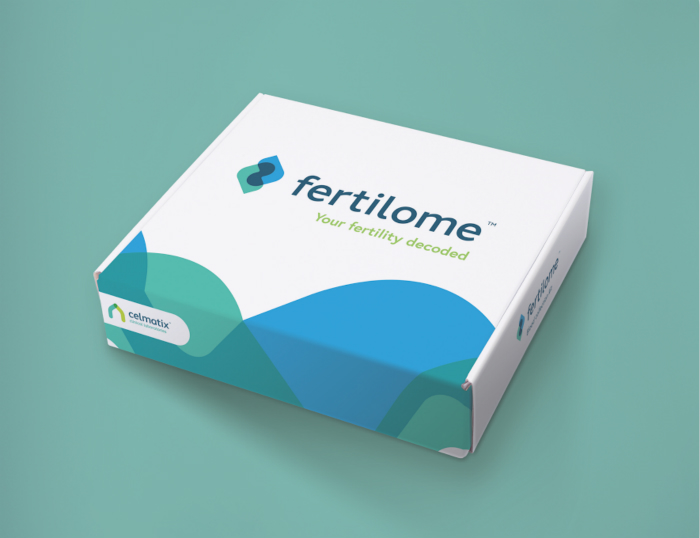
Fertilome Product Outer Packaging
In January this year, Celmatix launched its new product, Fertilome. As previously reported by VCBeat, this is the second product released by Celmatix in the “femtech” market, following Polaris.Fertilome is a novel DNA-based fertility testing method that analyzes 49 variants across 32 genes. It can be used to assess the risk of hereditary conditions such as endometriosis and polycystic ovary syndrome (PCOS), providing women with reference information for preconception planning.。
In the past, women who were planning to conceive but struggled with infertility often had no choice but to wait for fertility specialists to offer them genetic testing—by which time they had typically been battling infertility for a prolonged period. Fertilome took a full eight years from development to market launch, but its arrival was quite timely.
Globally, the age at which women experience their first pregnancy continues to rise. Between 2000 and 2014, the number of women in the United States giving birth for the first time at age 35 or older increased by 23%. Beim acknowledges that age remains a significant risk factor for fertility; a woman’s fertility at age 30 is approximately half of what it was at age 20. Therefore, earlier genetic testing to assess fertility potential is important for these women. However, age is only one of many influencing factors and can be misleading, causing women to mistakenly believe that youth alone guarantees strong fertility.
Fertilome primarily targets two groups: couples seeking to identify the causes of infertility and women considering egg freezing. To undergo Fertilome testing, patients must visit a fertility clinic where physicians order the test. After collecting blood samples from patients, Celmatix conducts the analysis and reports the results back to the physician, who then discusses the optimal next steps in treatment with the patient based on these findings.
Currently, Fertilome’s test is priced at $1,900 per session and is not covered by insurance. Regarding service coverage, CNNTech reports that, with the aid of FDA-approved gene sequencing devices, Fertilome’s genetic testing services are available in all 50 U.S. states. Women who undergo the testing will receive their genetic test reports within two weeks.
Fertilome and Polaris are well-positioned to collaborate, with the former collecting genetic data and the latter continuing to gather clinical data. Although Fertilome has not yet been integrated into Polaris’s algorithms, Beim stated that they plan to integrate the two in the future to comprehensively evaluate factors such as hormone levels, pregnancy history, age, other in vivo biomarkers, and female genetic risk for patient couples.
The New Landscape: Genomic Big Data
Some causes of infertility may stem from ancient dormant genes that have been passed down through generations, only manifesting when individuals encounter difficulties in conception. Given the many unknowns in genetics, not all cases of infertility can be attributed to uterine factors, nor can they all be ascribed to genetic causes. Therefore, more in-depth research is needed to clarify these uncertainties. However, to date, there is no comprehensive genetic test available on the market to guide the diagnosis and treatment of infertility.
Celmarix has also targeted this market gap, having begun in recent years to integrate other types of data, such as gene sequencing data. Just as personalized cancer treatment aims to assess cancer risk through DNA testing, Celmarix seeks to pioneer a fertility genomics system that enables women to understand their fertility potential before attempting to conceive. This is particularly important in today’s society, as many women delay childbearing due to career development and other factors; earlier clarity regarding their genetic makeup could help them better plan the timing of pregnancy.
In February 2016, Celmarix announced a collaboration with 23andMe, a leading genetic technology company, to improve conception outcomes for patients with infertility.
“The scale of 23andMe’s genetic data is second to none in the field of reproductive medicine,” said Beim at the time. “Celmarix has partnered with leading global fertility centers for six years, during which we have continuously reviewed, validated, and discovered new genetic markers that will significantly impact the diagnosis and treatment of infertility. Collaboration with the 23andMe research community will greatly accelerate our progress. Together, we will provide greater support to those struggling with infertility, helping them build their families sooner.”
Celmarix has identified over 5,200 genetic biomarkers associated with human fertility potential, while 23andMe boasts a robust genetic database and research team; this collaboration represents a powerful alliance between two industry leaders.
Emily Drabant Conley, Vice President of Business Development at 23andMe, expressed great enthusiasm for this collaboration: “Fertility research and women’s health have long been key research priorities for 23andMe. We chose Celmarix as our partner because they are a leader in the field of reproductive medicine founded by Dr. Xinghua Geng. Leveraging their big-data platform and integrated clinic network, they have amassed a clinically deep database on infertility treatment.”
Integrating this platform with 23andMe’s large-scale genetic information database will create a unique and powerful engine, providing strong momentum for research in the genetics of infertility. Celmarix’s vision is to provide women with genetic information that empowers them to proactively manage their fertility, which will have a profound impact on the treatment of infertility. Having personally experienced difficulties conceiving, Emily deeply understands the significant role such information can play in infertility treatment, as even after she successfully became pregnant, doctors were unable to identify the cause of her prior conception challenges.
On February 22 of this year, the two companies announced that they are collaborating to launch a new fertility research community.This initiative requires collecting genetic data from women who are attempting to conceive or have recently achieved pregnancy, while tracking their health status, living environment, diet, and lifestyle habits, ultimately to determine the correlations between these factors and fertility outcome indicators.。
“This ambitious initiative will empower us to better enable women who wish to have children in the future to gain deeper insights into the lifestyle choices, dietary habits, and timing of conception that may potentially impact their fertility,” said Beim, CEO of Celmatix, commenting on the new project.
23andMe will provide free personal genomic services to participants in this study. The collection of these genetic data will facilitate Celmatix’s broader research efforts to identify and understand the various factors that contribute to lifelong fertility potential across diverse populations.
“Current research exploring female reproductive potential lacks examination at the genetic level; compared to other areas of medical research, this field is typically narrower in scope and less comprehensive,” said Jorge Chavarro, Professor and Scientific Research Advisor at the Harvard T.H. Chan School of Public Health. “This work not only has the potential to enhance the clinical impact of next-generation personalized medicine products, but is also likely to make significant contributions to our fundamental understanding of reproductive science.”
The program is currently recruiting female volunteers aged 18 to 45. Participants can join the program from home; they are required to voluntarily provide saliva samples for DNA analysis, complete an online questionnaire every two months, and consent to sharing anonymized data with researchers.