

Medical-Grade Wearables: A More Promising Path Than Trump’s Executive Orders to Tackle U.S. Healthcare Costs?
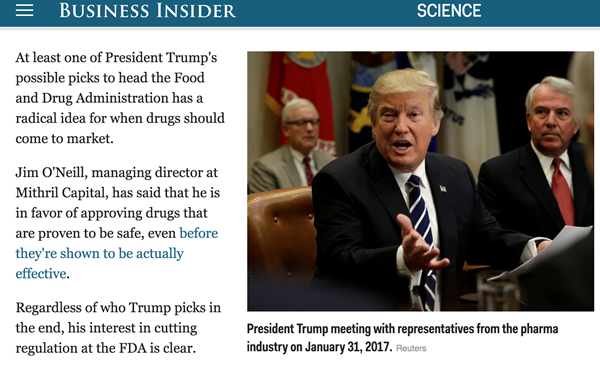
After Trump took office, he halted the Obama-era healthcare reform, imposed a travel ban on citizens from seven countries, initiated the construction of the U.S.-Mexico border wall, and revived oil pipeline projects, among other actions. He made significant strides in immigration, energy, and trade protectionism—areas where presidential executive orders can bypass Congress and be implemented rapidly.
Not long ago, he once again set his sights on the U.S. Food and Drug Administration (FDA), vowing to “streamline its regulations to an unprecedented degree.” The newly inaugurated U.S. president stated that his primary objectives are to reduce drug costs and lower healthcare expenses for the public.
Yet, can streamlining FDA processes truly reduce healthcare expenditures? In fact, the “culprit” behind the United States’ high healthcare costs—accounting for 17% of GDP, significantly higher than other developed nations such as Switzerland at 10.9% and Canada at 9.7%—may not be the FDA’s stringent drug regulations. The key to genuinely lowering U.S. healthcare costs lies in reducing administrative and labor costs within the healthcare industry, among other factors.
To address these issues, the medical-grade wearable devices that have emerged in the United States in recent years may be far more reliable than Trump.
Over the past decade, consumer-grade wearable devices experienced a surge in hype before settling into relative quiet. The reason lies in people’s excessively high expectations; ultimately, they found that the convenience these devices brought to daily life was not as significant as imagined.
So, why have medical-grade wearables, the close relatives of consumer wearable devices, once again become an industry hotspot?
The fundamental differences in the types of data collected have opened up an entirely new industry future and market space.
As the name suggests, medical-grade wearable devices must undergo FDA clearance and are capable of collecting and monitoring precise, medical-grade physiological data, thereby enhancing disease prevention and reducing healthcare costs. A 2016 report by CVS indicated that medical-grade wearable devices could save $63 million per 100,000 patients.
What impact will such medical-grade wearables have on the healthcare systems in the United States and around the world? How advanced is their adoption in the U.S.? Dr. Jiang Li, founder of VivaLnk, a representative company in the U.S. digital health sector, discusses this emerging industry that could produce countless essential medical products of the future.
In the globally acclaimed book *Homo Deus: A Brief History of Tomorrow*, a scenario is depicted in which doctors are completely replaced by machines. Artificial intelligence-powered physicians can effortlessly access vast, inexhaustible datasets on diseases and treatment modalities, while monitoring human health conditions around the clock.
In real life, we may have to wait and see, potentially for decades, before determining whether the author is speaking without basis. The only certainty is that tangible progress is continuously occurring within the U.S. healthcare industry.
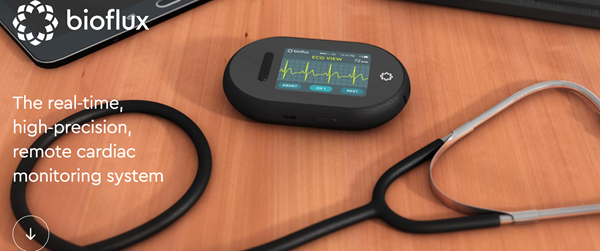
Biotricity’s Flagship Product: The Bioflux Remote Cardiac Monitoring Device
Abbott Laboratories’ FreeStyle Libre Flash can remotely monitor blood glucose levels via a sensor; remote patient monitoring provider Biotricity announced a partnership with AT&T, the largest carrier in the United States, which will provide it with “near real-time” human data transmission capabilities; VivaLnk is currently the first company globally to achieve human data collection using electronic skin technology and has signed multi-million-dollar contracts with Fortune 500 companies.
“Medical-grade wearable devices currently entering the market have met FDA validation requirements, causing significant disruption in the industry.” Li Jiang believes that previous wearable devices collected insufficiently accurate data, making them unsuitable for medical applications, while traditional medical equipment was too bulky and isolated, failing to adapt to modern healthcare’s interconnected, data-driven ecosystem. Medical-grade wearables represent an optimal solution that combines the advantages of both approaches.
In addition, Silicon Valley investors pointed out to reporters that market education has been completed, thanks to the booming wave of wearable devices in recent years. This has laid the foundation for the future explosion of the medical-grade wearable device industry.
Wearable devices have not “failed”; although they are no longer a hyped concept in the venture capital and startup community, they have tangibly transformed many people’s lives.
At VivaLnk’s office in the heart of Silicon Valley, a reporter could see that half of the employees were wearing Fitbit bands capable of tracking their heart rates and step counts.
“Users already have a basic understanding and awareness of this technology, and new medical-grade wearable startups are able to continuously adapt based on the experiences of previous wearable companies, gaining insight into the market’s true needs,” said Li Jiang.
A report from the authoritative market research firm Frost & Sullivan shows that the market size of medical-grade wearable devices will grow from $5.1 billion in 2015 to $18.9 billion in 2020.
In application scenarios that are already familiar to users, facilitating the transition from legacy technologies to new ones has always been far easier than starting from scratch to create entirely new use cases. This holds true for medical-grade wearable devices as well.
Its earliest applications were in two scenarios already familiar to people: home health monitoring and hospital diagnosis.
First, home health monitoring devices. For the past century, every household has been equipped with a thermometer. With technological advancements, homes with elderly members also have pulse oximeters, blood pressure monitors, and other devices. However, these devices share certain limitations: they can only measure data at a single point in time, making continuous monitoring difficult; furthermore, the devices cannot connect with one another, resulting in isolated, non-systematic data.
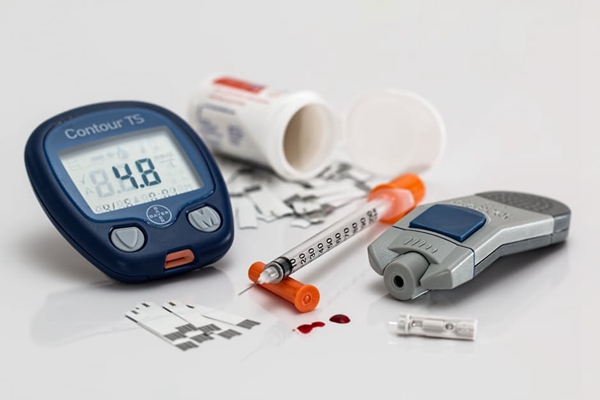
Past Home Health Monitoring Devices
Medical-grade wearable devices enable comfortable, continuous wear and long-term monitoring, while storing precise physiological data in the cloud, offering immense potential for future innovation.
Secondly, hospital diagnostic equipment, including both in-hospital and out-of-hospital settings.
In past TVB dramas, a common scene depicted ambulances speeding to the hospital, with patients being rushed into the emergency room while connected to various medical devices. Even after their lives were no longer in immediate danger, patients had to remain motionless in bed to allow the machines to continuously collect vital physiological data.
Once medical-grade wearable devices are deployed in hospitals, they can provide physicians with continuous, high-precision data without restricting patient mobility.
Applications outside the hospital setting fall into two categories. First, many “invisible” conditions require long-term monitoring. For instance, signs of heart disease may not be detectable during in-hospital tests and can only be diagnosed after prolonged data monitoring. Second, chronic diseases such as diabetes also necessitate medical devices capable of long-term monitoring.
The consumer and medical sectors are merely the initial focal points for medical-grade wearable devices. In the future, these domains are likely to converge, further blurring the boundaries between “home” and “hospital,” thereby impacting health monitoring, disease prevention, treatment, and more. Healthcare may shift from a treatment-centric model to one focused on prevention.
“Both China and the United States are witnessing a clear trend toward implementing preventive measures when changes in health status are detected—preventing illness or treating minor conditions promptly to avoid progression to severe disease.” Li Jiang believes this represents a critically important shift for reducing healthcare expenditures.
In addition, medical-grade wearable devices can alleviate significant labor burdens, thereby reducing the United States’ substantial healthcare expenditures from another angle. For China, which faces severe population aging, addressing disease prevention among the elderly may resolve not only an economic challenge but also a broader social issue.
Under such medical trends, it is particularly crucial to seize the market first—what lies ahead, connected to medical-grade wearables, is vital human physiological data, which holds vast commercial potential. What kind of medical-grade wearable devices can “break through the competition”? Dr. Li Jiang highlighted three key aspects.
First, the device must meet medical-grade data accuracy standards. Second, the product must be comfortable and user-friendly. Finally, the price must remain within consumers’ affordability to achieve widespread commercial adoption.
Companies possessing these characteristics are highly likely to be the first to secure critical entry points for human physiological data, thereby laying a solid foundation for future development. Prominent examples currently visible in the market include Abbott Laboratories, which developed remote blood glucose monitoring devices; Medtronic, a renowned U.S. medical device manufacturer; and VivaLnk, an advanced developer of electronic skin technology.
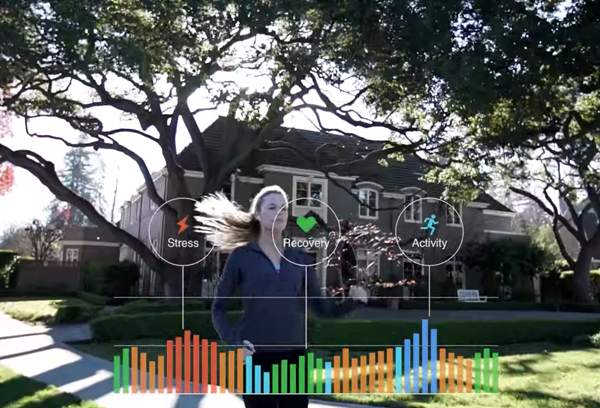
Screenshot from the introductory video of VivaLnk’s product, Vital Scout
In the future, we can also anticipate a comprehensive healthcare solution—comprising hardware devices equipped with sensing or sensor capabilities, and a large-scale backend database with robust data processing power.
By integrating AI technology with medical big data and the capabilities of AI or deep learning, medical-grade wearable devices can further analyze data to derive diagnostic outcomes—such as disease type and severity—ultimately enabling therapeutic functions.
“It’s just like current insulin pumps,” said Li Jiang, describing it as an example of the “simplest version” that is still quite uncomfortable to wear. “This type of insulin pump monitors the user’s blood glucose levels and automatically administers medication into the patient’s body whenever levels exceed a predefined threshold.”
To help journalists better understand current medical-grade wearable devices, Li Jiang presented two medical solutions from VivaLnk slated for launch in 2017: Fever Scout and Vital Scout. These solutions include two flexible patches, similar in size to adhesive bandages, capable of monitoring various physiological parameters such as body temperature, heart rate, and stress levels. Meanwhile, a connected smartphone displays real-time changes in these metrics and generates line graphs, transforming continuous data monitoring into visualized charts.

Wearing Fever Scout is virtually imperceptible
Recently, VivaLnk has signed a multi-million-dollar partnership with a Fortune 500 company to sell its Fever Scout medical solution to millions of households worldwide.
This marks VivaLnk’s first step toward the market. According to Li Jiang, VivaLnk has already established a technological R&D direction focused on the acquisition of all fundamental human physiological data. In the future, the company will gradually roll out a series of products and data services tailored for both home-based and in-hospital markets.
(Note: All data mentioned in this article were provided and verified by the interviewed enterprises.)